Sweet Almond Oil: What It Is and Who Should Skip It
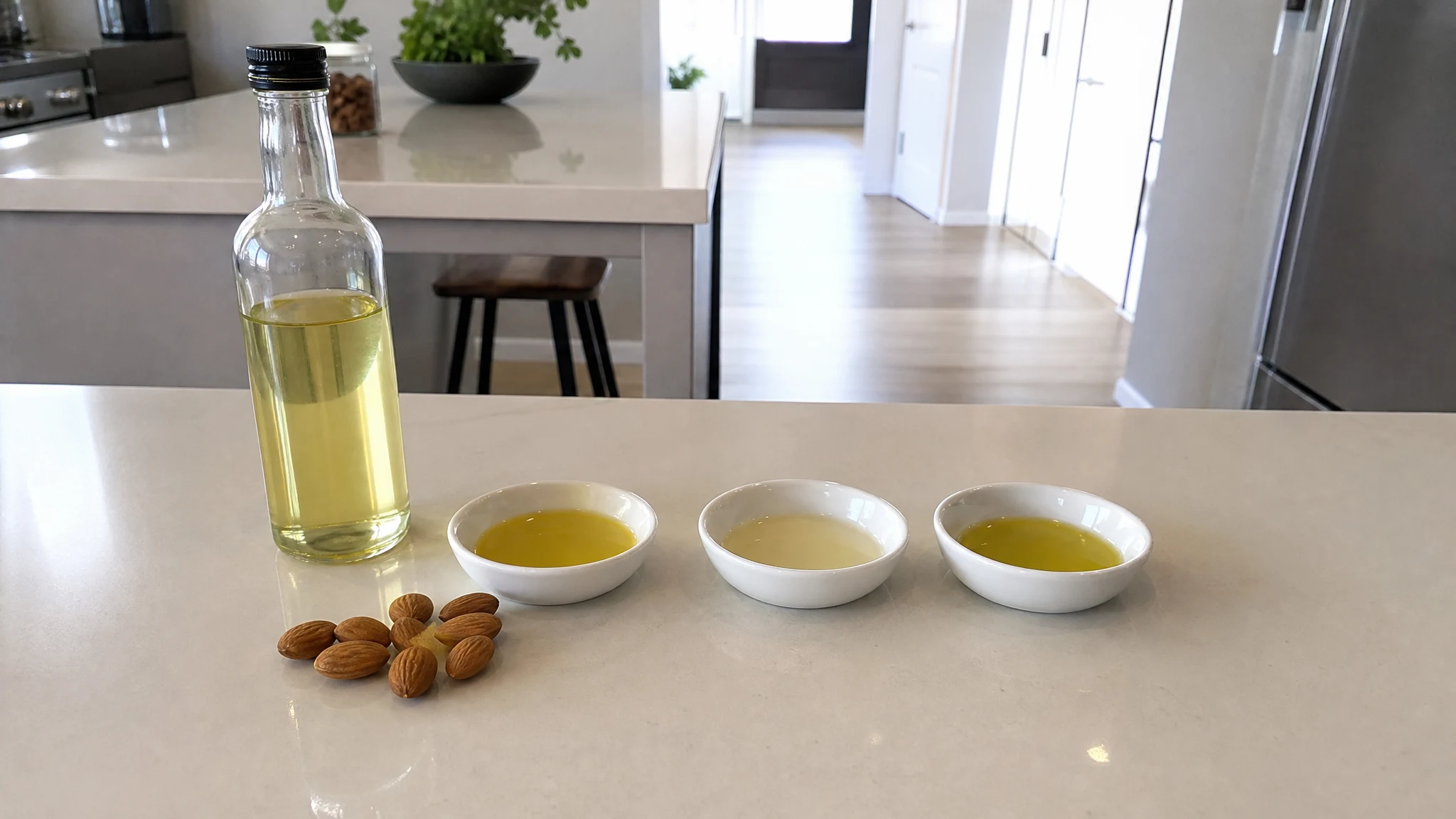
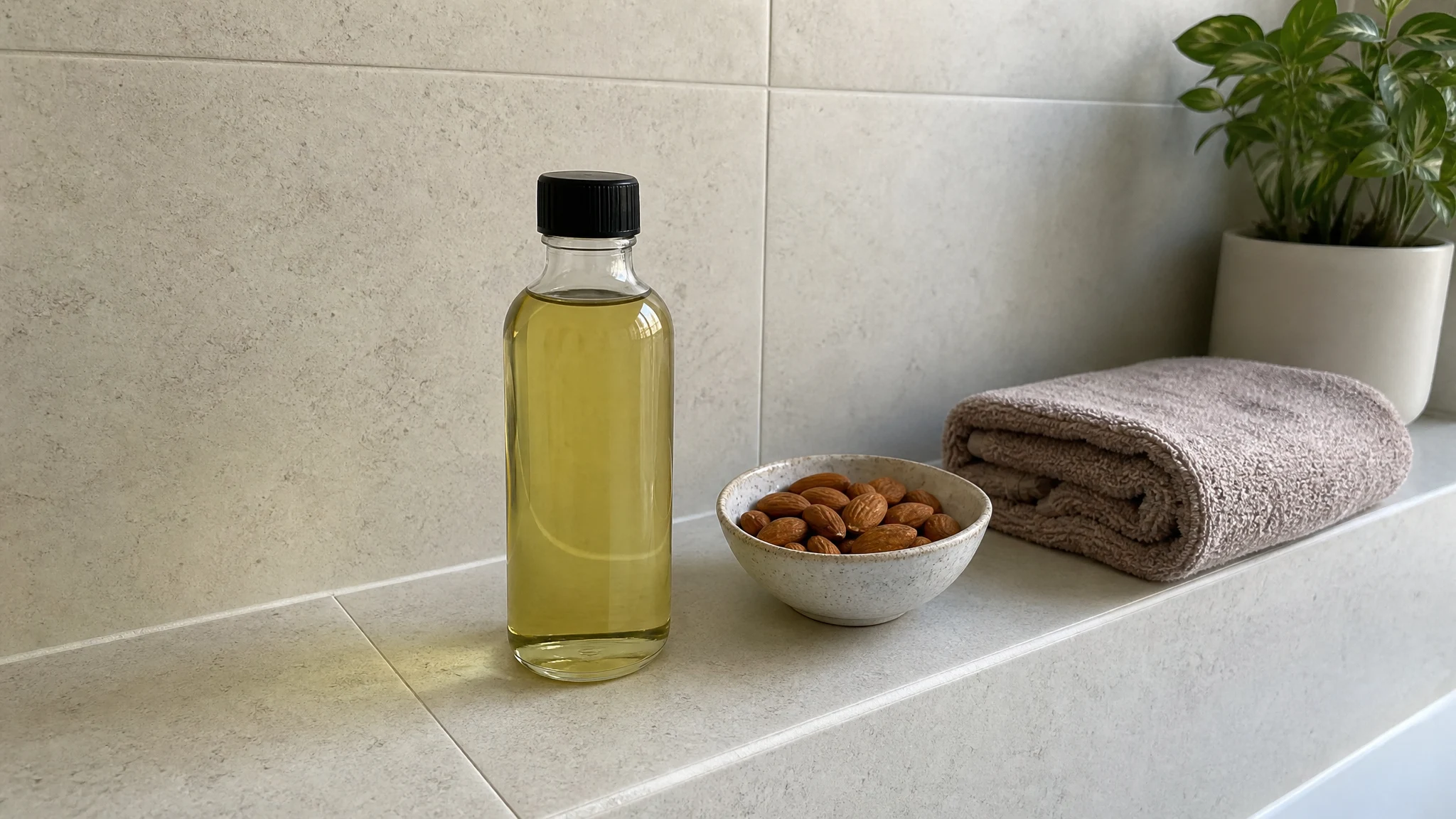
Open a bottle of our sweet almond oil and the first thing you notice is how quiet it is: a faintly golden oil with a soft, subtly nutty, lightly sweet aroma. That gentleness is a big part of its appeal. It is the kind of oil you reach for to moisturize, to give a massage some glide, or to carry essential oils without covering them up. It also comes with one firm rule, so let us start there.
Who should skip it
Almond is a tree nut. Food Allergy Research & Education lists almond oil among tree nut products and notes that tree nut oils such as walnut and almond, which often are not highly refined, are sometimes used in lotions, hair care products and soaps. The FDA adds that its food-allergen labeling law does not cover cosmetics, so a cosmetic label cannot be counted on to warn you. Our oil is cold-pressed and unrefined, so trace almond protein is present, and anyone with a tree nut allergy should not use it. We would rather say that first than last. The nut allergy guide covers the details.
What is in the bottle
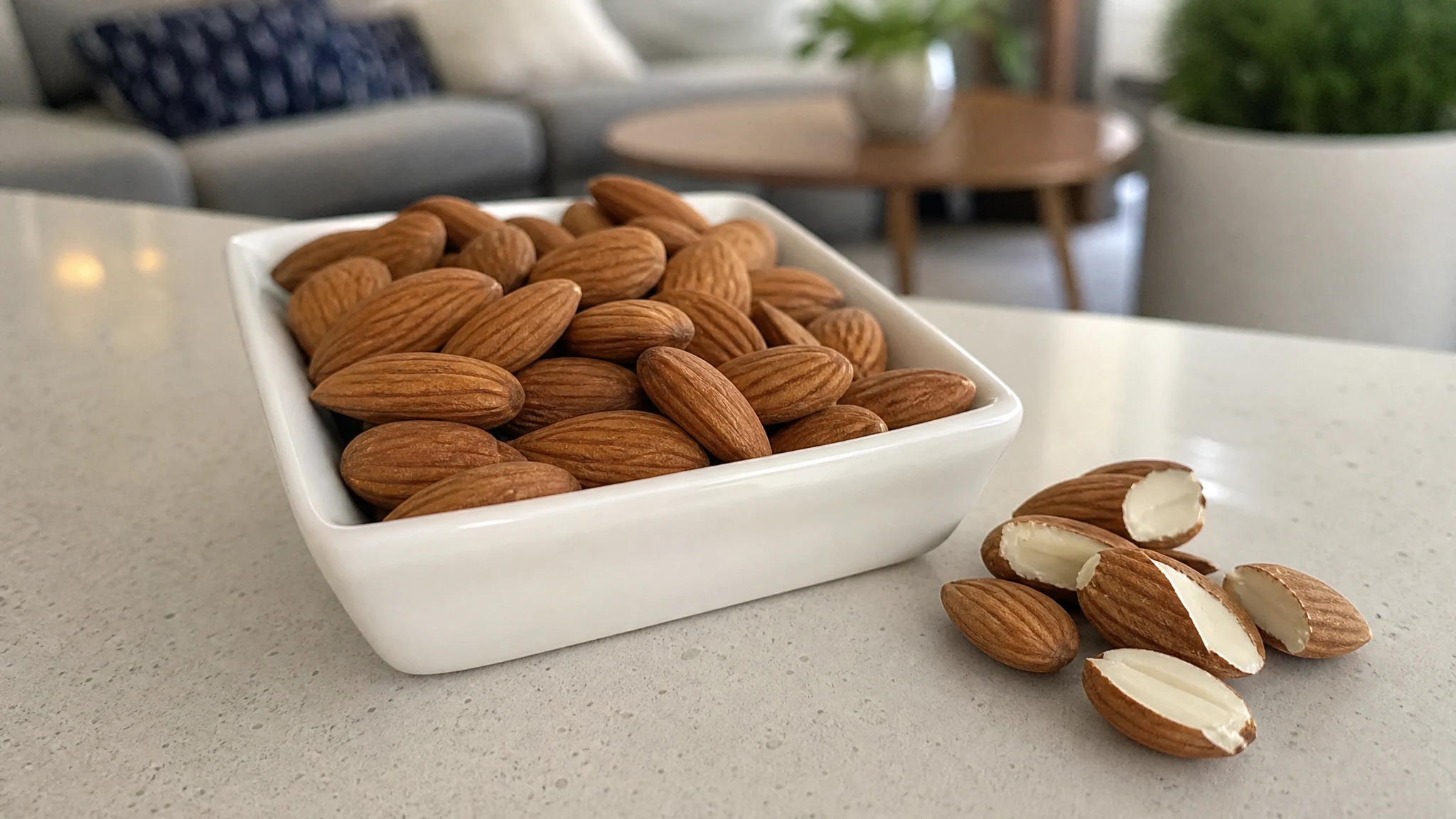
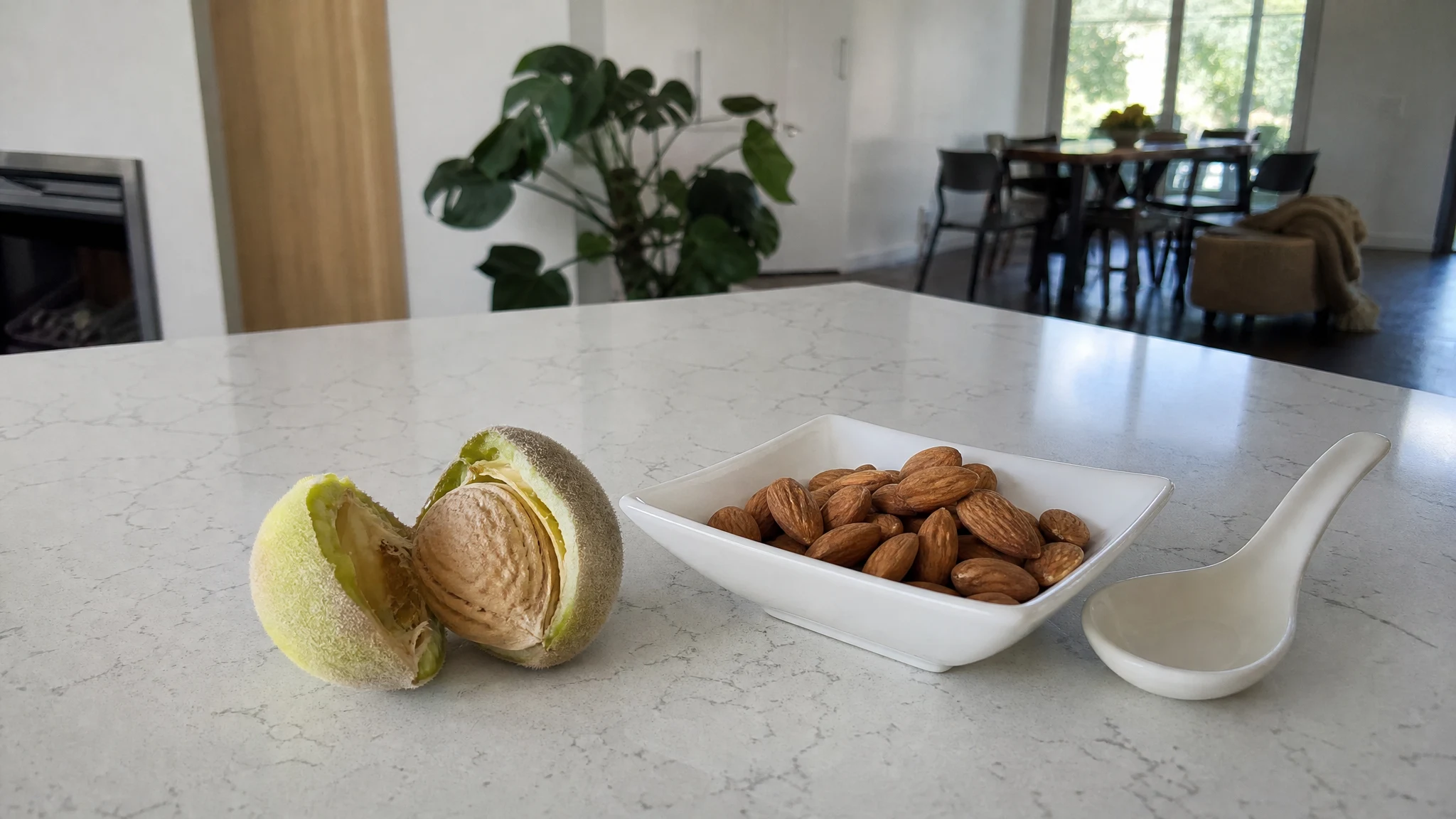
We press whole California kernels cold, keeping the press below 40 C (104 F), with no bleaching, deodorizing, winterizing or solvent, and nothing added, not even vitamin E. The botanical name is Prunus amygdalus dulcis, the sweet variety, which matters because bitter almond oil is a different material that we do not sell; see sweet versus bitter almond oil. If you are curious about the pressing itself, how almond oil is made walks through it, and refined versus unrefined explains what the difference means in practice.
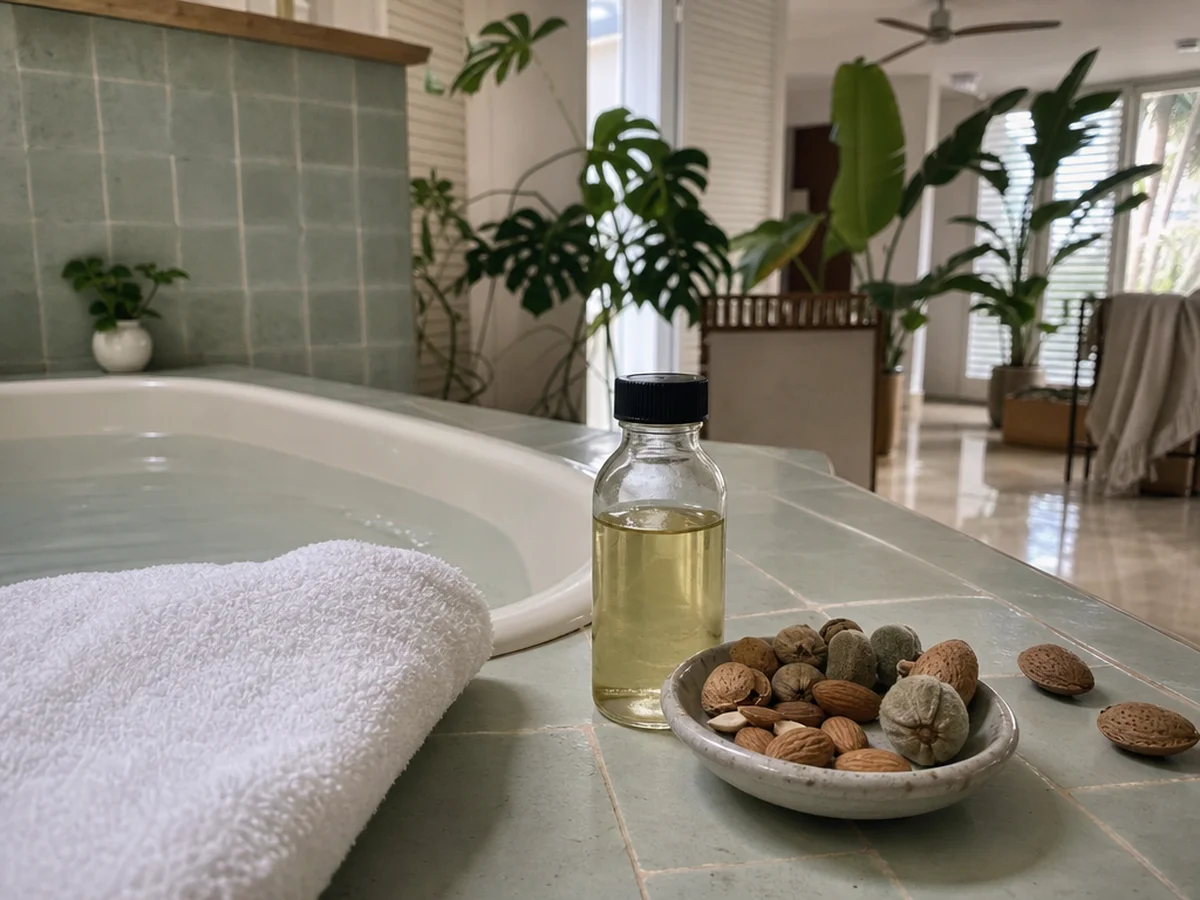
Like most almond oil, ours is mostly oleic and linoleic fatty acids with a little vitamin E. A 2020 analysis of 31 sweet almond varieties put oleic acid at roughly 62% to 76% of the oil, linoleic acid at about 14% to 30%, and total vitamin E forms at about 47 to 80 mg per 100 g. Those are ranges for almond oil in general, measured on solvent-extracted oil, so they describe the family rather than our bottle. The Certificate of Analysis we publish for one batch lists density, refractive index and optical rotation.
What it does well
Our oil is for external cosmetic use, and its strengths are the sensory ones: it glides softly, absorbs fast and leaves a non-greasy finish. That makes it a pleasant moisturizer, a massage base, a carrier for essential oil blends (it works nicely with lavender, rose, geranium, chamomile, sandalwood and ylang ylang), and an ingredient for soap, candle and grooming projects. For safety, the Cosmetic Ingredient Review panel concluded that 244 plant-derived oils, almond among them, are safe as used in cosmetics, which is a statement about typical cosmetic use rather than any particular benefit.
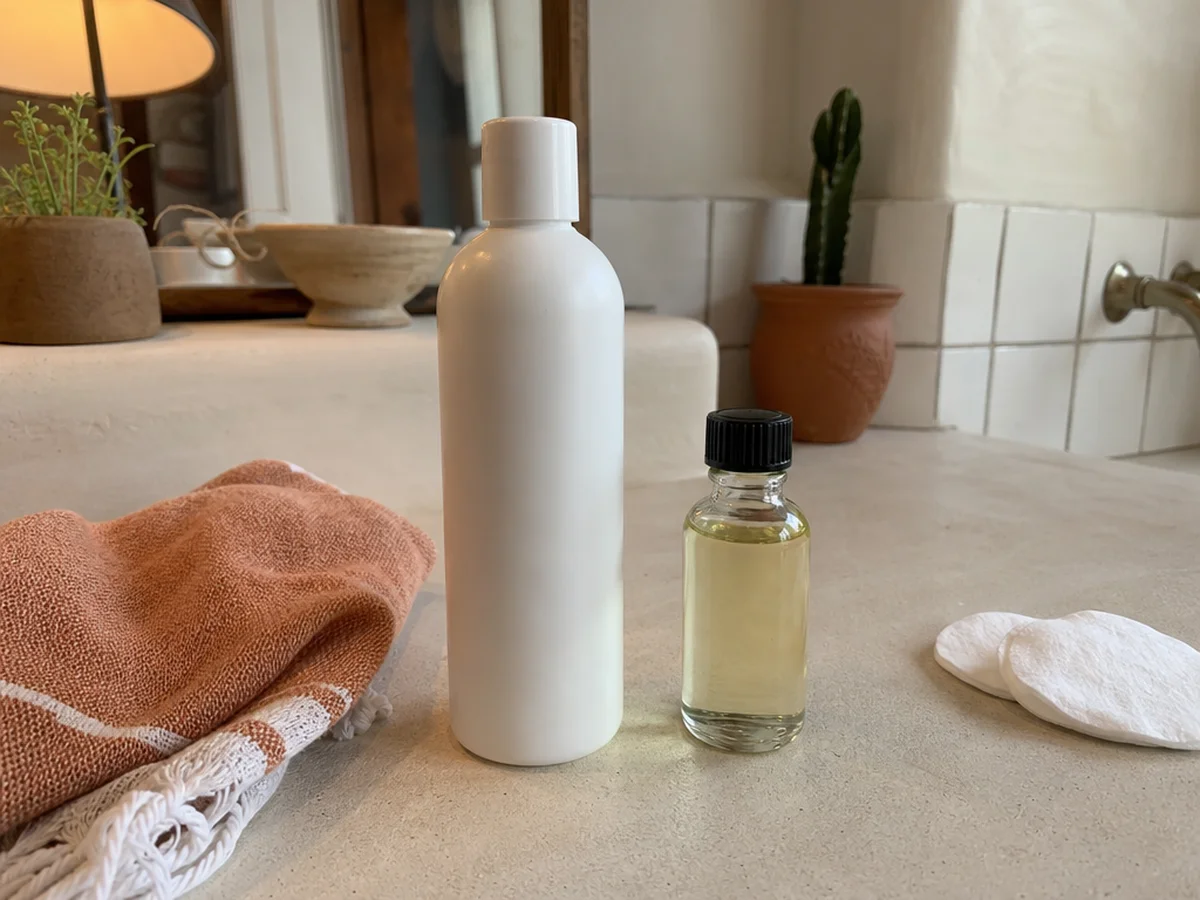
On dry skin, the dermatologists at the American Academy of Dermatology emphasize habits more than ingredients: moisturize while skin is still damp from the bath or shower, keep showers short and warm, and choose fragrance-free products. A small randomized pilot found that almond, coconut and jojoba oil and white petrolatum all raised skin hydration over two weeks, with no significant differences among them, and participants liked almond oil best. A light, pleasant oil used well is a fine addition to a routine like that. Our skin guide goes through it, and the science behind almond oil maps the wider research.
A few easy ways to start
If you are new to it, keep things simple. Put a few drops in your palm after a shower and smooth it over your arms while your skin is still damp. Use a little on your hands in the evening. Or pour some into a small bowl and warm it for a massage. A little goes a long way, which is part of the pleasure: a small bottle lasts a good while, and you will quickly learn how much suits you.
Notice how the scent behaves too. It is gentle enough that it will not fight with the soap or the essential oil you pair it with, and for many people that quietness is the reason they keep a bottle on the shelf.
What it is not for
Our oil is cosmetic grade, so it is not for eating or cooking; for a kitchen oil you want a food-grade product from a food seller. We make no medical claims, so it is not a treatment for any condition, and anything that looks like a skin problem belongs with a dermatologist or other clinician. We do not sell food oils, baby products, lip products or lubricants, and other sellers cover those uses.
Using it well, and choosing a size
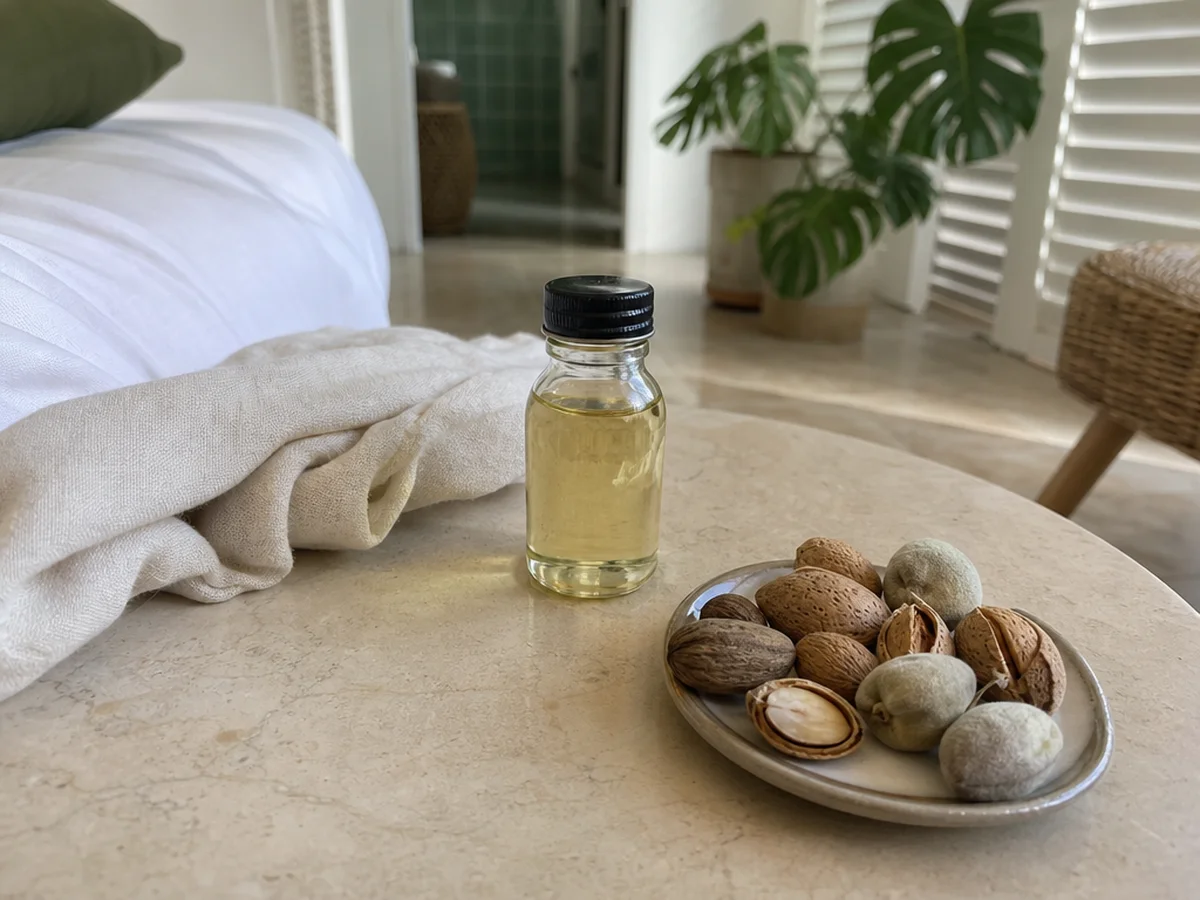
Patch test a small area and wait a day before wider use, and keep the oil away from your eyes. Unsaturated plant oils age, so store the bottle cool and dark and plan to use it within about a year of pressing; our bottles carry a pressing date, bottling date and lot number, so you can always tell. A changed smell is a reason to stop. If you need results beyond our one-batch certificate, such as peroxide value or fatty acid data, ask us in writing through the contact page.
We sell the oil in ten sizes, from 0.5 oz to 440 lb, so the best size is the one you will use inside the date. Our bulk buying guide is for larger purchases, and the buyer's guide sets out how to compare any seller's label. Begin with the allergy question, then the label, then what you actually want to do with the oil, and the rest falls into place.
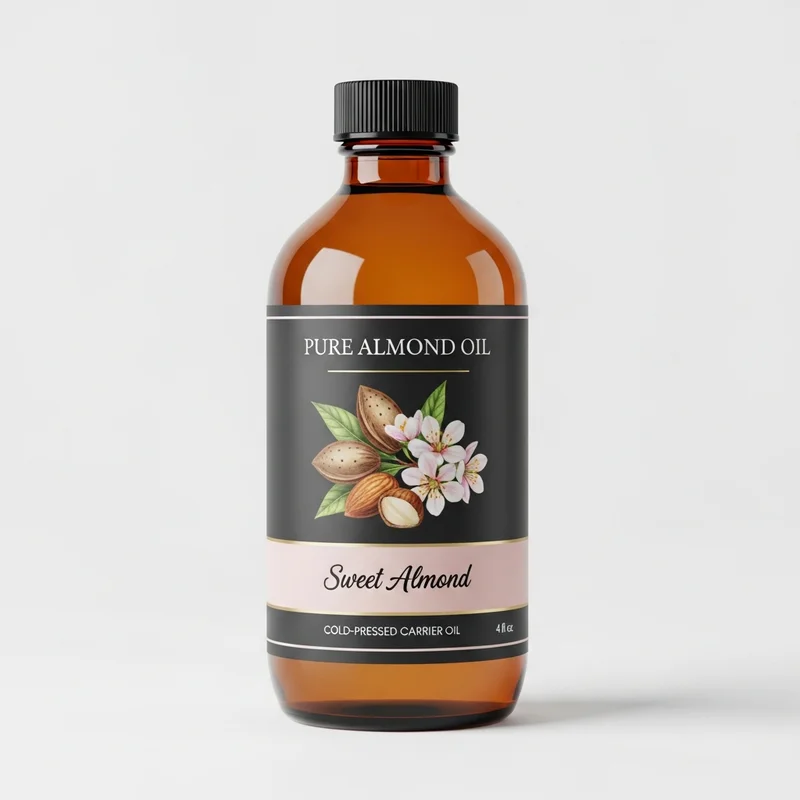
Sweet Almond Oil
Sweet Almond Oil from our own shop, in sizes from 0.5 oz to bulk.
From $9.99
Shop Now →Sources & Further Reading
- Tree Nut, Food Allergy Research & Education
- Food Allergies, U.S. Food and Drug Administration
- Effect of almond genotypes on fatty acid composition, tocopherols and mineral contents and bioactive properties of sweet almond (Prunus amygdalus Batsch spp. dulce) kernel and oils, Journal of Food Science and Technology, 2020
- Safety Assessment of Plant-Derived Fatty Acid Oils, International Journal of Toxicology, 2017
- Dermatologists' top tips for relieving dry skin, American Academy of Dermatology
- Multi-Center Randomized Clinical Study of The Effects of Natural Oils on Xerosis and Skin Barrier Properties, SKIN The Journal of Cutaneous Medicine