Cooking With Almond Oil: What Smoke Points Do Not Tell You
Search for cooking with almond oil and you will meet one tidy number: a smoke point, sometimes with a flame icon beside it. It is a tempting shortcut, and it is only part of the story. Before we get to the interesting bit, one clear note: the oil we sell is cold-pressed, unrefined and made for external cosmetic use only. We do not market it for cooking, so everything below is about food-grade almond oil bought from a food seller.
Start with the label, not the temperature
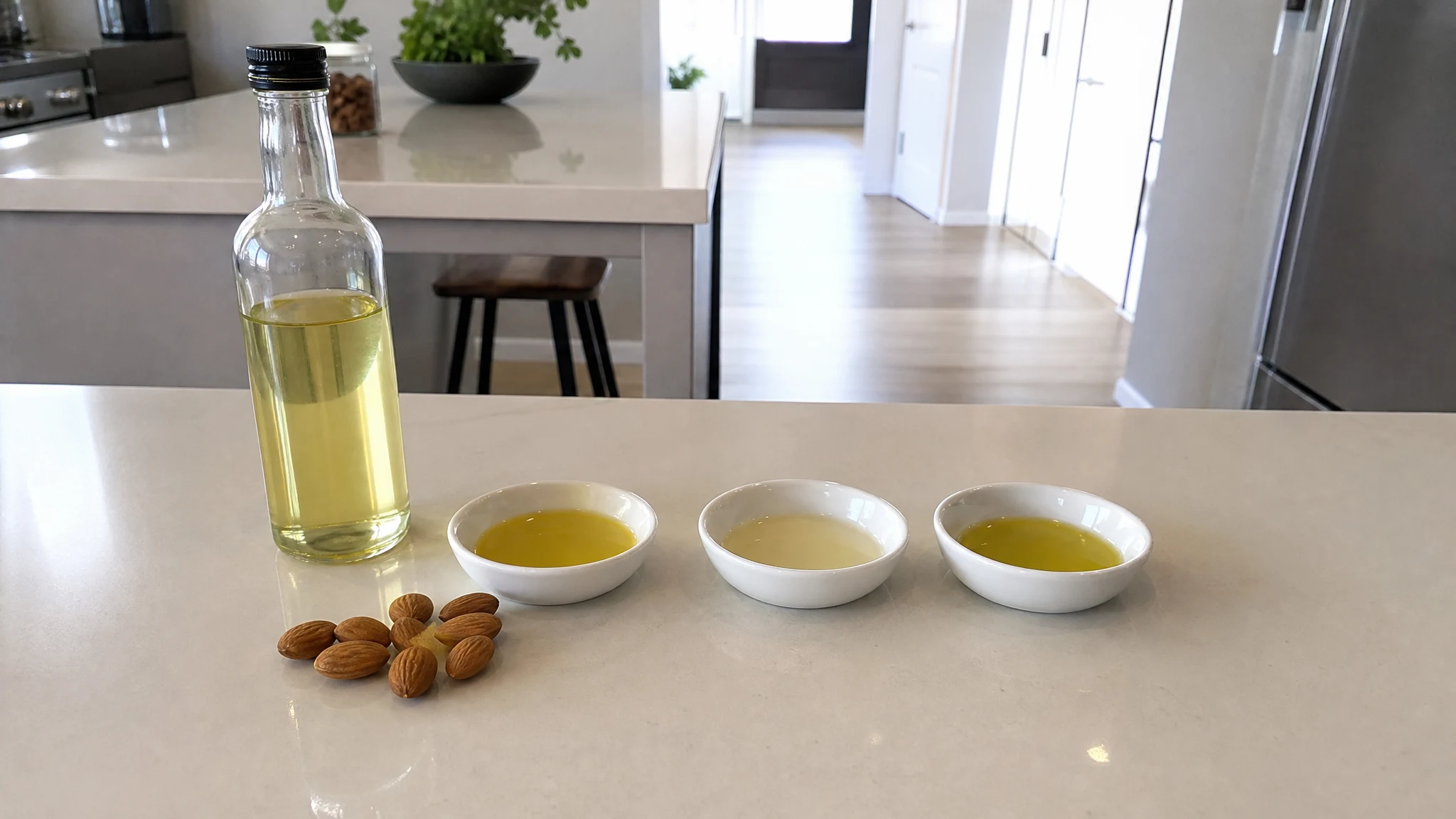
"Almond oil" is sold as at least two different things, a cosmetic carrier oil and a food oil. They share a name but not paperwork. If you plan to eat it, buy it from a food seller and read how it was made.
The label question matters for allergy, too. U.S. food law lists "tree nuts (e.g., almonds, pecans, or walnuts)" among major food allergens and excludes "any highly refined oil derived from a food" on that list (21 U.S. Code § 321 - Definitions; generally). An allergist writing for the American Academy of Allergy, Asthma and Immunology adds that refined oils generally lack the proteins that unrefined, cold-pressed oils keep, and advises asking the manufacturer whether a nut oil is refined (Food allergy: nut oils in topical products). That page is about skin products and says the topic is not well studied, so take it as a reason to ask, not a kitchen rule. Anyone with a tree nut allergy should skip unrefined almond oil, and our nut allergy post and refined versus unrefined guide go through the words on a bottle.
Why a single number falls short
A smoke point is the temperature at which an oil starts visibly smoking. It is a handy ceiling for a fresh, clean oil, but it moves: an oil that has aged, been reused or carries more free fatty acids will smoke lower. Researchers who heated common cooking oils up to 240 C and held them at 180 C for six hours concluded that smoke point did not predict how an oil held up under heat, and that oxidative stability and polyunsaturated fat content were better guides (Evaluation of Chemical and Physical Changes in Different Commercial Oils during Heating). The oils they highlighted were olive, coconut and canola, not almond, so the study does not tell us where almond would land. It simply says: do not trust the number alone.
What is in almond oil that heat touches
When oils are fried, volatile aldehydes form mostly from the oxidation of oleic, linoleic and linolenic acids; that was shown with refined soybean oil held at 180 C (The changes in the volatile aldehydes formed during the deep-fat frying process). Almond oil carries two of those. In eight California almond cultivars, oleic acid was about 58 to 74 percent of the lipids and linoleic acid about 19 to 35 percent (Fatty acid composition of California grown almonds). Reasoning from that, almond oil has a meaningful share of the more heat-sensitive linoleic acid, which suggests it is not an obvious deep-frying oil regardless of its chart number. These are general almond figures; the certificate we publish for our oil covers density, refractive index and optical rotation only.
Refined is not the same as fresh
It is easy to assume a refined oil is automatically the stable choice. One 2025 study measured a commercial refined almond oil with a peroxide value of 9.65 mEq O2/kg, and in an oxidative stability test it lasted 52.91 minutes against about 93 to 97 minutes for hexane-extracted oils from blanched almonds in the same paper (Influence of Extraction Techniques on Almond Oil Quality: A Comparative Study of Solvent-Extracted and Commercial Products). That is one sample of one product, so it says nothing about the bottle on your shelf. What it does show is that the date on the label and how an oil was kept matter as much as the grade.
Keeping a nut oil fresh
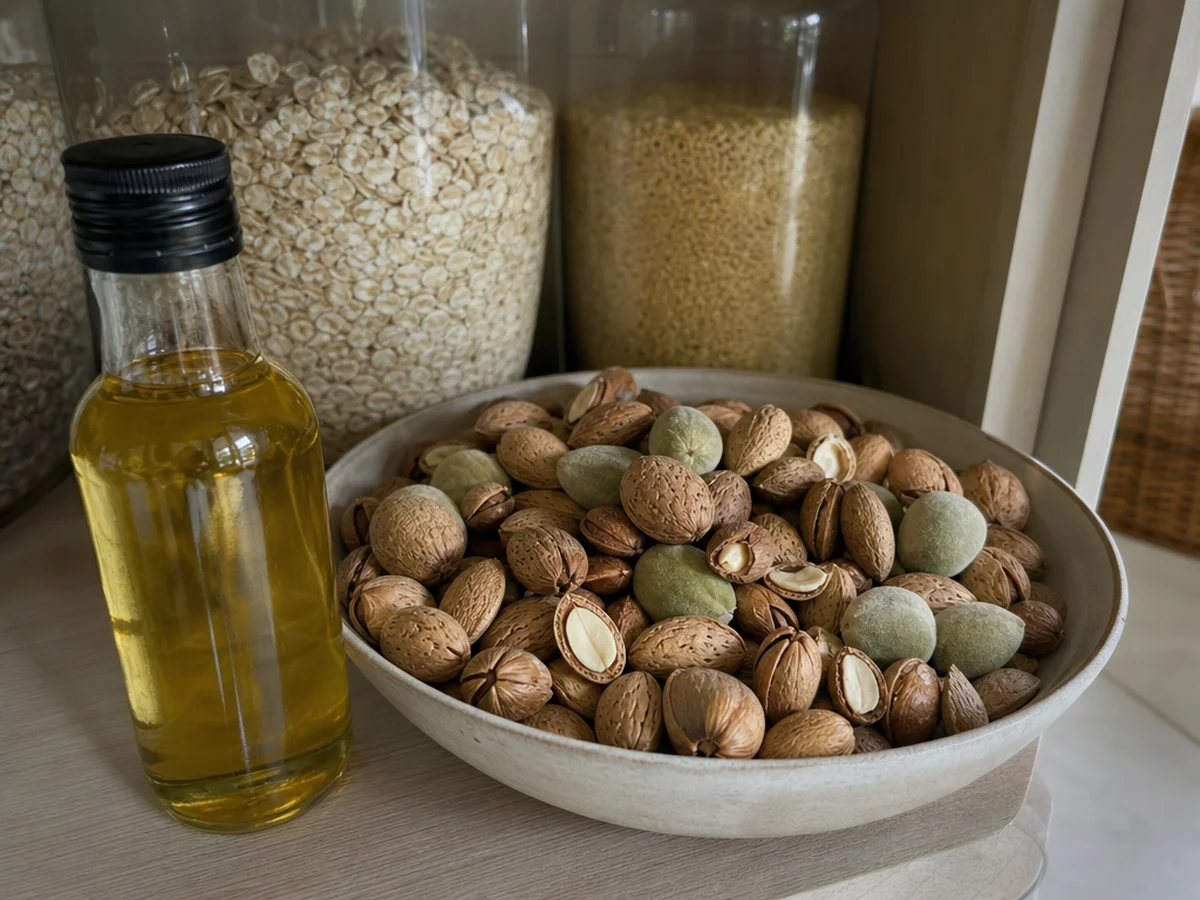
A study stored cold-pressed almond, walnut and pistachio oils for up to 16 months at several temperatures. Resistance to oxidation fell in all three whatever the conditions, and peroxide values rose faster at room temperature than in the cool; almond came second in stability, behind pistachio (Storage stability and composition changes of three cold-pressed nut oils under refrigeration and room temperature conditions). The practical lesson: buy the smallest bottle you will finish, keep it cool and dark, and see our storage post.
Where food-grade almond oil tends to shine
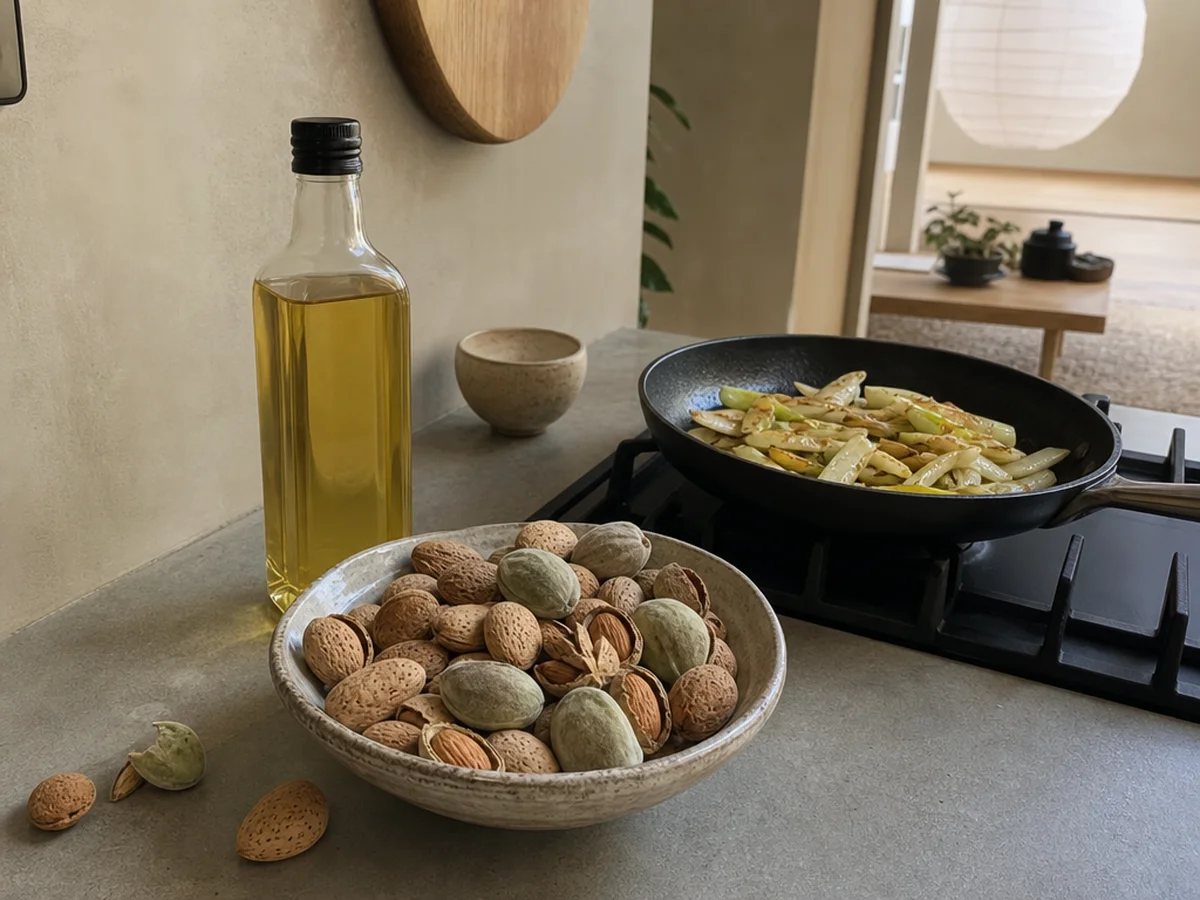
Reasoning from the chemistry above, we would keep almond oil away from high-heat searing and use it where a nut oil's flavor is the point: finishing a dish, a dressing, or gentle oven work. Our vinaigrette post and baking post take that further, and the olive oil comparison shows how the usual alternative stacks up.
Wondering whether it does something special for the heart? The American Heart Association's 2017 advisory says replacing saturated fat with unsaturated fat is sound advice, with trial evidence for polyunsaturated vegetable oils in general (Dietary Fats and Cardiovascular Disease: A Presidential Advisory From the American Heart Association). It does not single out almond oil, and questions about your own diet belong with a physician or dietitian.
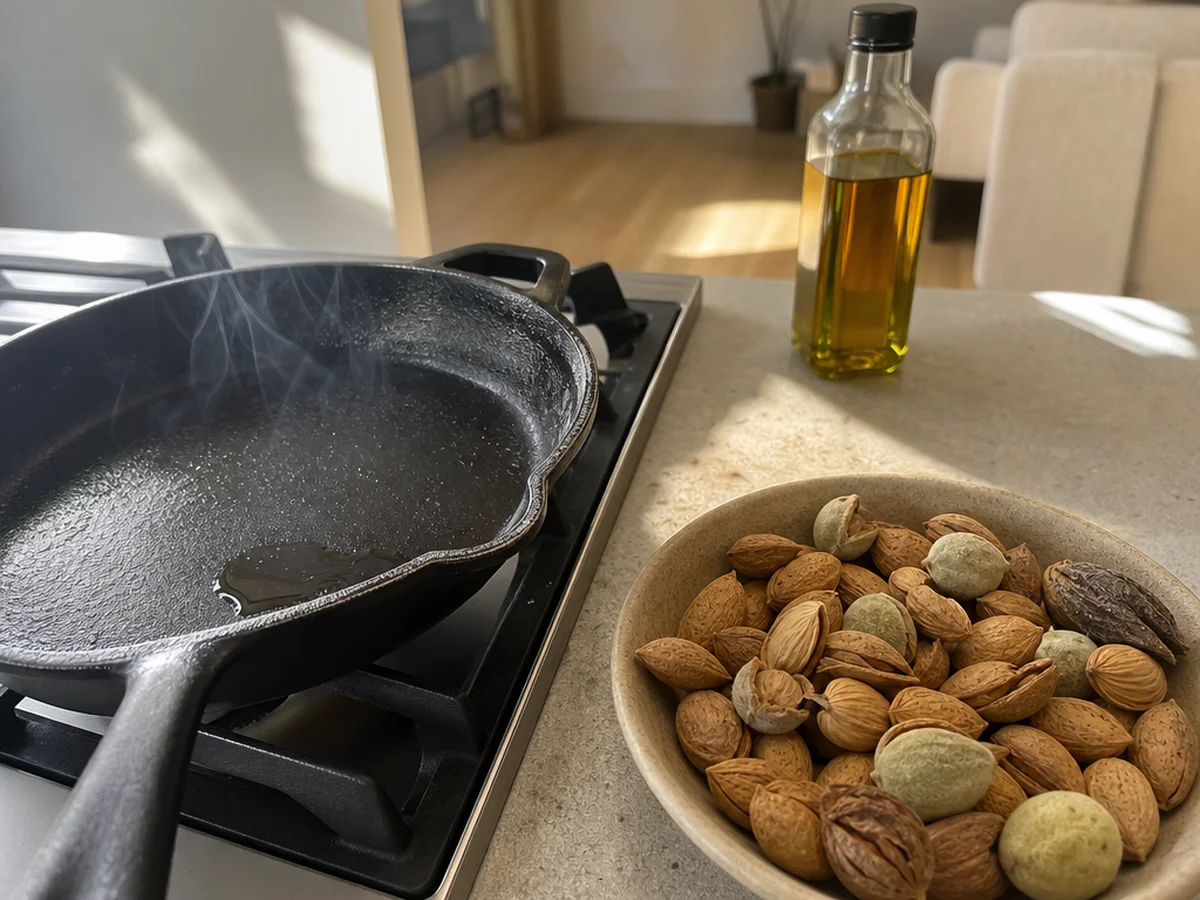
If you do cook with a food-grade almond oil, a small bottle goes a long way, and your senses are a useful guide: a fresh one smells mild and nutty, and one that smells sharp or crayon-like has had its day. Pour what you need, close the cap and keep it out of the sunny spot beside the stove.
A final label note
Sweet and bitter almond oils are different materials; we sell only sweet, and for the skin. If you cook with almond oil, treat any smoke point as a ceiling, not a target, and read the date.
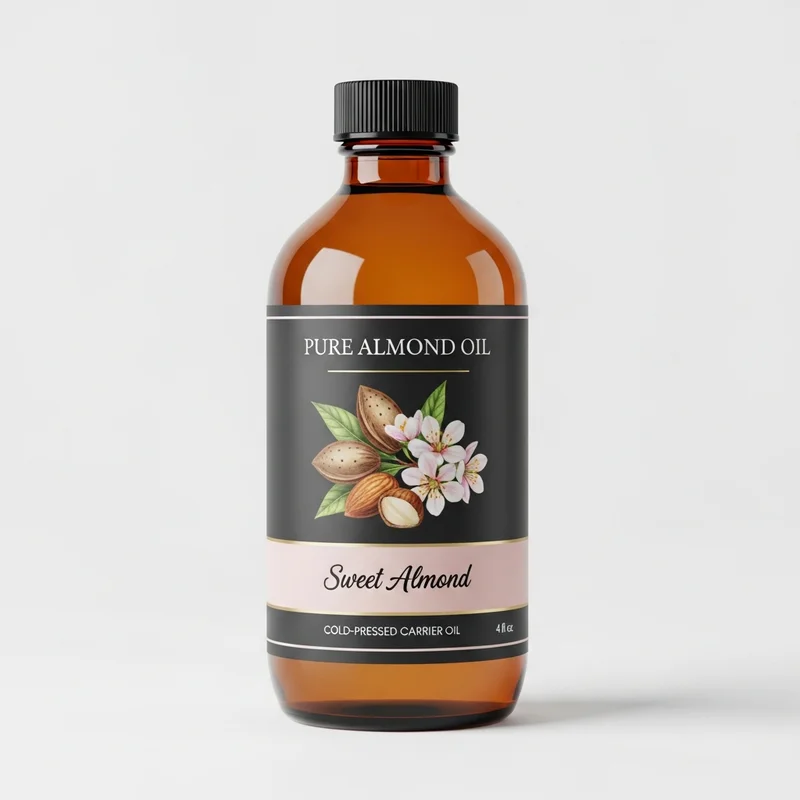
Sweet Almond Oil
Sweet Almond Oil from our own shop, in sizes from 0.5 oz to bulk.
From $9.99
Shop Now →Sources & Further Reading
- U.S. Code. 21 U.S. Code § 321 - Definitions; generally. Legal Information Institute.
- American Academy of Allergy, Asthma and Immunology. Food allergy: nut oils in topical products.
- De Alzaa F, Guillaume C, Ravetti L, 2018. Evaluation of Chemical and Physical Changes in Different Commercial Oils during Heating. Acta Scientific Nutritional Health.
- Zhang Q et al., 2015. The changes in the volatile aldehydes formed during the deep-fat frying process. J Food Sci Technol.
- Sathe SK et al., 2008. Fatty acid composition of California grown almonds. J Food Sci.
- Kozłowska M et al., 2025. Influence of Extraction Techniques on Almond Oil Quality: A Comparative Study of Solvent-Extracted and Commercial Products. Molecules.
- Rabadán A et al., 2018. Storage stability and composition changes of three cold-pressed nut oils under refrigeration and room temperature conditions. Food Chem.
- Sacks FM et al., 2017. Dietary Fats and Cardiovascular Disease: A Presidential Advisory From the American Heart Association. Circulation.