Almond Oil Vinaigrette: Ratios and Fridge Rules
A good vinaigrette takes a minute to make and shows off the oil in it. The part most recipes skip is the one that matters most for safety: what you stir in. One note first, because it is important. The oil we sell is cold-pressed, unrefined and for external cosmetic use only, so a dressing needs a food-grade almond oil from a food seller.
The ratio
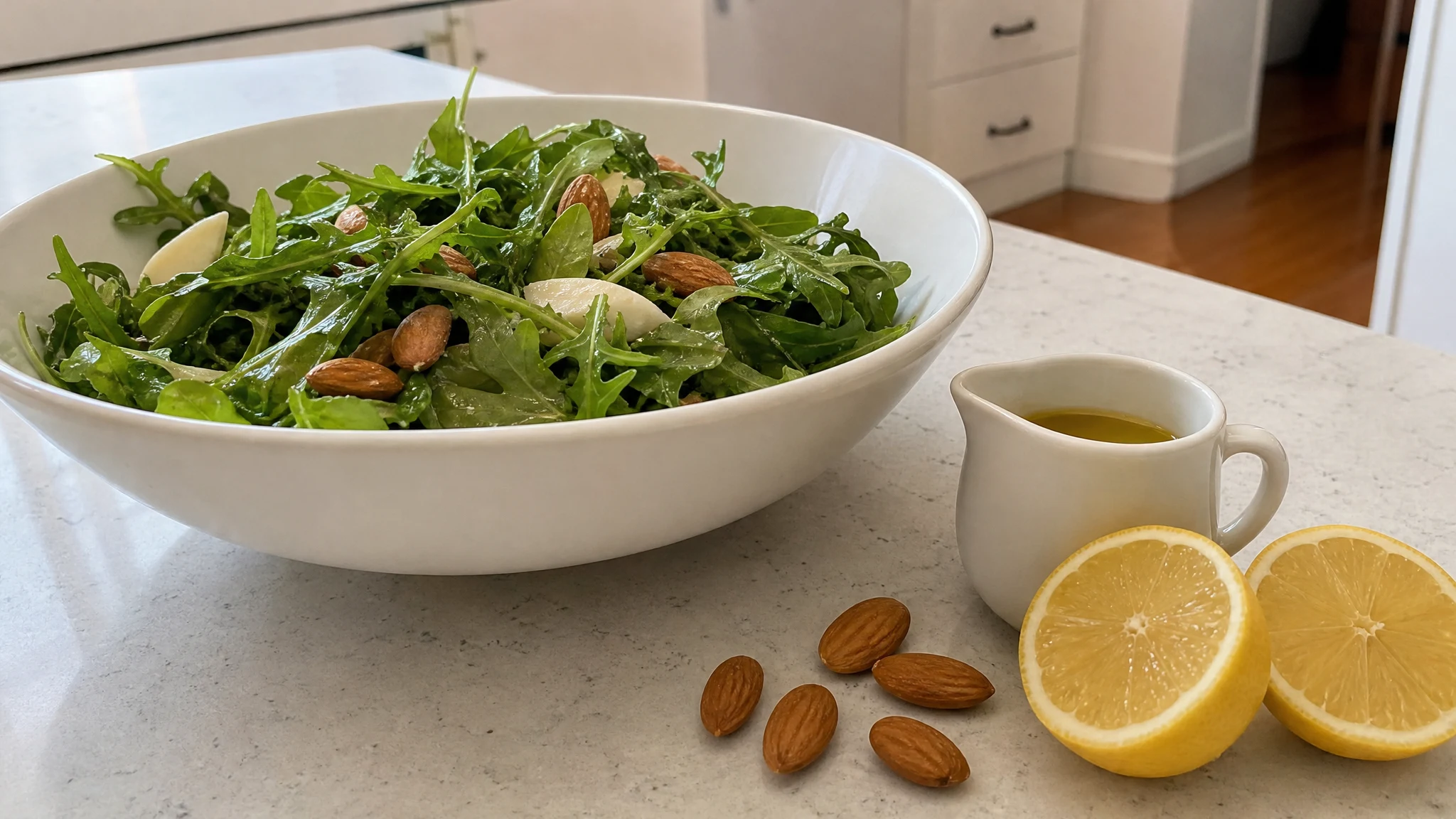
A classic starting point is three parts oil to one part acid, which is simply a suggestion, not a standard. By volume that is 75 percent oil. Three tablespoons of oil to one tablespoon of vinegar or citrus juice makes about 59 ml of dressing, plenty for a salad for two or three. For a sharper dressing move toward two parts oil to one part acid, which is about two thirds oil, and adjust one step at a time with a taste between changes.
Taste matters more than any ratio. Dip a piece of lettuce or bread into the dressing instead of a spoon, because that is how it will actually meet your food. Salt that seems perfect on a spoon can vanish on greens, and acid that seems sharp on its own often mellows once it coats a leaf. Adjust with small pinches and drops, and give it a good shake between tastes.
Whisk or shake the acid, salt and any aromatics first, then add the oil, so the salt dissolves and the dressing comes together.
Four pairings to start from
- Lemon and shallot: 3 tbsp oil, 1 tbsp lemon juice, 1 tsp finely minced shallot, salt and pepper.
- Dijon and red wine vinegar: 3 tbsp oil, 1 tbsp vinegar, 1 tsp Dijon mustard, salt.
- Rice vinegar and orange: 3 tbsp oil, 2 tsp rice vinegar, 1 tsp orange juice, a pinch of salt.
- Fresh herb: 3 tbsp oil, 1 tbsp white wine vinegar, 1 tbsp chopped parsley or chives, salt.
These are flavor pairings built on that starting ratio, to taste and to adapt, and none is a standard.
Think about what is going into the bowl. A bitter leaf stands up to a sharper dressing, and tender lettuce likes a lighter hand. Roasted vegetables and grain salads can take a bit more oil. Make the dressing in a small jar with a tight lid, so shaking is the only whisk you need, and keep it small so there is no temptation to leave leftovers around.
The fridge rule for fresh aromatics
This is the part to remember. Food safety agencies treat garlic, vegetables and herbs held in oil as a botulism risk, because they are low-acid foods in an oxygen-poor environment. The CDC's advice is to refrigerate homemade oils made using garlic or herbs and to throw away any unused oils after 4 days. Health Canada says to keep vegetables and herbs in oil in a refrigerator set at 4 C (40 F) or lower and to use the oil within one week. The two pages differ, so we follow the stricter one: dressings with fresh garlic, shallot or herbs go straight into the fridge and are discarded after four days. Make small batches and never leave the jar on the table through a meal.
Neither page is written about vinaigrette, so we are applying their advice by reasoning. A dressing with just oil, acid, salt and pepper is outside what they cover, but keeping it cold is still a good habit, for the oil's sake as much as anything.
If you want a thicker, creamier dressing that holds together longer, add the oil slowly while whisking, a thin stream at a time. A small spoonful of mustard in the acid helps the two stay friends for a few minutes. It is a pleasant technique to learn, and it makes a jar of dressing look glossy and pale instead of split and thin.
Separation is normal
Oil and vinegar part company, so shake the jar again just before dressing the salad. A dressing that has simply separated is fine. One that smells off or has sat past its days goes in the bin.
Keeping the oil fresh
A dressing is only as good as its oil. A 2018 study followed cold-pressed almond, walnut and pistachio oils for up to 16 months at several storage temperatures. Peroxide values rose faster at room temperature than at lower ones, and almond oil came second to pistachio in stability. So buy the smallest bottle you will finish, keep it cool and dark, and see our storage guide. If you are choosing between bottles, our refined versus unrefined guide explains the label.
If nuts are a concern
An allergist writing for the AAAAI says refined oils generally lack allergenic protein while unrefined, cold-pressed ones keep it, so ask the manufacturer which you have. If anyone at your table has a tree nut allergy, their allergist decides. Our nut allergy guide goes through it. Heat is not part of a dressing, so smoke points do not come into it; for the hot side see our baking post.
Shake it small, keep it cold, and let the fresh aromatics set your calendar. That is the whole method.
And remember the first thing we said: the almond oil we make is for skin and hair. A dressing deserves an oil made for the table, and a food seller is where to find it.
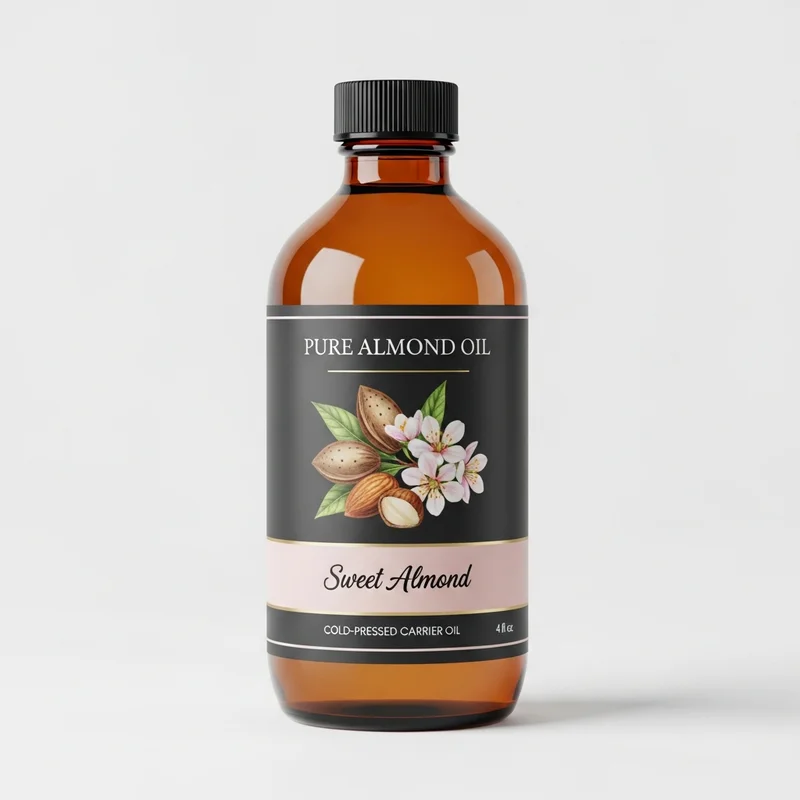
Sweet Almond Oil
Sweet Almond Oil from our own shop, in sizes from 0.5 oz to bulk.
From $9.99
Shop Now →