Almond Oil Face Oil: A Simple DIY With Two Formulas
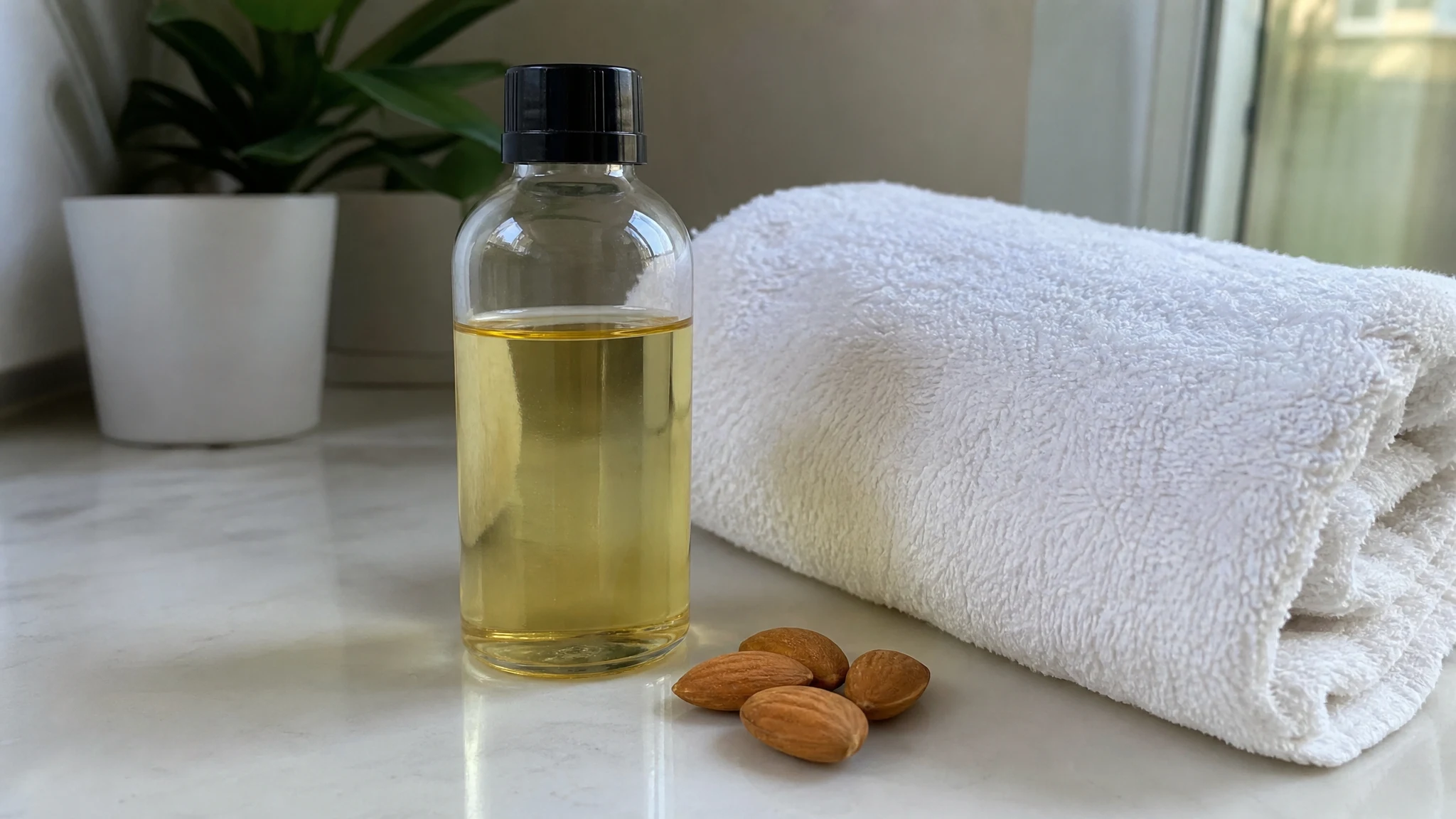
The easiest face oil you can make is almond oil in a clean bottle, and honestly, that is a fine place to stop. Everything else in this post is optional extras and sensible checks, so you can decide how far to go. The first decision is whether an oil layer suits your skin at all.
Who an oil layer suits
The American Academy of Dermatology's moisturizer guidance says someone with dry skin does well to start with a cream or ointment, while people with oily skin can consider skipping moisturizer or using a gel. An oil sits near the ointment end of that spectrum: a layer with no water in it. In practice, that points to dry or tight skin as the natural fit, ideally applied over skin that is still slightly damp. If your skin is oily or breakout-prone, you may be happier without it, and our acne-prone skin FAQ goes through the question. A rash you cannot name belongs with a dermatologist.
Almond is also a tree nut. Our oil is cold-pressed and unrefined, so trace almond protein is present, and anyone with a tree nut allergy should not use it. Our nut allergy article explains the reasoning.
How almond oil has done in trials
One small randomized pilot compared almond oil, coconut oil, jojoba oil and white petrolatum, applied twice daily for two weeks to 32 people who finished. All four raised skin hydration by week two, none differed significantly from the others, and almond oil was the one participants liked best (38%), with coconut next (31%). The page does not say which almond oil was used. We read that as a friendly result: almond oil holds its own as a moisturizer, and people enjoy using it. It does not show it beats the others, and it does not show that a more complicated blend does better. Our face routine post covers more.
Two formulas, by weight
We weigh rather than count drops; the Tisserand Institute notes that drop conversions "are always approximate." These are example formulas for a 50 g bottle:
| Ingredient | Plain version | Two-oil version |
|---|---|---|
| Sweet almond oil | 49.75 g (99.5%) | 45.00 g (90%) |
| Jojoba oil | none | 4.75 g (9.5%) |
| Essential oil (optional) | 0.25 g (0.5%) | 0.25 g (0.5%) |
At the density of the batch on our Certificate of Analysis (0.918), 45 g of almond oil is about 49 ml, a little over 3 tablespoons. The 0.5% scent level sits inside the Tisserand Institute's 0.5% to 1.2% range for facial cosmetics and its 0.2% to 1% for sensitive skin, and the advice there is to start low. In a 1 oz bottle of almond oil (about 27 g) that is only around 0.14 g of essential oil, easy to overshoot by hand, so many people leave scent out. Our oil has its own soft, subtly nutty aroma. Our blending article explains the weights, and the jojoba, essential oil and bottles come from a supplier or craft shop, since we sell the almond oil on its own.
Choosing the bottle
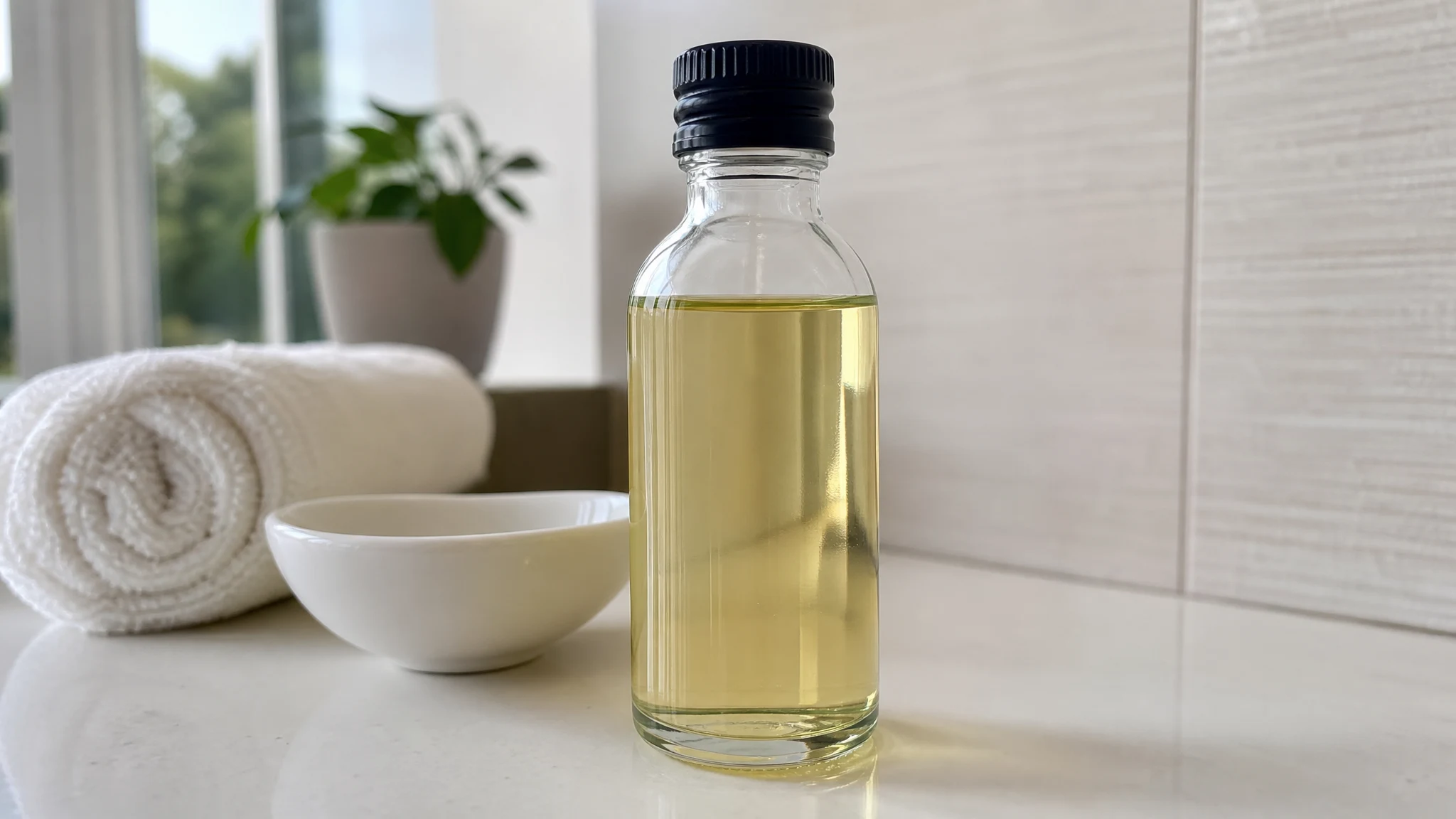
The bottle is half the pleasure. A small glass bottle with a dropper or a pump looks handsome on a shelf and is easy to dose, and a dark glass bottle keeps light off the oil. Pick one with an opening you can clean properly, because a bottle you cannot wash well is not worth the trouble. Check the lid too: a dropper that fits snugly means fewer drips on the bathroom counter, and a little less oil on your fingertips each time. You will find bottles like this at craft and supply shops.
Making it
- Wash the bottle and tools in hot soapy water and let them dry completely. Leftover water is the one thing the blend cannot have.
- Set the bottle on a scale, tare it, and weigh the almond oil in. Add jojoba if using, and the essential oil last.
- Cap and tilt the bottle end to end for about a minute. The oils mix without heat.
- Label it with the date made, the ingredients and the essential oil percentage.
- Keep it cool, dark and capped.
We say our oil keeps about a year from pressing when stored cool and dark, and a blend is only as fresh as its oldest ingredient, so note the pressing or bottling date of what you used. Our storage article has the details.
What to notice as you use it
For the first week, treat the blend as a small experiment you watch closely. Press two or three drops into slightly damp skin, wait a minute, and see how your face feels. If it feels soft and comfortable, you have found your amount. If it feels slick, use fewer drops. If you want to try the two-oil version, make it separately and use it on different days from the plain one, so you can compare them. Keep notes on the label date, and smell the oil each time you open the bottle: it should smell softly of almonds and nothing sharp.
Keep it simple, and keep it dry
We would leave out water, aloe, hydrosols and honey. The FDA's page on cosmetic microbiology lists contaminated water, ineffective preservation and warm, damp storage among the routes to contamination, and an oil-only blend avoids the problem. Once water is in, you need a broad-spectrum preservative and a cosmetic chemist's review. The FDA also notes that people can make cosmetics at home but are responsible for their safety and labeling, so read its homemade cosmetics fact sheet before you give or sell any.
Test the finished blend
Patch test the blend, not just the oil. The dermatologists' method is a quarter-sized spot on the inner arm or elbow, twice a day for 7 to 10 days, stopping if skin turns red, itchy or swollen. Our own request is a small area and a day's wait, and for a face product the longer test is the better standard. Our patch testing guide has the steps. A simple oil, a clean bottle and a careful test are all you need to enjoy this.
Sweet Almond Oil
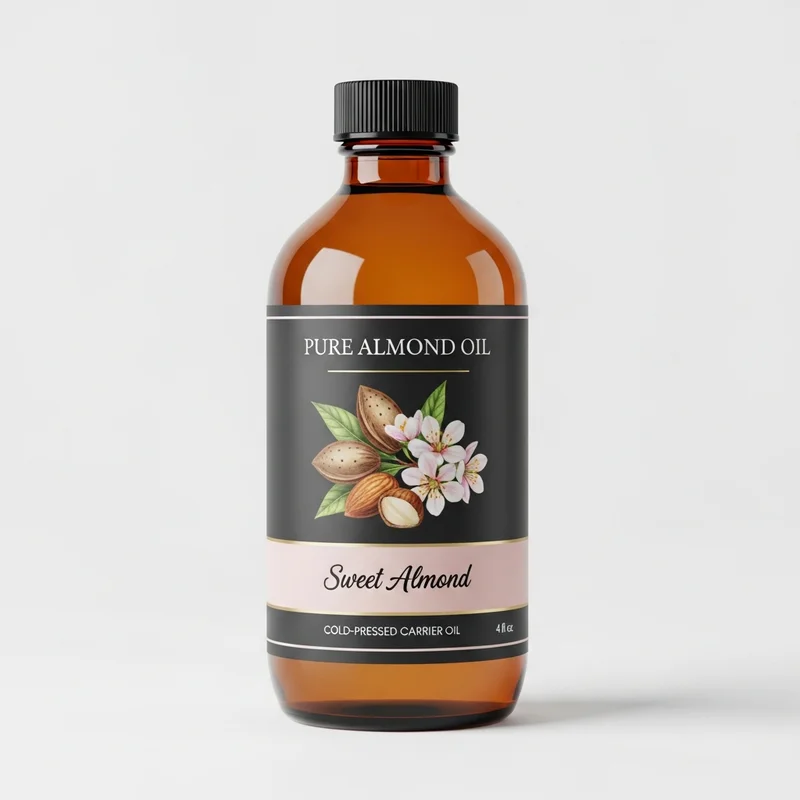
Sweet Almond Oil from our own shop, in sizes from 0.5 oz to bulk.
From $9.99
Shop Now →Sources & Further Reading
- American Academy of Dermatology, How to pick the right moisturizer for your skin
- Vaughn et al., 2018. Multi-Center Randomized Clinical Study of The Effects of Natural Oils on Xerosis and Skin Barrier Properties. SKIN The Journal of Cutaneous Medicine.
- Tisserand Institute, Dilution for essential oils
- American Academy of Dermatology, How to test skin care products
- US Food and Drug Administration, Microbiological Safety and Cosmetics
- US Food and Drug Administration, Small Businesses & Homemade Cosmetics: Fact Sheet