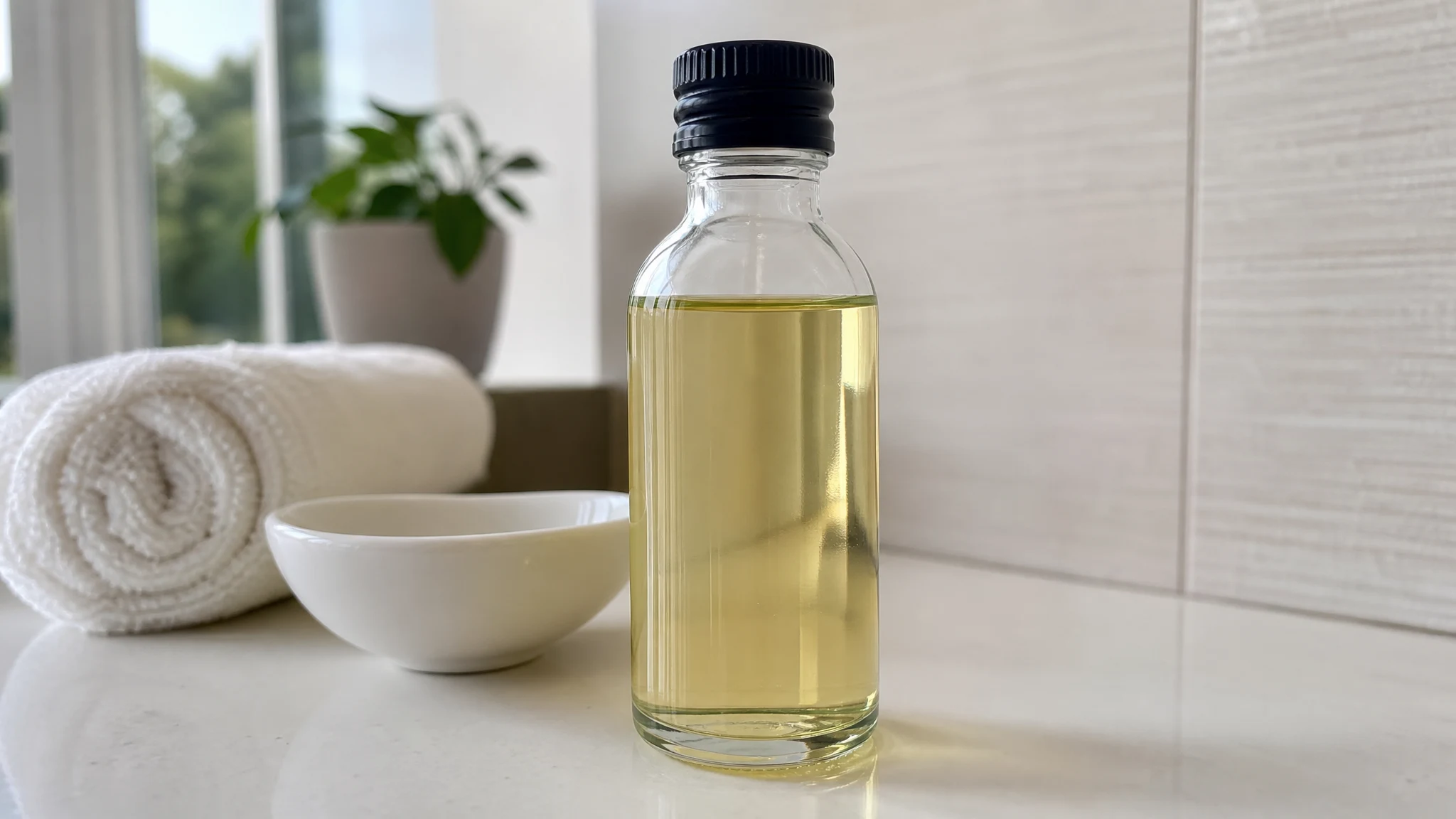
Almond Oil and Fine Lines: What Moisture Can Do
Hydrated skin looks smoother, and that is the honest promise of any moisturizer, almond oil included. It is a pleasant, visible effect that lasts as long as the moisture does. It is also different from changing the skin itself, so this article is about getting the most out of the first and keeping the second in perspective.
What moisture does for the look of skin
The American Academy of Dermatology names sunscreen and moisturizer as the two most effective products in a skin care routine, and reminds shoppers that skin care products deliver modest results. We like that honest framing. A good moisturizer leaves skin feeling soft and smooth, and a well-hydrated surface reflects light more evenly. That is the effect we describe for our oil: it moisturizes dry skin and leaves it feeling soft. We make no claim that it changes the skin's structure or the lines themselves.
Almond oil does well here. In a randomized pilot study of people with dry skin, Vaughn and colleagues had participants apply almond oil, coconut oil, jojoba oil or white petrolatum twice a day for two weeks. Almond oil, jojoba oil and coconut oil each significantly increased skin hydration, with results comparable to petrolatum, and almond oil and coconut oil were the most liked by participants. It was a small study of 32 people who finished, and it measured hydration, not lines. But it is a nice, grounded reason to enjoy an oil as part of your routine.
What smoother looking means in daily life
It helps to be concrete about what you can expect to see. When skin is dry, tiny flakes and a rough surface scatter light, and the face can look dull and a little creased, especially by midday. After a moisturizer, the surface feels softer and a bit more even, and the skin often looks fresher. You will notice this most on the places where skin is thin and dry, like the cheeks and the backs of the hands. It is a temporary, surface-level pleasure, and a perfectly good reason to keep a bottle on the shelf.
Where sunscreen fits
If you want one evidence-based habit for skin that looks its best over the years, it is daily sunscreen. In an Australian trial of 903 adults under 55, the group assigned to daily broad-spectrum sunscreen showed no detectable increase in skin aging over 4.5 years, and aging from baseline was 24 percent less than in the group using it only when they chose to. That finding belongs to sunscreen, not to oils. Almond oil is not a sunscreen, a point we cover in our SPF myth article, so layer the two as separate steps.
A few minutes that make a difference
Routine matters more than any single product. If you can give yourself two quiet minutes in the morning and again in the evening, you will do more for how your skin looks than any bottle. Wash gently, pat the skin until it is only a little damp, and press the oil in with flat palms rather than tugging at the skin. Pressing, not rubbing, is a kinder gesture, and it feels pleasant, too.
It is also worth taking a photo in the same natural light once a month. Not to judge yourself, but because change is so gradual that your mirror will not show it, and a photo gives you a calmer view of what is actually happening.
Using the oil well
- Apply it while skin is still damp. The AAD's dry skin advice is to moisturize right after a shower or bath, after washing your hands, and whenever skin feels dry. A few drops pressed into damp skin spread easily, and our oil absorbs quickly with a soft, non-greasy finish.
- Gently massage it in. The AAD recommends taking time to massage a moisturizer into skin.
- Add one new product at a time. The AAD notes that using more than one anti-aging product in a few days or weeks can irritate skin, so if you are introducing the oil, let it be the only new thing for a couple of weeks.
- Choose fragrance-free if your skin is easily bothered. Blending in essential oils creates a fragranced product, and our blending guide covers the dilution limits.
The AAD's guidance on very dry skin favors creams and ointments, which add more moisture than lotions, and an oil works well alone or over a cream. Our dry skin article goes deeper on that.
The small-business-owner view
We would rather tell you something honest than sell you a promise. A bottle of almond oil is a pleasant, simple moisturizer with a lovely scent and a silky feel. If you want a long-term plan for how your skin looks, start with sunscreen and a dermatologist's advice, and let the oil be the part that feels good. We think that is a better way to enjoy it, and it is the way we recommend using ours.
Who should skip our oil on the face
Almond is a tree nut. Our oil is cold-pressed and unrefined, so trace almond protein is present, and if you have a tree nut allergy you should not use it; our nut allergy article explains more. If your skin is breakout-prone, a dermatologist is the right person to ask, and our acne-prone skin FAQ sets out what we know. Always patch test first; our patch test guide shows how.
A moisturizing oil, a daily sunscreen and a bit of patience make a very good routine, and the oil is the part that feels like a treat. Warm it between your palms, press it in, and enjoy the scent while you are at it.

Sweet Almond Oil
Sweet Almond Oil from our own shop, in sizes from 0.5 oz to bulk.
From $9.99
Shop Now →Sources & Further Reading
- American Academy of Dermatology: How to select anti-aging skin care products
- American Academy of Dermatology: Dermatologists' top tips for relieving dry skin
- Vaughn A, Nguyen M, Maarouf M, et al. Multi-Center Randomized Clinical Study of The Effects of Natural Oils on Xerosis and Skin Barrier Properties. SKIN The Journal of Cutaneous Medicine, 2018
- Hughes MC, Williams GM, Baker P, Green AC. Sunscreen and prevention of skin aging: a randomized trial. Ann Intern Med, 2013