Abhyanga With Almond Oil: A Warm Self-Massage Routine
Abhyanga is the Ayurvedic habit of massaging warm oil over the whole body, usually before a bath or shower. It is less a technique than a pause in the day: slow strokes, a little warmth, no screens. Sweet almond oil, with its light feel and soft nutty aroma, is a pleasant oil to do it with.
What we can honestly say about it
A 2026 randomized trial in Frontiers in Sports and Active Living gave 42 young men with tight hamstrings either stretching alone or stretching plus a daily self-massage called Nitya-Abhyanga for four weeks. Both groups improved, and the self-massage group improved more on several flexibility measures. It is a nice study to know about, with limits worth keeping in mind: the volunteers were young men, the comparison included extra touch and time, and the abstract does not name the oil. It tells us nothing specific about almond oil.
So we offer abhyanga as a routine to enjoy. Warm skin, unhurried hands and a quiet ten minutes are reason enough, and we leave the bigger promises to the people who can back them up.
Check first: almond is a tree nut
This matters more for a whole-body routine than for a dab on one hand, because a lot of skin is covered, often daily. Our sweet almond oil is cold-pressed and unrefined, so trace almond protein is present, and if you have a tree nut allergy you should not use it. The American Academy of Allergy, Asthma and Immunology explains that whether a nut oil carries allergenic protein depends on how it was extracted, and that unrefined, cold-pressed oils retain it. Before your first full session, put a little on a small area and wait a day, as our patch testing guide describes. Our nut allergy article has the longer story. Skip any area with a rash, open skin or sunburn, and if you have a skin condition, ask your dermatologist before starting a daily habit.
Warming the oil
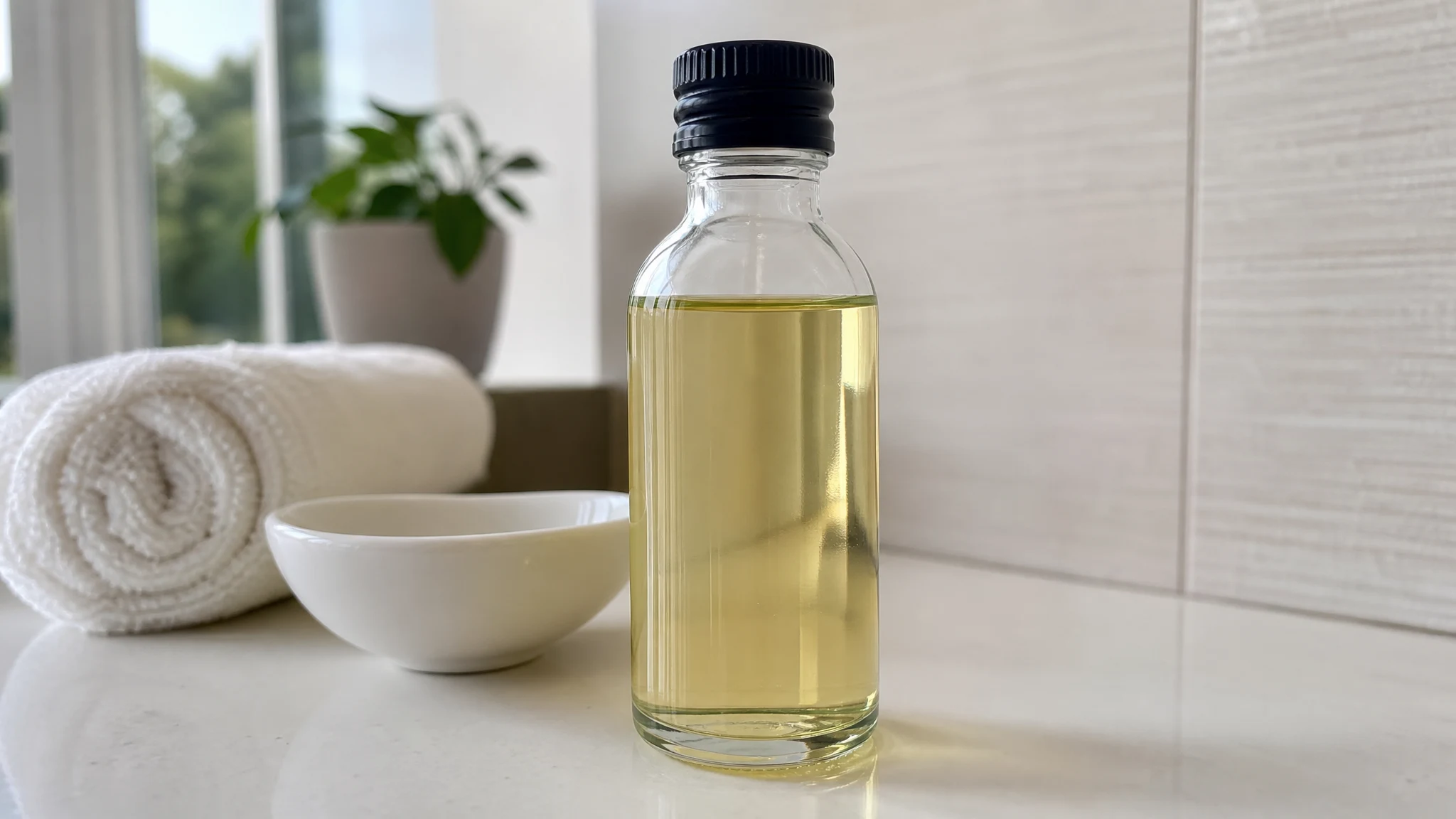
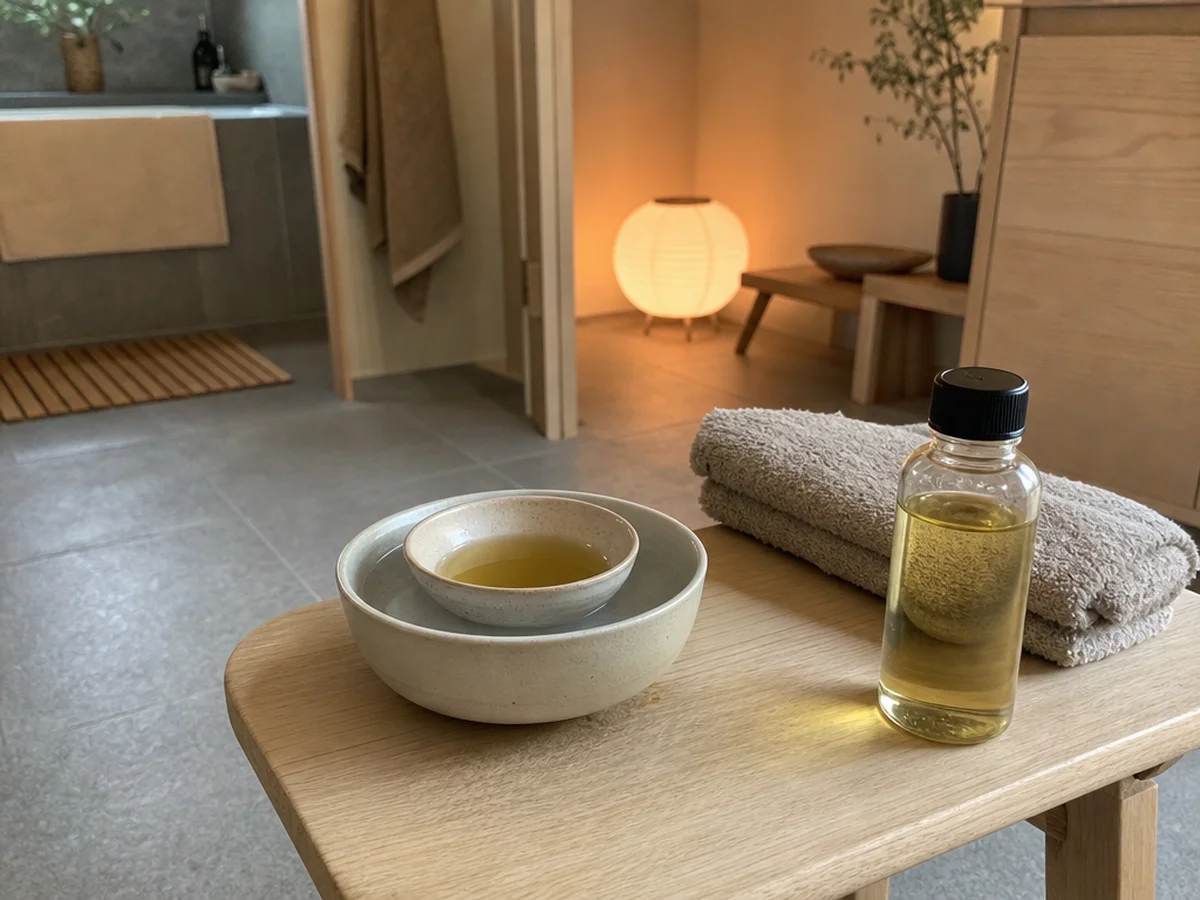
Warm oil is the signature of abhyanga, and a gentle method keeps it enjoyable. This is our practical suggestion rather than a sourced protocol. Stand the capped bottle in a bowl of hot tap water for a few minutes, then put a drop on the inside of your wrist. It should feel like a comfortable bath. We would skip the microwave and the stove, since oil can heat unevenly and a quick touch will not always catch a hot spot. Pour out only what you need for the session and do not return leftovers to the bottle.
How much to use
Two tablespoons is about 29.6 ml, close to 1 oz. At the density of the batch on our Certificate of Analysis (0.918 at 20 C), that weighs about 27 g. We offer this as a starting estimate; use less if your skin feels slick for hours. A 16 oz bottle holds about 473 ml, which is roughly 16 sessions at that amount. We say our oil keeps for about a year from pressing when stored cool and dark, so pick a bottle size that matches the pace you will really keep, and see our storage article for keeping it fresh.
Setting the scene
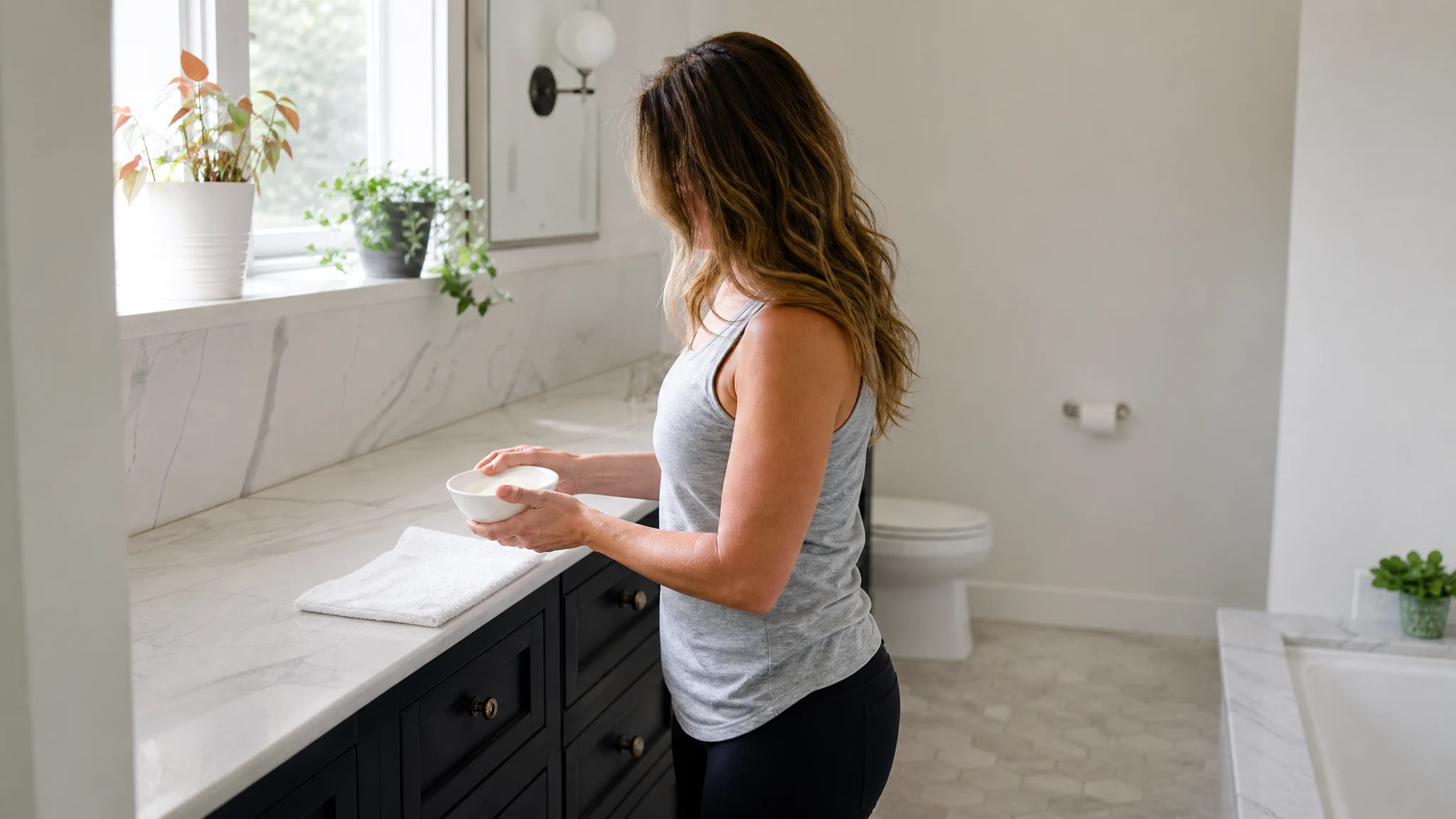
Before you pour anything, set up the room. Lay a big towel on the floor or a chair, keep a second towel within reach, and turn the heating up a notch so you are not shivering on bare skin. Put your phone in another room. Then open the bottle and notice the aroma: it is soft, faintly sweet and nutty, nothing like a perfumed body oil, and you may find that quiet scent is part of why the routine feels like a pause.
The session
There is no single official order of strokes, and teachers vary, so we will not pretend otherwise. What works for nearly everyone: use open palms, slow even strokes and a pressure you would welcome from a friend. Go lighter over bony areas, bruises or anywhere sore. Keep oil away from the eyes, and for a lighter face routine try oil cleansing instead. If you would like hands-on instruction, a licensed massage therapist or a qualified Ayurvedic practitioner can show you. Our comparison of almond and sesame oil for massage explains how the two handle differently, since sesame is the traditional choice.
Afterwards, you can let the oil sit a few minutes and then shower. The American Academy of Dermatology suggests warm showers or baths of about 5 to 10 minutes, patting dry and moisturizing while the skin is still damp. That advice is written for ordinary moisturizers, but it fits an oil routine nicely.
Floors and laundry
Oil makes tile slippery, so do the massage on a towel or non-slip mat and step carefully into the shower. For laundry, an insurer's loss-control page for massage businesses says oil-saturated sheets and towels can ignite in a dryer even after washing, and advises washing at 104 F or hotter and drying below 125 F. It speaks about oils in general rather than almond oil in particular. A dedicated old towel, a hot wash and a low-heat dry is an easy habit, and do not leave warm oily towels piled up.
Make it a habit you can keep
Pick a day and a time that already exist in your week, such as Sunday evening before your shower, rather than aiming for every day from the start. A short session you repeat beats an elaborate one you skip. Begin with your legs and feet, where there is plenty of room to practice, and add more areas as it becomes natural.
If dry skin is what brought you here, our dry skin article is a good companion. Mostly, abhyanga is about slowing down, and a warm bottle and a clear ten minutes are all it asks for.

Sweet Almond Oil
Sweet Almond Oil from our own shop, in sizes from 0.5 oz to bulk.
From $9.99
Shop Now →Sources & Further Reading
- John TJ, Dileep A, Madhavan VR, Sudha M, Robin DT, 2026. Effect of Nitya-Abhyanga (self-massage) combined with stretching on hamstring extensibility, muscle stiffness, and stretch tolerance in college students: a randomized controlled trial. Front Sports Act Living.
- American Academy of Allergy, Asthma and Immunology, Food allergy: nut oils in topical products
- American Academy of Dermatology, Dermatologists' top tips for relieving dry skin
- Great American Insurance Group, Avoid Fires from Massage Oils