Oil Cleansing With Almond Oil: A Gentle Evening Routine
Picture the end of a long day in a water-resistant sunscreen. You splash your face, towel off, and feel clean. In one small photographic study, plain water left almost 60 percent of waterproof sunscreen still sitting on the skin. That gap is the best argument for oil cleansing, and it also tells you how to do it well.
Where an oil cleanse earns its place
Oil dissolves oil, which is why it is such a natural fit for sunscreen and makeup. In that study, Chen and colleagues photographed 20 volunteers before and after washing off sunscreen with water, a foaming cleanser or a cleansing oil. Against waterproof sunscreen the foaming cleanser left about 37 percent behind, while the cleansing oil left under 6 percent, close to the clean-skin baseline. Eight people in the cleanser group reported dry skin afterward, against one in the oil group.
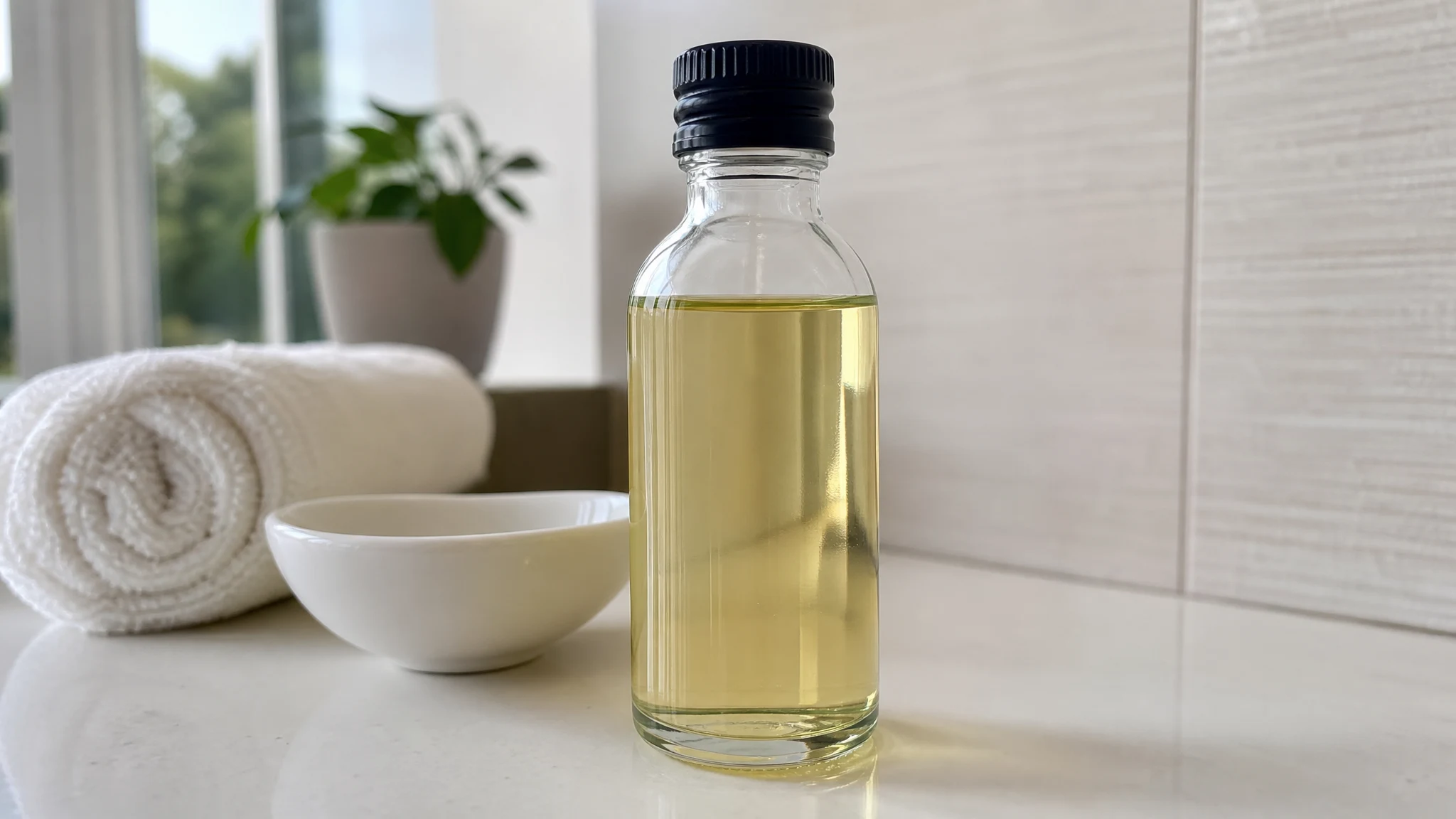
The product they used was a purpose-made cleansing oil, built to rinse away. Our sweet almond oil is a single cold-pressed ingredient with nothing added, so it does the dissolving beautifully but has nothing in it to help it leave. That is why we pair it with a second step, and it is the one part of oil cleansing people tend to skip.
A gentle evening routine
- Patch test first. Dermatologists suggest a quarter-sized spot on the inner arm, twice a day for seven to ten days (see the American Academy of Dermatology's method), and our patch test guide walks through it.
- Start with dry hands and a dry face. A few drops warmed between your palms is plenty to begin with.
- Glide it over your face with your fingertips, using slow, light circles. Stop as soon as the sunscreen or makeup looks lifted, and keep the oil away from your eyes.
- Rinse with lukewarm water, again with fingertips. The AAD advises against washcloths and mesh sponges, which can irritate.
- Follow with the mild, alcohol-free cleanser the AAD describes in its face washing guide. This second wash takes off what the oil leaves, and your skin ends up clean, not slick.
- Pat dry with a soft towel and moisturize if your skin feels dry.
Once a day, at night, covers most of what oil cleansing is for. On days without sunscreen or makeup, a gentle cleanser alone does the job, and the oil step adds little. That schedule is our suggestion from the AAD's guidance, not a studied protocol. Morning sunscreen is a separate job that oil cannot do, as we explain in our sunscreen myth article.
What you will notice as you go
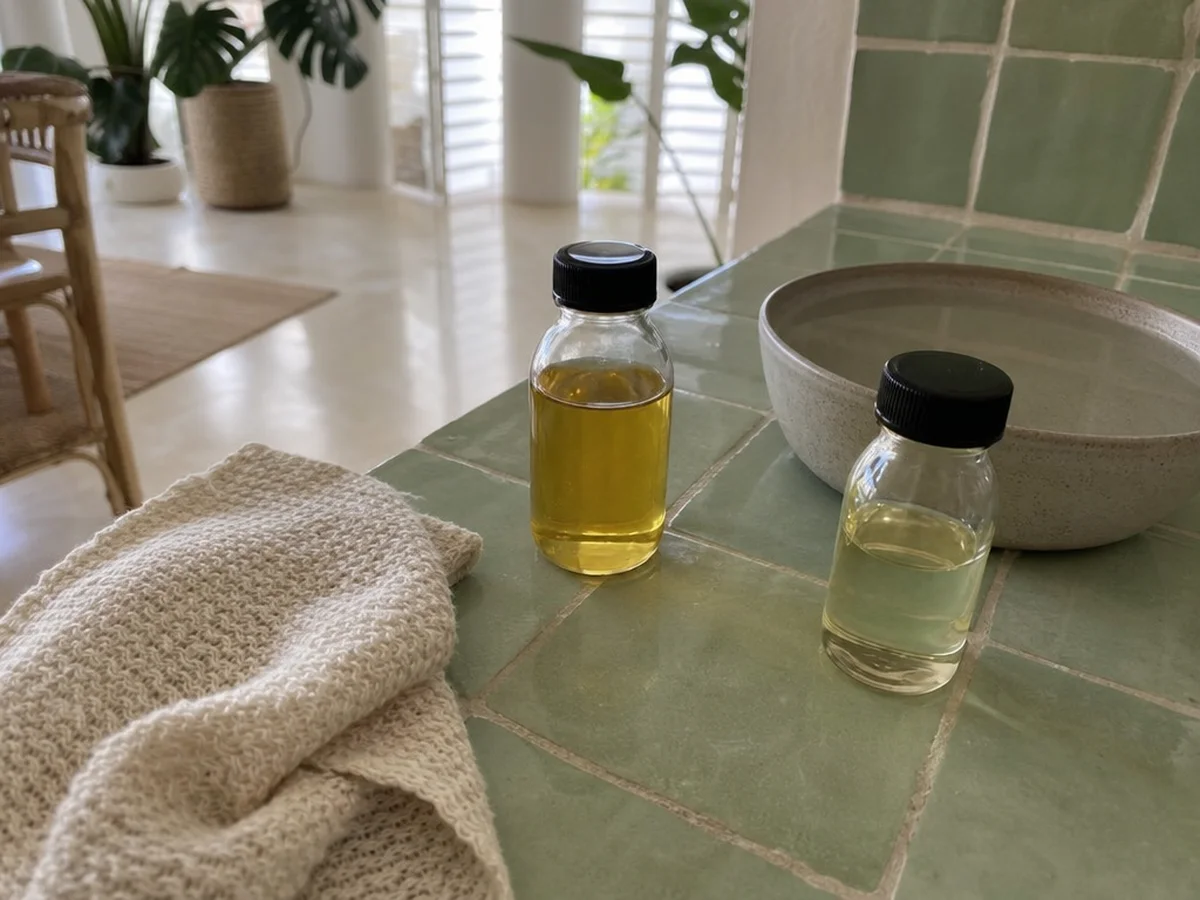
Oil cleansing is as much about touch as anything else, so slow down. Warm the oil between your palms for a few seconds and it spreads more easily. You will notice the soft glide of almond oil under your fingertips and a faint, nutty, lightly sweet aroma. As sunscreen or makeup loosens, the oil on your skin may look cloudy or tinted, which tells you it is time to rinse.
Rinsing is where the routine can go wrong. Use lukewarm water and plenty of it, in cupped handfuls, and give the hairline and the sides of the nose and jaw extra attention, since oil collects there. Then do the second, gentle cleanse.
Little extras worth having at the sink
- A clean, dry towel for your hands before you start, so no water gets into the bottle.
- A soft headband to keep hair out of the oil.
- A small amber bottle for the bathroom, with the main bottle kept somewhere cool and dark.
- A dedicated cloth or towel for patting dry, washed regularly, since oils soak into fabric.
It also helps to pick a regular time. Right after you get home, before you change into comfortable clothes, is easy to remember, and the whole routine takes only a few minutes once you have the hang of it.
A word on oily and breakout-prone skin
The AAD's page on oily skin says not to use oil-based cleansers, which it says can irritate, and to look for products labeled noncomedogenic. If your skin leans oily or acne-prone, that guidance comes first, and a dermatologist is the right person to ask. Our acne-prone skin FAQ covers what we know.
Many readers also ask whether an oil will clog pores. A small back-patch study by Draelos and DiNardo found that finished products made with ingredients rated comedogenic were not necessarily comedogenic themselves. In plain terms, an ingredient's rating does not predict how a whole routine behaves, and your own skin is the best test. Introduce the oil on its own, and give it a couple of weeks before judging.
Who should skip almond oil
Almond is a tree nut. Because our oil is cold-pressed and unrefined, it keeps trace almond protein, and an allergist writing for the AAAAI explains that unrefined nut oils retain protein that refined ones lack. If you have a tree nut allergy, please do not use our oil on your face or anywhere else. Our refined versus unrefined guide explains the difference, and our face routine article shows where an oil fits alongside everything else.
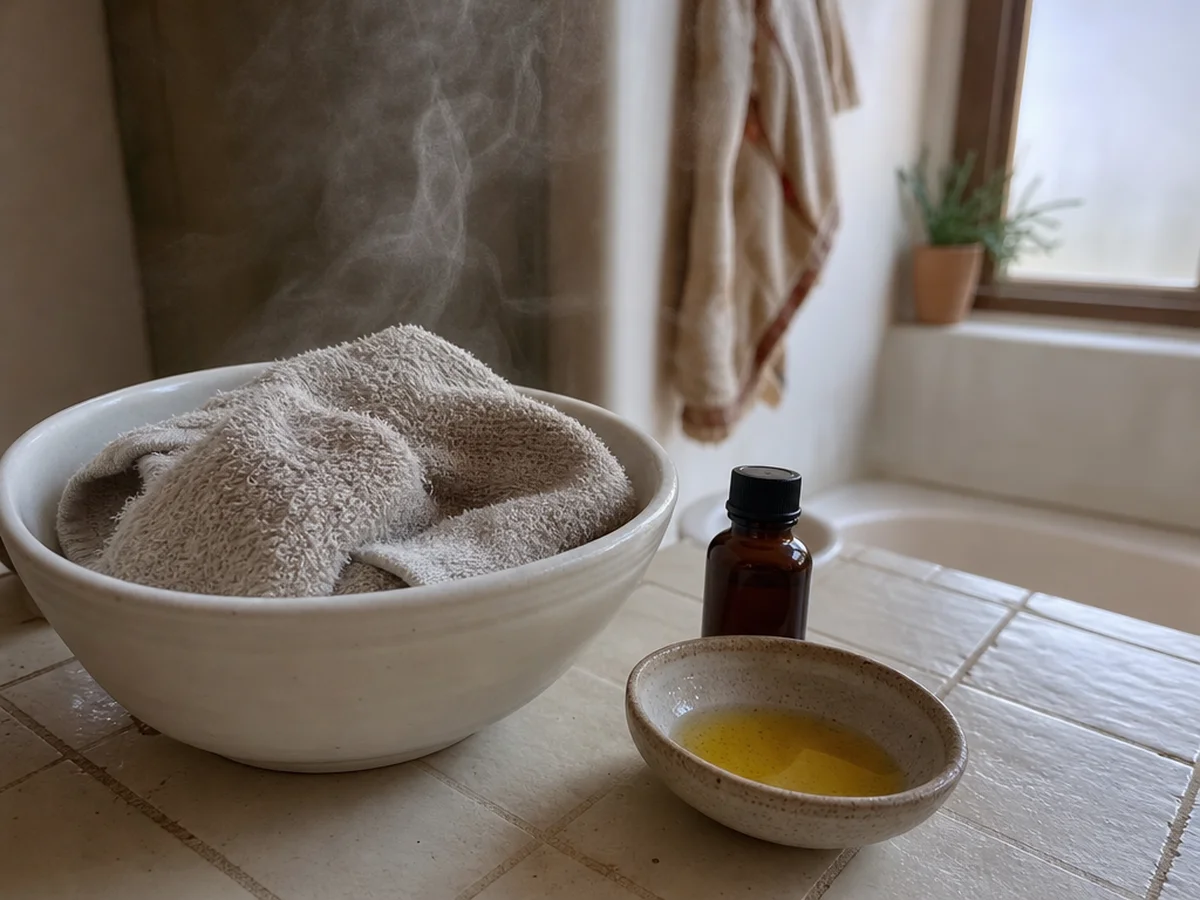
Done this way, oil cleansing is a small evening ritual: a soft, lightly nutty scent, a minute of massage, and a clean face at the end of it.
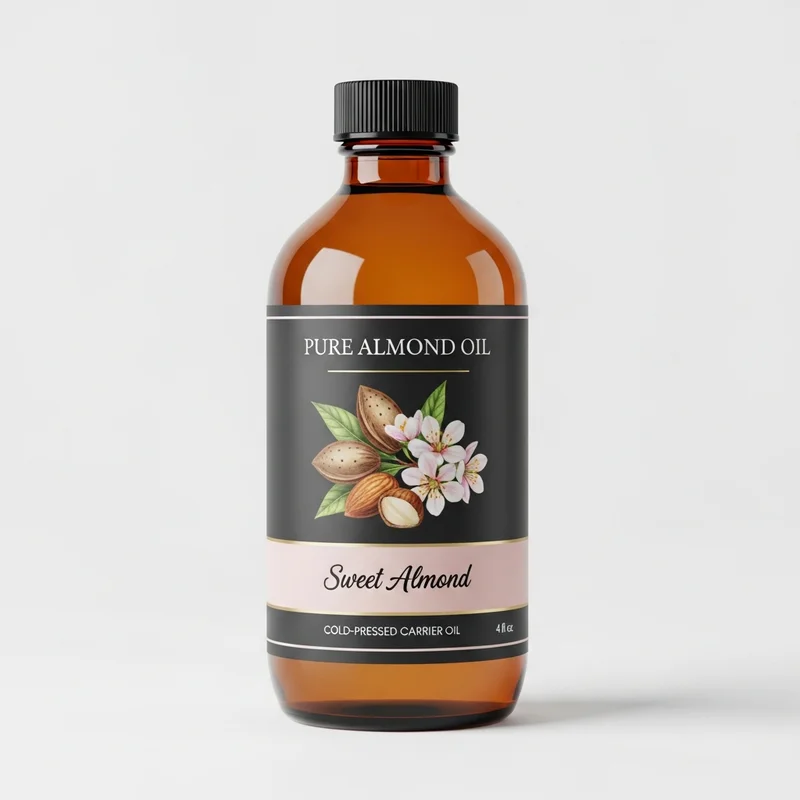
Sweet Almond Oil
Sweet Almond Oil from our own shop, in sizes from 0.5 oz to bulk.
From $9.99
Shop Now →Sources & Further Reading
- Chen W, He M, Xie L, Li L. The optimal cleansing method for the removal of sunscreen:Water, cleanser or cleansing oil? J Cosmet Dermatol, 2020
- Draelos ZD, DiNardo JC. A re-evaluation of the comedogenicity concept. J Am Acad Dermatol, 2006
- American Academy of Dermatology: How to control oily skin
- American Academy of Dermatology: Face washing 101
- American Academy of Dermatology: How to test skin care products
- American Academy of Allergy, Asthma & Immunology: Food allergy: nut oils in topical products