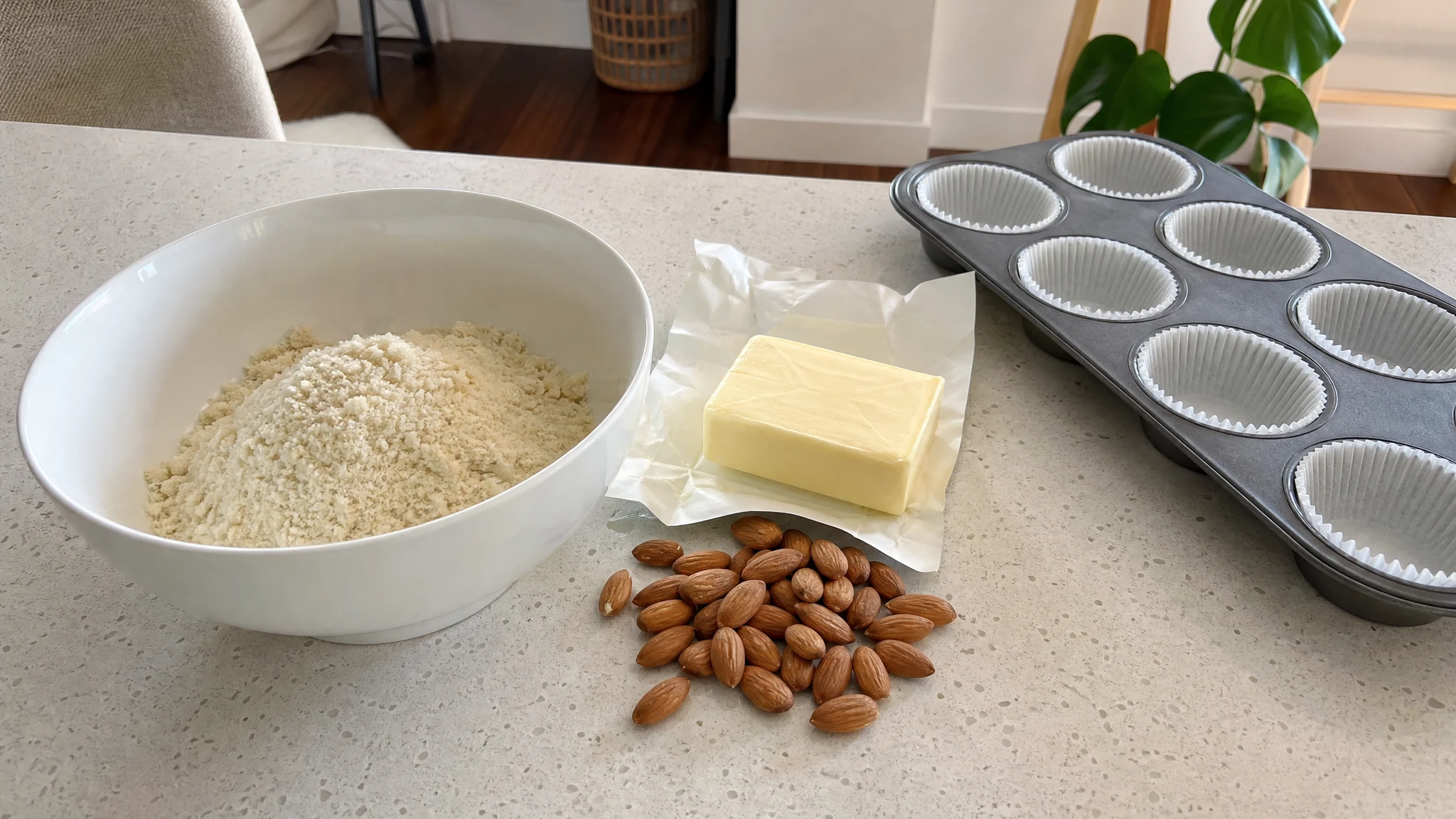
Refined vs Unrefined Almond Oil: How to Choose
Pour a little unrefined almond oil into your palm and you get a faint golden colour and a soft smell of almonds, which is exactly what you would expect from an oil that has been pressed and left alone. A refined oil can look and smell quieter. Neither is a trophy winner, and the choice between them comes down to three practical things: who is using it, what you want it to smell like, and how long you will keep it.
What the words actually mean
The labels are used loosely, so it helps to pin them down. The European Pharmacopoeia, as summarised in a 2022 quality study of marketed almond oils, describes two kinds. Virgin almond oil is obtained by cold expression from ripe seeds. Refined almond oil starts the same way and is then refined, and antioxidants may be added. So under that standard, refined is not a different pressing, just an extra step afterwards.
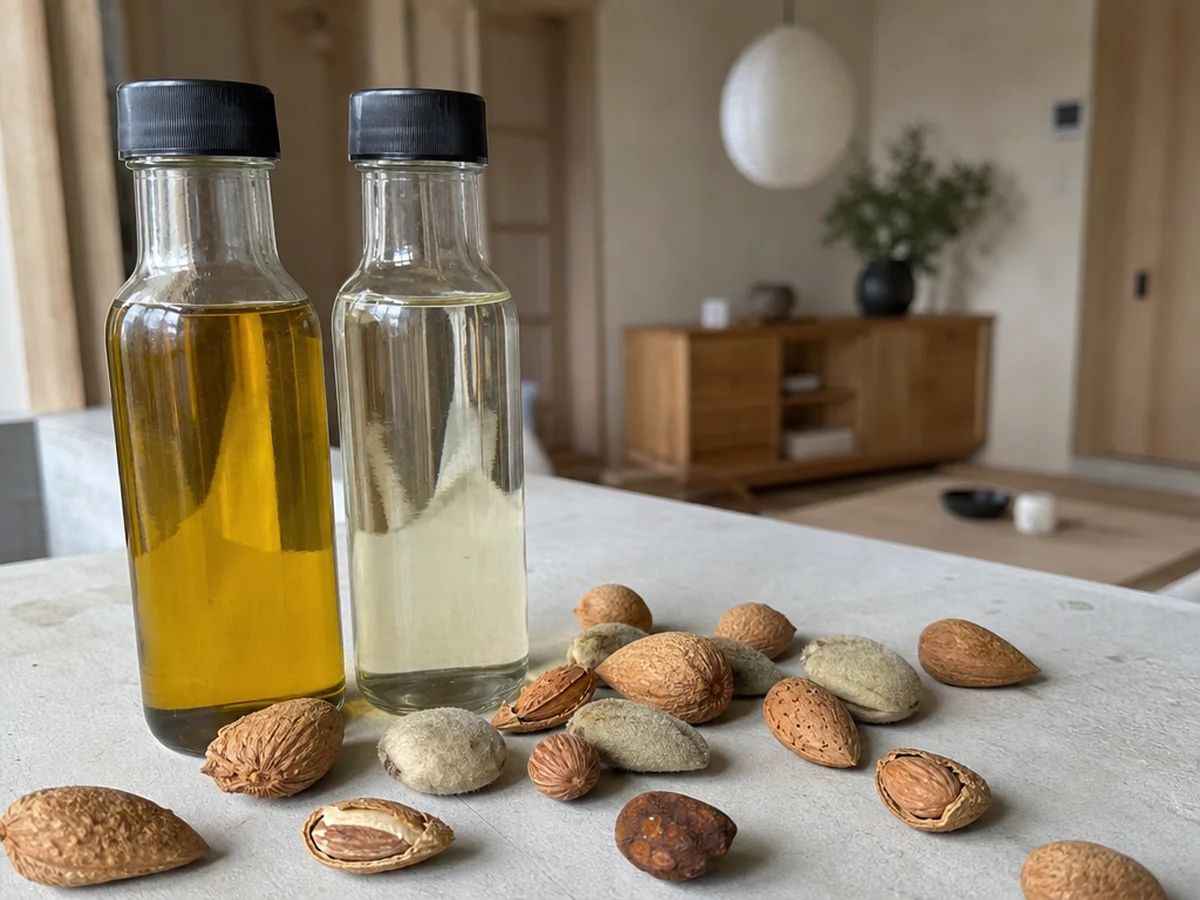
Other sellers use "refined" more broadly, so a bottle that says only that does not tell you which route it took. It is a perfectly reasonable question to ask any seller what refined means for their bottle.
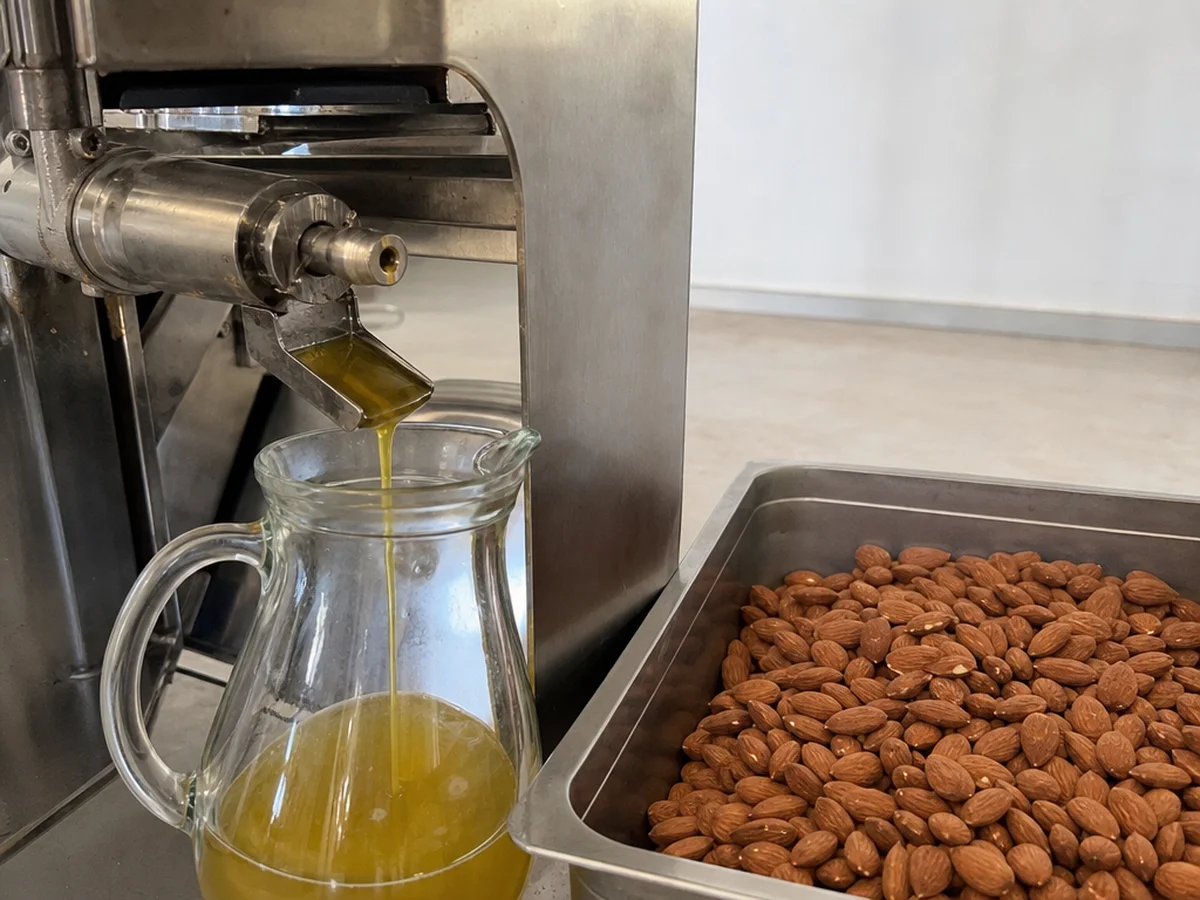
Ours is cold-pressed and sold unrefined. We press whole California kernels below 40 C (104 F), and there is no bleaching, deodorizing, winterizing or solvent step and nothing added, not even vitamin E. What you get is the oil as it comes off the press, with its own aroma intact. Our process guide walks through it.
What you will notice in your hands
Put a drop of each on the back of your hand if you can, and you will probably notice the difference before you read a single label. An unrefined oil often has a little colour to it, like pale straw, and a soft almond scent you can pick up when you lift the bottle to your nose. A refined oil tends to look clearer and smell like very little at all. Neither response is wrong. It is simply a matter of which character you want in the finished oil.
Why allergy is the dividing line
If you remember one thing from this page, make it this. Almond is a tree nut, and proteins are what allergic reactions respond to. An allergist writing for the American Academy of Allergy, Asthma and Immunology explains that refined nut oils generally lack that protein while unrefined, cold-pressed oils retain it, and that skin exposure to nut oils has not been well studied. The advice is to ask the manufacturer whether a nut oil is refined.
So here is our straight answer. Our oil is unrefined, trace almond protein is present, and anyone with a tree nut allergy should not use it. A refined oil is not an automatic pass for an allergic person either, since that is a call for an allergist, not a label. Our nut allergy guide goes deeper.
Aroma, keeping time and what is left in the oil
For everyone without an allergy, the trade is more about character than quality. Unrefined oil keeps its gentle nutty sweetness, which some people love in a massage or body oil and others would rather not have competing with a fragrance. Refined oil is closer to neutral, which suits a blend where the scent should come from somewhere else.
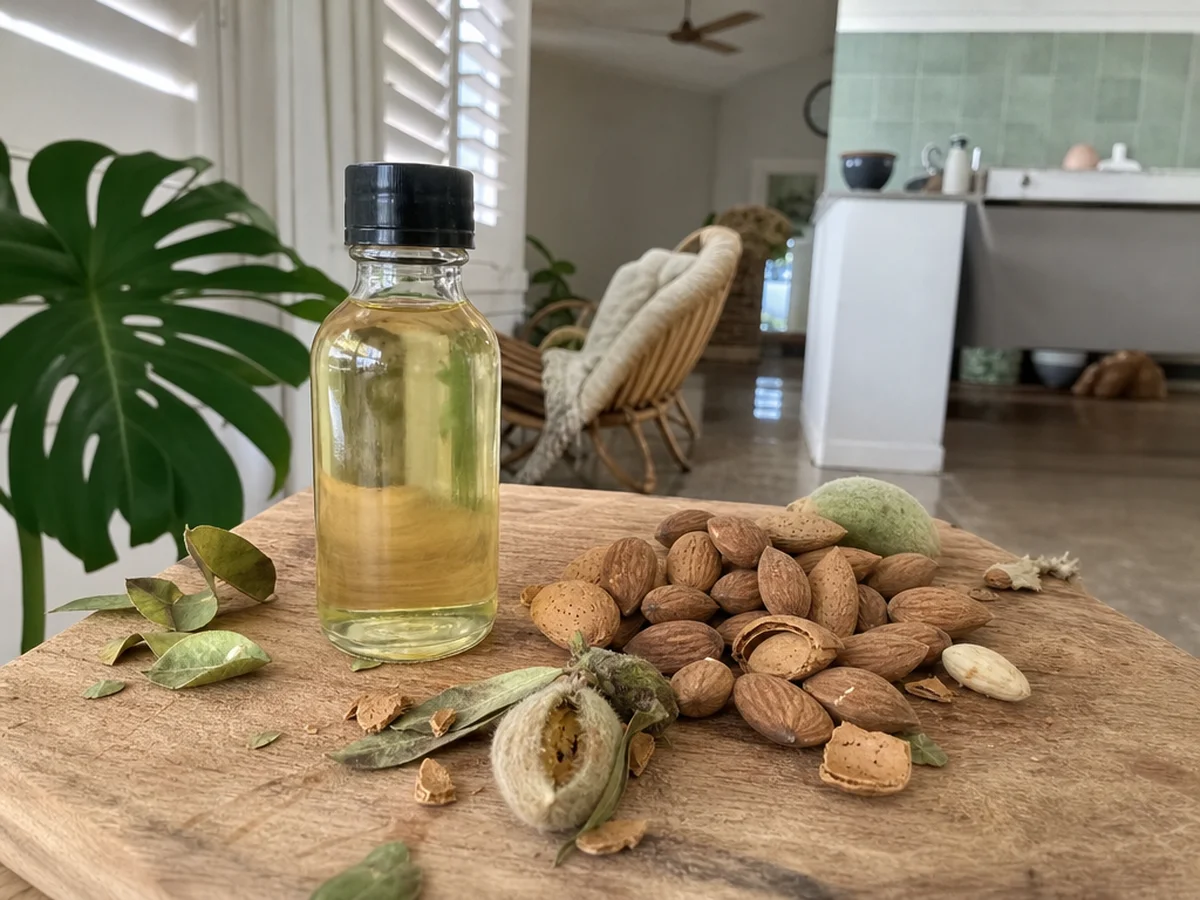
Keeping time is the other consideration. Every almond oil ages, and the speed depends on heat, light, air and handling more than on one label word. In a study that held cold-pressed almond, walnut and pistachio oils for up to 16 months, peroxide values rose under every storage condition, climbing faster at room temperature. For us that means a pressing date matters more than a marketing word. Our bottles carry a pressing date, a bottling date and a lot number, in amber glass, and we count about a year from pressing when the oil is kept cool and dark. Our storage guide shows how to get the most from a bottle.
Our own leaning
We love an unrefined oil because it still smells like the nut it came from, and that is part of why we make ours this way. But we would never tell a soap maker or a perfume blender that they are wrong for wanting a quiet base. If you are not sure, start with the smallest bottle you can find, use it for a few weeks and see whether you like having that gentle almond note around. The best oil is the one you enjoy reaching for.
How we would choose
This is our reasoning rather than a rule, so adjust it to your own situation.
- You have no nut allergy and like a natural, lightly nutty aroma: unrefined suits skin, massage and carrier use, and it is what we make.
- You want a nearly scentless base for a fragrance blend: a refined oil may suit you better, and any almond-based product still needs the allergy check.
- Anyone in the household has a tree nut allergy: skip almond oil in the bath and body routine and speak to an allergist about alternatives.
- You are buying a large amount: weigh the size against the year, because a freshly pressed oil in a size you finish beats a drum that sits.
Whichever you choose, patch test on a small area and wait a day before regular use, and keep oil away from your eyes. Our buying guide covers what to read on the label, and for a carrier-oil view, the carrier oil guide is a good next stop.
Both kinds start with the same nut, so the better question is not which is superior but which one fits the person using it.

Sweet Almond Oil
Sweet Almond Oil from our own shop, in sizes from 0.5 oz to bulk.
From $9.99
Shop Now →Sources & Further Reading
- Berkkan A et al., 2022. Evaluation of Marketed Almond Oils [Prunus dulcis (Mill.) D.A. Webb] in Terms of European Pharmacopoeia Criteria. Turk J Pharm Sci 19:322-329. PMC9254091
- Pongracic J, American Academy of Allergy, Asthma and Immunology. Food allergy: nut oils in topical products. aaaai.org
- Rabadan A et al., 2018. Storage stability and composition changes of three cold-pressed nut oils under refrigeration and room temperature conditions. Food Chem 259:31-35. PubMed 29680059