How to Store Almond Oil So It Stays Fresh
Almond oil does not spoil on a particular day. It oxidizes slowly from the moment it is pressed, a little faster when it is warm or lit, and the early stages have no smell. So storing it well is about slowing a clock, and the good news is that a few small habits slow it a lot.
Start with the date
Each of our bottles carries a pressing date, a bottling date and a lot number, and we count about a year from pressing, kept cool and dark. That date is more useful than your nose. Oxidation begins with compounds called peroxides, which have no fixed smell, and a rancid odor tends to arrive later. Reasoning from that chemistry, an oil can be some way along before it smells different, so go by the date and the storage history, and treat a changed smell or a thick, sticky feel as a clear signal to retire the bottle.
It is worth building the habit on day one. When a new bottle arrives, take a moment to look at the dates, write the opening day on the label with a marker, and decide where it will live. Choosing the spot while the bottle is still in your hands is easier than moving it after months on a sunny shelf.
What the studies tell us
Temperature matters most. In one study, researchers stored cold-pressed almond, walnut and pistachio oils for up to 16 months at several temperatures. Peroxide values rose faster at room temperature than at lower temperatures, and the induction period, a measure of how long an oil resists oxidation, fell in all three oils however they were kept. Almond oil came out second most stable, behind pistachio. The lesson is that cooler is slower, and nothing stops the clock entirely.
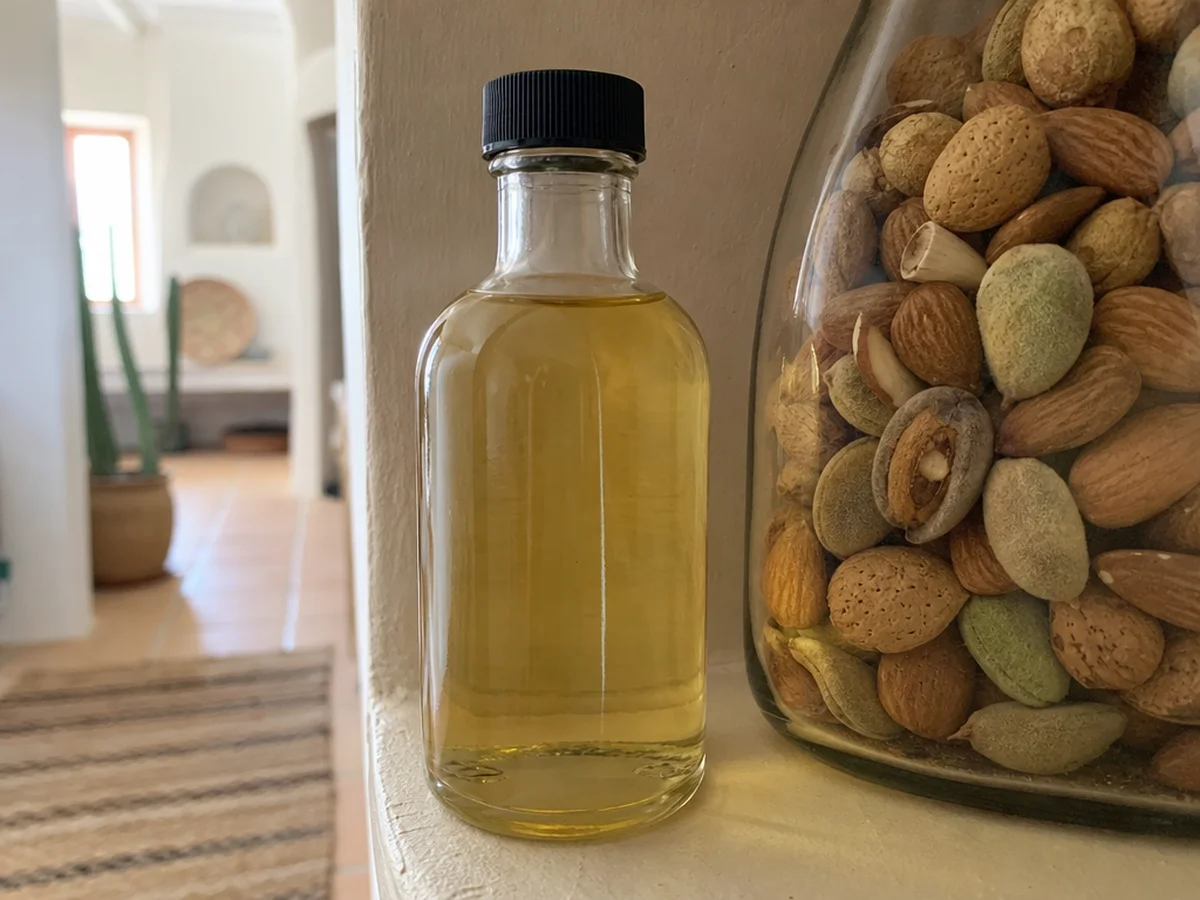
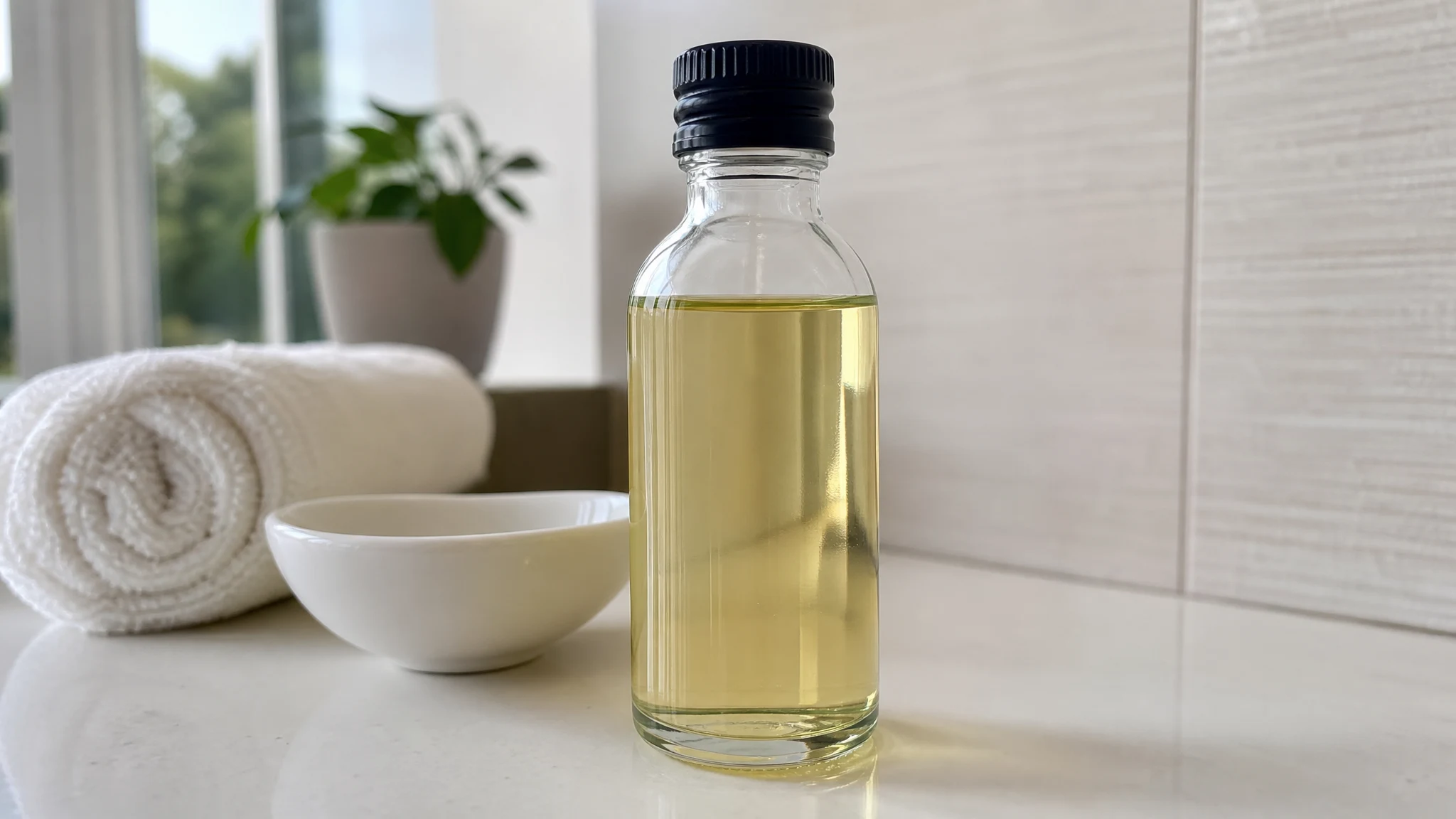
Light is the other factor. A study on extra virgin olive oil, a different oil, left bottles in sunlight for five weeks. Oil in clear glass deteriorated the most, oil in clear glass wrapped in foil showed no deterioration, and amber glass sat in between, with primary oxidation products still present. Almond oil is also rich in unsaturated fat, so applying the finding is a reasonable inference. Our oil comes in amber glass, which is real protection, and a cupboard adds more.
A simple storage routine
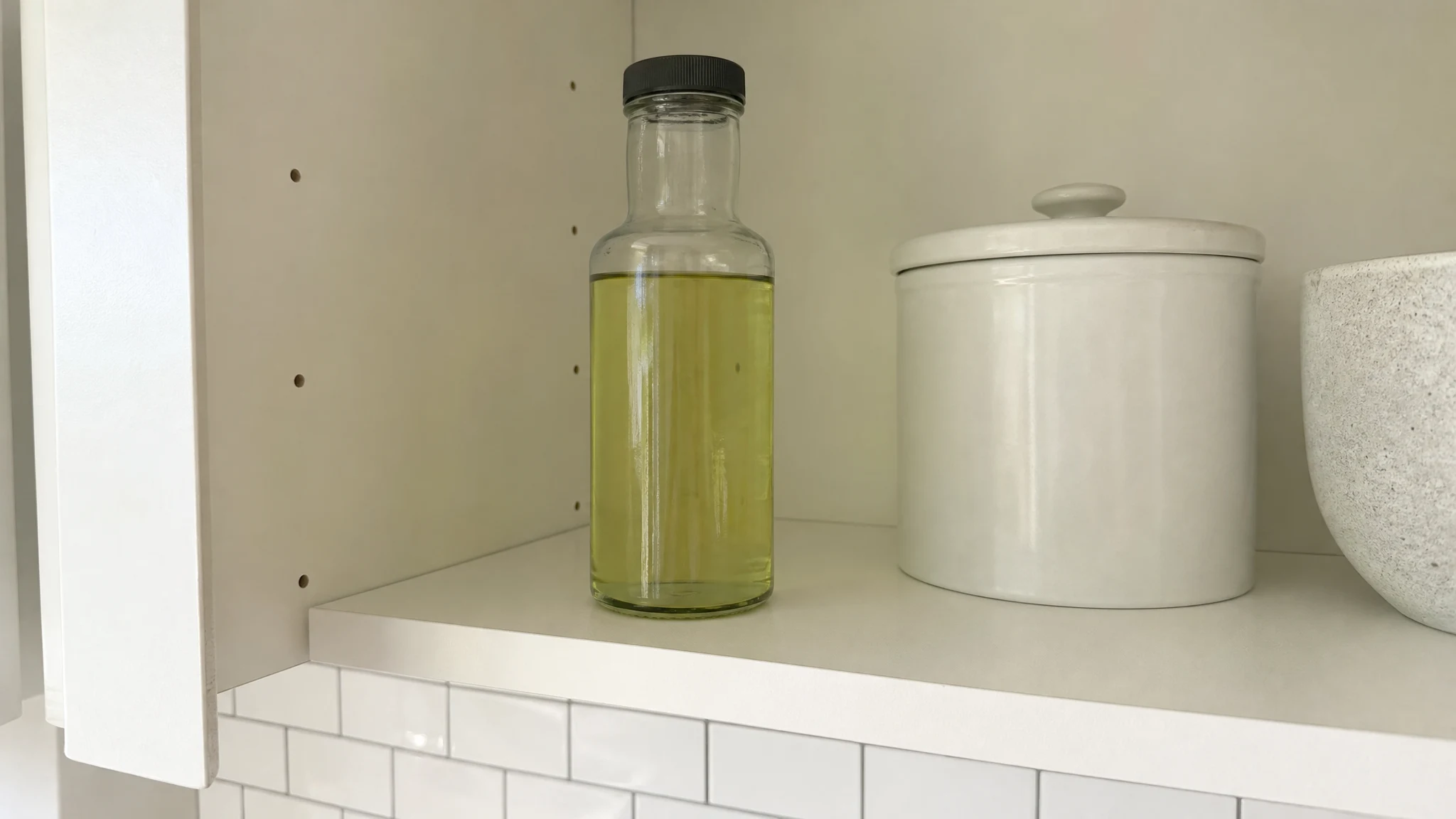
- Choose an interior cupboard away from the stove and the window. A steamy bathroom shelf is the wrong spot, because the FDA notes that some microorganisms grow faster in warm or damp storage conditions.
- Close the cap every time. Air is what oxidizes the oil, and this costs nothing.
- Pour onto your palm rather than dipping fingers into the bottle. The FDA lists dipping fingers into a product as a way contamination gets in, and the same goes for letting water into the bottle.
- If you buy a larger container, decant a month or two of oil into a small clean, dry bottle and keep the rest sealed and cool. The reserve then meets fresh air only at refill time.
- Buy what you will use. Here is the arithmetic: a teaspoon is about 4.93 ml, so an 8 oz bottle (about 237 ml) lasts roughly 48 days at a teaspoon a day. Our size and cost guide works through the rest.
Where bottles tend to end up
Most of us put things where they are convenient, and convenient is rarely cool and dark. The bathroom counter, the kitchen windowsill and the shelf above the radiator are the usual culprits. Try thinking of almond oil as a fresh ingredient rather than a cosmetic, and put it somewhere you would keep a bottle of good vinegar or spice. If you use it daily, a small bottle near where you dress is fine, so long as it is out of direct light and the cap goes back on.
A few things you will notice if an oil has aged
Open the bottle and take a slow sniff. A fresh almond oil smells soft and faintly nutty. If you catch something sharp, paint-like or stale, or the oil feels heavier and stickier than it did, that is your cue to stop using it. Trust your hands and nose, and do not feel guilty about retiring a bottle. Pouring it out is better than putting something on your skin that you are not sure about.
What about the refrigerator?
Colder is slower, so refrigerating a large reserve is a reasonable choice. For a bottle you will finish within a few months, a cool cupboard is plenty. If you do chill a bottle, let it come back to room temperature with the cap on before opening, so moisture does not condense on the oil.
When to retire a bottle
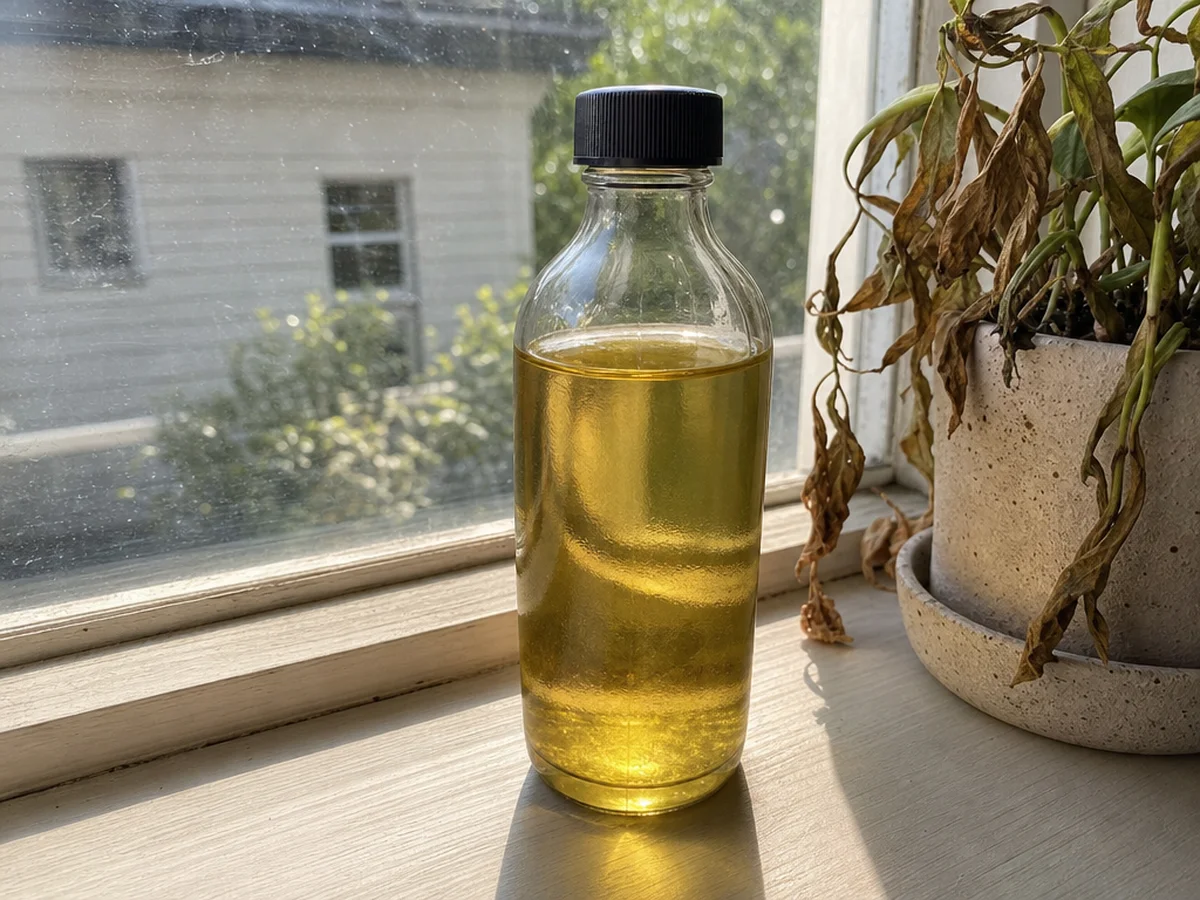
Replace it if it is well past a year from pressing and has been stored warm or in light, if the smell is clearly different from when you opened it, or if anything has grown in it or water has got in. Skin that reacts to an oil that used to be fine is also a reason to stop and ask a dermatologist if it continues.
It helps to know that the FDA does not require cosmetics to carry an expiration date, and says that manufacturers are responsible for determining shelf life. That is why a date on the bottle is the seller's statement, and why it is fair to ask how it was set. Our buyer's guide lists the questions to ask, and our article on testing almond oil at home covers what you can and cannot learn from a kitchen check.
Good storage is mostly habit: dark, cool, closed and dated, and your oil keeps its soft, faintly nutty scent for the whole year.

Sweet Almond Oil
Sweet Almond Oil from our own shop, in sizes from 0.5 oz to bulk.
From $9.99
Shop Now →Sources & Further Reading
- Rabadán A, Álvarez-Ortí M, Pardo JE, Alvarruiz A. Storage stability and composition changes of three cold-pressed nut oils under refrigeration and room temperature conditions. Food Chem, 2018
- Kishimoto S. Influence of Exposure to Sunlight on the Oxidative Deterioration of Extra Virgin Olive Oil during Storage in Glass Bottles. Food Sci Technol Res, 2019
- FDA: Microbiological Safety and Cosmetics
- FDA: Do I need to label my cosmetics products with expiration dates?