Almond Oil Label Guide: 6 Questions to Ask
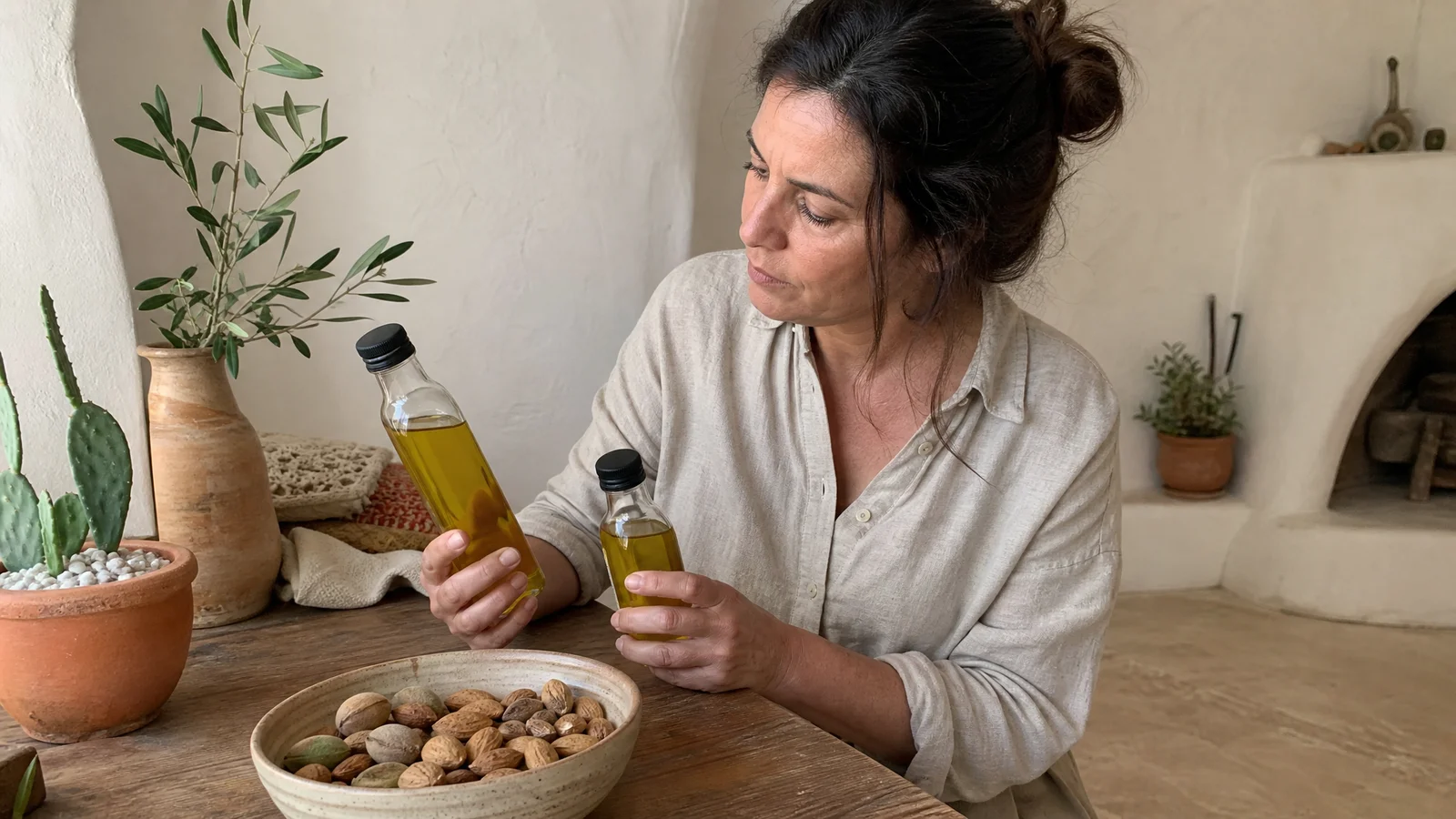
Everything you need to size up a bottle of sweet almond oil is printed on it, or should be. If you walked into our shop with a bottle in your hand, these are the six things we would look at together, in the order that saves you the most time.
Is it meant for skin or for food?
Settle this first, because it sorts most buyers right away. Our oil is cosmetic grade, for external use only, and we do not market it for cooking. If you want almond oil for the kitchen, buy one sold as food from a food seller. If you are after a body oil, a massage oil or a carrier for blending, read on. Our guides to cooking with almond oil cover the food side.
It sounds basic, but the wording tells you a lot. Phrases like "cosmetic" and "for external use" suggest the maker has thought about where the oil is going. If a label is vague on this point, ask before you pour it anywhere near your kitchen.
Can everyone using it eat tree nuts?
Almond is a tree nut. An allergist writing for the American Academy of Allergy, Asthma and Immunology explains that unrefined cold-pressed nut oils keep their protein, and that using them on skin has not been well studied. Ours is unrefined, so we say plainly that anyone with a tree nut allergy should not use it. No size, price or brand changes that. Our allergy guide has the details.
Does it say sweet almond?
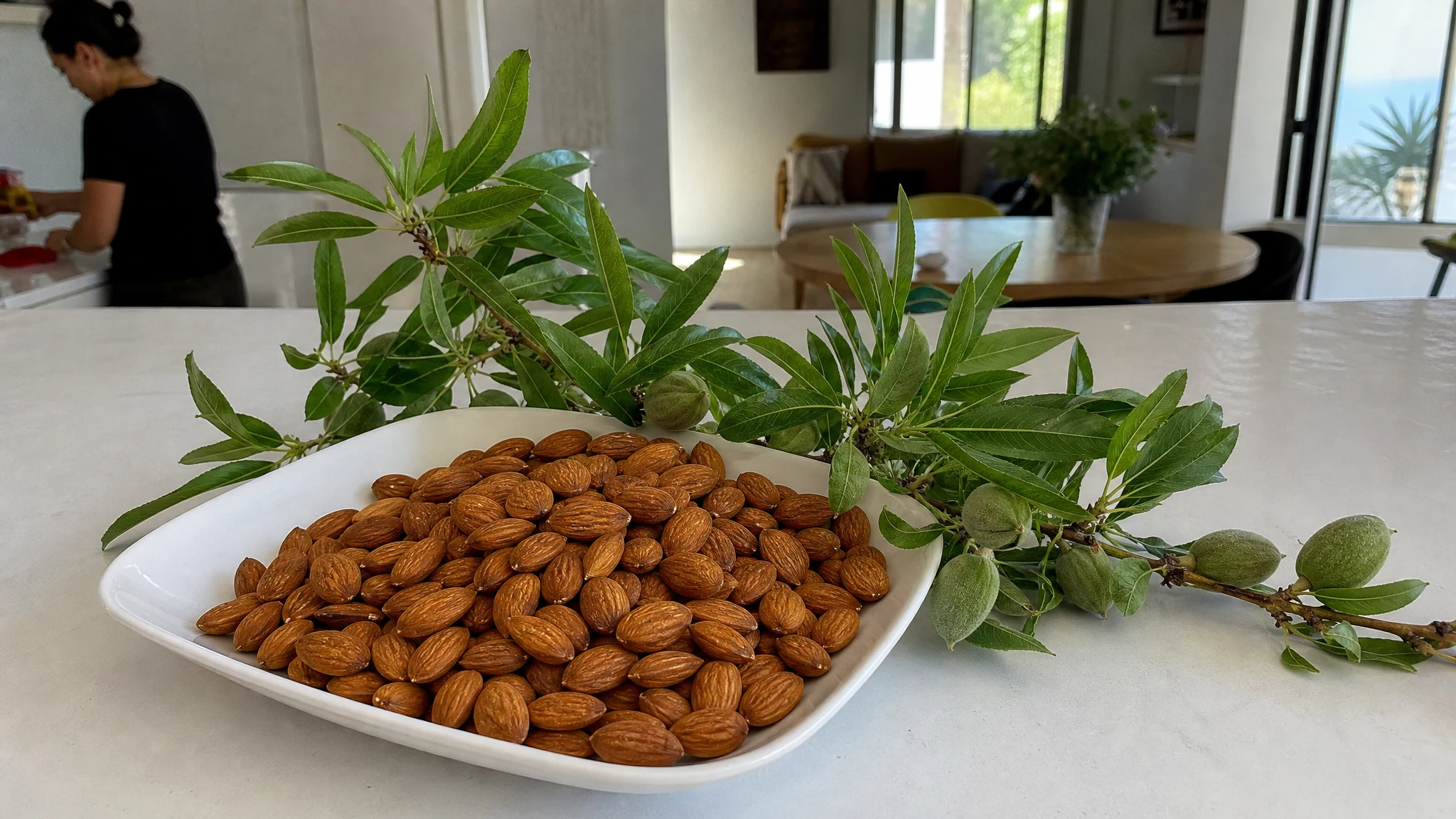
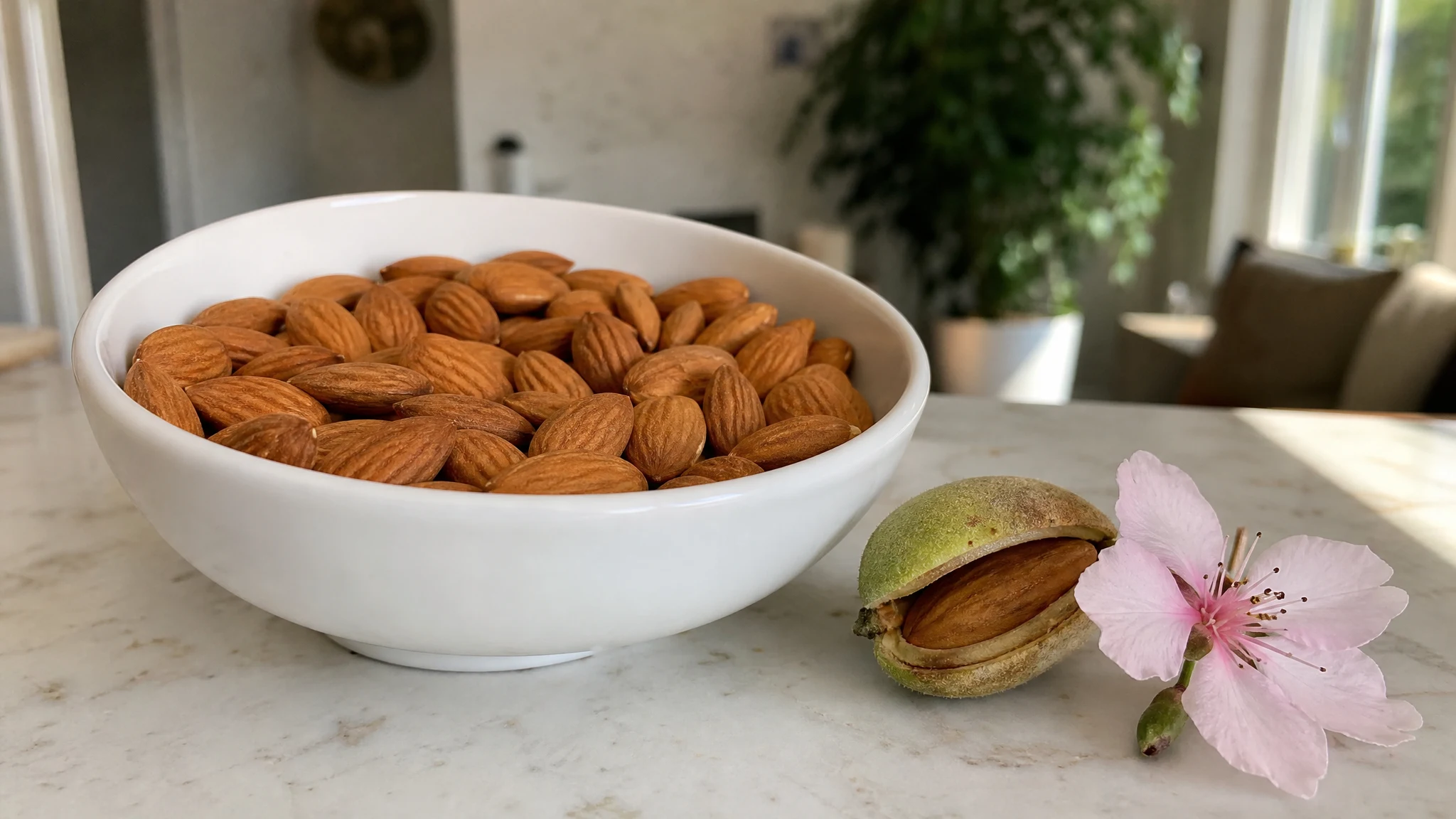
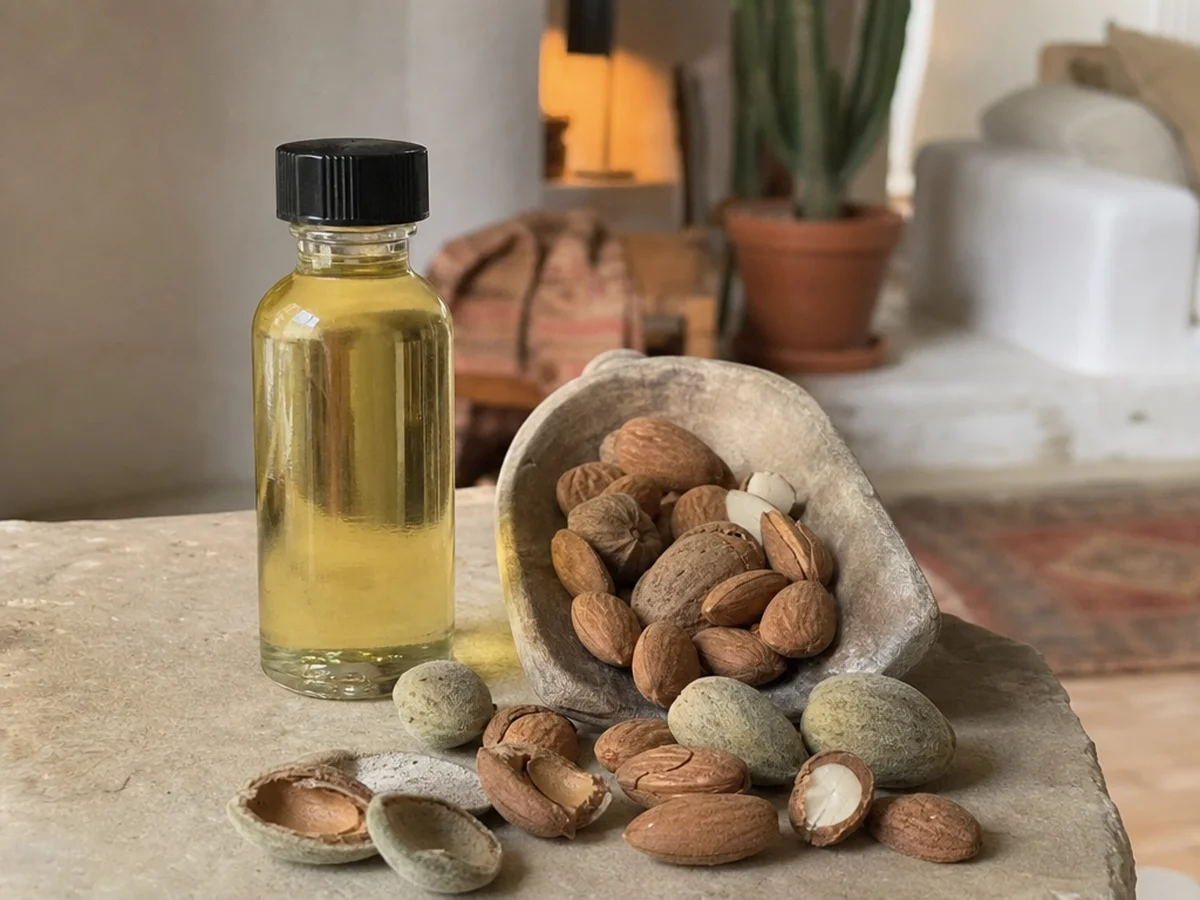
Look for the botanical name in the ingredient list. On the certificate for our oil it reads Prunus amygdalus dulcis (Sweet Almond) Kernel Oil. We sell only sweet almond oil. Bitter almond oil is a wholly different material with genuine toxicity concerns, so a label that says only "almond oil" with no variety is worth a question. Our post on sweet and bitter almond oil explains the split.
Take a moment to read the whole ingredient list, not just the front of the bottle. A single-ingredient oil should have a very short list, and you will notice right away when a label has more on it than you expected.
How was it pressed, and is it refined?
"Cold-pressed" sounds precise, though it rarely names a temperature, and "refined" can mean different things to different sellers. We press below 40 C (104 F) and sell the oil unrefined, with nothing added. Whatever you buy, a seller who can tell you the temperature and the process is easier to trust. A more detailed comparison is in our refined versus unrefined guide.
Color and smell are worth a glance too. Our oil is faintly golden and smells like almonds, soft and a little sweet. Whatever you buy, open the bottle and take a sniff before you commit to it. A fresh almond oil smells gentle and nutty, and a sharp, paint-like or stale smell is a reason to put the cap back on.
Is there a date on it?
Almond oil ages, so a date is useful. The FDA states that US law does not require cosmetic makers to print expiration dates and that manufacturers are responsible for determining shelf life. In other words, a date is the seller's choice, which makes a bottle that carries one more informative. Ours carry a pressing date, a bottling date and a lot number, in amber glass, and we count about a year from pressing when kept cool and dark.
Keep the date habit going at home. When you open a bottle, write the day on the label with a marker, and store it somewhere cool and out of the light. A bottle with a clear date is far easier to judge months later than one you have to guess about.
What paperwork stands behind it?
This is where sellers differ most. In a study of 17 almond oils bought from pharmacies, herbal shops, online sellers and cosmetics stores, only two met the European Pharmacopoeia almond oil criteria, so a nice label did not guarantee the contents. The certificate we publish is for a single batch and lists density, refractive index and optical rotation, each against a standard range. If you need a peroxide value, free fatty acids, a fatty-acid profile or sterols, ask us in writing through the contact page for the lot paperwork before you rely on it, and do the same with any other seller. Our post on what a home test can show sets expectations for checks at the kitchen counter.
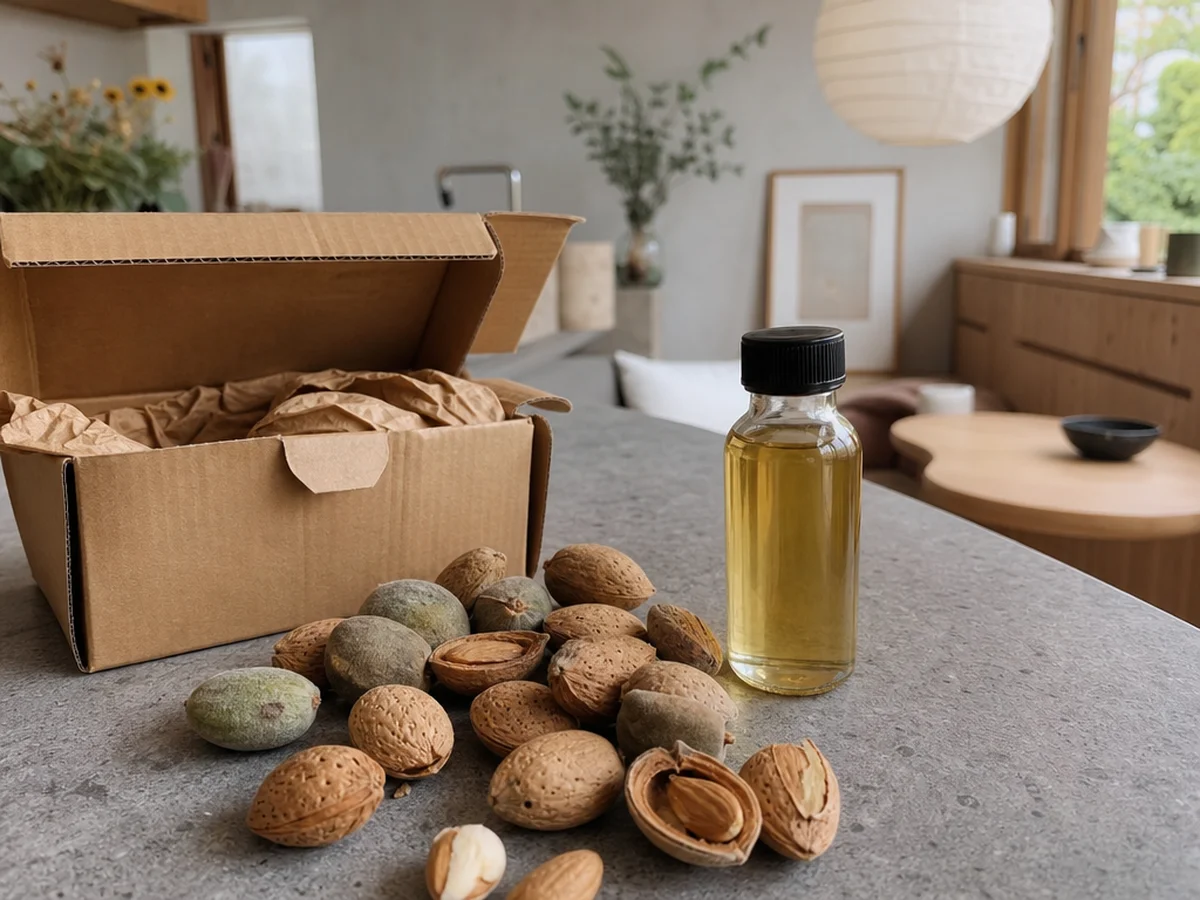
Do not be shy about asking questions, of us or of anyone else. A short, specific email before you order tells you a great deal about how a seller works, and it is much easier than sorting things out after a bottle arrives.
Putting it together
If a bottle answers those six questions clearly, you are in good shape. If you are buying in volume, take a look at our bulk page and wholesale page, since sample sizes let you check an oil before committing to a drum. Whatever you buy, patch test a small area and wait a day before regular use, as our safety copy advises, and keep it out of your eyes.
A good label is short, specific and willing to be asked a follow-up question, and the best sellers welcome the follow-up.

Sweet Almond Oil
Sweet Almond Oil from our own shop, in sizes from 0.5 oz to bulk.
From $9.99
Shop Now →Sources & Further Reading
- Pongracic J, American Academy of Allergy, Asthma and Immunology. Food allergy: nut oils in topical products. aaaai.org
- U.S. Food and Drug Administration. Do I need to label my cosmetics products with expiration dates? fda.gov
- Berkkan A et al., 2022. Evaluation of Marketed Almond Oils [Prunus dulcis (Mill.) D.A. Webb] in Terms of European Pharmacopoeia Criteria. Turk J Pharm Sci 19:322-329. PMC9254091