How to Patch Test Almond Oil: A One-Week Method
Most patch test advice goes like this: dab a little on your wrist, wait until morning, and carry on. For a product you plan to wear for months, that is the shortest possible version of a good idea. Dermatology sources describe a longer test, and it is easy to do at home with almond oil.
If you have a tree nut allergy, stop here
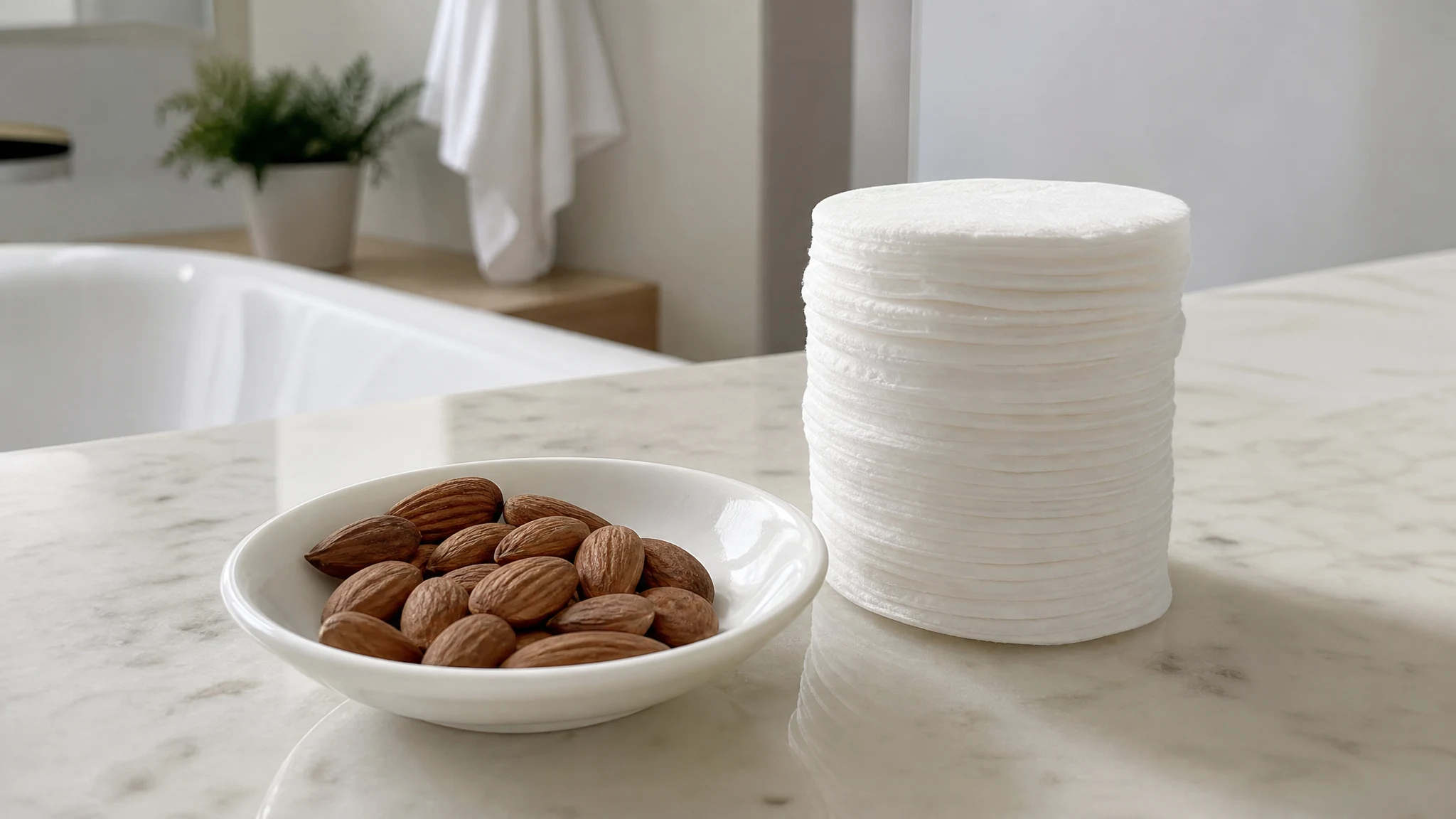
Almond is a tree nut, and our oil is cold-pressed and unrefined, which means trace almond protein is present. Our guidance is simple: if you have a tree nut allergy, do not use this oil, and do not use a patch test to check. Food Allergy Research & Education (FARE) lists almond oil among the tree nut products to avoid, and an allergist writing for the AAAAI explains that unrefined, cold-pressed nut oils keep the proteins that refined oils lose. If you are unsure whether you are allergic, an allergist is the right first stop. Our nut allergy article goes deeper.
Why a week beats a night
Skin can react to a product in two ways. Irritation tends to show up quickly. An allergic contact reaction often arrives days later. DermNet, a dermatology reference, describes a home method called the open application test: apply the product to one small patch of skin twice a day for a week, and if the skin still looks and feels normal at the end, you are unlikely to have a significant allergy to it. Clinics follow the same logic. The American Academy of Dermatology says its clinic patch tests stay on for 48 hours and are followed by a second visit days later, because an allergic reaction can take time to develop.
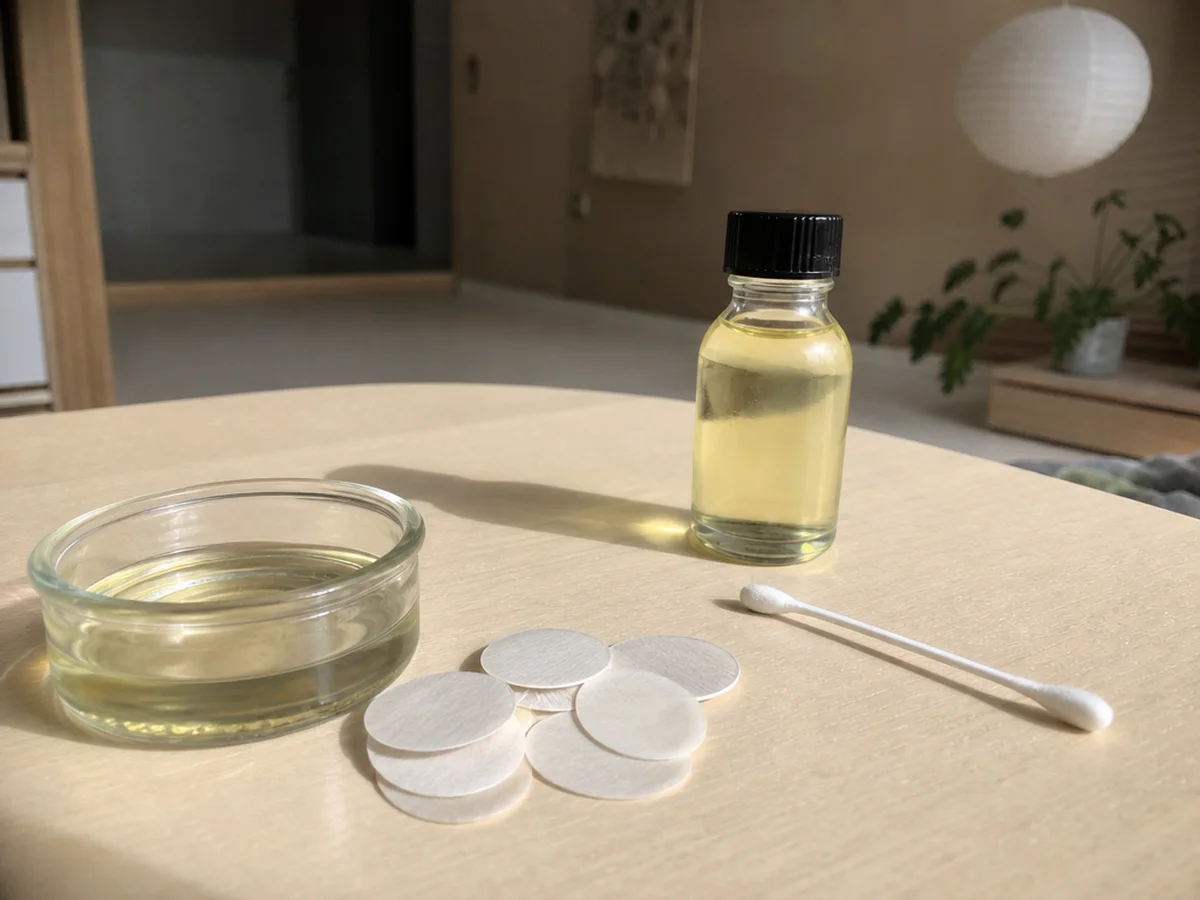
Our own safety guidance is to patch test a small area and wait a day. Think of that as the minimum. A week gives a leave-on oil a fairer trial.
The week-long method
- Choose clean, healthy, hairless skin that has not had much sun: the inner forearm, inner elbow, behind the ear or the side of the neck.
- Mark an area about 5 cm by 5 cm (a little under 2 inches square) with a pen dot at each corner.
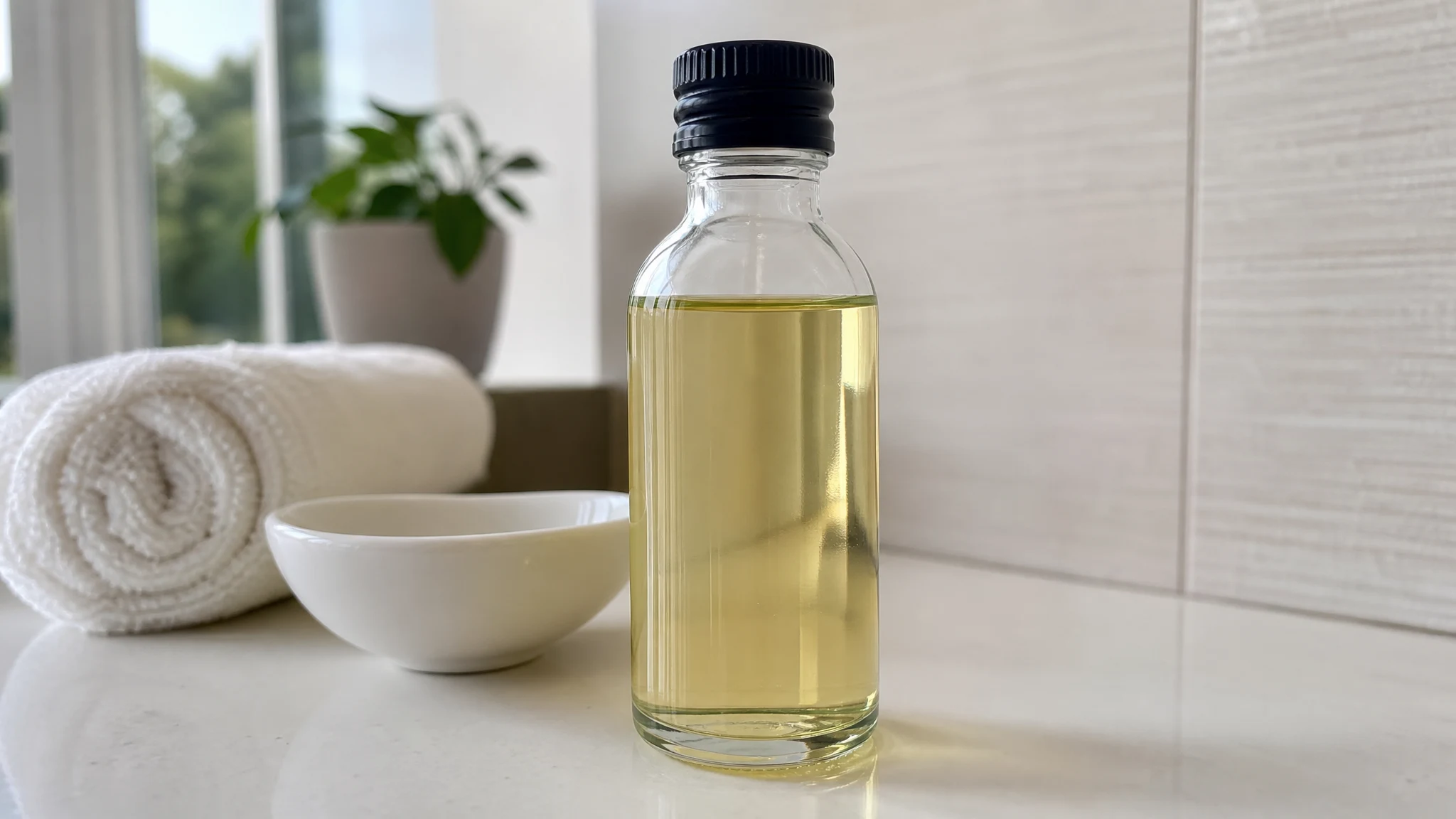
- Apply a thin film of oil twice a day for seven days, using the amount you would normally use. The AAD's product testing tips use the same twice-a-day rhythm over seven to ten days with a quarter-sized spot.
- Keep the spot out of strong sun, since DermNet lists sun exposure as a cause of false negatives.
- Check the site at the end of the week, not only the next morning. Redness, dryness, itching or a rash means stop, and stay stopped.
If you take oral antihistamines, oral steroids or other immune-modulating medicines, or use topical steroids or calcineurin inhibitors on the test site, DermNet says the result will not be accurate. A pharmacist or prescriber can tell you whether to wait.
Making the week easy to stick with
The hardest part of a week-long test is remembering. Tie the two daily applications to things you already do, such as brushing your teeth in the morning and washing up in the evening. Keep the pen next to the bottle, and write the start date on the bottle itself so you always know which day you are on. Take a quick phone photo on day one so you can compare honestly on day seven, because memory flatters.
While you are at it, notice the aroma and the feel. Ours is soft, faintly nutty and glides quickly, and a week is plenty of time to decide whether you like it.
What a clear result means
A clear week is good news, and it is also a screen, not a guarantee. It does not cover an immediate allergy, which involves hives, swelling or trouble breathing within minutes and is never something to test at home. The AAD notes that a life-threatening reaction to clinic patches appears within 30 minutes and needs immediate medical care. Location matters too. DermNet says testing on skin thicker than the area you intend to treat, such as the face or eyelids, can give false negatives, so a forearm result does not clear the skin around your eyes. Keep our oil away from the eyes either way.
DermNet is also candid about the trade-offs: a positive test can bring an itchy rash elsewhere, and a dark patch can linger at the site for some weeks. A forearm is an easier place to carry that than a cheek, which is why we suggest testing there before the face. If you plan to use almond oil on your face, our oil cleansing guide shows one way to ease in.
When to see a dermatologist instead
If your skin keeps itching or breaking out, if you have eczema or psoriasis, or if the test site reacts, a dermatologist can help more than another round of home testing. The AAD says more than 15,000 substances can cause an allergic skin reaction, and clinic patch testing checks a panel of them under supervision. If you want to know more about what is in your bottle, the certificate of analysis we publish covers one batch, and you can ask us in writing through our contact page for the lot's other paperwork before you start.
A patient week with a small patch of skin is a nice way to start a relationship with a new oil, and it costs you nothing but a pen mark on your forearm.

Sweet Almond Oil
Sweet Almond Oil from our own shop, in sizes from 0.5 oz to bulk.
From $9.99
Shop Now →