Almond Oil for Dry Skin: Apply It After the Shower
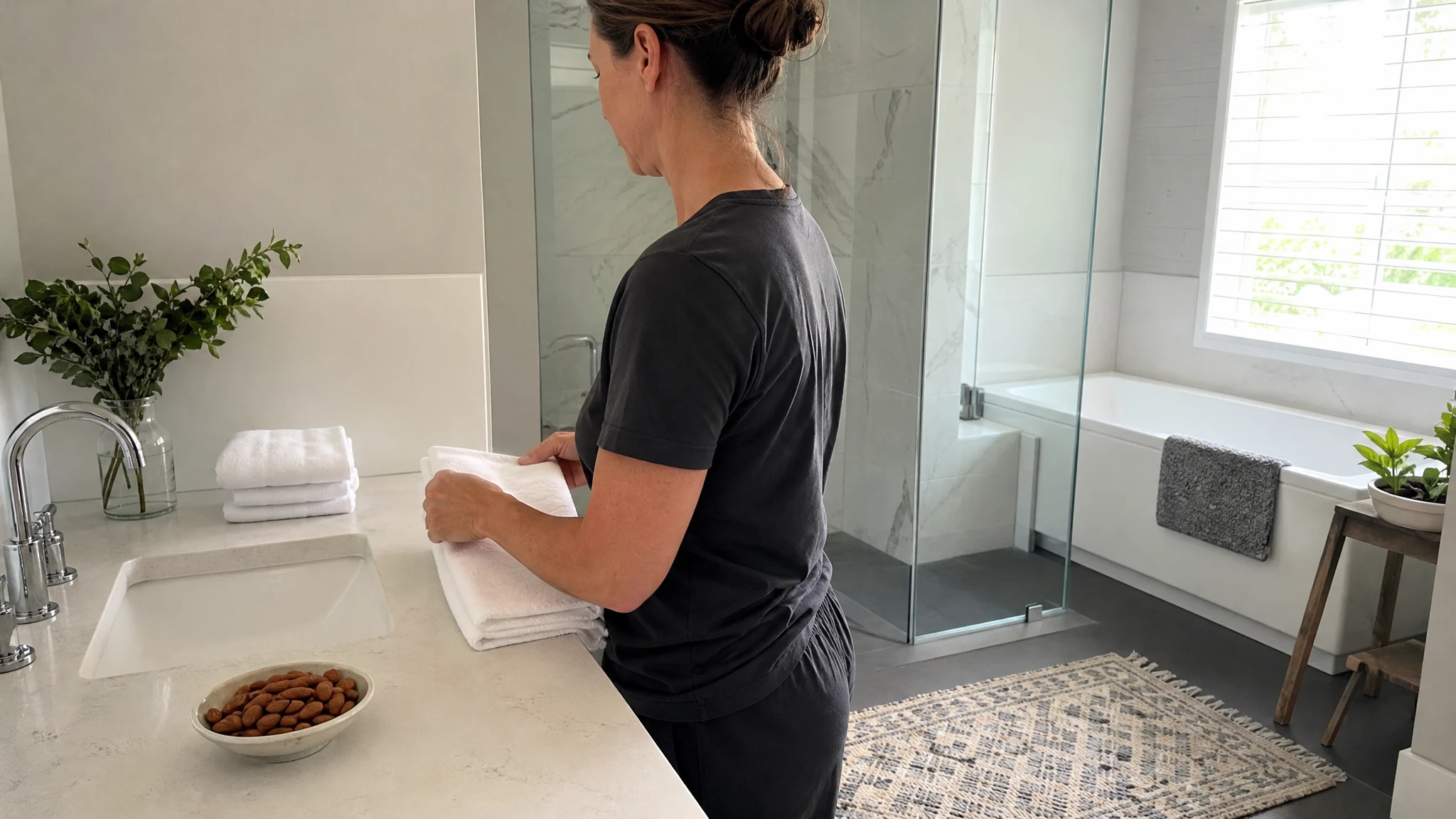
Picture the moment that decides whether a moisturizer works: you have just stepped out of the shower, the towel is on the rail, and your skin is still damp. The American Academy of Dermatology (AAD) says to apply moisturizer while skin is still damp after a shower or bath, and that timing matters more than most of what gets argued about which oil is best. Sweet almond oil slots into that moment beautifully for adults with dry skin and no tree nut allergy.
Before the oil, the bathroom
The AAD’s dry-skin advice starts before the bottle. Its dermatologists suggest keeping showers and baths to five to ten minutes in warm water, patting skin dry instead of rubbing, choosing fragrance-free products, and running a humidifier in a dry home. None of that costs anything, and it helps whatever you apply afterward. If you have changed your oil but not your twenty-minute hot shower, the shower is probably the bigger variable.
What an oil is good at
An oil is all lipid, with no water in it. That makes it a sealant: it slows the evaporation of moisture from the skin surface, but it cannot add water to skin that has none. That is the whole case for damp skin. Pat gently with the towel, leave a little moisture behind, and let the oil lock it in. Because an oil spreads more easily than a cream or ointment, a thin film goes a long way.
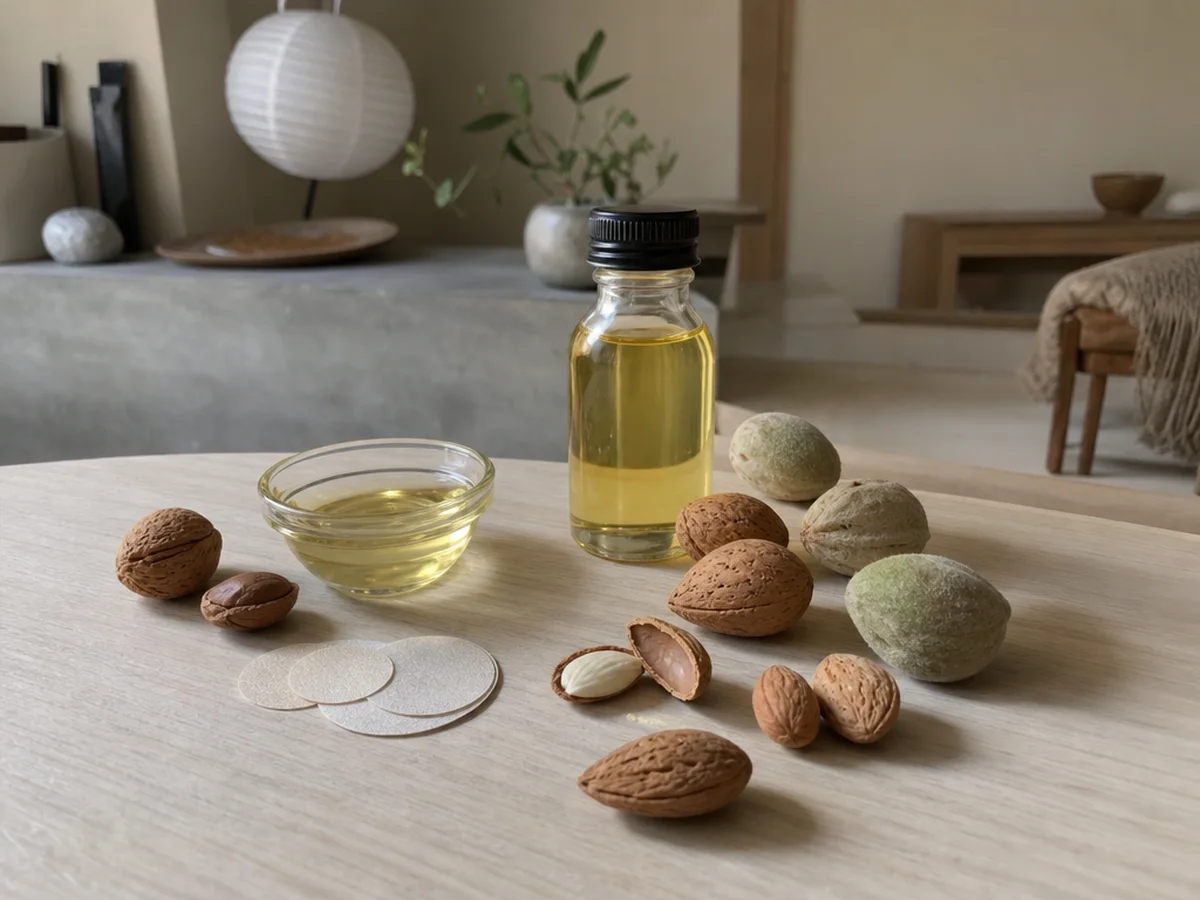
As arithmetic and a starting suggestion, not a studied dose: a quarter teaspoon is about 1.2 ml. At the density of 0.918 on the Certificate of Analysis we publish for one batch of our oil, that is roughly 1.1 grams, enough to cover both forearms or both shins. Warm it between your palms first, smooth it on, and add a touch more where skin is driest. We find it easiest to think of it as a finishing step rather than a lotion you slather.
What it feels like on damp skin
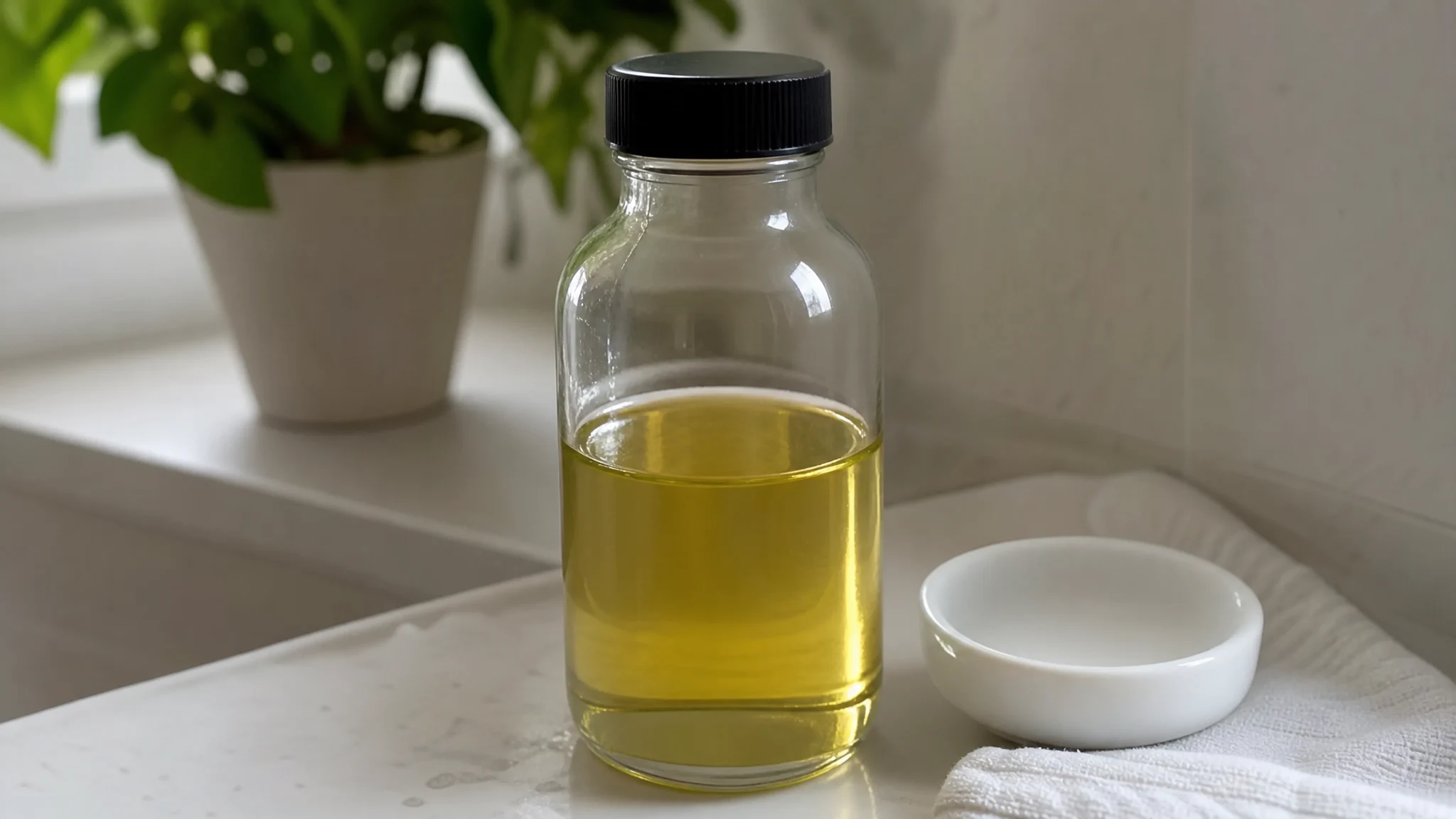
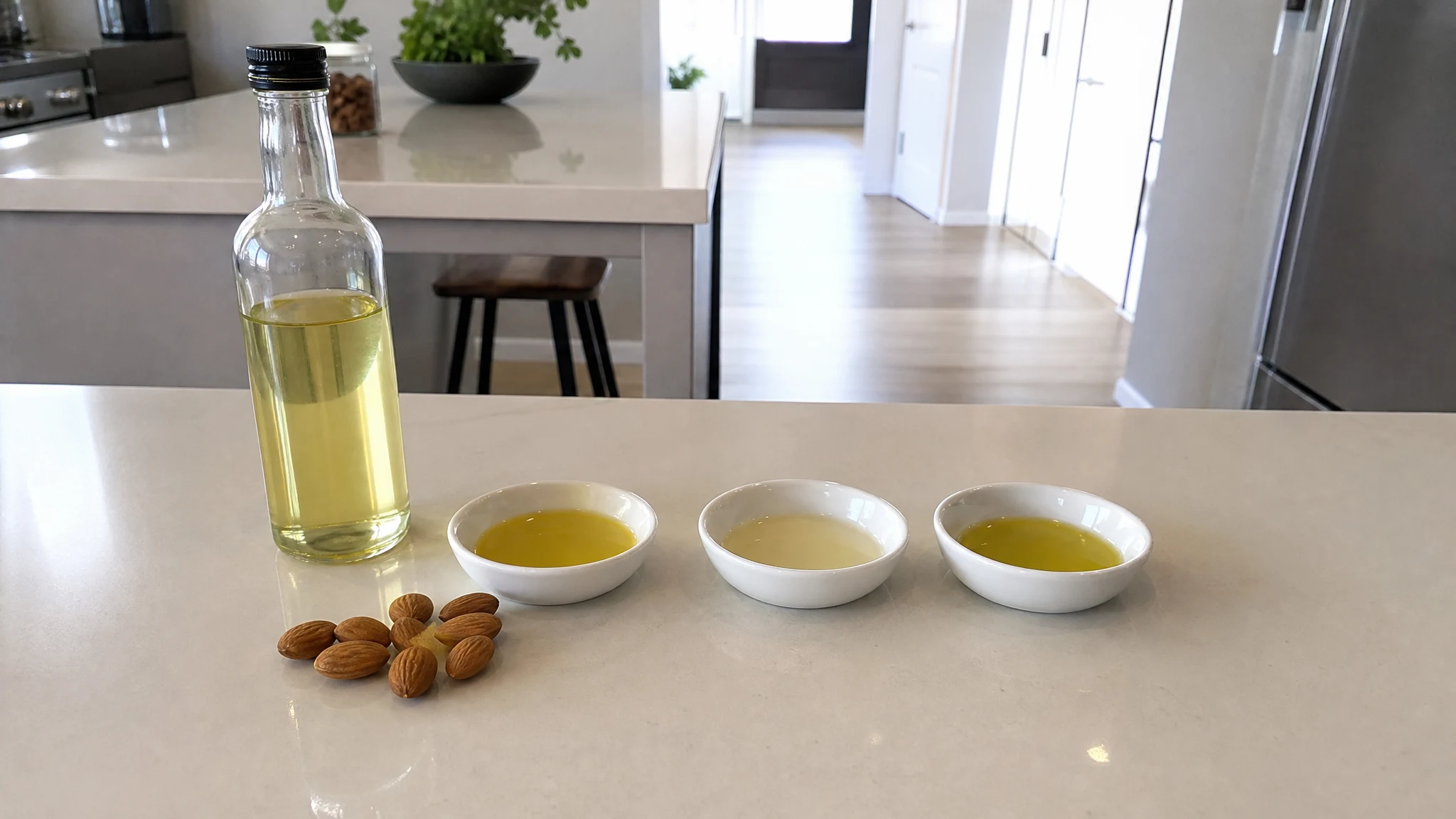
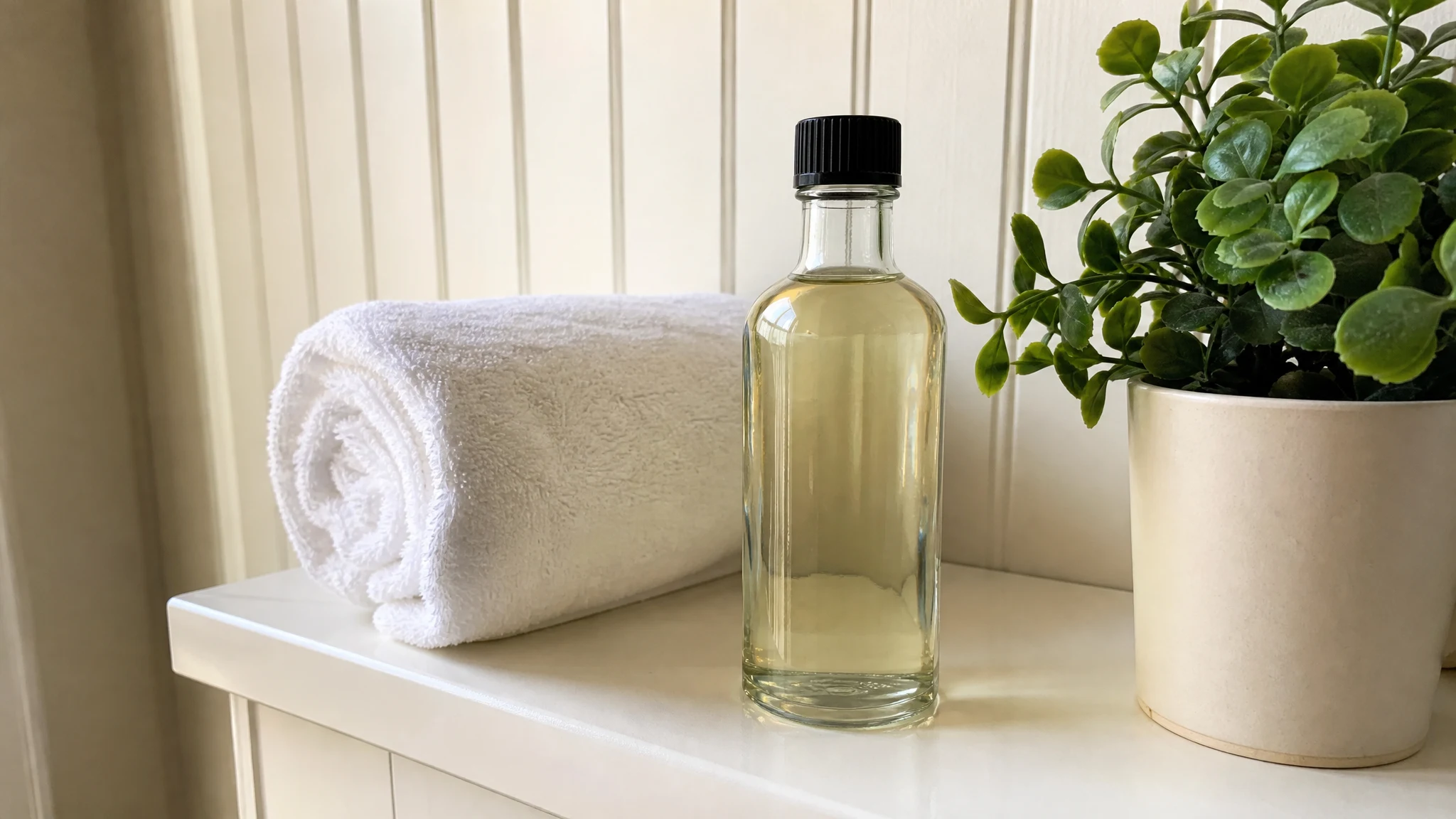
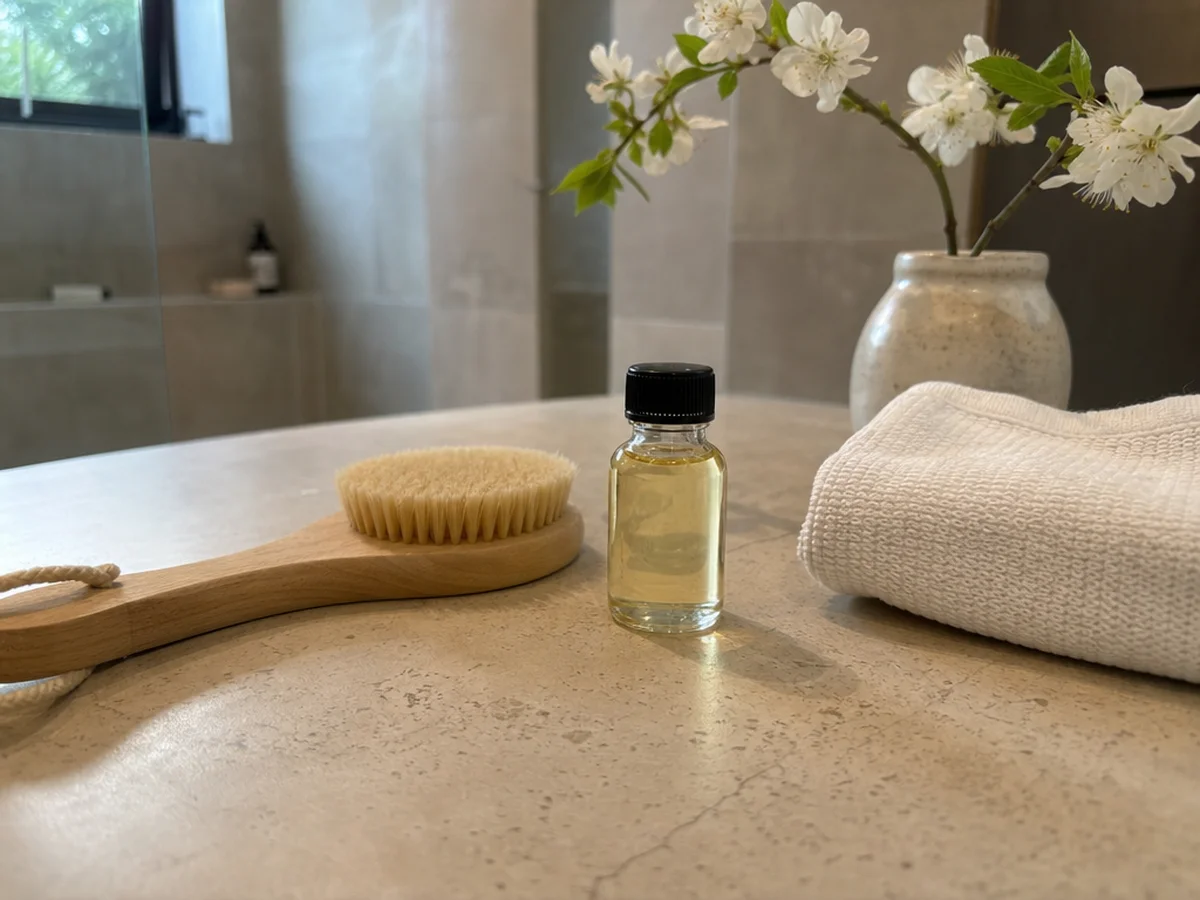
Open the bottle and you will notice a soft, subtly nutty, lightly sweet scent, and a faintly golden color in the palm. Warm a few drops between your hands and the oil turns silky and thin. On damp skin it spreads almost on its own: you will see it bead slightly where the skin is wet and glide where it is not. That is a useful signal. If the oil is sliding around in drops, there is probably more water on the skin than you need, so give it a second gentle pat with the towel and press the oil in with your palms rather than rubbing.
What the research says
Almond oil has one small trial worth knowing. In a 2018 randomized pilot in the journal SKIN, 32 people who completed the study put almond oil, coconut oil, jojoba oil or white petrolatum on dry skin twice a day for two weeks. All four raised skin hydration by week two, and none beat the others. Almond oil was the product the largest share of participants liked best, at 38 percent. Reasoning from that, almond oil moisturized about as well as petrolatum in a two-week pilot, and people enjoyed using it. The paper did not specify whether its almond oil was cold-pressed or refined, so we treat it as a general result for almond oil rather than a promise about ours.
When skin is very dry, the AAD’s advice is to start with a cream or ointment and skip lotions. Neither of its dry-skin pages lists a plain oil as the starting point, so for painfully dry or cracked skin a cream or ointment is the dermatologist-endorsed choice, and an oil is a lovely addition for everyday dryness or a preference of texture and scent. If you are weighing heavier options, our comparisons with shea butter and avocado oil are a good place to start, and our body care guide shows where else an oil can go.
Not every plant oil behaves the same
One more study is worth a mention because it shows why the choice of oil matters. A 2013 forearm study in Pediatric Dermatology gave 19 adult volunteers olive oil on one arm and, in the second group, sunflower seed oil on the other. Olive oil reduced the integrity of the skin’s outer layer and caused mild redness; sunflower seed oil preserved integrity and improved hydration. Almond oil was not tested, but the finding is a good reminder that “any plant oil is fine” is not a safe assumption, and a good reason we would not claim another oil’s result for ours.

Where to put it first
Dry skin is rarely even. Shins, the outsides of the arms, elbows and the tops of the feet are the usual suspects, so those are the places to start, and the rest of the body can wait. A good habit is to keep the bottle near the towel, so the oil is a ten-second finish rather than an extra task. Habits that cost no effort are the ones that last through the whole winter.
A small amount of oil on a bathroom floor makes it slippery, so dry your feet well and take a moment before stepping off the mat.
Who should skip it, or slow down
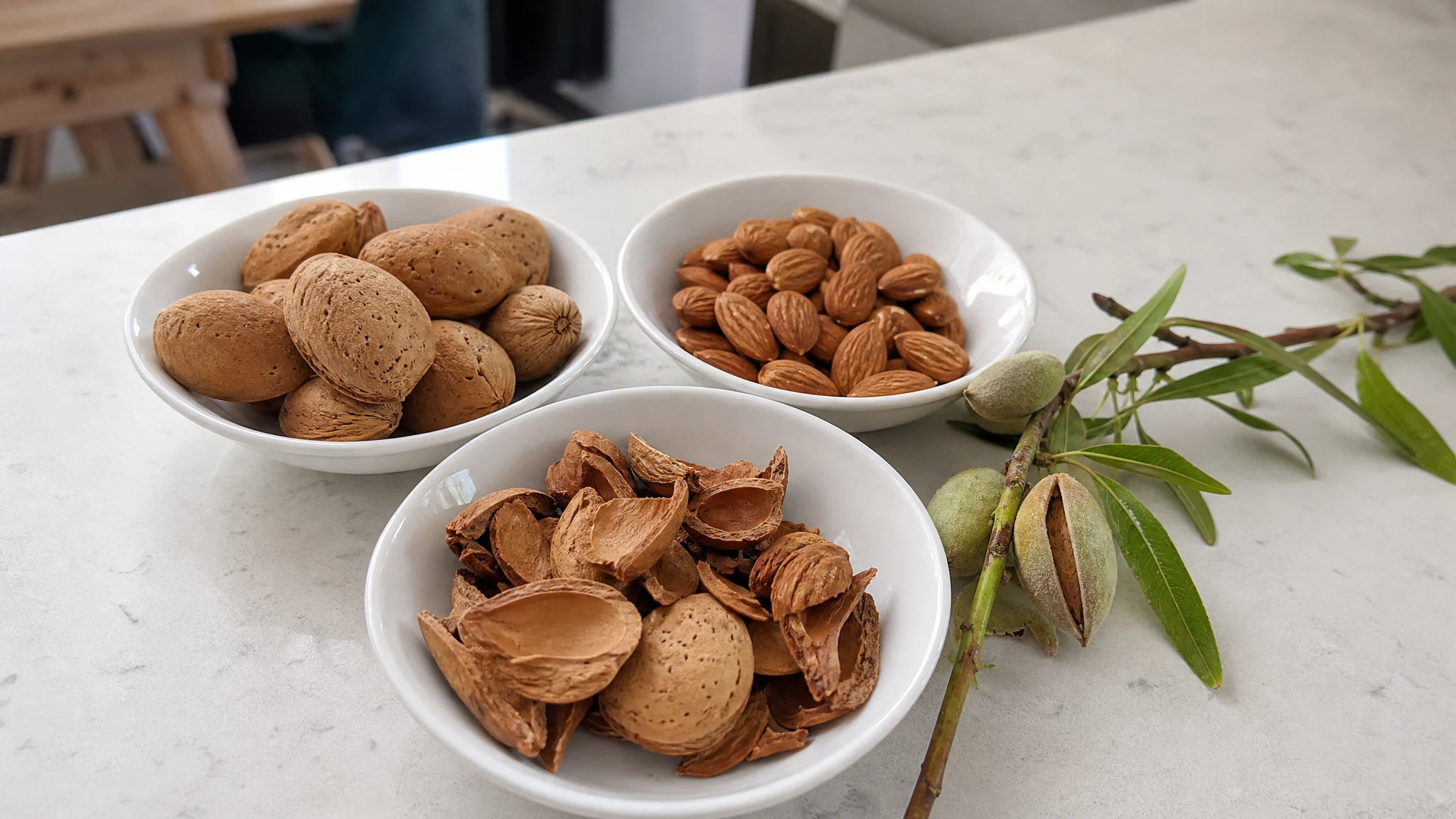
Anyone with a tree nut allergy. Almond is a tree nut, our oil is cold-pressed and unrefined so trace almond protein is present, and we ask anyone with a tree nut allergy not to use it. Our nut allergy post explains more.
Anyone who has not patch-tested. We suggest a small test area and a day’s wait; the AAD’s method is more thorough, a quarter-sized spot on the inner arm or elbow bend, twice a day for seven to ten days, watching for redness, itching or swelling. Our patch-testing guide has the steps.
Anyone whose skin is cracked, bleeding, stinging or not improving. The AAD recommends a board-certified dermatologist when dryness persists after trying its tips.
For everyone else, a few drops after the shower is one of the nicest small habits we know. The towel is still damp, the oil smells softly of almonds, and winter has a little less bite.
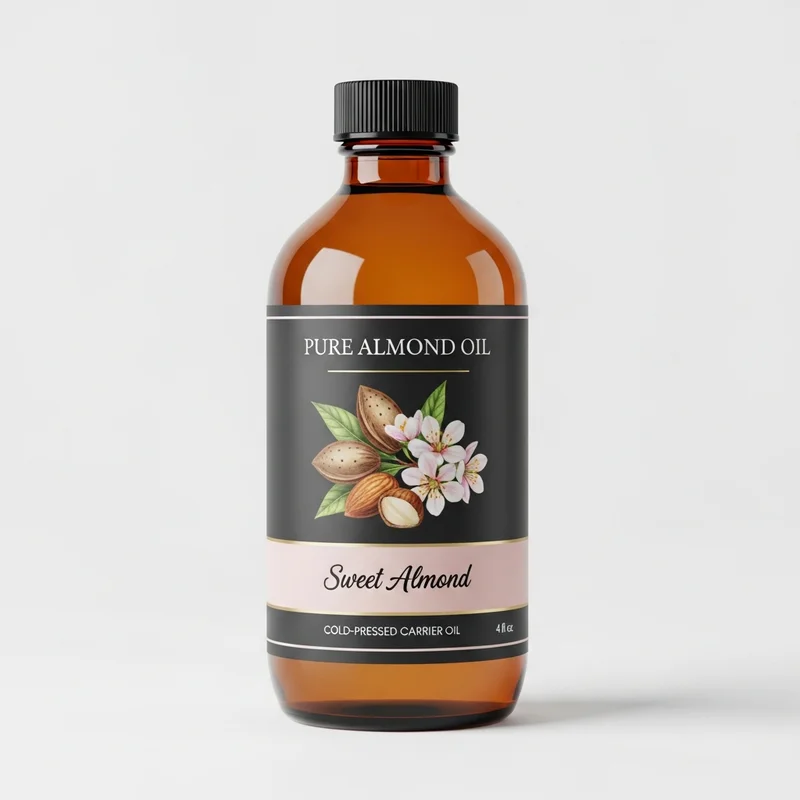
Sweet Almond Oil
Sweet Almond Oil from our own shop, in sizes from 0.5 oz to bulk.
From $9.99
Shop Now →Sources & Further Reading
- American Academy of Dermatology. Dermatologists’ top tips for relieving dry skin.
- American Academy of Dermatology. How to pick the right moisturizer for your skin.
- American Academy of Dermatology. How to test skin care products.
- Vaughn A, et al. (2018). Multi-Center Randomized Clinical Study of The Effects of Natural Oils on Xerosis and Skin Barrier Properties. SKIN The Journal of Cutaneous Medicine.
- Danby SG, et al. (2013). Effect of olive and sunflower seed oil on the adult skin barrier: implications for neonatal skin care. Pediatric Dermatology.