Almond Oil for Dry Lips: What to Try First
The thing that dries lips out most is something almost everyone does without thinking: licking them. Dermatologists at the American Academy of Dermatology (AAD) put it simply. When saliva evaporates, your lips become drier than before, which tempts you to lick again. Breaking that loop does more for most people than any oil, and it is a good place to begin before we talk about where almond oil fits.
What dermatologists suggest
The AAD’s tips for dry, chapped lips are refreshingly practical. Stop licking, biting and picking. Reach for a non-irritating lip balm whenever the urge strikes. Run a humidifier in the bedroom, especially if you breathe through your mouth at night. And check your current lip product, because the AAD lists ingredients to stop using while lips are chapped: camphor, eucalyptus, menthol, fragrance, lanolin, salicylic acid, phenol, propyl gallate, octinoxate or oxybenzone, and cinnamon, citrus, mint or peppermint flavoring. If your balm has one of those, changing it may help more than adding an oil on top.
For very dry or cracked lips the AAD suggests a thick ointment such as white petroleum jelly, noting that ointment seals in water longer than waxes or oils. It also advises a lip balm with SPF 30 or higher and zinc oxide or titanium oxide before going outdoors, even in winter. Almond oil is not a sunscreen, and our post on the sunscreen myth explains why it cannot stand in for that step.
Where almond oil fits
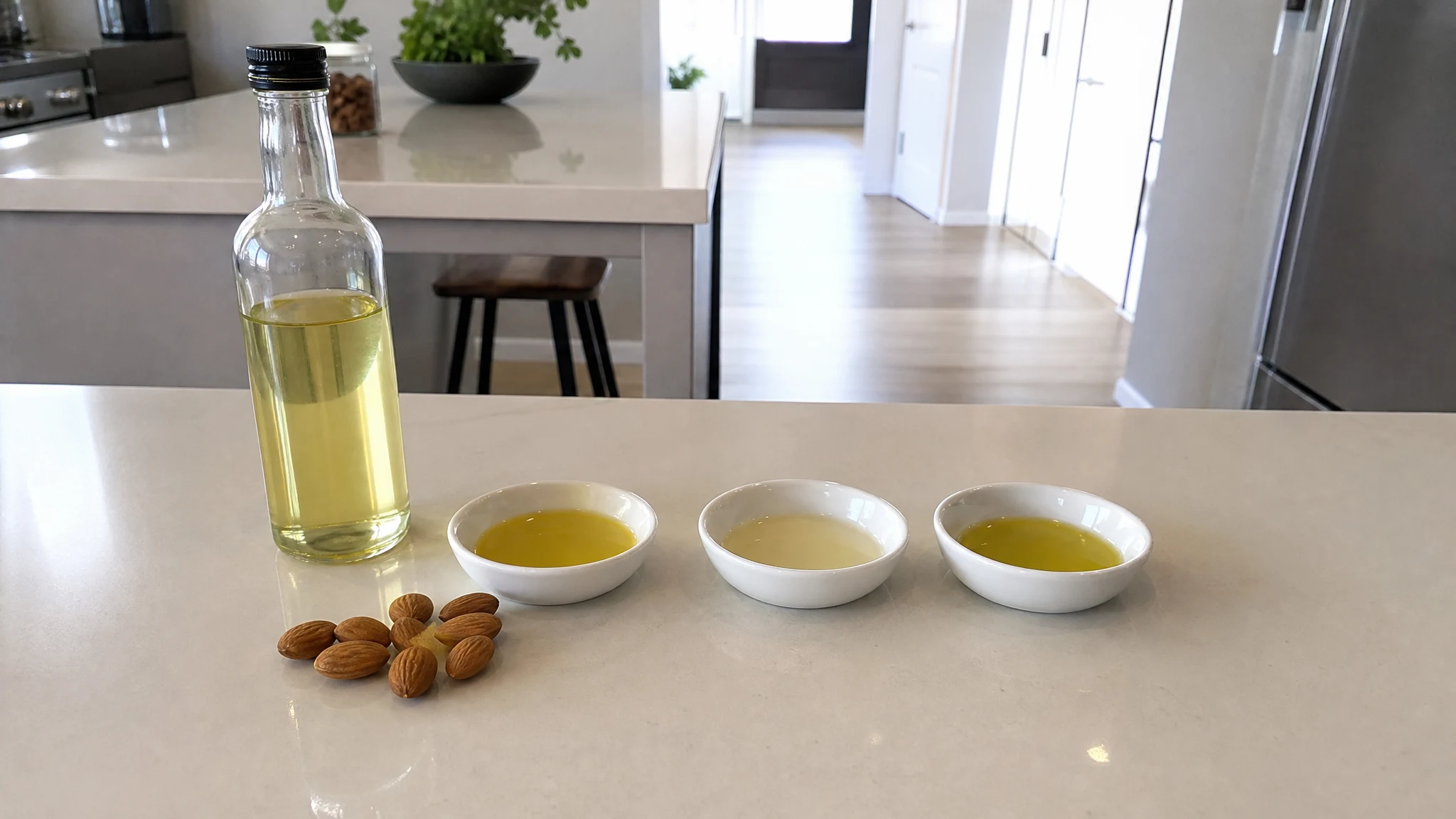
A plain oil is a gentle, single-ingredient option for mild dryness, and it passes the AAD’s ingredient list by default, with no camphor, no menthol, no fragrance and no flavoring. Sweet almond oil also has a soft, lightly nutty aroma that makes it a pleasant thing to use on skin. In a 2018 randomized pilot in the journal SKIN, 32 people who finished the study used almond oil, coconut oil, jojoba oil or white petrolatum on dry skin twice daily for two weeks, and all four raised hydration by the second week. It was a trial on dry skin, not on lips, so we mention it as a general sign that almond oil moisturizes skin rather than as a lip result.
Why we send you to a lip balm
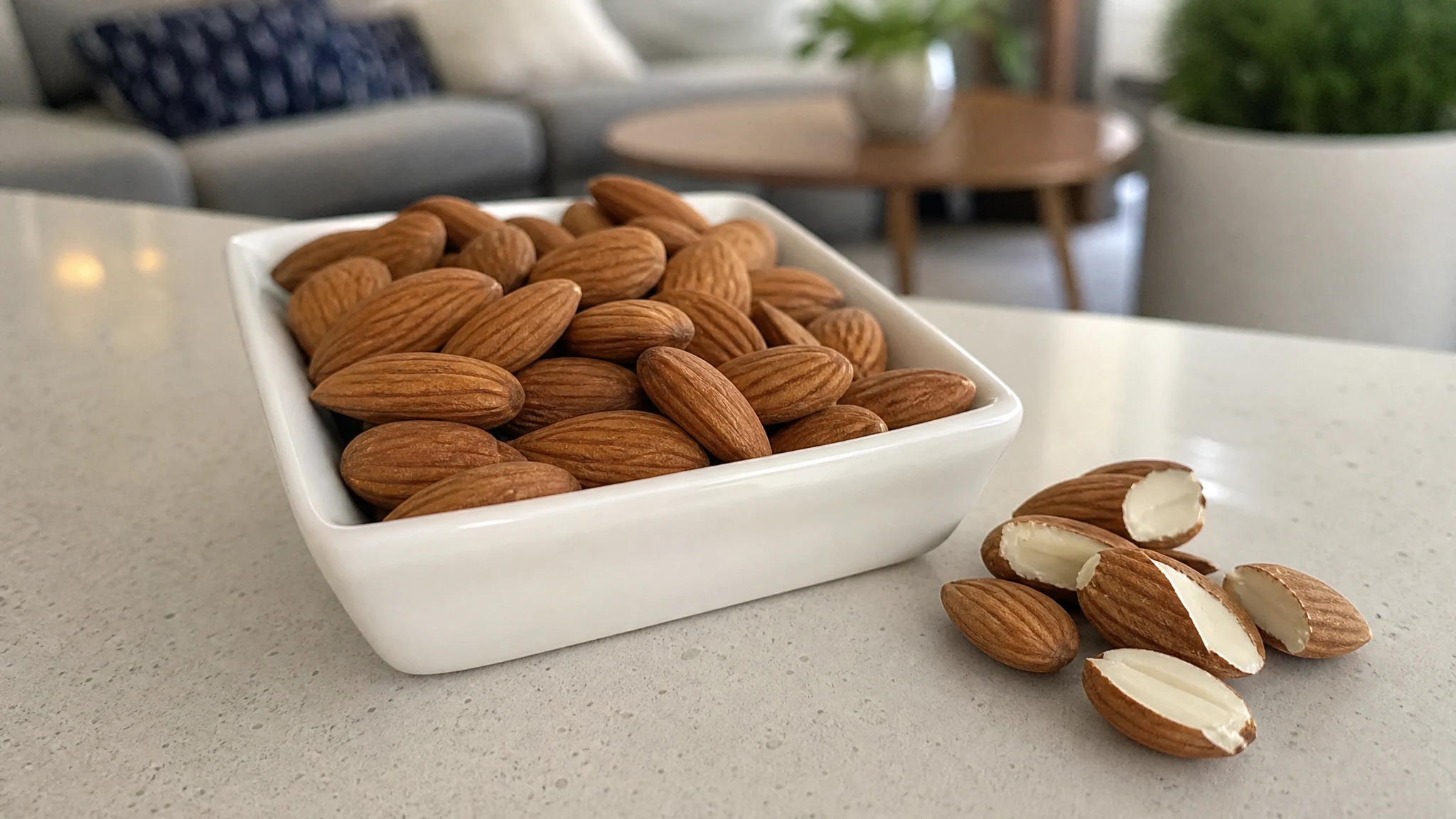
Here is the practical point. Whatever you put on your lips ends up in your mouth, a little at a time, and more if you lick. Our oil is made for external cosmetic use only; we do not market it for culinary use, and we do not describe it for lip use. It is also cold-pressed and unrefined, so trace almond protein is present, and anyone with a tree nut allergy should not use it. A reaction on or around the mouth is not a place to experiment. Our nut allergy post goes further, and an allergist can advise if you are unsure.
So our suggestion is simple: if you want almond oil in a lip product, buy one formulated, labeled and sold for lips by a lip-care maker, where the full ingredient list is in front of you. Food-grade almond oil is a different product from ours, sold by food sellers, and whether it suits lips is a question for that seller and a dermatologist. If you like making things yourself, our lip balm post covers the idea, though we would still start with the AAD guidance above.
If you love making things
Handmade lip care is a lovely hobby, and the pleasure is in choosing every ingredient yourself. Keep the list short, label the jar with the date, and stay away from the AAD list above while lips are chapped. Think of a homemade balm as a gift to yourself on a good day, and keep a store-bought one in your coat for the rest. If you ever hesitate over an ingredient, leave it out.
A one-minute label check
Pick up your lip balm and scan the ingredients against the AAD list: camphor, menthol, fragrance, lanolin, salicylic acid, mint or citrus flavoring. If any appear, that may be the whole story. Then look for something helpful, such as petrolatum, and check for SPF 30 or higher if you will be outdoors. A balm that passes both checks makes a separate oil unnecessary.
Habits through the day
Put a balm wherever you spend time: coat pocket, desk drawer, nightstand. You will find you start to notice the moments you lick your lips, often while concentrating or walking in the cold, and a balm within reach turns that urge into something kinder. Smooth it on slowly and press your lips together, then leave them alone.
In windy weather, a scarf pulled up over the mouth takes some of the sting out of a cold walk. And keep a glass of water nearby, since a day at a desk with a dry office heater can leave lips as parched as the outdoors.
For the rest of your skin
For the rest of your skin, a few drops on damp skin after a shower is our favorite use for the oil; see our dry skin post. Whatever you try, test first. The AAD method is a quarter-sized spot on the inner arm or elbow bend, twice a day for seven to ten days, watching for redness, itching or swelling. Our patch-testing guide has the details.
Soft lips are mostly a matter of habits and a good balm. The AAD says you can expect noticeable improvement in two to three weeks if you follow its tips, and that is a pleasant goal to aim for.
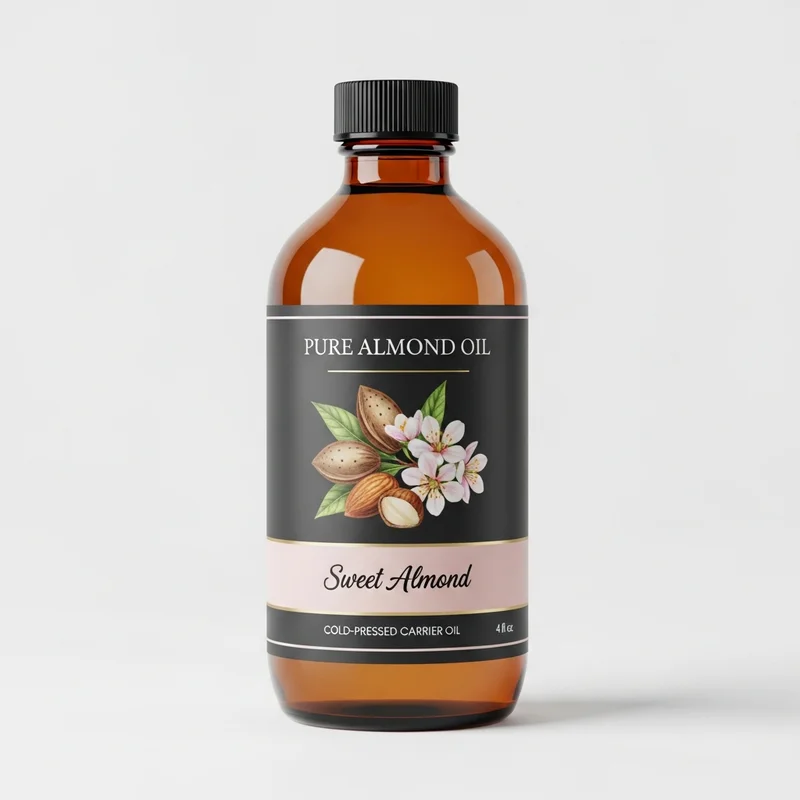
Sweet Almond Oil
Sweet Almond Oil from our own shop, in sizes from 0.5 oz to bulk.
From $9.99
Shop Now →Sources & Further Reading
- American Academy of Dermatology. 7 dermatologists’ tips for healing dry, chapped lips.
- American Academy of Dermatology. How to test skin care products.
- Vaughn A, et al. (2018). Multi-Center Randomized Clinical Study of The Effects of Natural Oils on Xerosis and Skin Barrier Properties. SKIN The Journal of Cutaneous Medicine.