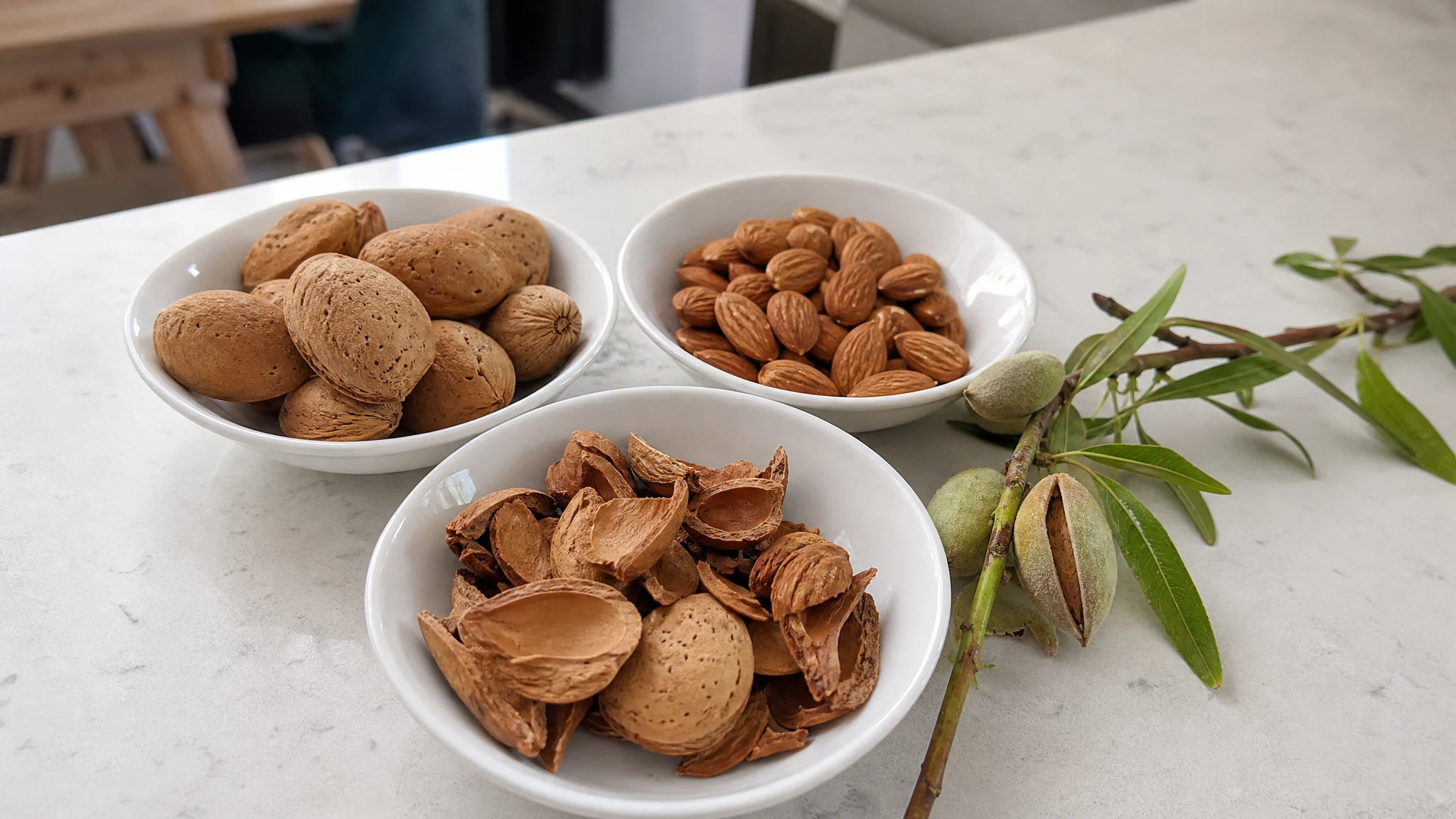
Almond Oil and Skin: What the Research Shows
Search for almond oil research and you will find a lot of confident claims and surprisingly little study. That is not a disappointment so much as a useful map: it shows what almond oil is well suited to, which is everyday moisturizing and massage, and where the science belongs to doctors rather than to a bottle.
The safety verdict
The most reassuring document is a safety review. An expert panel at the Cosmetic Ingredient Review assessed 244 plant-derived fatty acid oils as used in cosmetics, noted that oils are used for their skin conditioning, emollient and moisturizing properties, and concluded they are safe as used in cosmetics (Safety Assessment of Plant-Derived Fatty Acid Oils). That is a statement about ordinary cosmetic use, and it is the baseline we are happy to stand on. It does not mean every person tolerates every oil, which is why a patch test and a tree nut allergy check come first with almond.
If you are new to almond oil, that order is worth keeping. The reading comes after the checking. Open the bottle, notice the soft, lightly sweet scent, put a single drop on your forearm and see how it feels over the next few minutes. Our oil absorbs quickly and leaves a non-greasy finish, and that simple first impression tells you whether you will enjoy it before you spend any time with a study.
A small, friendly comparison
The most useful study for a skin-care reader is a small one. In a randomized pilot, 32 people with dry skin applied almond oil, coconut oil, jojoba oil or white petrolatum twice daily for two weeks. Hydration rose significantly with all four by week two, the products did not differ significantly from each other, and almond oil and coconut oil were the ones participants liked best, with almond oil named by 38% (Multi-Center Randomized Clinical Study of The Effects of Natural Oils on Xerosis and Skin Barrier Properties).
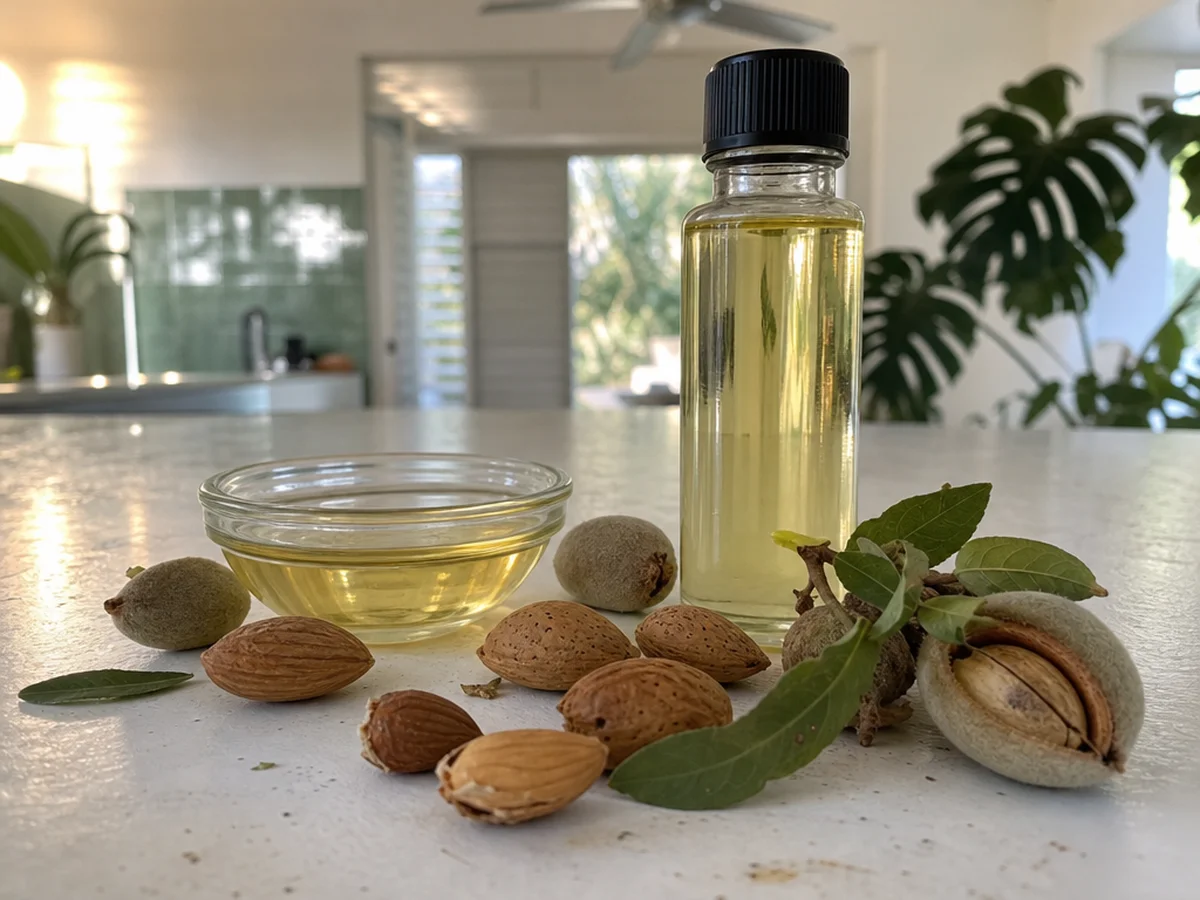
Read that in plain English: a plain oil moisturized dry skin about as well as petrolatum over two weeks, and people enjoyed using it more. It is a pilot, so we would not hang a lot on it, but it fits what almond oil feels like on the skin. It also fits why we think of it as a lovely everyday body oil.
Notice how simple the routine in that study was: a plain oil, twice a day. That is the quiet lesson in a small study like this one. A dependable routine you enjoy counts for more than a clever ingredient list, and a few drops after a shower is about as simple as a routine gets.
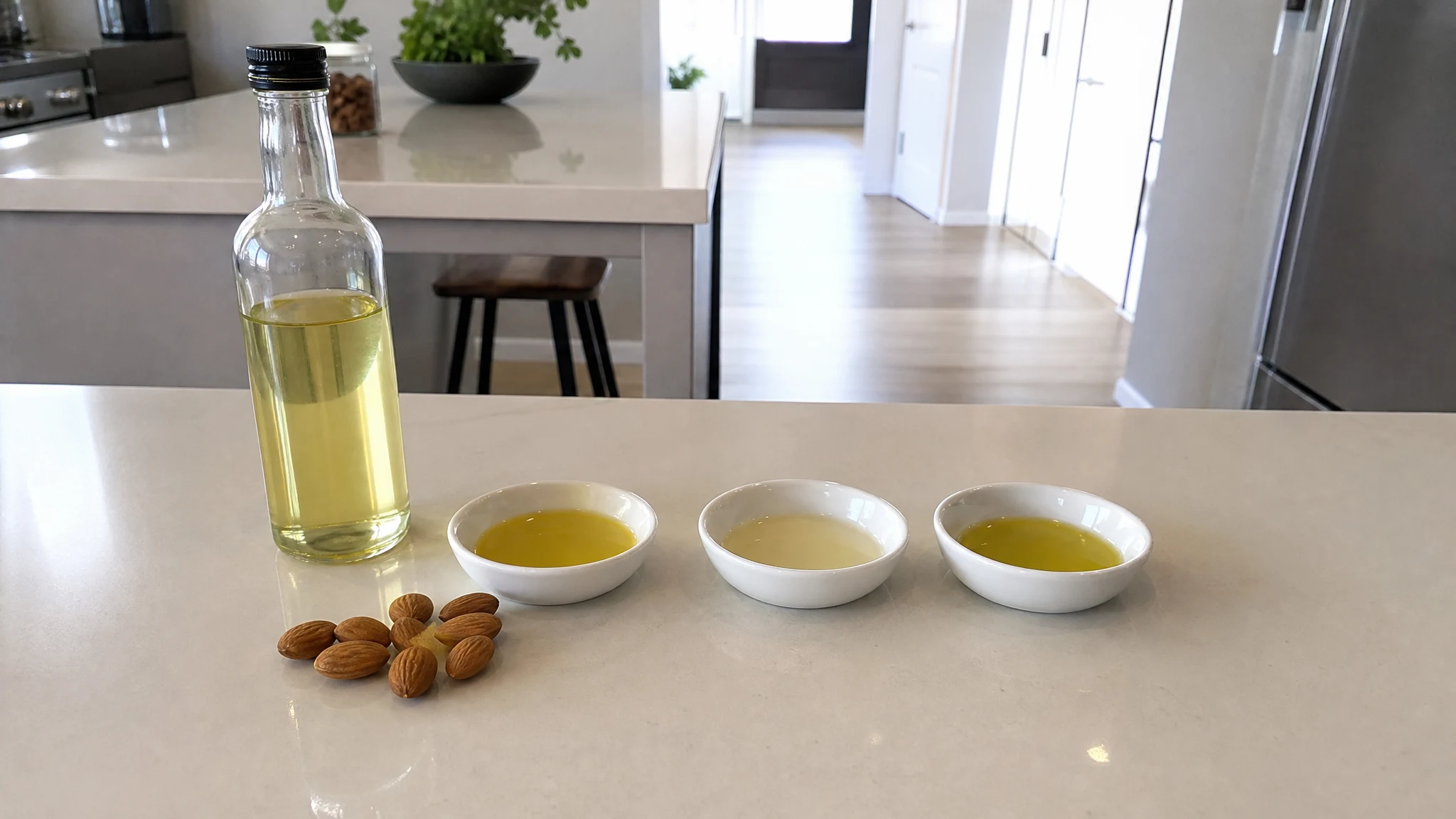
If you want to try the comparison for yourself, keep it playful and low stakes. Put a drop of oil on the back of one hand and nothing on the other, and notice how each feels after a few minutes. Ours is a thin, faintly golden oil that spreads easily, so a single drop covers more than you expect. This is not a study, only a way to meet the oil, and it is a good first step before you decide whether it belongs in your routine.
Why the clinical trials stay with clinicians
If you look further, you will meet trials of almond oil in pregnancy and in neonatal units. One randomized trial compared aloe vera gel and sweet almond oil in nulliparous women (The effect of Aloe vera gel and sweet almond oil on striae gravidarum in nulliparous women), and another compared sunflower seed oil and almond oil on the skin of preterm infants (The Effect of Sunflower Seed and Almond Oil on Preterm Infant Skin: A Randomized Controlled Trial).
These are worth knowing exist, but they tell you about specific people in specific care settings, with oil applied under a protocol. We sell a cosmetic oil for external use and make no medical claims, so we will not translate those results into advice. If you are pregnant, or choosing something for a newborn, your obstetrician, midwife or pediatrician is the right person to ask.
What we take from it
Put the pieces together and the picture is consistent. Almond oil is a mild, well-liked emollient with a sound cosmetic safety record, and the research that exists is small enough that anyone promising dramatic results is getting ahead of it. We think that is a fine place for an oil to be. You do not need a miracle from a bottle of sweet almond oil; you need something that spreads nicely, smells gently of almonds and leaves skin feeling soft.
For how to use it day to day, our dry skin guide and patch test walkthrough are good next steps, and our nut allergy article explains who should skip it entirely.
Our oil is cold-pressed and sold unrefined, so we ask anyone with a tree nut allergy not to use it, and we are glad to answer questions in writing through our contact page.
A bottle of sweet almond oil does not need to promise anything. It needs to feel good, smell gently of almonds and be fresh when you open it, and those are things you can judge for yourself in a minute.
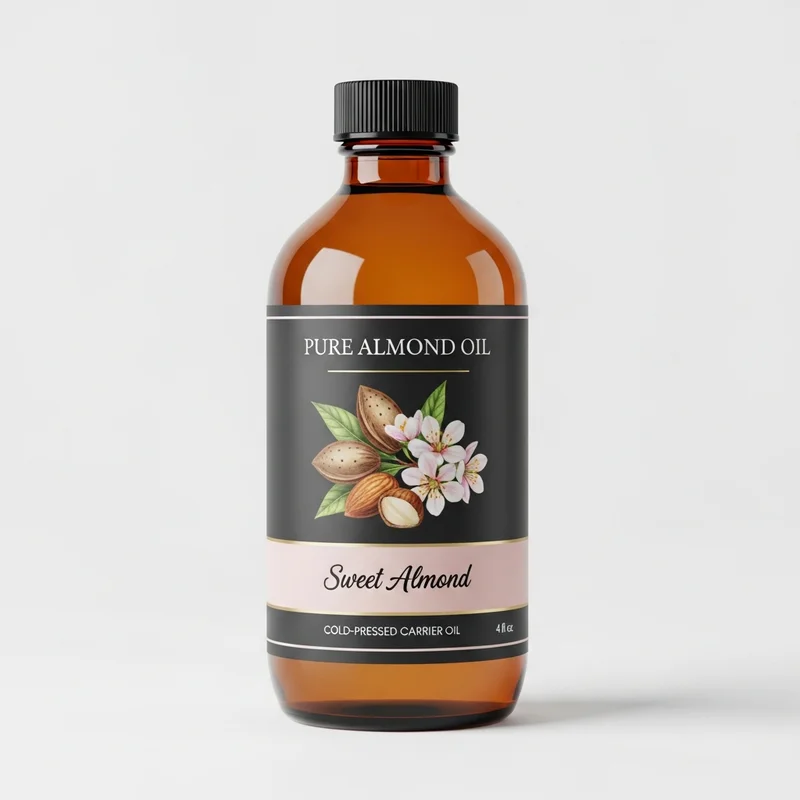
Sweet Almond Oil
Sweet Almond Oil from our own shop, in sizes from 0.5 oz to bulk.
From $9.99
Shop Now →Sources & Further Reading
- Cosmetic Ingredient Review Expert Panel, Safety Assessment of Plant-Derived Fatty Acid Oils, Int J Toxicol, 2017
- Vaughn et al., Multi-Center Randomized Clinical Study of The Effects of Natural Oils on Xerosis and Skin Barrier Properties, SKIN The Journal of Cutaneous Medicine
- Hajhashemi et al., The effect of Aloe vera gel and sweet almond oil on striae gravidarum in nulliparous women, J Matern Fetal Neonatal Med, 2018
- Çağlar et al., The Effect of Sunflower Seed and Almond Oil on Preterm Infant Skin: A Randomized Controlled Trial, Adv Skin Wound Care, 2020