How to Use Almond Oil on Skin: The Damp-Skin Method
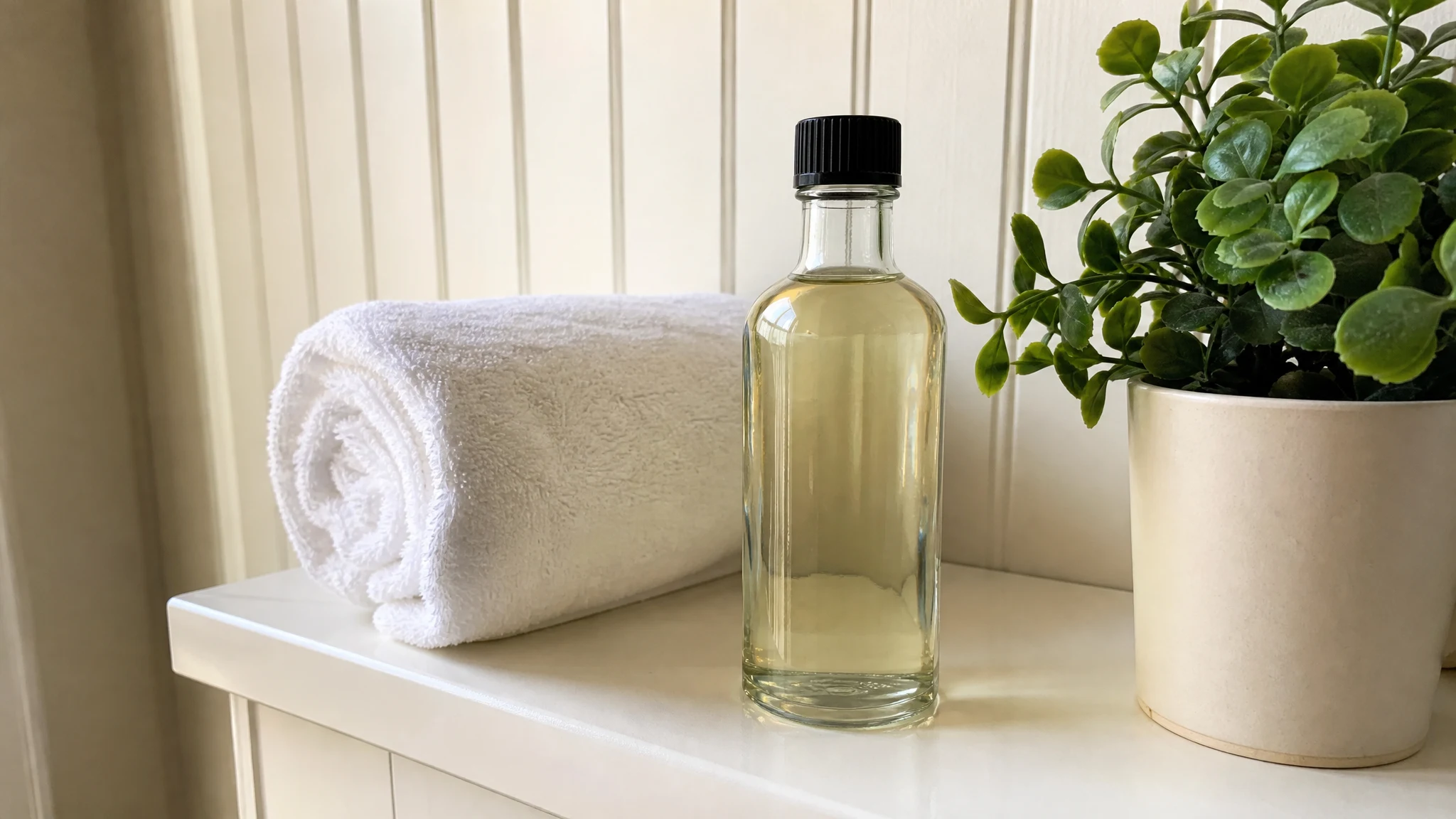
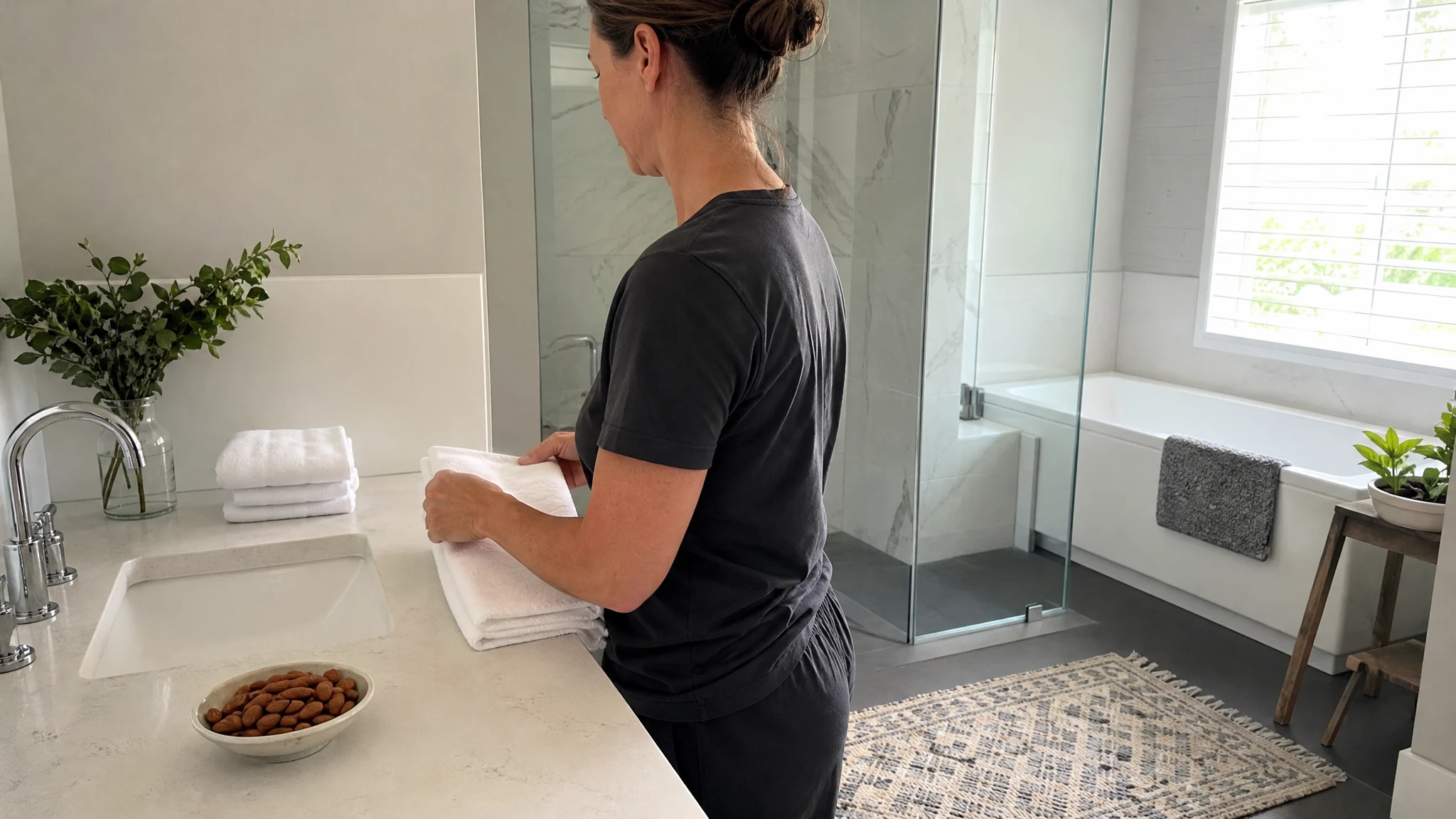
The best moment to use almond oil on your skin is the minute you step out of the shower, when your skin is still damp and a towel has only patted it. A few drops pressed over that moisture feel soft and quick to absorb, and it is the simplest way we know to get the most out of a bottle.
Why damp skin matters
Board-certified dermatologists at the American Academy of Dermatology make the timing point themselves: pat the skin dry after a bath or shower and apply moisturizer right away, while it is still damp. They also suggest keeping baths and showers to five to ten minutes in warm water, choosing fragrance-free products, and moisturizing again after hand washing and whenever skin feels dry. None of that requires a special product. An oil is simply a lovely way to do the last step, because it spreads in a thin layer over the water already on your skin.
The same page recommends creams and ointments over lotions for very dry skin, and lists ingredients such as petrolatum, shea butter and jojoba oil among the ones to look for. That is useful context: an oil is a light, pleasant finishing layer, and for skin that is cracking or very dry you may want a heavier ointment from a pharmacy alongside it.
Opening the bottle
Take a moment with the bottle when it arrives. Ours is amber glass, with a pressing date, a bottling date and a lot number on the label. Pour a few drops into your palm and notice the color, a faintly golden shade, and the smell, soft, subtly nutty and lightly sweet. Rub your fingers together and feel how smoothly it glides. That small ritual tells you what the oil is like when it is fresh, so you will recognize it if it ever changes.
What is in the bottle
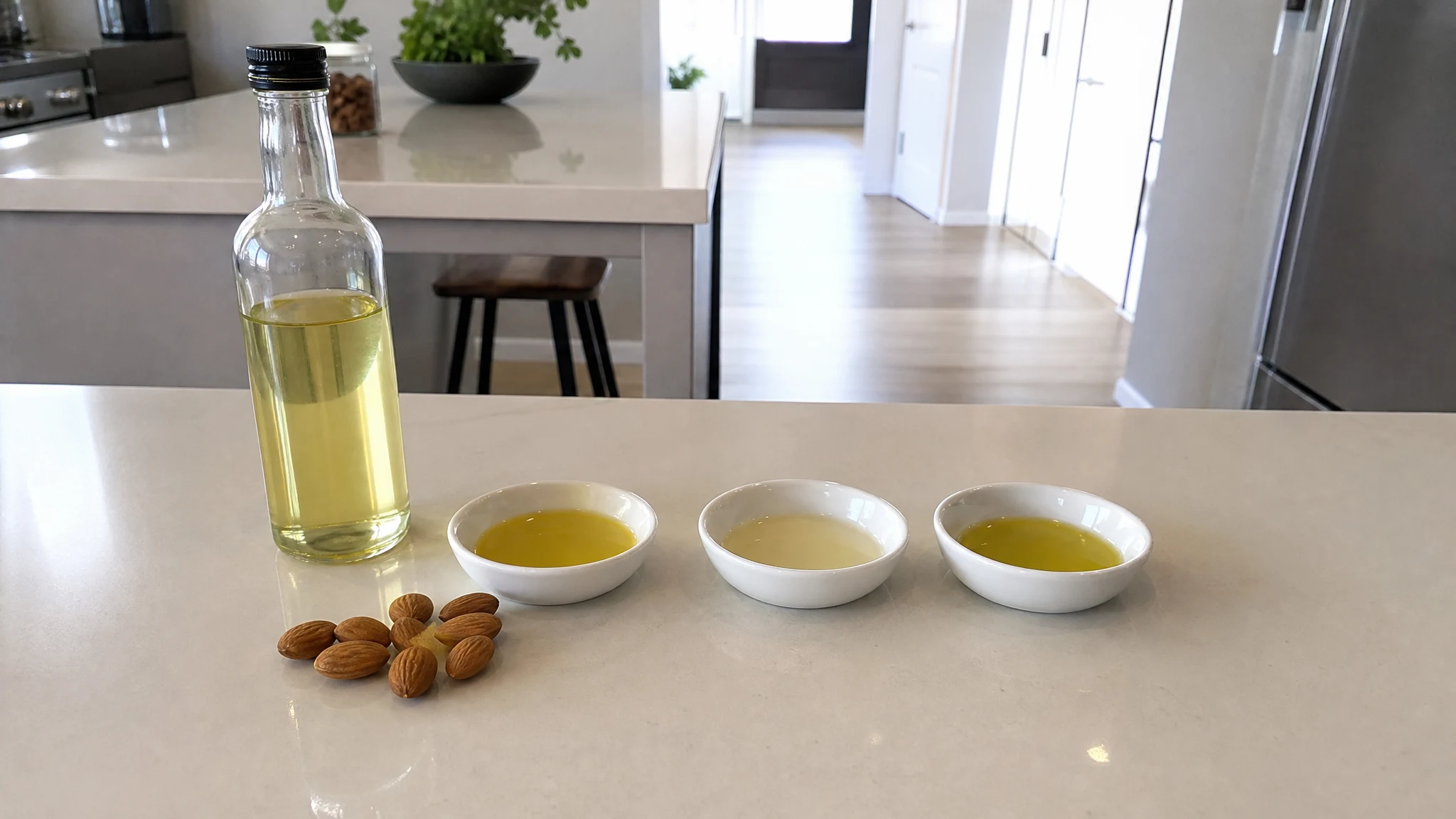
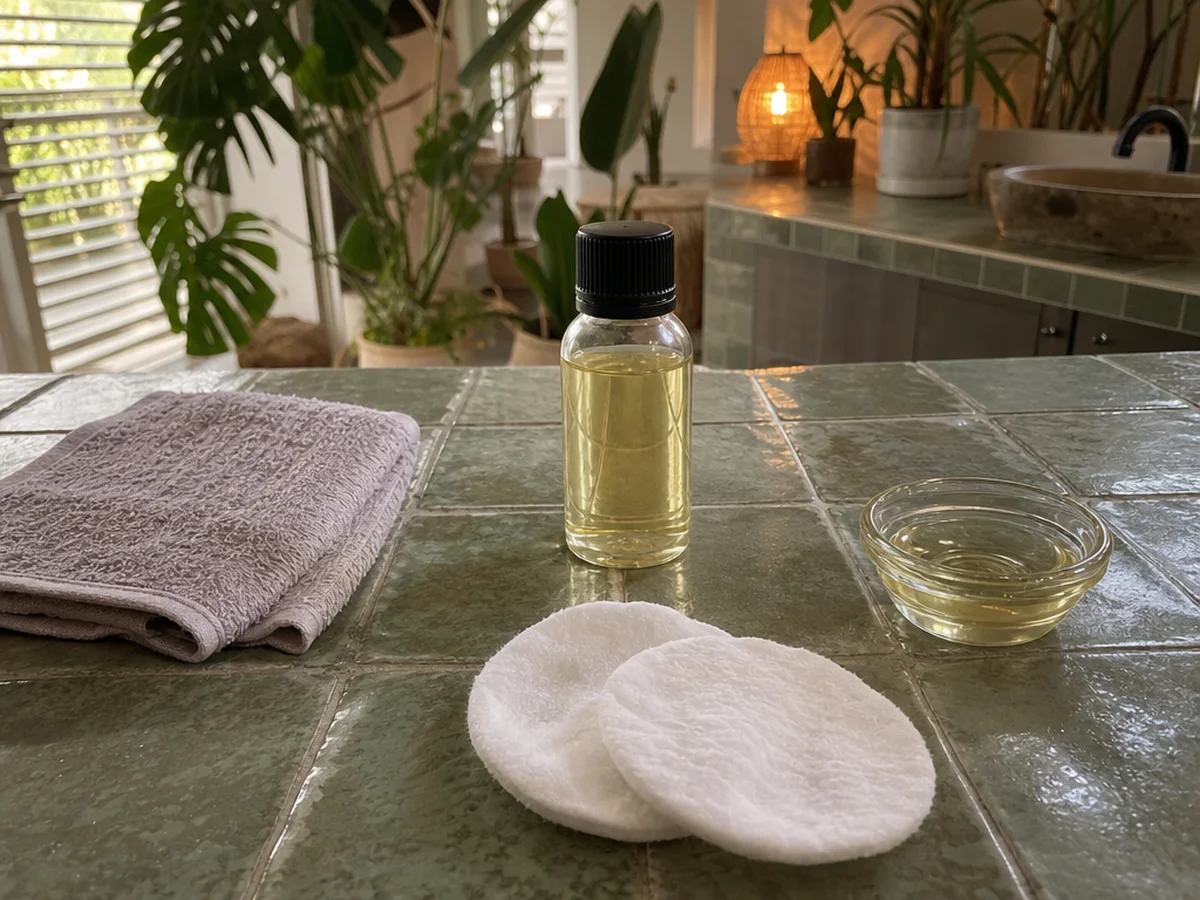
Ours is a cold-pressed, unrefined sweet almond oil with nothing added. It glides on softly, absorbs fast and leaves a non-greasy finish, with a gentle, subtly nutty, lightly sweet aroma. The composition is part of why it feels that way. A 2020 analysis of 31 sweet almond varieties found oleic acid, a soft, spreadable fatty acid, making up about 62% to 76% of the oil, followed by linoleic acid and a small amount of vitamin E. Those are laboratory figures for almond oil in general, extracted with a solvent, so they describe the family rather than our batch. The Certificate of Analysis we publish covers density, refractive index and optical rotation for one batch.
What the research gives us
Two findings are worth knowing. First, the Cosmetic Ingredient Review expert panel assessed 244 plant-derived oils and concluded they are safe as used in cosmetics. Second, a small randomized pilot in people with dry skin compared almond, coconut and jojoba oil with white petrolatum, applied twice a day for two weeks. All four raised skin hydration, with no significant differences among them, and almond oil was the one participants liked best. Taken together, that makes sweet almond oil a reasonable, well-liked moisturizer for dry skin in people who tolerate it.

It also helps to remember that plant oils are not interchangeable. In a study of 19 adults, olive oil applied to the forearm reduced skin barrier integrity and caused mild redness, while sunflower seed oil preserved integrity and improved hydration. Almond oil was not in that study, but it is a good reminder to choose an oil on its own record, and to start small with any new one.
Where to start on your body
If you are new to oils, begin with the places where dry skin is most obvious and the skin is sturdy: shins, forearms and elbows. Those areas forgive a little too much or too little. Save the face for later, once you know how the oil feels and after a patch test. Over a week or two you will find your own favorite spots, and your own amount, and the routine will take less thought each time.
Know its lane
Almond oil is a moisturizer, and that is the job we recommend it for. It is not a sunscreen, and dermatologists advise a broad-spectrum, water-resistant sunscreen with an SPF of 30 or higher for sun protection, with shade and protective clothing; our article on that myth goes into it. Persistent rash, scaling or itching is a question for a dermatologist, and the AAD notes that ongoing dryness can be linked to conditions that need a diagnosis. If you are curious how far the research on almond oil goes beyond moisturizing, our science article maps it.
Using it well
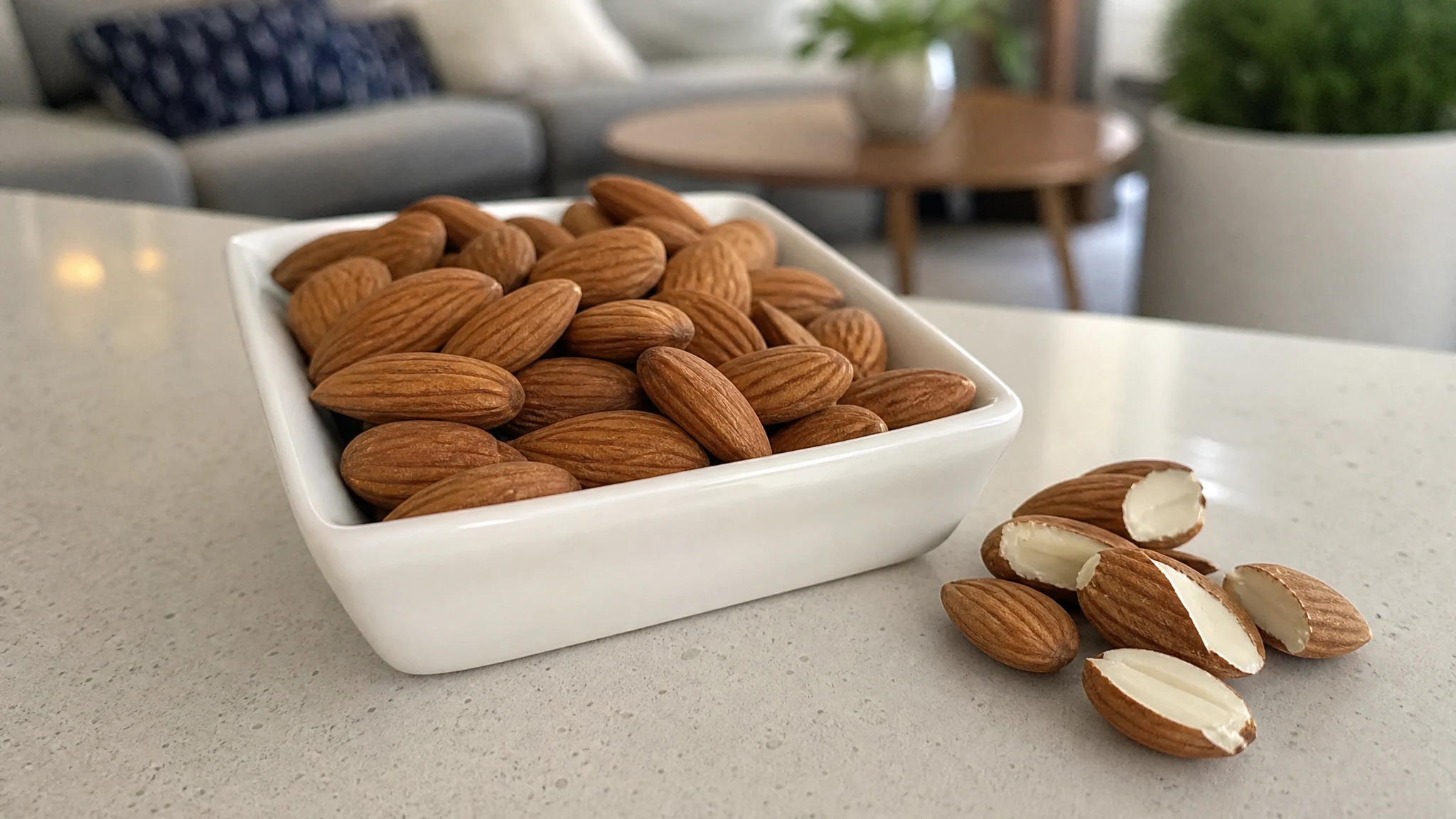
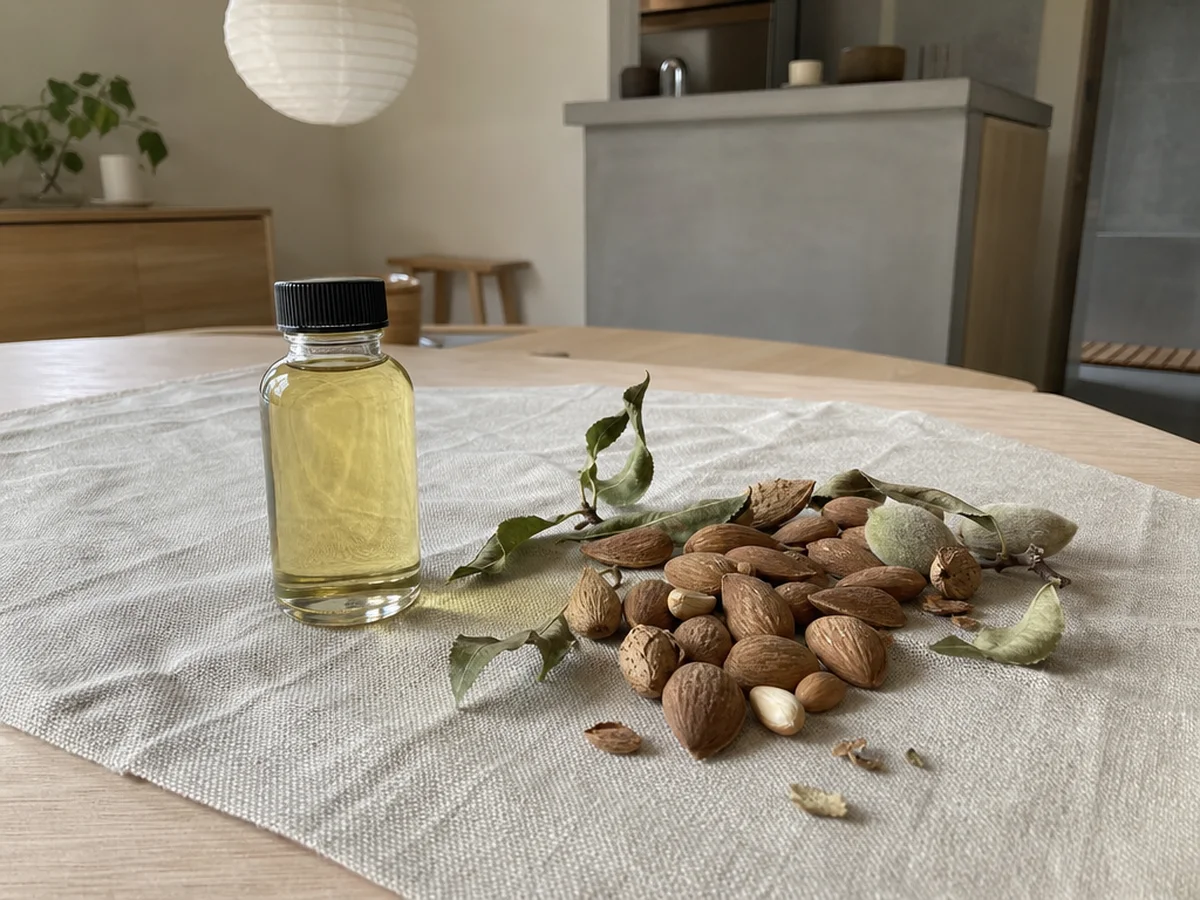
Start with a few drops warmed between your palms and add more only if needed; a thin layer is the whole point. Almond is a tree nut and our oil is unrefined, so trace almond protein is present: anyone with a tree nut allergy should not use it. Patch test a small area and wait a day first, and keep the oil away from your eyes. Our patch test guide explains how, and the nut allergy article has the detail. Kept cool and dark, the oil lasts about a year from pressing. For faces and breakouts, our face article and acne FAQ take it from there.
If you ask for a single habit from this guide, make it the damp-skin one. It costs nothing, it works with whatever moisturizer you prefer, and it makes an oil feel every bit as good as it looks.

Sweet Almond Oil
Sweet Almond Oil from our own shop, in sizes from 0.5 oz to bulk.
From $9.99
Shop Now →Sources & Further Reading
- Dermatologists' top tips for relieving dry skin, American Academy of Dermatology
- Multi-Center Randomized Clinical Study of The Effects of Natural Oils on Xerosis and Skin Barrier Properties, SKIN The Journal of Cutaneous Medicine
- Safety Assessment of Plant-Derived Fatty Acid Oils, International Journal of Toxicology, 2017
- Effect of olive and sunflower seed oil on the adult skin barrier: implications for neonatal skin care, Pediatric Dermatology, 2013
- Effect of almond genotypes on fatty acid composition, tocopherols and mineral contents and bioactive properties of sweet almond (Prunus amygdalus Batsch spp. dulce) kernel and oils, Journal of Food Science and Technology, 2020