Can You Use Almond Oil on Leather? Conservators Say
When the National Park Service’s conservators wrote up what a century of research says about leather dressings, one line stood out: researchers concluded nearly a hundred years ago that dressings have no preservative effect. It is a surprising sentence for anyone who has ever reached for a bottle of oil to feed a tired pair of boots. Their reasoning is interesting, and it is a useful guide even if you only have a handbag or a pair of work boots to look after.
What the conservators learned the hard way
The Park Service leaflet, Conserve O Gram 9/1, explains that in the 19th and early 20th centuries it was routine to dress old leather in museum collections with products such as neatsfoot oil and saddle soap, in the hope of slowing deterioration. Over time, the results taught the opposite lesson. Frequent dressing contributed to leather that looked oily and dark, turned brittle, and grew a waxy white bloom called fatty acid spew. The leaflet describes a pair of children’s shoes treated at Harpers Ferry Center in 1978: soaking one in a dressing solution darkened it and weakened the stitching until the shoe came apart. Its summary is memorable: sometimes doing nothing is the best course of action for the longevity of an object.
The same leaflet lists what the fats and oils in dressings can do: form that surface bloom, turn acidic, go rancid with a smell that cannot be reversed, oxidize and stiffen leather, leave a sticky surface and stain it. Applying a dressing is also described as irreversible, because the ingredients soak in and move through the leather.
Is your bag a museum piece?
No, and the conservators say as much. The leaflet states that applying dressings to personal, non-museum objects is acceptable if they must still function, naming leather work boots, baseball gloves and horse saddles. The risk the museums are guarding against builds up over years of controlled storage and routine application. A pair of boots that flex all day is a different situation. So the fair reading is a moderate one: a light, occasional application for an item you are using and enjoying is reasonable, and a heavy, repeated soaking is the habit to avoid.
How we would approach it
Almond oil is a plant oil, and the leaflet’s list of problems applies to fats and oils in general, so the same logic carries over as reasoning rather than a test of ours. Here is what we would suggest, starting with what we are and are not.
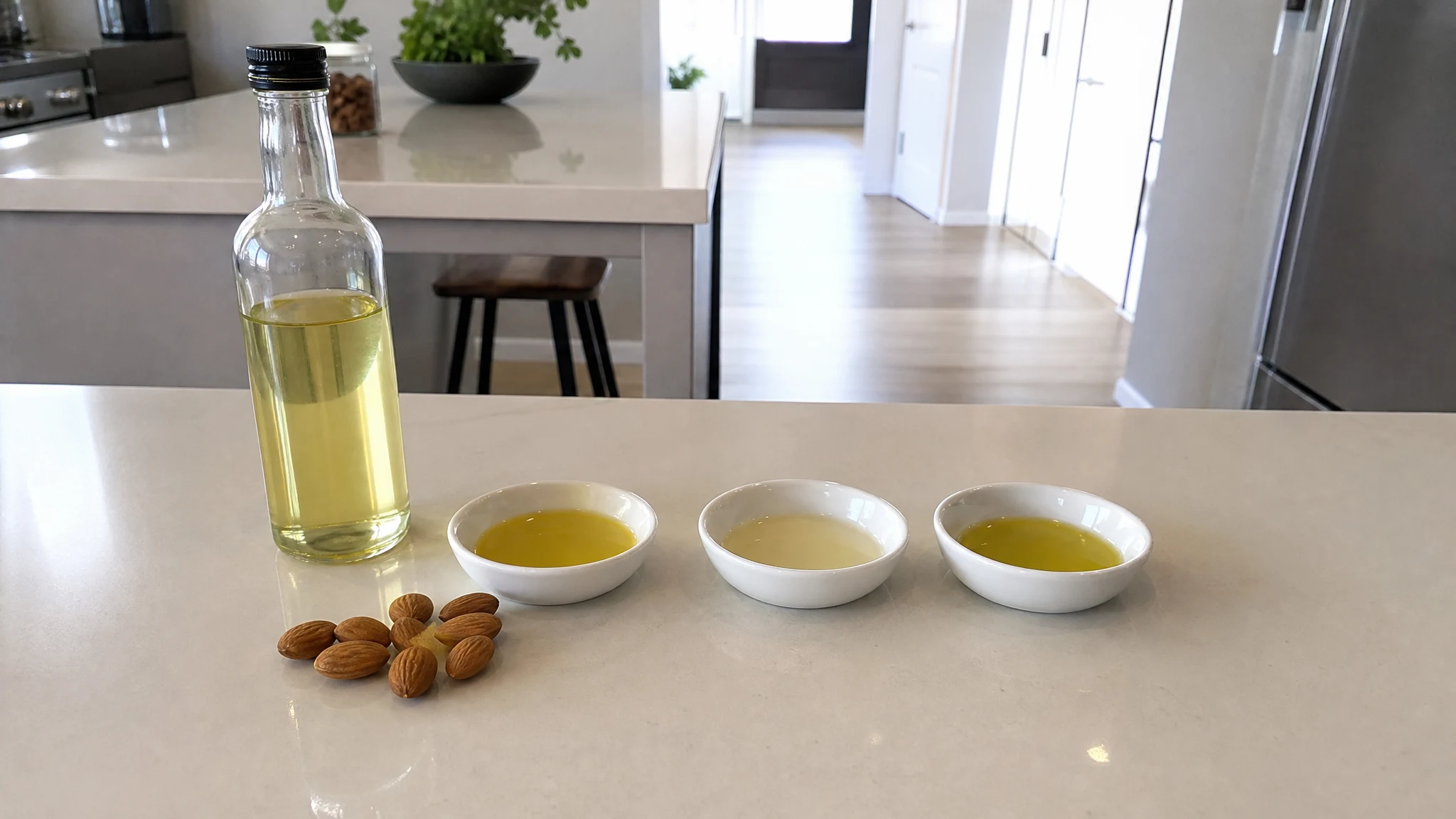
- Know what ours is. Our sweet almond oil is a cosmetic oil for skin, cold-pressed and sold unrefined with no added preservatives or vitamin E. We have not formulated it for leather, and a leather-care maker’s conditioner is designed for the job.
- Read the care label first. If the maker of a bag or pair of shoes names a conditioner, use that. If the label is silent, a shoe-repair or leather-care specialist knows the tannage and finish of your item.
- Test somewhere hidden. A small spot inside a seam or under a flap shows you any darkening before it matters.
- Use very little. Think of a faint sheen, not a soaking, and wipe off the excess.
- Keep heirlooms away. Antique or collectible leather should not be dressed with a kitchen or cosmetic oil; the conservators advise against dressing as routine care, and a conservator can advise on individual pieces.
Freshness matters, too. We put the shelf life of our oil at about a year from pressing, kept cool and dark. Oil soaked into leather is neither of those things, which is another reason to keep amounts tiny.
Care that needs no oil at all
Much of good leather care is dry and quiet. Wipe dust off with a soft, dry cloth. If shoes or a bag get wet, let them dry slowly at room temperature, away from radiators and direct sun, and stuff boots with paper to hold their shape. Store leather where air can move around it, in a cloth bag rather than a sealed plastic one. These habits cost nothing and never leave a mark.
If something white appears
The leaflet gives a handy way to tell spew from mold. If a bright white bloom appears and there has been no water event or humidity above 65 percent, spew is likely. Mold tends to look fuzzy or branched, and if the growth does not change when the object is moved to a drier spot below 50 percent relative humidity, it is more likely spew. Spew feels waxy or soapy and melts with gentle heat from a hair dryer, as the leaflet describes. If you are unsure, a leather specialist can tell you.
A household note on skin contact
Furniture, car seats and sofas are touched by skin all day. Our oil carries trace almond protein, and we ask anyone with a tree nut allergy not to use it, so we would not use it on seating in a household with a nut allergy. An allergist writing for the American Academy of Allergy, Asthma and Immunology says topical exposure to nut oils has not been well studied, which is a good reason for caution. Our nut allergy post explains more.
If you like exploring non-skin uses of the oil, our posts on wood furniture, guitar fretboards and cutting boards each look at how it behaves on other surfaces.
Leather rewards patience. A little restraint, and the right product from a leather-care maker, is often the best thing you can do for it.
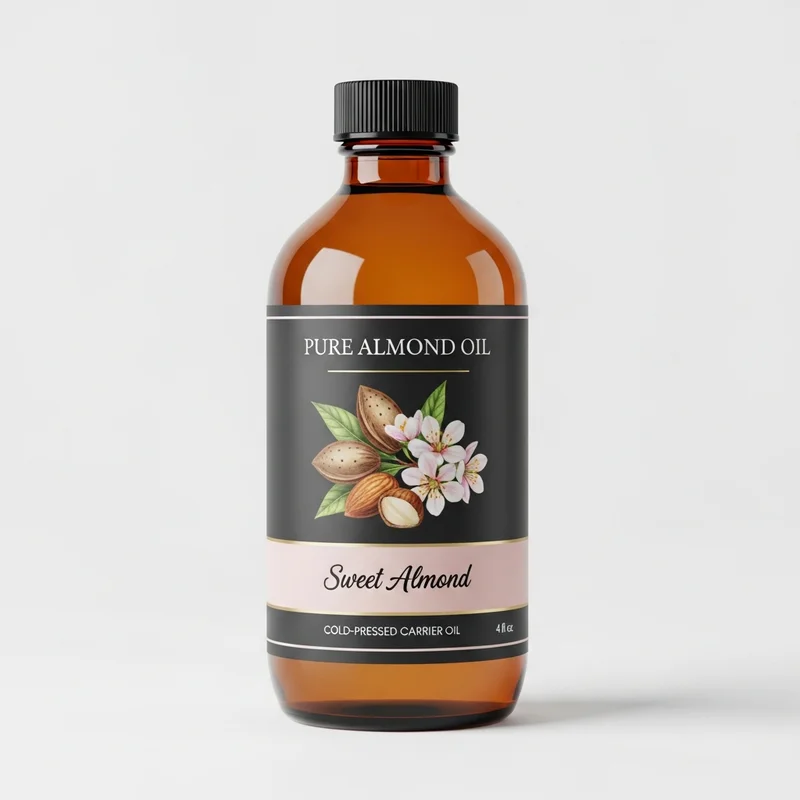
Sweet Almond Oil
Sweet Almond Oil from our own shop, in sizes from 0.5 oz to bulk.
From $9.99
Shop Now →Sources & Further Reading
- National Park Service. Conserve O Gram 9/1: Fatty Acid Spew on Leather Objects.
- American Academy of Allergy, Asthma and Immunology. Food allergy: nut oils in topical products.