Does Almond Oil Work on Wood Furniture?
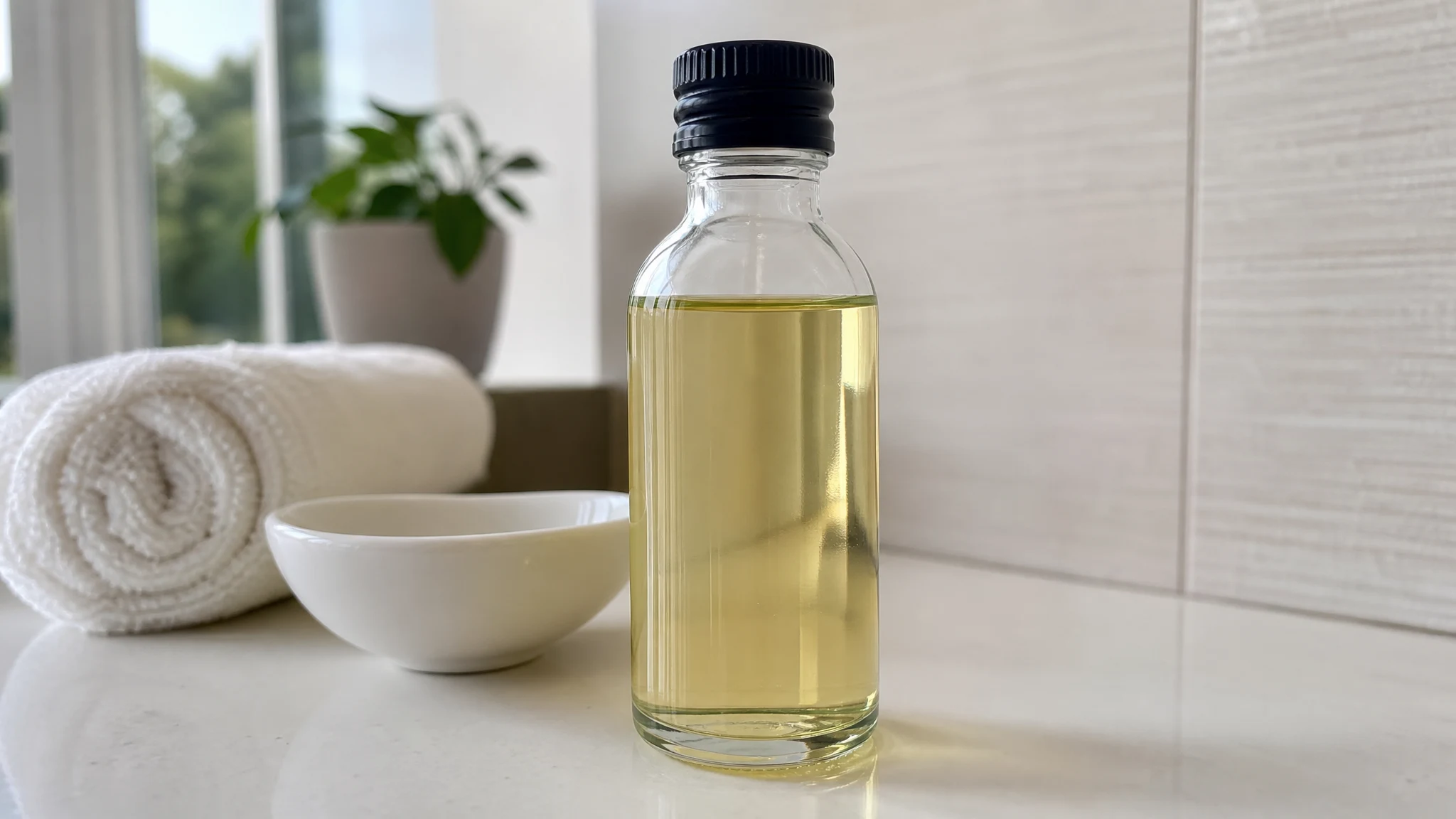
A bottle of almond oil and a dull wooden table look like a natural match, and the idea is everywhere online. The detail that rarely makes the blog posts comes from wood finishing: some oils harden in the wood and some never do, and almond oil sits in the second group.
First, what is already on the wood?
The US Forest Products Laboratory leaflet on finishes for wood bowls and butcher blocks splits finishes into two families. Film finishes such as varnish, lacquer and shellac sit on top of the wood and eventually chip, peel or crack. Penetrating finishes soak in, and come as drying oils or nondrying oils. The leaflet is written about bowls and cutting boards, not furniture, but the principle carries over. Most dining tables and chairs carry a film finish. An oil wiped over a film cannot feed the wood beneath it; at most it adds a thin layer to the surface that a duster will lift. A bare or oil-finished surface is the case where oil can actually reach the wood, and if you are unsure which you have, a furniture restorer can tell you in seconds.
Drying oils and nondrying oils
Drying oils such as linseed and tung penetrate and then harden, and the leaflet counts them among the most satisfactory finishes for wood, since they reduce water absorption and resist scratches. Nondrying oils "simply penetrate the wood," and the leaflet names both vegetable and mineral oils in that group. It also says vegetable oils eventually turn rancid, which can leave an unpleasant odor or flavor.
Almond oil is not named in the leaflet, so this part is our reasoning from the chemistry. Oils that cure to a hard coat are rich in polyunsaturated fatty acids, which let them cross-link as they take up oxygen. Almond oil is mostly oleic acid, a monounsaturated fat. A study of eight California almond cultivars put oleic acid between about 58 and 74 percent of the soluble lipids, and that is general almond data, not a measurement of our oil. Mostly oleic acid points to a nondrying oil, which is why we describe almond oil that way.
What that means in practice
- It will not build a protective coat, because it does not harden.
- A light touch is best. Any oil left on the surface tends to feel slightly tacky and collect dust and fingerprints, so wipe off the excess.
- Our oil is cold-pressed, unrefined and has no added preservatives or vitamin E. We put its good life at about a year from pressing, cool and dark, and a sunny tabletop is neither.
If you decide to try a hidden spot
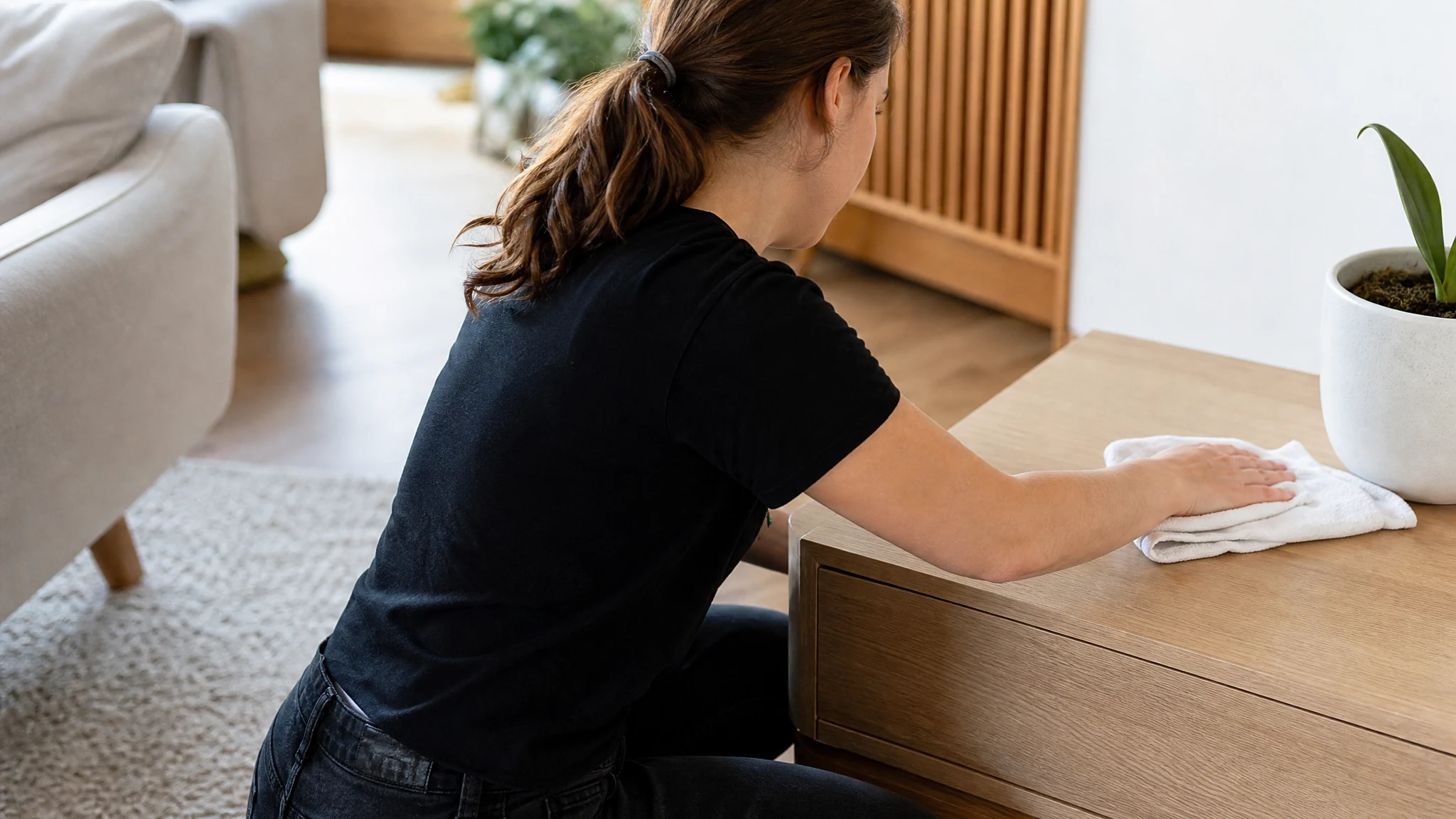
If your piece is bare or oil-finished and you are curious, start somewhere nobody will see, such as the underside of a table or the back of a leg. Use a soft, lint-free cloth with a tiny amount of oil and rub it in along the grain. Then wait a day. Wipe away any oil still sitting on the surface. If it looks even and feels dry to the touch, you have your answer. If it feels tacky, that tells you something too. For an antique or a piece you love, ask a restorer before you reach for any oil at all.
It helps to notice how a surface feels after you touch it. A well-finished table is smooth and slightly cool under your palm. A table with too much oil on it feels faintly sticky, and your hand picks up dust. If you ever find yourself in that second situation, a clean, dry cloth wiped along the grain will lift most of it, and a restorer can advise on the rest.
Rags and heat
If you ever move on to a drying oil finish like linseed, remember that curing releases heat. A Mississippi State University Extension safety note says a pile of oil-soaked rags can heat itself because it insulates, and advises spreading small amounts in a single layer outdoors until they are hard and brittle. The note lists several cooking oils too. It does not test almond oil, so treat any oily cloth with the same care.
Food, skin and allergy
Furniture is touched, leaned on and sometimes eaten from. Our oil is a cosmetic oil, so for chopping boards and serving trays we do not offer it, and the leaflet itself says finishes for food-contact items should be recommended for food use. For allergy, anyone with a tree nut allergy should not use our oil, and a nut-allergic household should avoid putting unrefined nut oil on surfaces that hands and faces touch daily. Our nut allergy guide goes into detail.
What we would do with the bottle
We press this oil for skin and hair, and that is where its character shows. It pours easily, spreads in a thin film, smells softly of almonds and leaves a light, non-greasy finish. Those same qualities are why a nondrying oil tends to sit on a tabletop instead of becoming a finish: it is made to sink into skin. Matching the oil to the job is the best advice we can give about any bottle in your cupboard.
For an antique or family piece, ask a restorer, because a finish history matters and an oil cannot be undone. Related questions, with the same pattern of what an oil does and what it leaves behind, are in our posts on almond oil on leather, hinges and storing almond oil. Where almond oil really shines is on skin and hair, which is what we press it for.
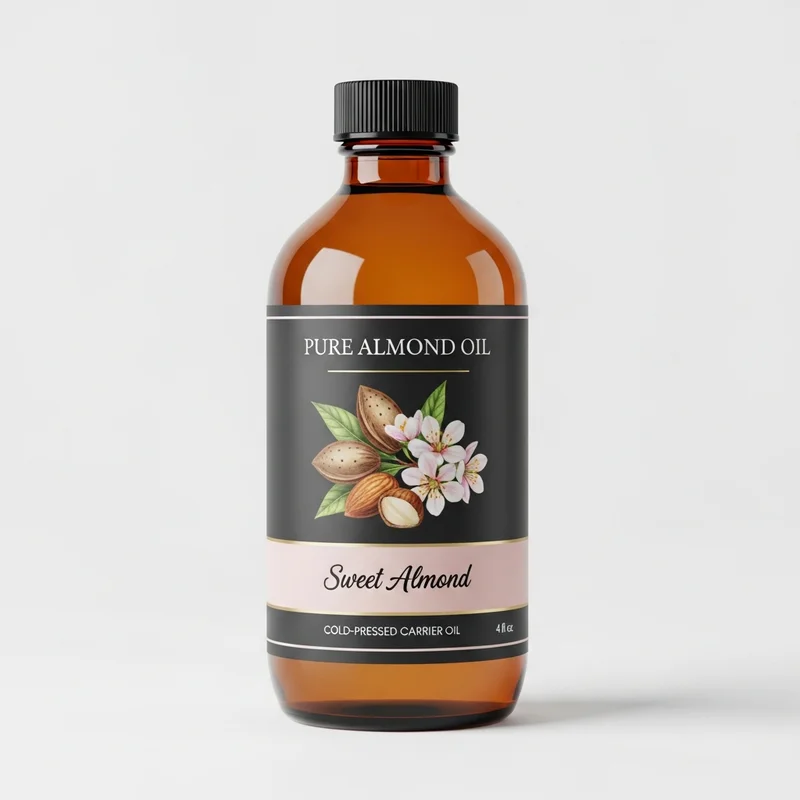
Sweet Almond Oil
Sweet Almond Oil from our own shop, in sizes from 0.5 oz to bulk.
From $9.99
Shop Now →