Almond Oil on Squeaky Hinges: Fix or Mistake?
Everyone who has stood at a squeaking door with a bottle of kitchen oil in hand knows how this goes: a drop on the pin, a few swings, and silence. It works, which is exactly why the question of what happens next is the interesting part.
Why any oil works at first
A squeak is metal rubbing on metal without enough of a film between. Almost any oil supplies that film, so the noise stops. That is true of almond oil, olive oil, canola and plenty of others. Manufacturers of purpose-made lubricants say as much while pointing out that household oils attract dust and grime over time.
You will know the moment it has worked, because the sound changes from a rasp to a quiet swing. That small victory is real. The only question is what the door looks and feels like a few weeks later.
What lubricant engineers say about plant oils
The engineering literature is encouraging and cautionary at once. A 1996 study in Lubrication Engineering found that neat high-oleic sunflower oil lubricated better than neat mineral oil, which is a point in favour of plant oils. The same study found that high-oleic vegetable oils without additives are much poorer than mineral oils at resisting oxidation under heat, and that a small dose of antioxidant (about one percent) dramatically cut the deposits. A later paper in Industrial Crops and Products describes vegetable oils as promising base fluids for greener lubricants, then lists poor oxidation stability and cold-flow behavior as the problems engineers work to solve with additives.
Neither paper tested almond oil or a door. They show a direction: plant oils lubricate well, and their weakness is that they age.
What that means for almond oil
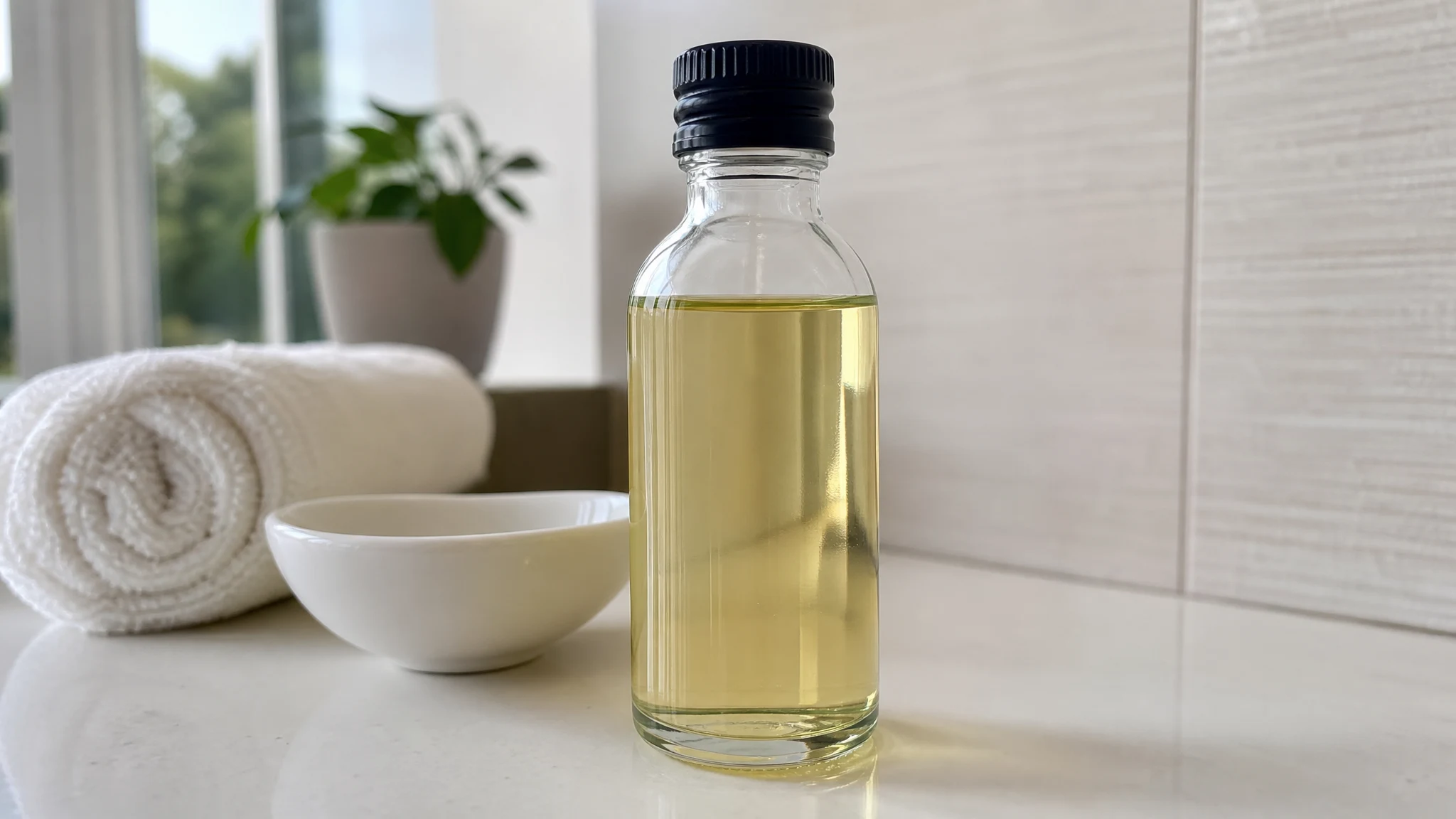
Sweet almond oil is rich in oleic acid, as the high-oleic oils in those studies are, and ours is cold-pressed and unrefined with nothing added, not even vitamin E. We keep it that way because it is a skin and hair oil, and we put its good life at about a year from pressing, kept cool and dark. A hinge is the opposite environment, with air, light, warmth and metal all in contact with the oil. Our reasoning, and it is reasoning rather than a measurement, is that an oil there will slowly thicken and turn tacky, and a tacky film collects dust. That is what lubricant makers describe.
What a purpose-made product adds
The antioxidant result in that 1996 study is the quiet hero of the story. Lubricant makers do not leave a plant oil bare; they formulate it with additives so it stays smooth instead of thickening, and that is the difference between a drop of kitchen oil and a product designed to live inside a mechanism. It is also a good way to see our oil clearly. We press it for skin and hair, where it absorbs quickly and finishes with a soft glide, and we leave it that way, with nothing added.
Choosing by the squeak
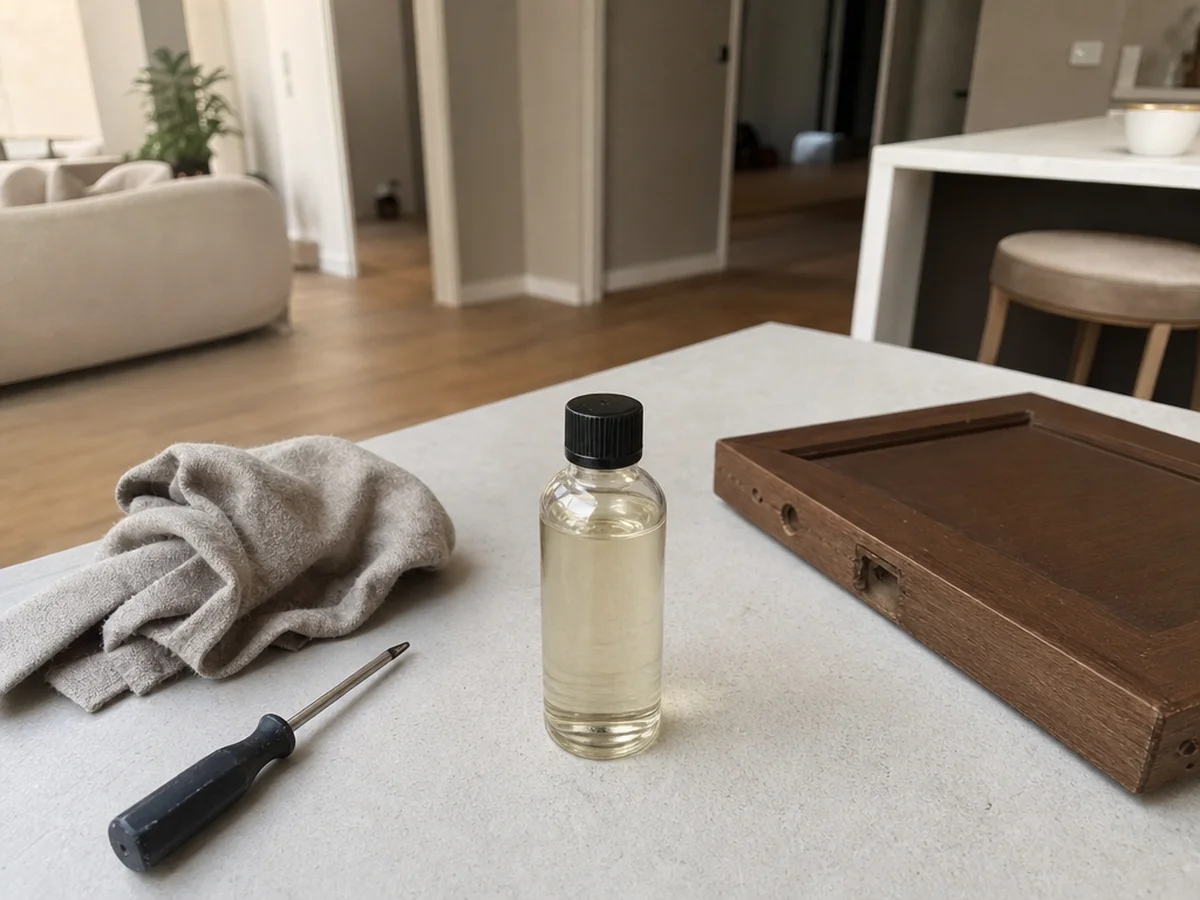
- A quick fix on an interior door: one small drop on the pin, with the excess wiped away, will do the job for now. Plan to clean it later.
- Anything you will not revisit: gates, garage doors, bike chains, locks and hinges that carry weight deserve a product made for the job, from a hardware store.
- Wooden drawer runners: that is a wood question, covered in our piece on almond oil and wood furniture.
- Kitchen tools and boards: our oil is a cosmetic oil, so we do not offer it for food-contact items.
If you do reach for it tonight
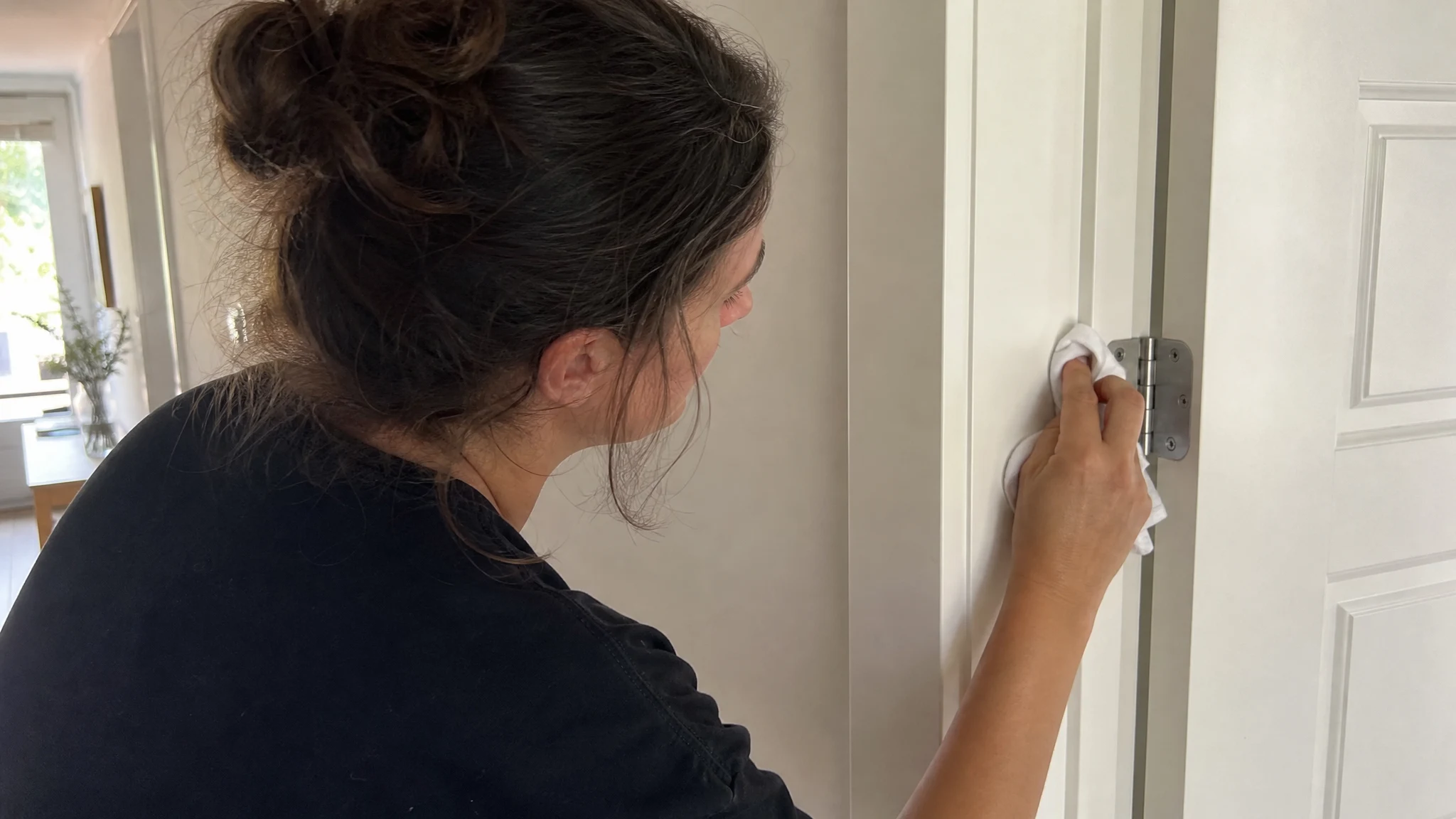
Go small and keep it tidy. Slide a folded paper towel under the hinge to catch drips, put a single drop at the top of the pin, and swing the door a few times so the oil works its way down. Then wipe away anything that creeps out. A hinge that looks clean is a hinge that will not collect lint and dust, and the wiping matters as much as the drop. Jot a reminder to give the pin a proper clean and a purpose-made product when you next have a free afternoon.
It is worth saying that none of this makes a drop of almond oil a bad idea in a pinch. It makes it a short-term idea. We would much rather you quiet the door tonight and plan a proper fix than leave a squeak for months because of a rule. Just remember the hinge when the weather warms up or the door starts to feel sticky.
The rag you forget about
One habit is worth adopting whatever oil you pick. A Mississippi State University Extension safety note explains that oil-soaked rags can self-heat, because a pile insulates itself, and advises spreading small amounts out in a single layer outdoors until they dry. The note lists linseed, cooking, cottonseed, corn and soybean oils; it does not name almond oil, so we simply treat any oily cloth the same way. For one wipe of a hinge the amount is tiny, but the habit costs nothing.
If you want to know how to keep a bottle of almond oil in good shape for the jobs it was pressed for, our storage guide and our overview of sweet almond oil are a good next read. For the door, a drop tonight and a proper lubricant for next time is a sensible plan.
The bottle on your bathroom shelf is happiest doing what we pressed it for: sliding over skin and hair with a soft glide. Leave the heavy lifting around the house to the people who make lubricants.
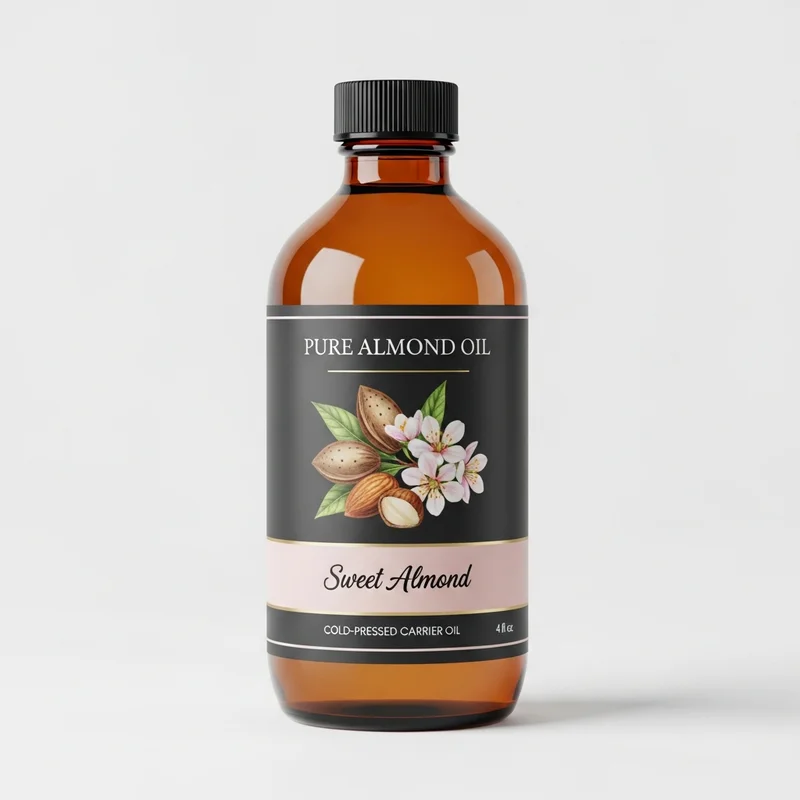
Sweet Almond Oil
Sweet Almond Oil from our own shop, in sizes from 0.5 oz to bulk.
From $9.99
Shop Now →