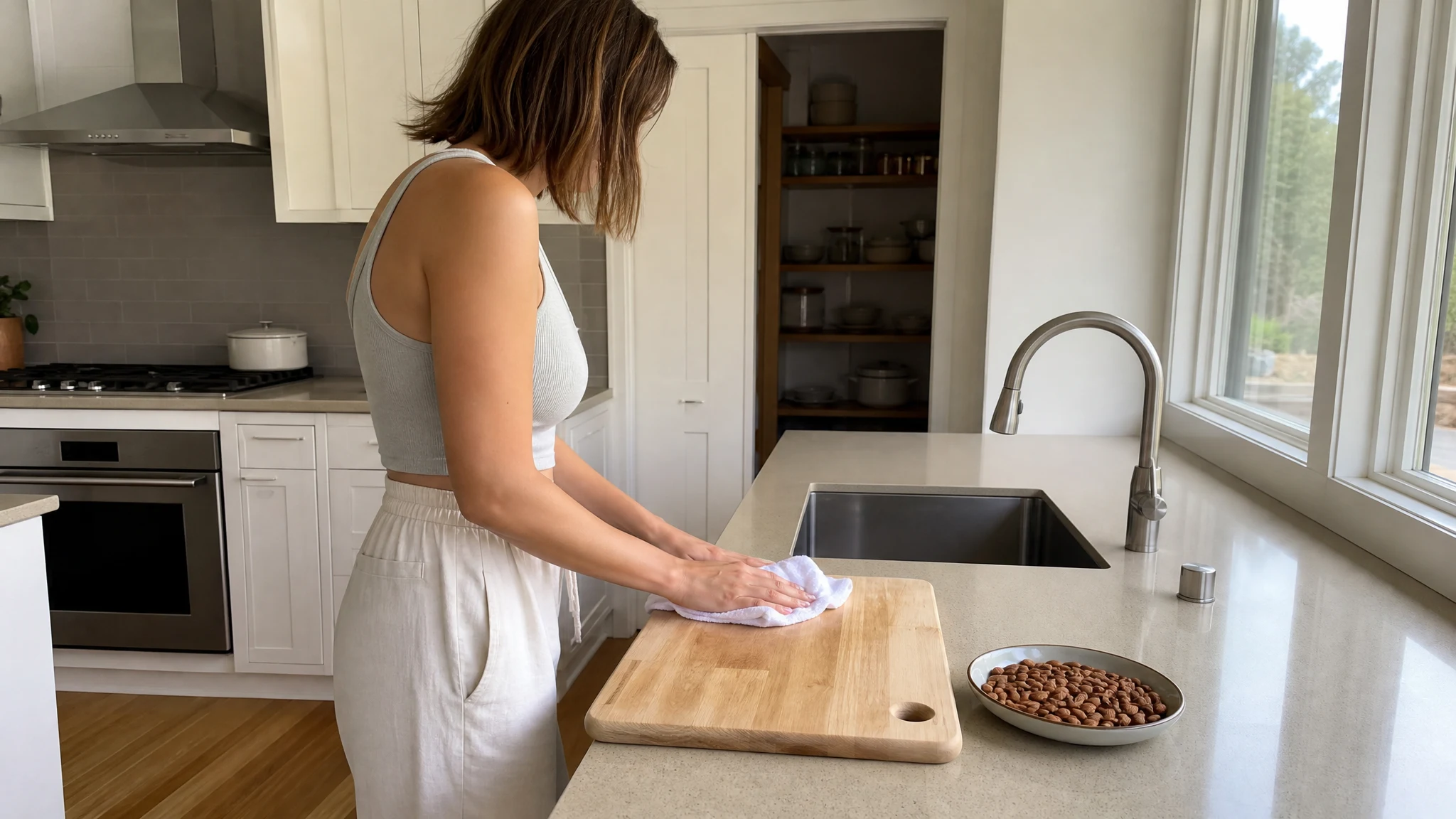
Can You Oil a Cutting Board With Almond Oil?
If you want a wooden cutting board to look rich and last for years, a little oil is the right idea. The oil we would reach for is not our almond oil, though, and the reasons make a nice little lesson in what each oil is good at.
What oil actually does for a board
Oiling is a finish. In guidance on finishes for wood bowls and butcher blocks, Mark Knaebe of the USDA Forest Service sorts oils into two families. Drying oils such as linseed and tung cure inside the wood. Nondrying oils penetrate but never cure, so they need refreshing as needed, and they are the usual choice for things that touch food. Either way, the point is to slow water absorption and keep the grain from looking parched. Oiling does not add nutrients to the wood, and it is not a sanitizing step.
That last part surprises people. Food-safety researchers cut new and used boards into blocks, inoculated them with E. coli, Listeria and Salmonella, and found that clean wood usually absorbed the inoculum within minutes and that mineral oil on the surface had little effect on the results. The board's food safety comes from washing it and from good kitchen habits, and the oil is there for appearance and wood care.
Why our almond oil stays with skin care
We press our sweet almond oil as a cosmetic oil, for external use, and we do not market it for culinary use. A cutting board touches food, so the bottle on your bathroom shelf is not the one to use. If you would like almond oil on a board, look for one sold as food by a food seller.
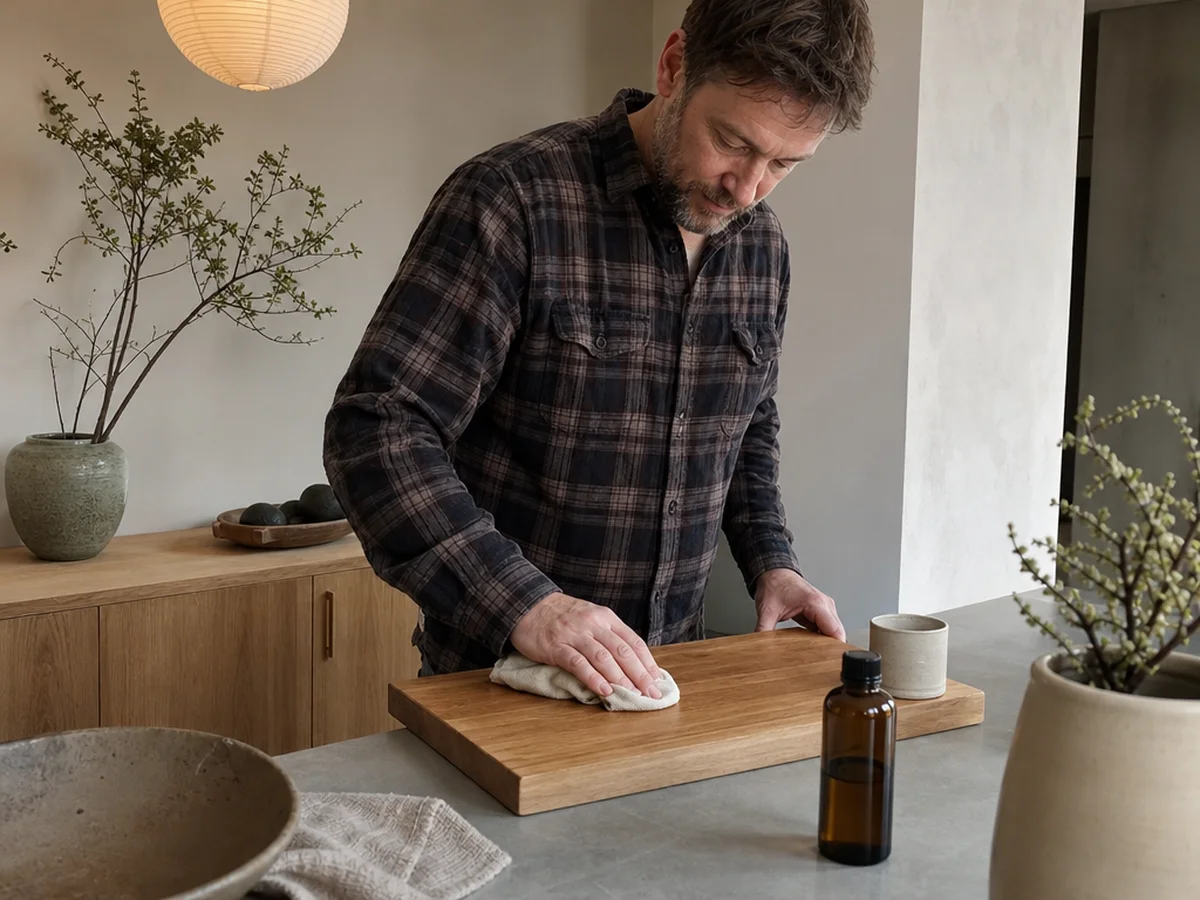
There are two more reasons worth knowing, whichever almond oil you own. First, Knaebe notes that natural vegetable oils such as walnut, olive and corn can turn rancid over time and may bring an odor or flavor to a utensil. Almond oil is a vegetable oil, so the same applies, and a thin film in a warm kitchen, washed with water, is a demanding place for it. Second, almond is a tree nut. FARE says even very small amounts of tree nuts can cause a serious allergic reaction and lists almond oil among the products to avoid, and an allergist writing for the AAAAI explains that unrefined nut oils keep their protein. Reasoning from that, an almond-oiled board in a household with a tree nut allergy puts a protein source on a surface everyone's food touches, and that is worth skipping.
What to reach for instead
Knaebe's list for food-contact wood is short and practical: food-grade mineral oil, a petroleum-based nondrying oil used on utensils and boards, or melted canning paraffin brushed on countertops, butcher blocks and cutting boards. He cautions against baby oil, which contains additives not intended for food contact. Mineral oil and wax are not something we sell, and a kitchenware shop, hardware store or pharmacy will have them.
How to oil a board
There is no official schedule, so here is a sequence built from Knaebe's description and sound woodworking logic.
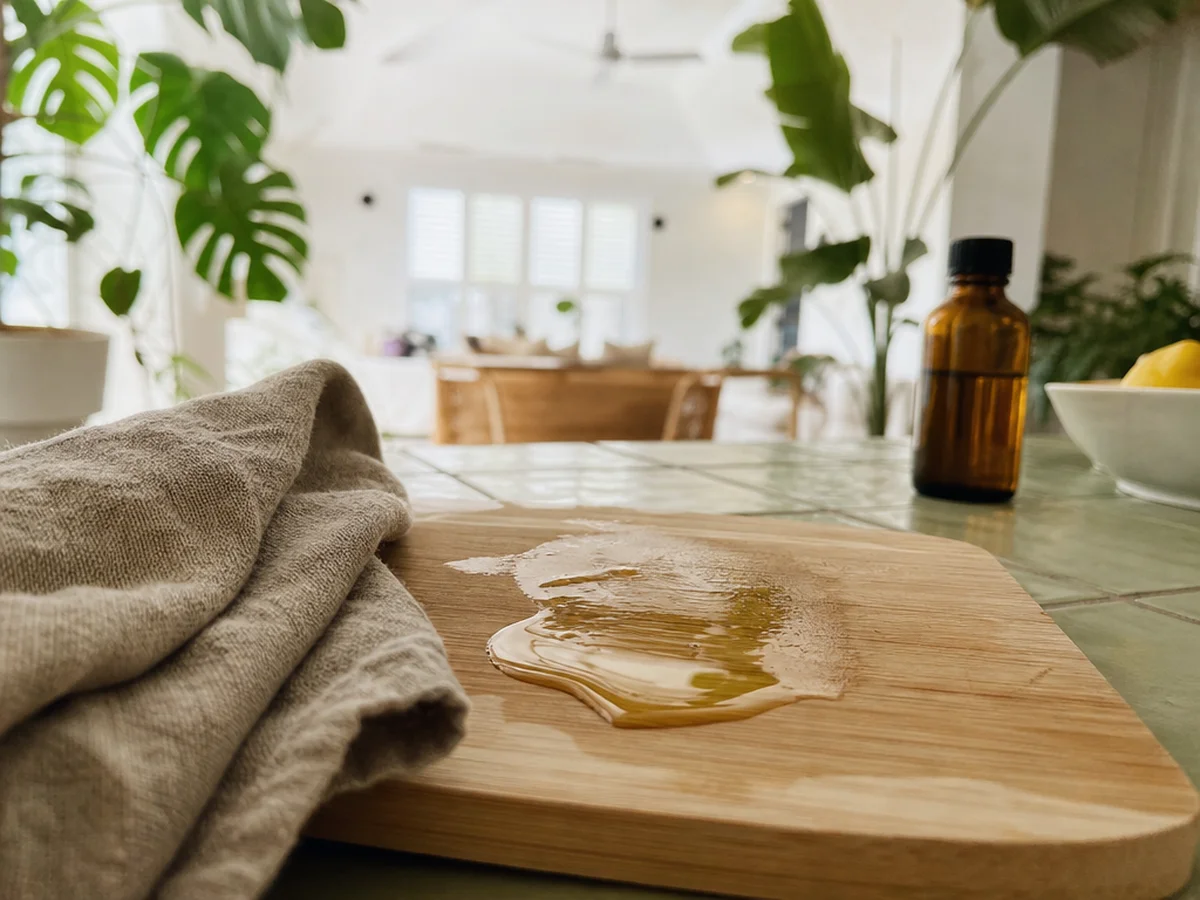
- Wash the board and let it dry on its edge until the wood feels dry all the way through. Oil sealed over damp wood traps water.
- Pour a little oil on and spread it with a clean cloth in thin coats. Knaebe describes several coats for nondrying oils.
- Cover every face, including the edges and underside, so the board takes up moisture evenly.
- Wipe off whatever has not soaked in after a short while, and let the board rest before use.
- Re-oil when water stops beading on the surface and starts darkening the wood.
If a board ever smells stale or sharp after oiling, sand it lightly and refinish. Oil also will not repair deep knife grooves or flatten a board that has cupped from soaking.
A small ritual, whichever oil you use
There is quiet satisfaction in oiling a board. Pick an evening when the dishes are done and lay the board flat on an old towel so nothing reaches the counter. A dry board looks pale and slightly rough. As the oil goes on, the color deepens and the grain comes alive. Rub along the direction of the grain, and give the ends a little extra attention, since they take up the most.
Leave the board to rest overnight, then wipe it over in the morning and put it to work. Keep one cloth just for oiling, and wash it afterward so it does not turn into a forgotten, oily rag.
Choosing and caring for a board
A heavy board that does not slide is a pleasure to work on, so set a damp cloth underneath when you chop. Wash it by hand soon after use and stand it on its edge so air reaches both faces. Avoid soaking it in the sink or running it through a dishwasher, since long wet spells are what leave a board dull and warped. A board that is cared for in small, regular ways often needs less fuss than one that is neglected and then rescued.
And for your hands
After a day of chopping and washing up, hands often feel dry, and that is a better job for our oil. It has a soft, subtly nutty, lightly sweet scent and a quick-absorbing feel. Patch test a small spot first, and skip it with any tree nut allergy. If you are curious about almond oil on other household surfaces, see our articles on wood furniture and leather, and our guide to storing almond oil if you want to keep any bottle fresh.
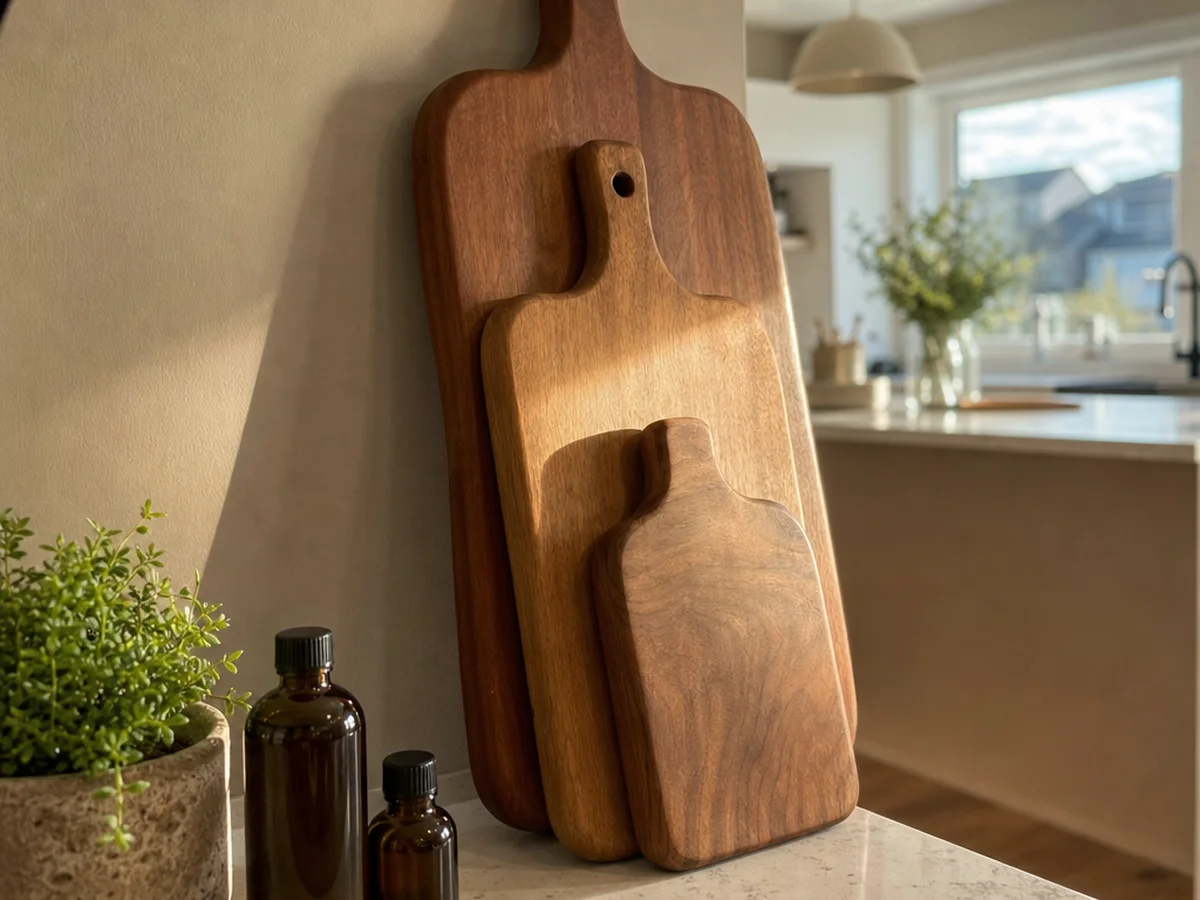

Sweet Almond Oil
Sweet Almond Oil from our own shop, in sizes from 0.5 oz to bulk.
From $9.99
Shop Now →Sources & Further Reading
- Windsor Plywood: Finishes for Wood Bowls, Butcher Blocks, Other Items Used for Food and Children’s Toys (guidance by Mark Knaebe, USDA Forest Service)
- Ak NO, Cliver DO, Kaspar CW. Cutting Boards of Plastic and Wood Contaminated Experimentally with Bacteria. J Food Prot, 1994
- FARE: Tree Nut
- American Academy of Allergy, Asthma & Immunology: Food allergy: nut oils in topical products