Almond Oil for Hair Care: What an Oil Can Do
A few drops of almond oil warmed between your palms and run through the ends of your hair is one of those small pleasures that feels right immediately: the comb glides, frizz settles and hair catches the light. That immediate, visible change is what an oil does best, and it is what we love about ours. What an oil cannot do is change how much hair you have, and we make no claims in that direction. Understanding the difference helps you enjoy the oil for what it is.
What an oil does on the surface
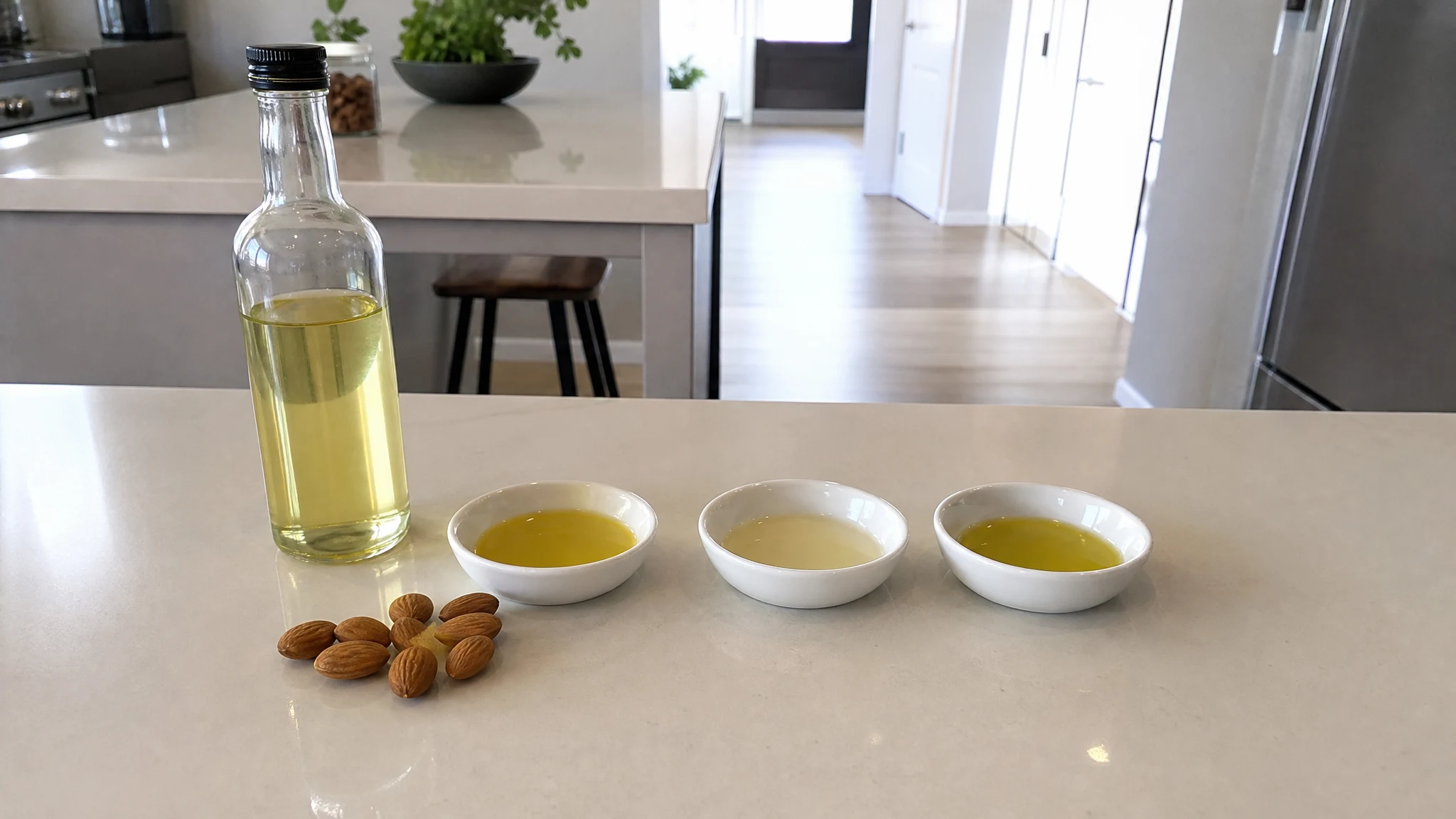
Hair is a fiber covered in overlapping scales. A thin coat of oil smooths those scales and reduces friction between strands, which is why oiled hair feels softer and detangles with less pulling. Our sweet almond oil is cold-pressed and unrefined, with a soft, lightly nutty aroma and a quick-absorbing, non-greasy feel on skin, and it pairs naturally with the hair and beard grooming blends many people like to make at home. A little goes a long way: if hair ever looks limp, the usual fix is a smaller amount applied to the ends, not the roots. Our post on whether almond oil makes hair greasy gets into the technique.
The sensory side
There is something deeply pleasant about hair oil. The scent of almond is warm and a little sweet, and the oil turns clear as it warms in your palms. It makes a soft, quiet sound as you rub your hands together. Run it through the ends and you will notice how the comb glides. Those small things are why many people keep a bottle by the mirror.
Not all oils behave alike
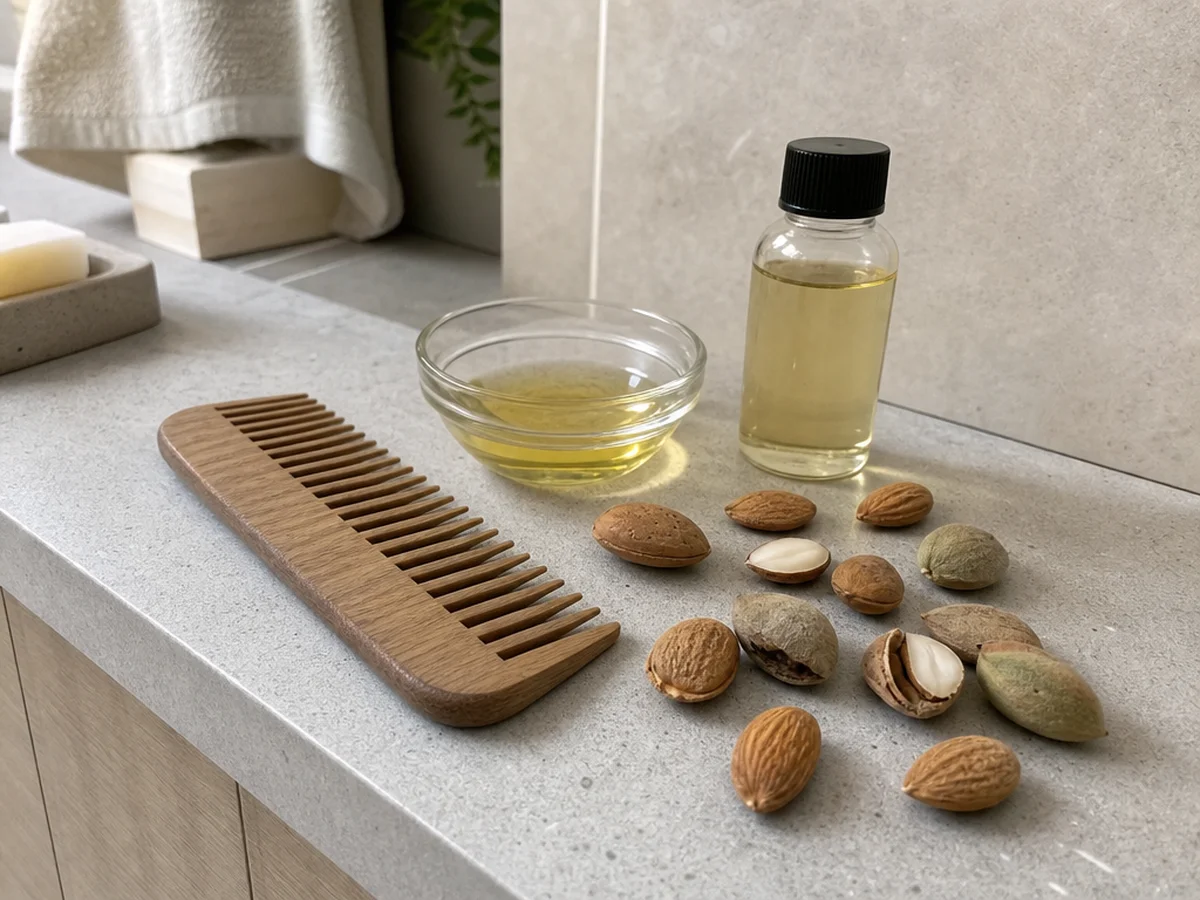
If you read about oils and hair, one study comes up constantly. A 2003 paper in the Journal of Cosmetic Science compared coconut, sunflower and mineral oil on hair before and after washing. Only coconut oil clearly reduced protein loss from combing, and the authors attributed it to coconut oil’s small, straight fatty acid chains, which let it enter the fiber. Sunflower and mineral oil did not reduce protein loss. Almond oil was not in it. The takeaway we draw is gentle: oil type changes the result, so the best-known finding cannot simply be borrowed for almond oil. We think of almond oil as a conditioning finish, a way to add slip, softness and shine, and that is how we describe it.
Shedding, breakage and thinning are different things
This is the part worth a minute of attention, because an oil can look like the cure for the wrong problem. The AAD says normal shedding is somewhere between 50 and 100 hairs a day. It describes excessive shedding as something that often follows a stressor, such as childbirth, losing 20 pounds or more, a high fever, surgery or stopping birth-control pills, usually showing up a few months afterward and typically settling within six to nine months. If your shedding began months after one of those events, an oil you started last week is not what changed it, and one you start now will tend to get credit it has not earned.
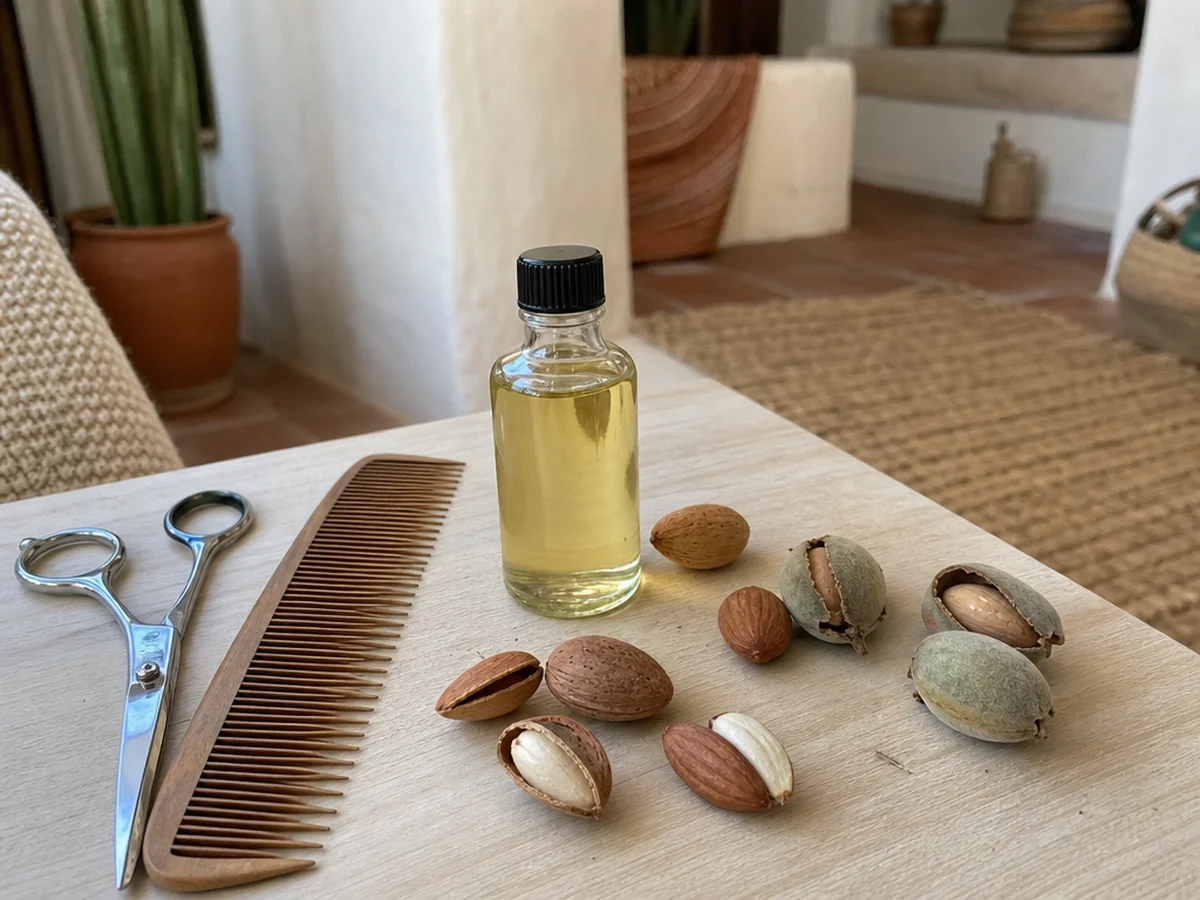
Breakage is a separate story. Hair that snaps partway along the shaft, usually from heat, color treatments or friction, is a fiber problem, and that is the territory where a conditioning oil can make hair look and feel better. Hair that comes out at the root, or a part that keeps widening, is a different question and one for a dermatologist, who can tell you whether you are looking at shedding, loss or both. We are happy to talk about the first kind of problem, and we leave the second to the experts.
Reading your hair
Before you add any oil, spend a minute getting to know your hair. Run your fingers down a damp strand. Is it smooth, or rough and catching? Is it fine and fly-away, or thick and wavy? Do the ends split while the roots stay soft? Hair varies from the scalp to the ends, because the ends are the oldest part and have seen the most brushing, heat and weather. That is why we suggest oil on the ends first. It is the part of your hair that appreciates a little softness the most, and you will notice the difference quickly.
How we would use it
Here is a practical suggestion, not a studied method. Start with a few drops. Warm them in your palms, smooth over the lengths and ends of dry hair, and use a wide-tooth comb to spread it. Some people apply a little before washing as a pre-shampoo treatment, and our hair mask post shows how to build that into a mask. If you prefer a lighter touch for styling, our frizz serum post is a good next read. For the scalp, our scalp massage routine keeps things simple.
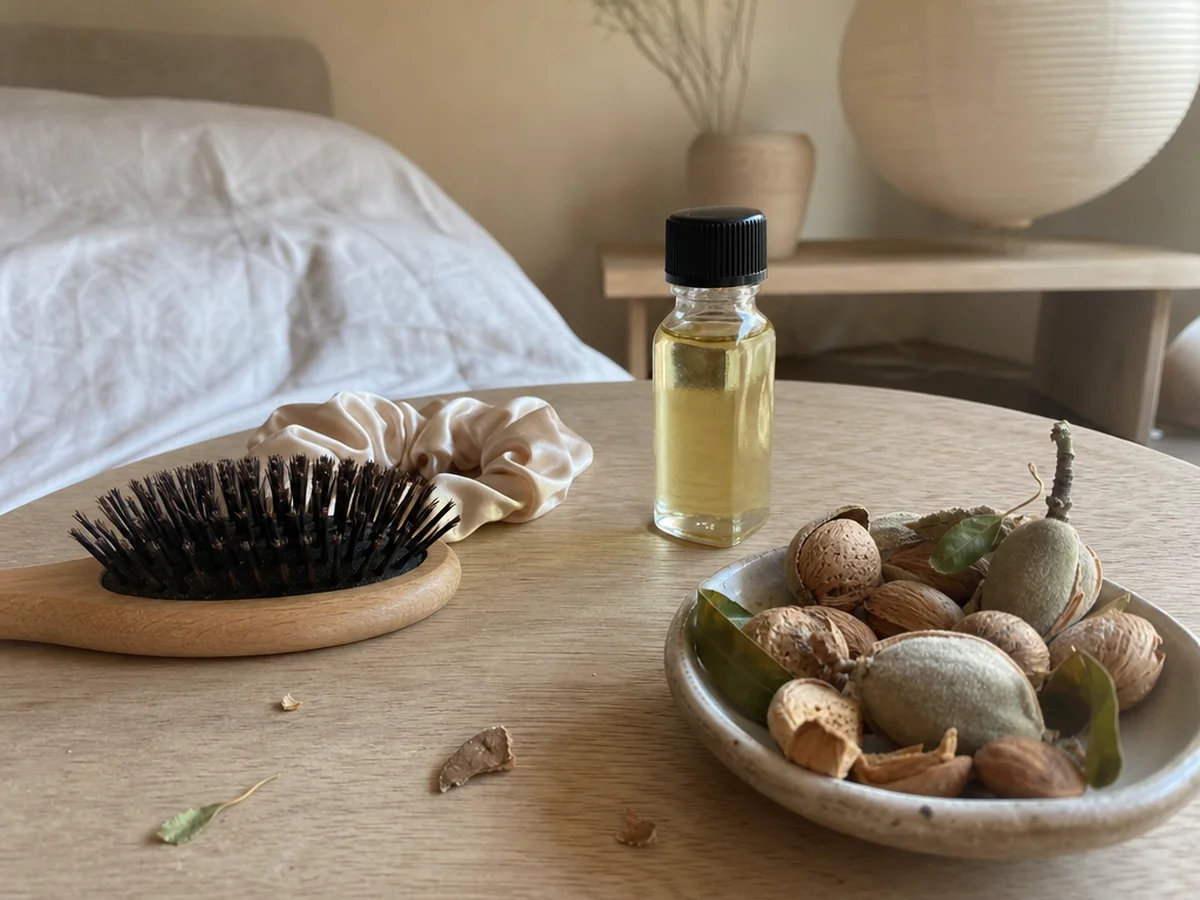
Two sensible cautions. Almond is a tree nut and our oil is unrefined with trace almond protein, so anyone with a tree nut allergy should not use it on hair or skin. And since the oil also touches skin, we suggest a small patch test first; our patch-testing guide shows how.
Think of almond oil as a finishing touch: it will not rewrite your hair’s biology, but it can make a good hair day a little softer and a little shinier.
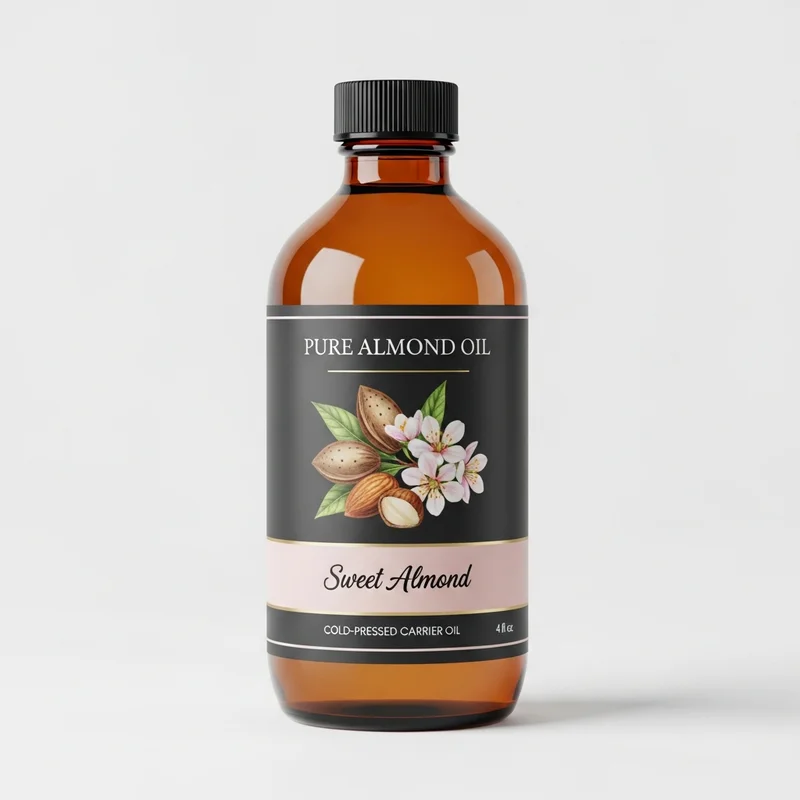
Sweet Almond Oil
Sweet Almond Oil from our own shop, in sizes from 0.5 oz to bulk.
From $9.99
Shop Now →Sources & Further Reading
- Rele AS, Mohile RB (2003). Effect of mineral oil, sunflower oil, and coconut oil on prevention of hair damage. Journal of Cosmetic Science.
- American Academy of Dermatology. Do you have hair loss or hair shedding?