Almond Oil Hair Mask: A Pre-Shampoo Wash Day Guide
A pre-shampoo oil mask is one of the easiest bits of hair care to try: a little oil on dry hair, a wait, then shampoo as usual. What makes it work, or not, is mostly timing and amount. The mask comes out with your shampoo, so it should fit around how often you wash, and that is where we like to begin.
Let your wash schedule choose the plan
The American Academy of Dermatology notes that straight hair with an oily scalp may need shampooing every day, while dry, textured, curly or thick hair can go as long as 2 to 3 weeks between washes. It also says to apply conditioner to the ends of fine or straight hair and to the full length of dry or curly hair. We can follow the same logic with oil, which is our own reasoning rather than a finding about almond oil:
- Fine or straight hair, washed daily. Keep the oil to the ends, if you use it at all. Your scalp makes plenty of its own, and a heavy film is what makes hair look limp. Our post on greasy hair and almond oil goes through how much is enough.
- Dry, curly or thick hair, washed every week or two. Work it through the mid-lengths and ends. These hair types go longest between washes, so a pre-wash oil fits naturally.
- Color or heat treated hair. Focus on the ends and any dry patches.
Keep oil off a flaking or itchy scalp. The Academy notes flakes can come from the wrong oil or scalp moisturizer for your hair type, and a persistent problem is a job for a dermatologist.
What to expect from almond oil
The best-known laboratory comparison of hair oils tested coconut, sunflower and mineral oil, and found coconut oil the only one to reduce protein loss in hair. Almond oil was not part of that comparison. So we describe an almond oil mask for what it is: a light, nutty-smelling coating that nourishes hair for a fuller, smoother appearance and leaves it feeling soft. It is a feel-good step, and a rather nice one.
Setting up wash day
A mask is more fun when the setup is easy. Lay down an old towel over your shoulders, put out the comb and clips, and have the shampoo within reach of the shower. Do the oil part before you get in the bathroom, ideally at a sink or on a stool, so you are not dripping across the house. Old T-shirts are your friend, since oil does not always come out of fabric.
The mask
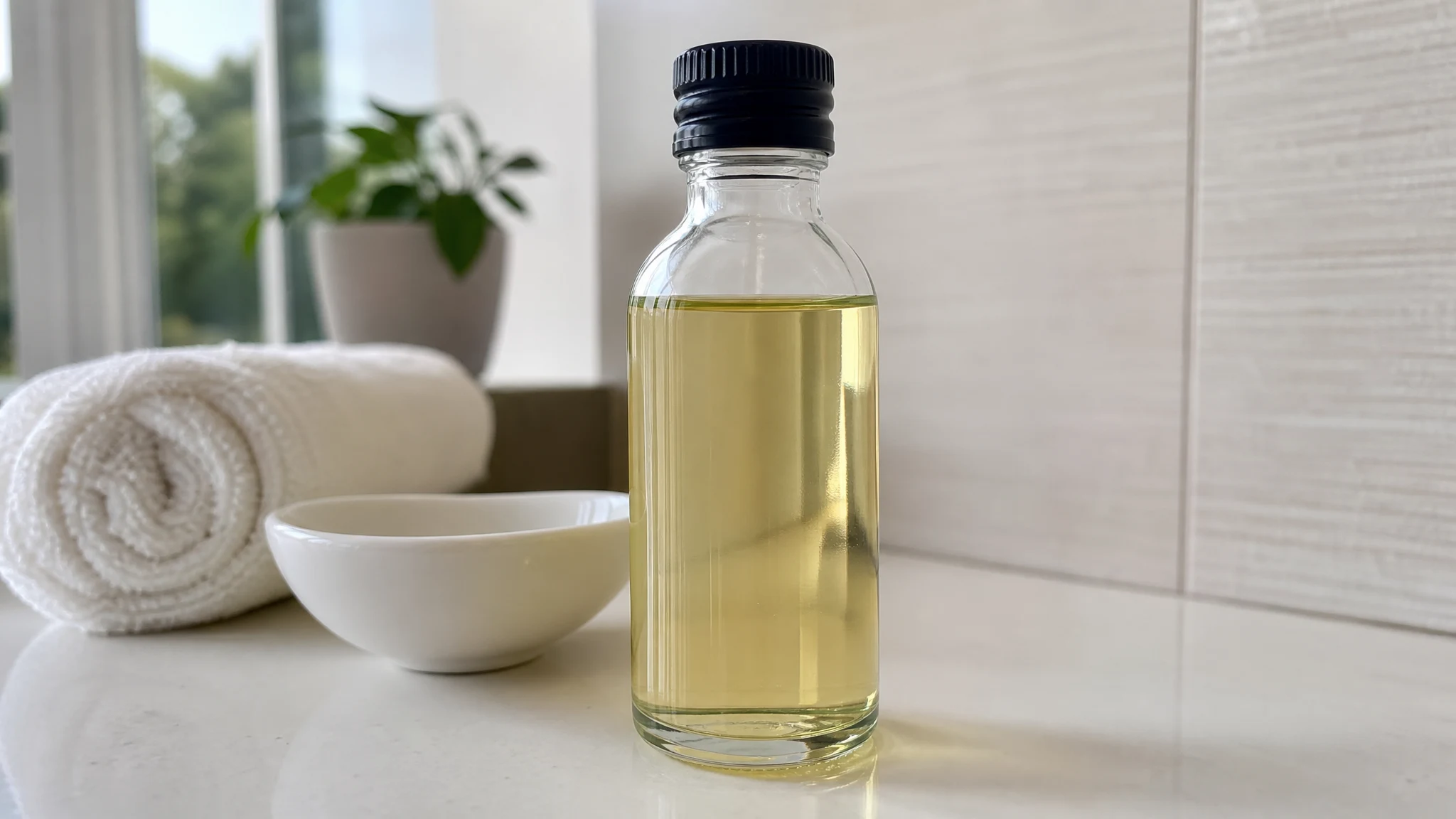
Keep it simple: sweet almond oil on its own. One tablespoon is about 14.8 ml, which weighs roughly 13.6 g at the density of the batch on our Certificate of Analysis (0.918). As a starting point, one tablespoon covers the ends of shoulder-length hair and two tablespoons is plenty for most heads. This is our suggestion rather than a studied amount, so adjust to your hair.
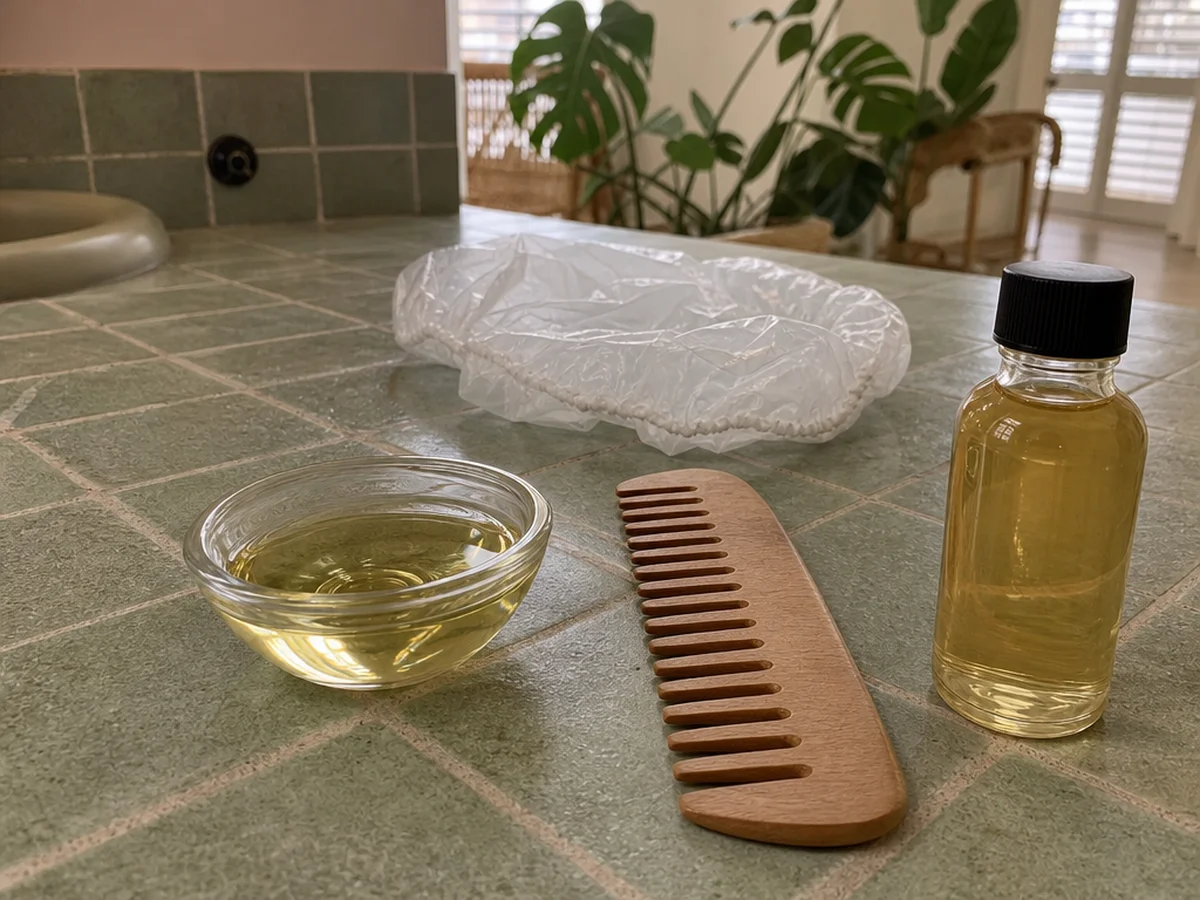
Warm the oil by standing the container in a bowl of warm tap water, and skip the microwave. It should feel comfortable on the inside of your wrist. Work it between your palms, smooth it through, and detangle with a wide-tooth comb, which is what the Academy advises for wet or damp hair. Clip your hair up or tuck it into a shower cap. For the wait, 20 to 30 minutes is a convenient suggestion; see how your hair feels.
To rinse, apply shampoo to the scalp rather than the full length, as the Academy recommends, and let the suds travel down. If your hair still feels coated after a second wash, use a little less next time.
What you will notice afterward
When you rinse, the oil gives hair a slippery feel that is normal in the shower. Once dry, you will notice softer ends and a gentle shine. The scent fades to a faint almond. If your hair feels coated even after washing twice, you probably used a little too much, so cut the amount in half next time. Fine hair tends to need the least, and thick hair the most.
About the add-ins
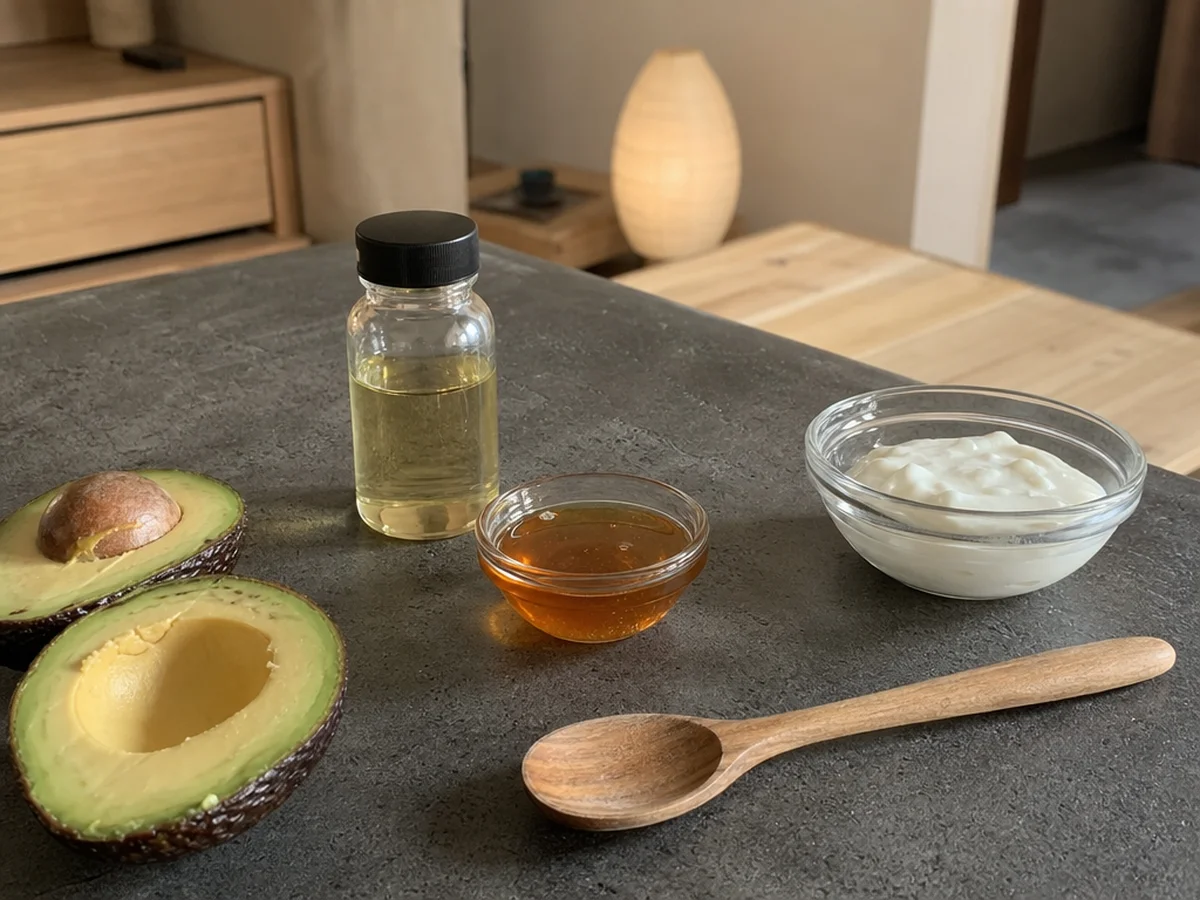
Many hair mask recipes add honey, egg, yogurt or avocado. Each brings water or protein, and the FDA's page on cosmetic microbiology lists contaminated water and ineffective preservation among the ways products become contaminated. If you want to include them, mix only what you will use right then, rinse it out, and never store leftovers. Honey and egg also bring allergy considerations of their own. Plain oil keeps things easy. If you add essential oil, the Tisserand Institute lists 0.2% to 1% for sensitive or impaired skin and 0.5% to 1.2% for facial products, with no hair-specific figure, so the lowest range is the thoughtful choice for something against the scalp. Our blending article shows the arithmetic.
Who should skip it
Almond is a tree nut. Our oil is cold-pressed and unrefined, so trace almond protein is present, and anyone with a tree nut allergy should not use it. A mask also runs down the neck and face and onto pillows. The American Academy of Allergy, Asthma and Immunology says unrefined cold-pressed nut oils retain protein, and our nut allergy article has more. Test the oil first on a quarter-sized spot of inner arm twice a day for 7 to 10 days, as dermatologists describe. If you are noticing shedding, see a dermatologist, who can look at the cause; our hair FAQ covers overnight use and wash frequency.
With a little oil, a warm towel and a schedule that suits your hair, a mask can turn wash day into something worth looking forward to.

Sweet Almond Oil
Sweet Almond Oil from our own shop, in sizes from 0.5 oz to bulk.
From $9.99
Shop Now →Sources & Further Reading
- American Academy of Dermatology, Tips for healthy hair
- Rele AS, Mohile RB, 2003. Effect of mineral oil, sunflower oil, and coconut oil on prevention of hair damage. J Cosmet Sci.
- American Academy of Dermatology, How to test skin care products
- US Food and Drug Administration, Microbiological Safety and Cosmetics
- Tisserand Institute, Dilution for essential oils
- American Academy of Allergy, Asthma and Immunology, Food allergy: nut oils in topical products