How Often to Use Almond Oil in Hair: A Simple Routine
The most common mistake with almond oil in hair is generosity. A teaspoon feels luxurious in the palm, but hair is a surprisingly small canvas, and a little oil goes a long way. If you take one thing from this page, make it this: start with a few drops, keep them on the lengths, and add more only if your hair asks for it.
How much, and where
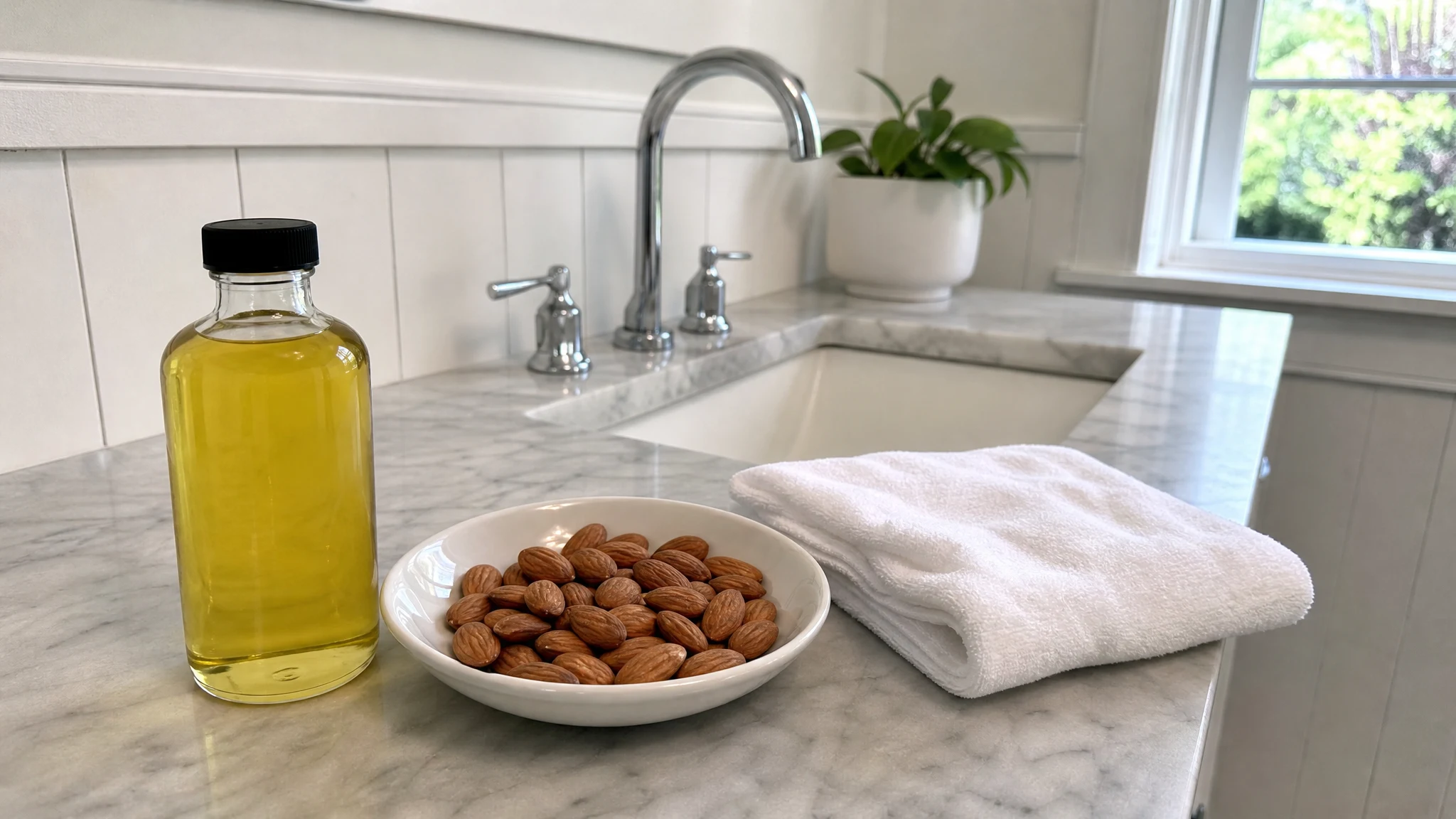
Our oil has a soft, lightly sweet, nutty aroma and absorbs quickly between your fingers. That same lightness is what makes it easy to overdo. Warm a few drops between your palms, smooth them over the mid-lengths and ends, and stop there. The roots make their own oil.
Fine or straight hair gets the smallest amount. The American Academy of Dermatology tells people with fine or straight hair to put conditioner on the ends rather than the whole length, and the same instinct works well for oil. Thick, dry, curly or coarse hair can usually carry more, applied along the length and worked through with your fingers.
There is a plain physical reason for this. Researchers who studied oil on single hair fibers found that a thick surface film masks the scales on the hair, and that the film thins over time as oil soaks in, faster with heat (Keis and colleagues, 2005). In everyday terms, a thin coat looks like shine; a heavy one looks like grease. We are applying that finding as reasoning, not promising a result.
How often
No study sets a schedule for almond oil, so anything you read with a precise number is habit rather than research. A better anchor is how often you wash. The AAD notes that someone with straight hair and an oily scalp may shampoo daily, while dry, textured, curly or thick hair may go at least 2 to 3 weeks between shampoos. Oil has to come out eventually, so it makes sense to line the two up. Our suggestion: for dry or coarse hair, oil once between washes is a comfortable place to start, and fine hair may be happiest with a few drops on the ends now and then.
A week with the oil
If you like a plan, here is a gentle way to begin. On wash day, try a few drops on the ends of dry hair. Notice how your hair looks that evening and the next morning. On the next wash day, change one thing: a little more or a little less. Keep it simple and watch. After three or four washes you will have a good sense of the right amount for your hair, which is worth more than any rule.
Overnight, or just an hour?
Leaving oil in overnight is a personal call, and a few practical points make it easier.
- Allergy comes first. Our oil is cold-pressed and unrefined, so trace almond protein is present. If you have a tree nut allergy, please do not use it, whether for an hour or a night.
- Patch test before any new routine. A small spot on the inner arm, as the dermatologists suggest, takes the guesswork out.
- Protect the pillowcase, and wash it well. Great American Insurance Group's loss-control guidance on massage oils recommends washing oil-soaked linens at 104 F or hotter and drying on low heat below 125 F, because oily fabric can ignite in a dryer. That guidance is about massage linens, so applying it to a pillowcase is our own sensible extension. A towel or a satin cap over a short treatment is even simpler.
If you only want a taste of the routine, a one-hour pre-shampoo session gives you the same soft finish with none of the laundry worry.
Washing it out
Concentrate the shampoo at the scalp and let the suds run down the lengths; that is the AAD's own advice for clearing buildup without over-drying. If hair still feels slick after rinsing, a second lather on the oiled sections does the job. If you wash infrequently, the oil adds up with each application, so ease off a little before it does.
Little things that help
A wide-tooth comb by the bathroom mirror makes spreading easy. Keep the bottle capped and upright, wipe the neck of the bottle when you finish, and wash your hands afterward so you do not leave oily prints on the doorknob. A small hand towel just for oil days saves your good towels.
Two honest notes
Almond oil is a conditioning touch for the hair you have, and we do not offer it as anything that changes how much you have. The best-known study of oils on hair, from 2003, found that coconut oil reduced combing damage while sunflower and mineral oil did not, and almond was not among the oils compared. Normal shedding runs 50 to 100 hairs a day according to the AAD, so if you are losing more than that, a dermatologist is the right next call. Color-treated hair is the same story: your stylist knows your formula, so ask them before oiling over a fresh gloss.
For the hands-on part, our scalp massage routine and our hair mask guide walk through the steps, and the greasy hair myth covers the worry we hear most. Questions about the oil itself are welcome through the contact page.
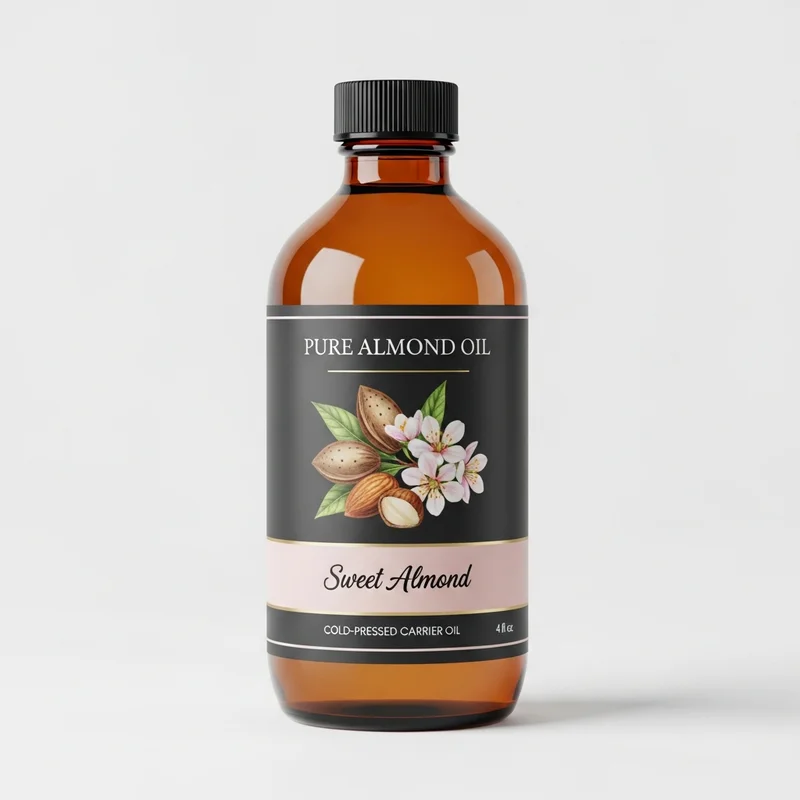
Sweet Almond Oil
Sweet Almond Oil from our own shop, in sizes from 0.5 oz to bulk.
From $9.99
Shop Now →Sources & Further Reading
- American Academy of Dermatology, Tips for healthy hair
- Keis K, Persaud D, Kamath YK, Rele AS. Investigation of penetration abilities of various oils into human hair fibers. J Cosmet Sci, 2005
- Rele AS, Mohile RB. Effect of mineral oil, sunflower oil, and coconut oil on prevention of hair damage. J Cosmet Sci, 2003
- Great American Insurance Group, Avoid Fires from Massage Oils
- American Academy of Dermatology, Do you have hair loss or hair shedding?