Almond Oil for Dry Fall Skin: A Simple Routine
The first cold snap brings a familiar moment: the heating clicks on, the air turns dry, and by the weekend your hands feel like paper. It is tempting to reach for a bottle of oil and call it done. We love sweet almond oil and it has a real place in a fall routine, but the habits around it do most of the work, so we will start there.
Fix the air and the water first
The American Academy of Dermatology says cold weather and indoor heating pull moisture out of skin, and most of its advice is about the environment rather than any one product. A filtered, cool-mist humidifier in the bedroom helps, as long as you clean it regularly so mold does not build up. Warm water is kinder than hot, and keeping showers to about 5 to 10 minutes, then patting dry instead of rubbing, protects the moisture you already have.
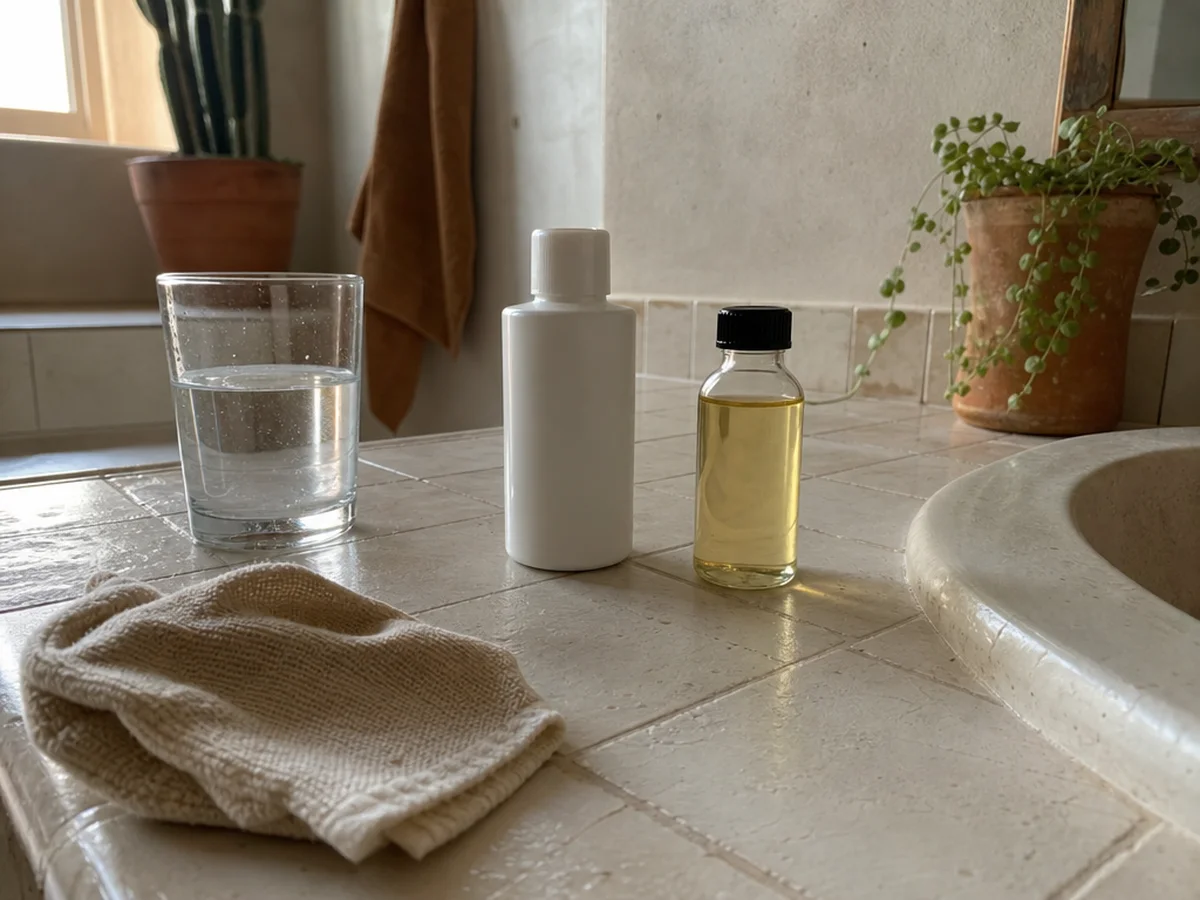
The same guidance suggests skipping antibacterial, deodorant and scented soaps, which can be harsh on dry skin, and cutting back on alpha or beta hydroxy acid products in winter, since they can add irritation. None of that costs anything, and all of it makes whatever you put on afterward work better.
A fall evening, start to finish
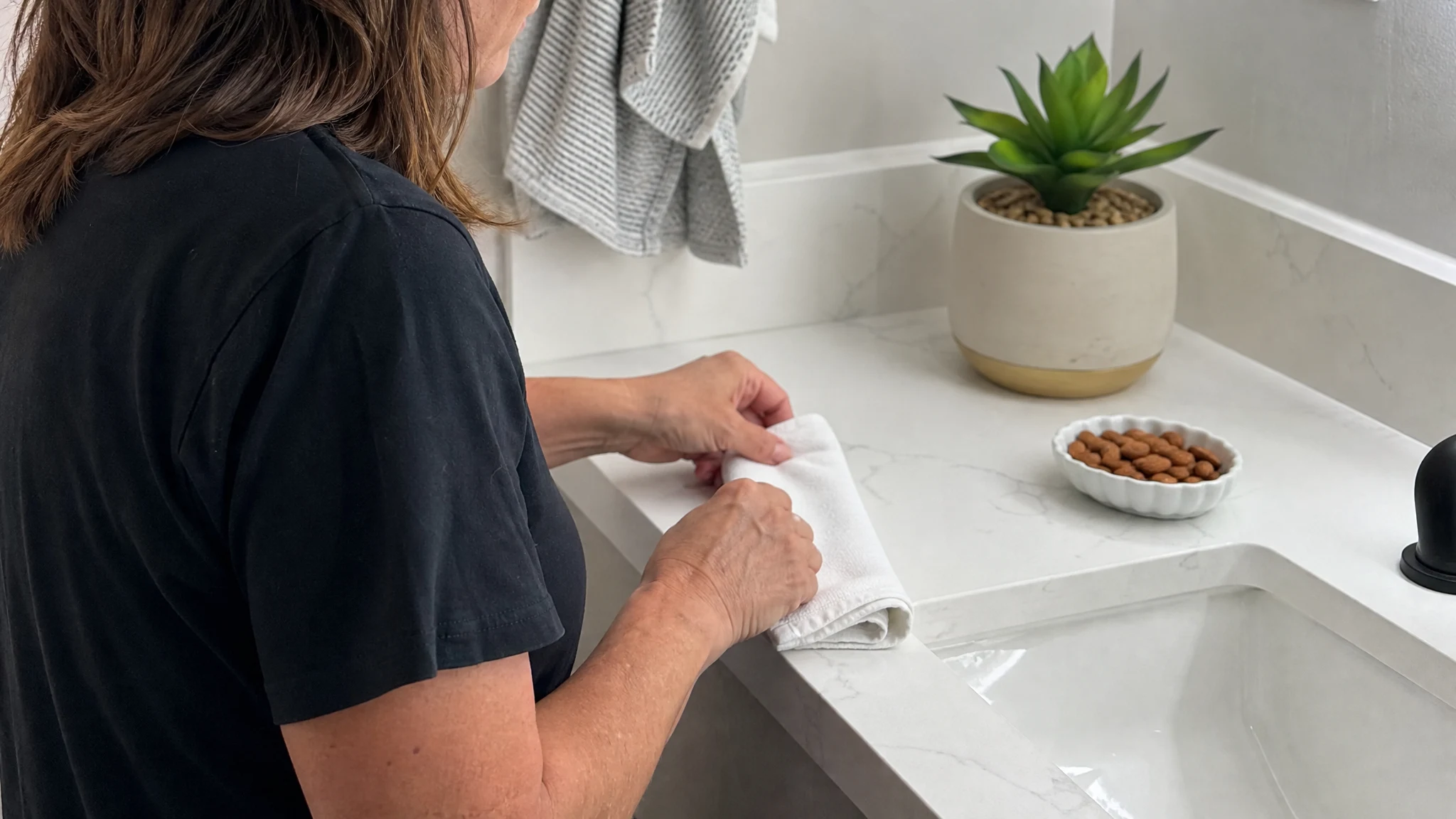
It helps to picture the routine rather than just read the rules. You come in from a cold evening, wash your hands in warm water, and pat them nearly dry. While they are still a little damp, you warm a few drops of oil between your palms and rub them together until the oil looks like a thin sheen. Hands first, then the backs of the wrists. A minute later, you reach for a sweater and your hands feel like skin again, not paper. Nothing in that routine needs special equipment, only the habit of doing it while your skin still has a bit of water on it.
Where a plain oil earns its place
Almond oil has no water in it, which makes it a good finishing layer: it sits on top of skin and helps keep in the moisture that is already there. That is our reasoning from how oils behave, and it matches the dermatologists' habit of telling people to moisturize while skin is still damp after a shower or hand wash. So the practical rule is simple. Wash, pat gently, and apply a small amount of oil to the places that feel dry while the skin still has a little water on it.
For a sense of how almond oil compares with other moisturizers, there is a small randomized pilot study from 2018 in which 32 people who finished the trial applied almond oil, coconut oil, jojoba oil or white petrolatum twice daily for two weeks. All four raised skin hydration by week two, with no significant difference between them, and almond oil was the one participants liked best, at 38%. The report does not say which almond oil was used, so we read it as a pleasant data point rather than a promise: oils like this can do a fine job on mild dryness, and a product you enjoy using is a product you will actually use.
It also helps to be realistic about very dry skin. The AAD says ointments and creams work better than lotions in cold weather, and for skin that is cracking, a thicker product may seal more reliably than a thin oil. We think of almond oil as the lovely option for everyday seasonal dryness on hands, elbows, shins and heels, with a cream or ointment on hand for the roughest patches.
How we would use it
- Use less than you think. A few drops warmed between your palms cover both hands. Our oil has a soft, subtly nutty, lightly sweet aroma and an unrefined, golden look, and a little goes a long way.
- Pick your spots. Hands after washing, elbows, knees, shins and heels are the usual fall trouble areas. Those are the places we would start.
- Go fragrance-free. The AAD points people with dry skin to products labeled fragrance-free, since "unscented" products can contain masking chemicals. Plain almond oil on its own fits that approach nicely; we suggest leaving essential oils out of a fall dryness routine.
- Patch test first. The AAD method is a quarter-sized amount on the inner arm or elbow crease, twice a day for 7 to 10 days. If you see redness, itching or swelling, wash it off and stop.
One firm point from us: almond is a tree nut, and our oil is cold-pressed and sold unrefined, so trace almond protein is present. Anyone with a tree nut allergy should not use it. Our guide to almond oil and nut allergies goes through the details, and our patch-test guide walks through the test step by step.
Little fall pleasures
Part of the fun of an oil routine is how well it fits the season. A few drops on your shins after a long walk in cold air, a drop or two on your cuticles before you pull on gloves, or a bit on your elbows before a sweater goes on. You will notice the oil's soft, nutty scent mixes nicely with the smell of wool and woodsmoke, and a small bottle by the door makes it easy to remember. Keep your gloves clean too, since oil on hands will transfer to leather and wool.
Keep the bottle as fresh as your routine
Fall is also when oil bottles migrate to a sunny bathroom windowsill or beside a radiator. We suggest a cool, dark cupboard instead. Our oil comes in amber glass with the pressing date, bottling date and lot number on the label, and we count about a year from pressing when it is kept cool and dark. More on that in our post on storing almond oil, and if dryness is a long-running theme for you, our dry-skin post covers where an oil fits and where it does not.
If your skin stays dry, itchy or cracked despite all of this, a board-certified dermatologist is the right person to ask, and a good oil is a pleasant extra rather than a replacement for that conversation. Here is to a comfortable fall.

Sweet Almond Oil
Sweet Almond Oil from our own shop, in sizes from 0.5 oz to bulk.
From $9.99
Shop Now →Sources & Further Reading
- American Academy of Dermatology, Cold weather and your skin
- American Academy of Dermatology, Dermatologists' top tips for relieving dry skin
- American Academy of Dermatology, How to test skin care products
- Vaughn et al., Multi-Center Randomized Clinical Study of The Effects of Natural Oils on Xerosis and Skin Barrier Properties (SKIN: The Journal of Cutaneous Medicine, 2018)