Facial Oils Explained: What Does a Layer of Oil Do?
Walk down any skincare aisle and the facial oil section keeps getting bigger. That popularity tells you facial oils are appealing, and it does not tell you whether your skin wants one. Here is how we think about it: an oil is a layer, a pleasant one, and the useful question is what that layer does and does not do.
What a layer of oil does
Oils sit on the surface of the skin and slow the loss of water from underneath, which is why dry skin tends to feel softer after one. The Cosmetic Ingredient Review Expert Panel assessed 244 plant-derived fatty acid oils used in cosmetics and describes their roles as skin conditioners and emollients, with occlusive and moisturizing properties. It concluded they are safe as used in cosmetics. That is a finding for the group, and a reassuring one, but it is a safety conclusion, not a promise that any oil improves a particular skin concern.
Why oils are not interchangeable
The best reminder that "an oil" is not one thing comes from a small forearm study by Danby and colleagues. Nineteen adults applied olive oil to one arm and sunflower seed oil to the other, twice a day for several weeks. Olive oil lowered the integrity of the skin's outer layer and caused mild redness, while sunflower seed oil preserved integrity and improved hydration. Almond oil was not part of that study, so we cannot call it a verdict on almond oil. It is a good reason to doubt any sentence that starts "oils are good for the skin barrier."
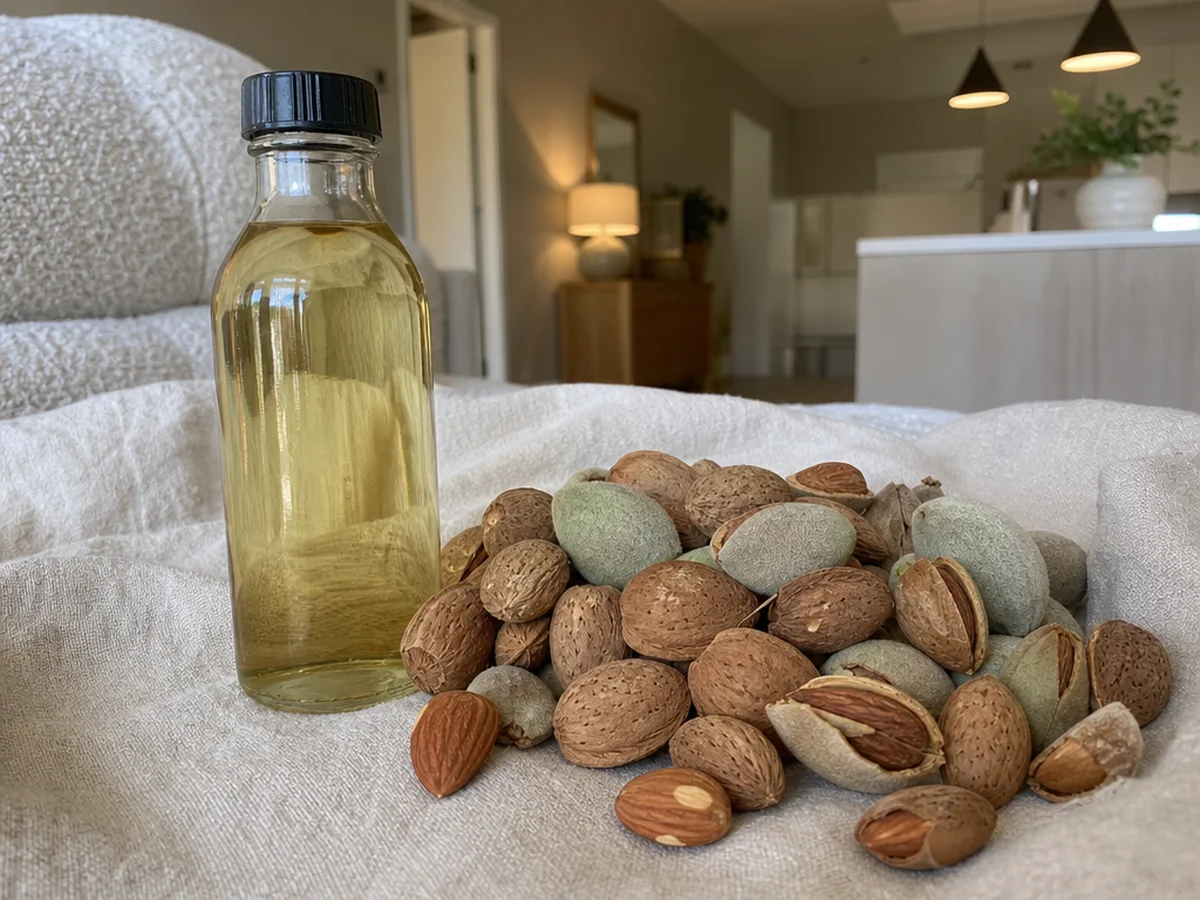
A review of plant oils by Lin, Zhong and Santiago offers part of the explanation: linoleic acid appears to support the skin's water barrier, while oleic acid can loosen it with continuous application. Almond oil is rich in oleic acid, with linoleic acid as the second main ingredient. California analysis found oleic acid at roughly 58% to 74% and linoleic acid at 19% to 35%. Nobody has run the olive-versus-sunflower style test on almond oil, so we hold that as a reason for good habits, not a verdict. Start small, and see how your skin feels. Our fatty-acid article explains why those percentages move.
What the almond oil trial showed
The human comparison we know of that includes almond oil is a two-week pilot by Vaughn and colleagues. Thirty-two people who completed it applied almond oil, coconut oil, jojoba oil or white petrolatum twice a day, and all four raised skin hydration by week two with no significant difference among them. Almond oil was the product participants liked best. The paper does not say whether the almond oil was cold-pressed or refined, and two weeks cannot say what months of use would look like. As a modest finding it stands: in dry skin, over two weeks, almond oil moisturized about as well as petrolatum. It does not show that an oil routine beats a plain cream.
Who is likely to enjoy one, and who should pause
- Dry skin that likes a richer finish. A small amount of oil on slightly damp skin is a classic way to seal in a moisturizer. That is our suggestion, drawn from how oils work rather than from a specific trial.
- Oily or breakout-prone skin. Comedogenic ratings for individual oils come from animal-based tests and are contested. A human study of six volunteers by Draelos and DiNardo found that finished products made with comedogenic ingredients were not necessarily comedogenic. A rating neither condemns nor clears an oil, so patch testing and patience are better guides. Our acne FAQ goes deeper.
- Tree nut allergy. Skip our oil. It is cold-pressed and unrefined, so trace almond protein is present, and we say plainly that anyone with a tree nut allergy should not use it. See our allergy guide.
If you decide to try one, go slowly
Treat a facial oil like meeting a new person: take it slowly. Begin with a single drop or two, warmed between clean fingertips, and press it lightly over slightly damp skin instead of rubbing hard. Use it in the evening first, so you can see how your skin feels by morning. Add one new product at a time, so that if something does not suit you, you know exactly which one it was. Keep it away from the eye area.
What you will notice
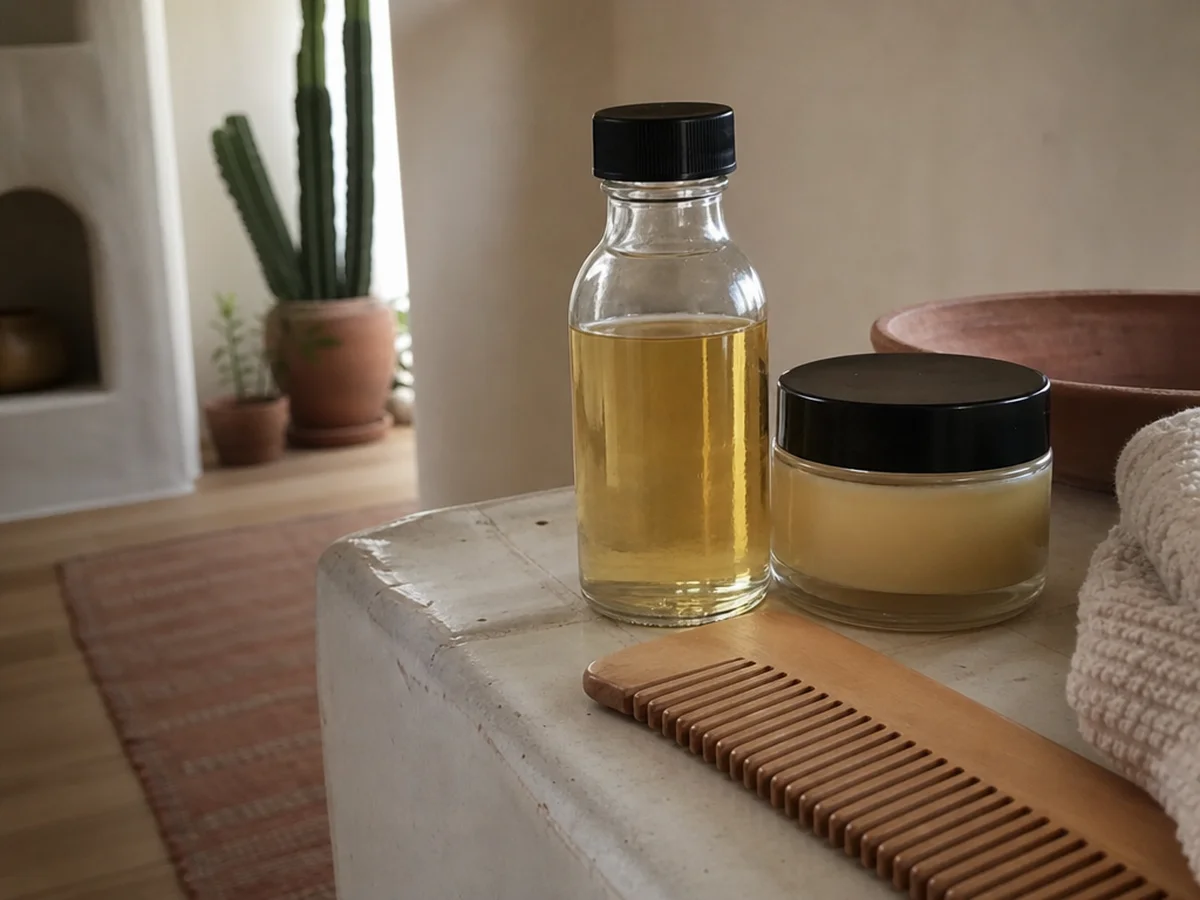
One drop of almond oil is a good way to learn what a plain oil feels like. Smell it first: ours is soft, subtly nutty and lightly sweet. Then rub it between your fingers and notice how quickly it glides and how it finishes.
Reading the label of a single-ingredient oil
With one ingredient, the label is where the quality information lives. Check that the botanical name is what you expect, whether the oil is cold-pressed or refined (our refined versus unrefined guide explains the difference), and whether the bottle carries a pressing or bottling date. Ours is cold-pressed, unrefined and sold neat, with a pressing date, bottling date and lot number on every bottle, in amber glass. The Certificate of Analysis we publish for one batch lists density, refractive index and optical rotation. If you need a peroxide value or fatty-acid profile for a lot, ask us in writing through the contact page. The buyer's guide lists the checks.
So here is our view of the trend: an oil is a lovely cosmetic choice for many adults with dry skin and no tree nut allergy, after a patch test, and a dermatologist is the right person to ask if you are hoping to solve a skin problem. Choose the one whose feel you enjoy, and let the label and the dates do the rest.
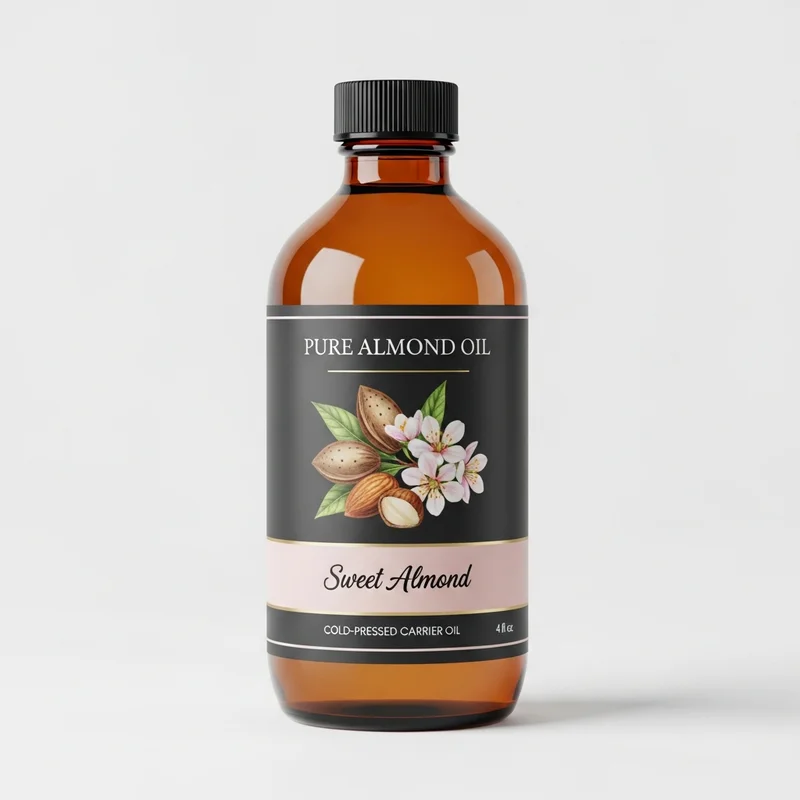
Sweet Almond Oil
Sweet Almond Oil from our own shop, in sizes from 0.5 oz to bulk.
From $9.99
Shop Now →Sources & Further Reading
- Burnett CL et al., 2017. Safety Assessment of Plant-Derived Fatty Acid Oils. Int J Toxicol. PubMed 29243540
- Danby SG et al., 2013. Effect of olive and sunflower seed oil on the adult skin barrier: implications for neonatal skin care. Pediatr Dermatol. PubMed 22995032
- Lin TK, Zhong L, Santiago JL, 2017. Anti-Inflammatory and Skin Barrier Repair Effects of Topical Application of Some Plant Oils. Int J Mol Sci. PMC5796020
- Sathe SK et al., 2008. Fatty acid composition of California grown almonds. J Food Sci. PubMed 19021789
- Vaughn AR et al., 2018. Multi-Center Randomized Clinical Study of The Effects of Natural Oils on Xerosis and Skin Barrier Properties. SKIN The Journal of Cutaneous Medicine. skin.dermsquared.com
- Draelos ZD, DiNardo JC, 2006. A re-evaluation of the comedogenicity concept. J Am Acad Dermatol. PubMed 16488305