Almond Oil for Sensitive Skin: Patch Test First
"Sensitive skin" can mean two quite different things: skin that stings or flushes easily, and skin that is truly allergic to something. Almond oil raises both questions at once, so it helps to pull them apart. The short version is that we can't call any oil safe for your skin, but we can show you a careful way to find out.
Irritation is one question, allergy is another
For everyday cosmetic use, the broadest reassurance comes from the Cosmetic Ingredient Review expert panel. It assessed 244 plant-derived fatty acid oils, the broad family of edible-type oils that cosmetics are built on and where sweet almond oil belongs, and concluded they are safe as used in cosmetics, with a focus on effects on the skin. That is a statement about typical cosmetic use across many people, which is useful, but it is not a promise about your skin on your Tuesday. Individual reactions happen with ordinary ingredients.
Allergy is a separate matter, and with almond oil it hinges on how the oil was made. An allergist writing for the American Academy of Allergy, Asthma & Immunology explains that refined nut oils generally lack allergenic protein, while unrefined, cold-pressed ones keep it. Ours is cold-pressed and sold unrefined, so trace almond protein is present. That makes our position simple and firm: if you have a tree nut allergy, do not use this oil. Food Allergy Research & Education adds a useful reminder that tree nut oils, almond included, which often are not highly refined, turn up in lotions, hair products and soaps, so the ingredient list of other products is worth a glance too.
A patch test you can actually follow
We like the American Academy of Dermatology's method because it is concrete:
- Pick a quarter-sized spot on the inner arm or the bend of the elbow, somewhere the oil will not rub or wash off.
- Apply the amount you would normally use, twice a day, for 7 to 10 days.
- If there is no redness, itching or swelling at the end, you can start using it.
- If a reaction develops, wash the oil off straight away and don't use it again. See a dermatologist if it is severe or doesn't settle.
It takes longer than a quick dab, but it tells you more, and for skin that reacts easily the extra week is cheap insurance. Our own minimum is patching a small area and waiting at least a day; the AAD routine is the thorough version, and we would follow it if your skin is the reactive type. The full walk-through is in how to patch test almond oil.
Ten days can feel long when you are curious, so make the waiting easy. Write the start date on a sticky note or in your phone, and keep the test spot clear of other new products so you know exactly what you are looking at. Keep everything else boring too: the same soap, the same laundry detergent, the same moisturizer. If you change three things at once, you cannot tell which one deserves the credit or the blame.
Small habits that keep it gentle
- Use less than you think. A drop or two warmed in the palms covers a surprising amount of skin.
- Keep it away from your eyes.
- Add nothing at first. Our oil is sold neat with nothing added, which keeps the patch test honest. If you later blend in essential oils, Tisserand Institute's lowest dilution range, for sensitivity issues or impaired skin, is 0.2 to 1%. Our dilution guide does the arithmetic.
- Store it cool and dark. We count about a year from pressing, and an oil that has gone off is a poor experiment for reactive skin. Storage habits are here.
Get to know the oil itself
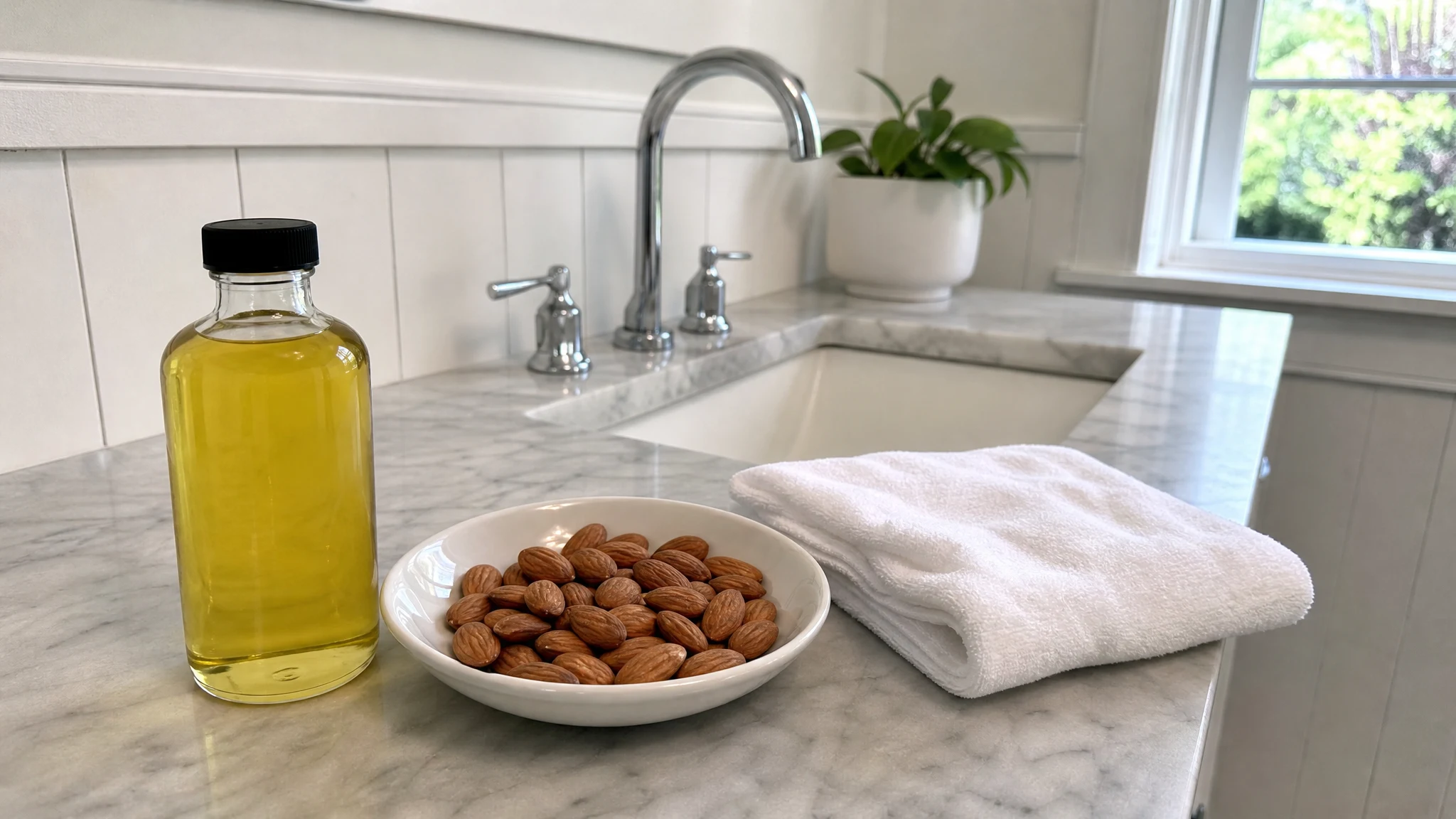
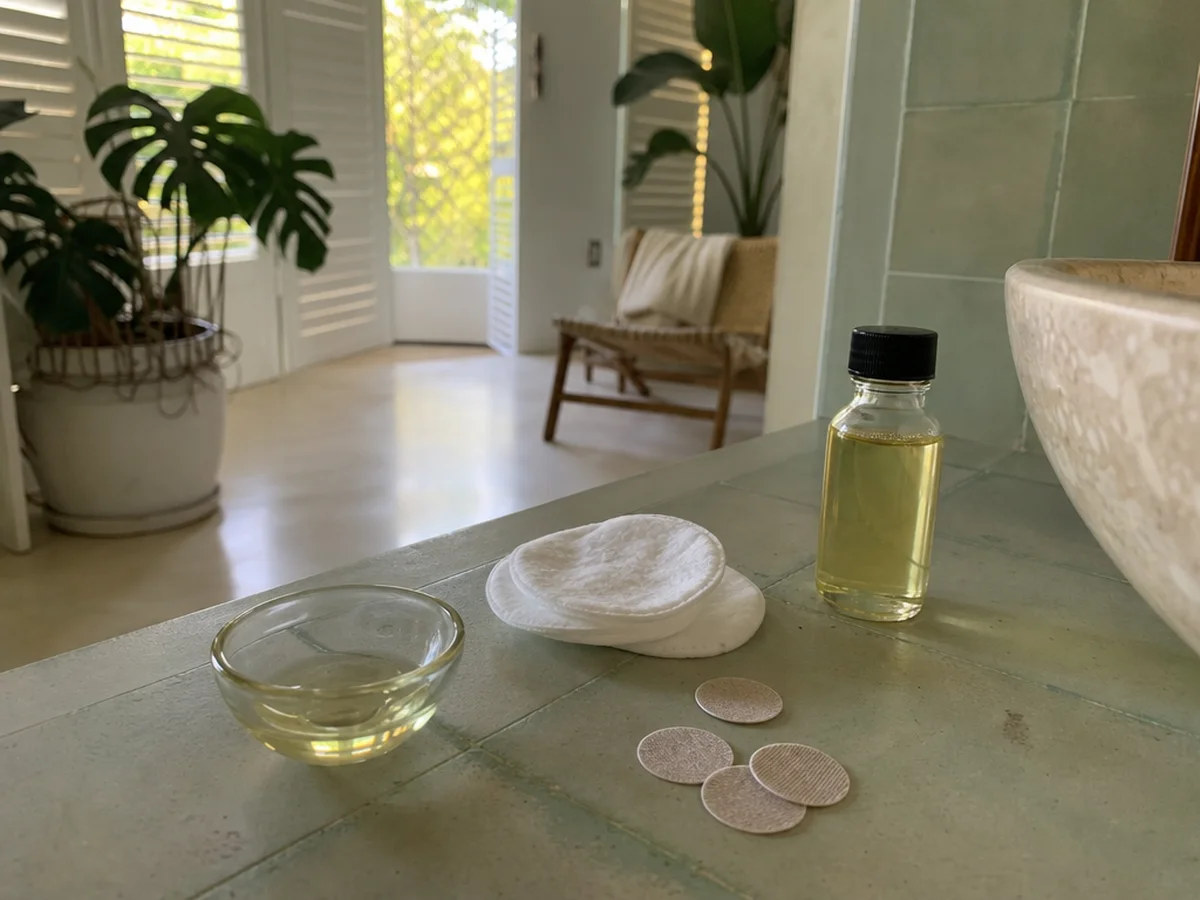
Before it ever touches your skin, open the bottle and look at it. Ours is a faintly golden oil with a soft, lightly sweet, nutty smell. Put a single drop on the back of your hand and watch how quickly it sinks in; it absorbs fast and leaves a non-greasy finish, which makes it easy to judge how much you really need. Knowing what normal looks and smells like is a useful part of caring for any bottle, because a sharp or flat smell is your cue to stop using it.
A gentle first week
Once the patch test passes, ease in. Use a single drop on one area, such as the backs of your hands or your forearms, and keep that up for a few days before you widen the circle. Warm the drop in your palms so it spreads thinly. Skin that reacts easily appreciates a slow introduction, and a slow start also makes it easier to tell how you feel about the oil itself: its soft, lightly sweet scent, its light finish and how quickly it sinks in.
Broken or inflamed skin
Everything above is about healthy skin. If yours is cracked, weepy, inflamed or flaring, that is a dermatologist's conversation before it is an oil conversation, and almond oil is not something we offer for any skin condition. It is a cosmetic oil for external use.
If you'd like to know more about how the oil is made, ask us through the contact page; our post on almond oil and nut allergies is the place to read next.
Slow and simple is the right pace for skin that reacts easily, and a plain oil with nothing added fits that approach nicely.
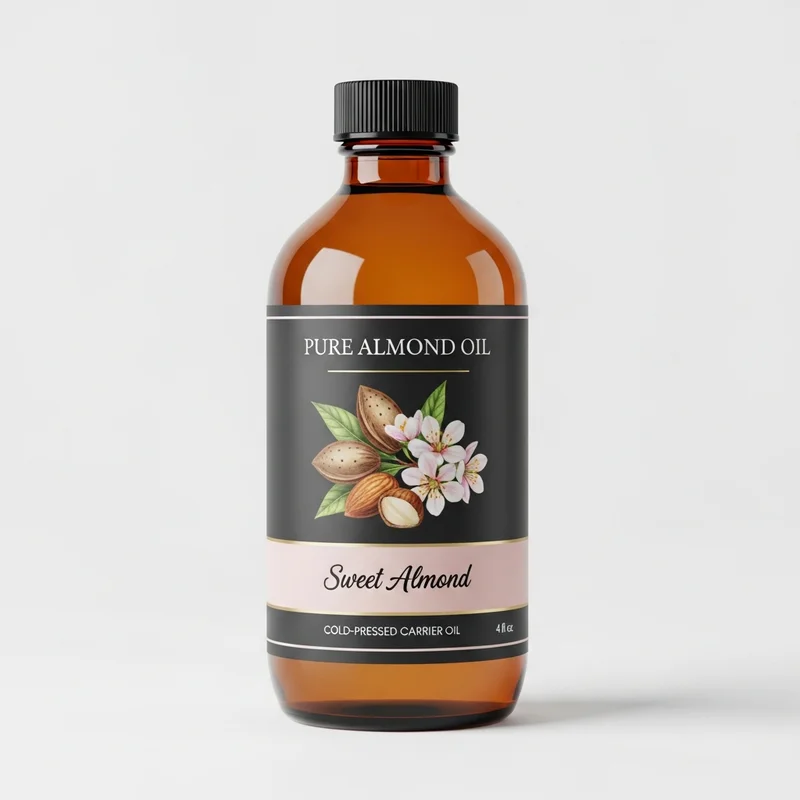
Sweet Almond Oil
Sweet Almond Oil from our own shop, in sizes from 0.5 oz to bulk.
From $9.99
Shop Now →Sources & Further Reading
- Burnett CL, et al. Safety Assessment of Plant-Derived Fatty Acid Oils. Int J Toxicol, 2017
- American Academy of Allergy, Asthma & Immunology, Food allergy: nut oils in topical products
- Food Allergy Research & Education, Tree Nut Allergy
- American Academy of Dermatology, How to test skin care products
- Tisserand Institute, Dilution for essential oils