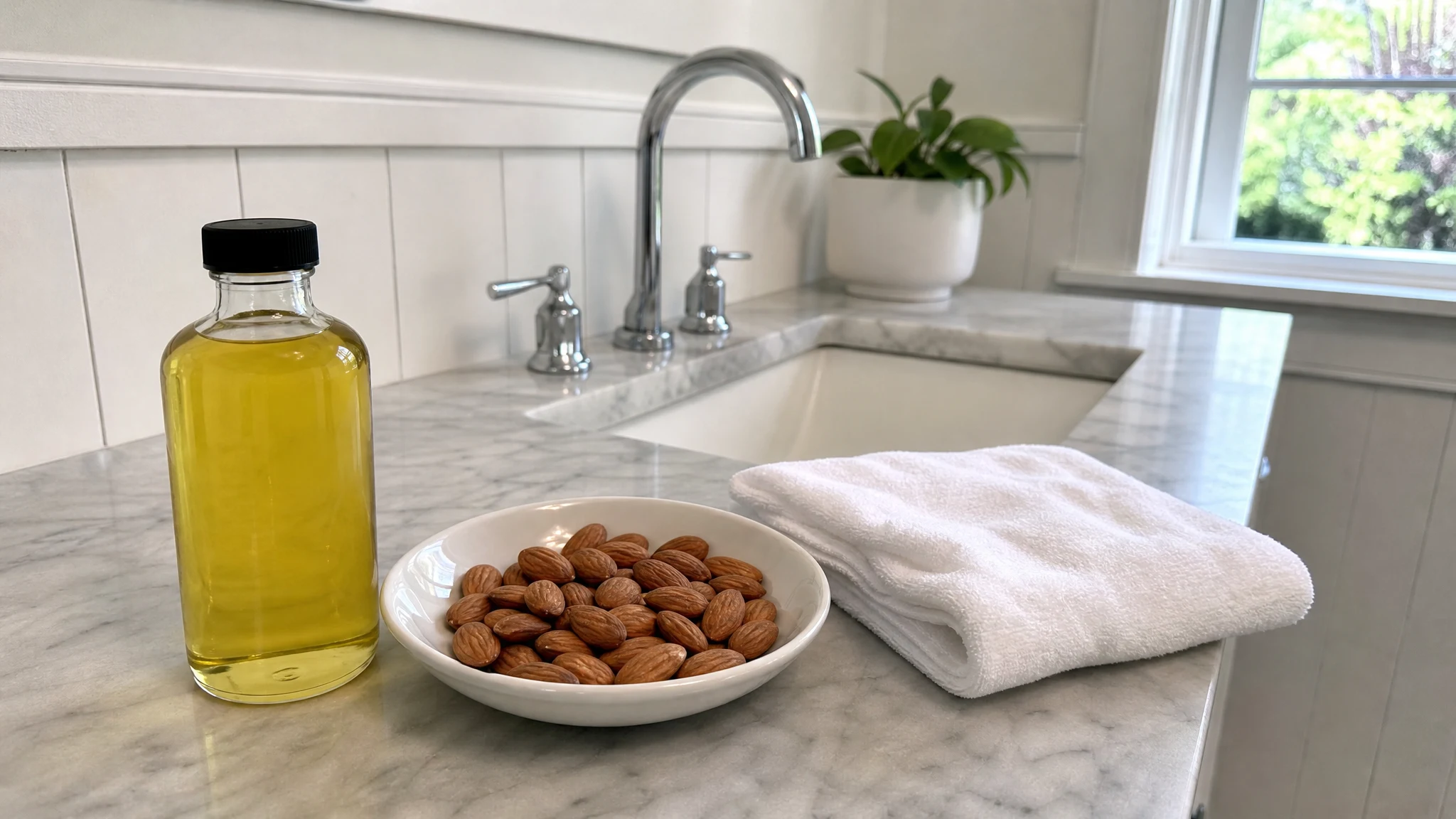
Mixing Almond Oil With Other Oils: Feel and Shelf Life
Almond oil is a good mixer. It is light, it carries other scents without drowning them, and it has no strong opinions about what you pour in beside it. The real questions are not "will these oils combine?" but "what will the blend feel like?" and "how long will it last?" Those two are worth a few minutes.
Will they actually mix?
Yes. Plant oils like almond, and the other carrier oils you would meet at a craft or supply shop, are all built the same basic way, so they stir together without separating and without an emulsifier. That is basic oil chemistry rather than a lab result we ran, but it matches what anyone who has poured one oil into another has seen. The things that do not simply stir in are water, butters that need melting, and waxes that need gentle heat.
Think in terms of feel
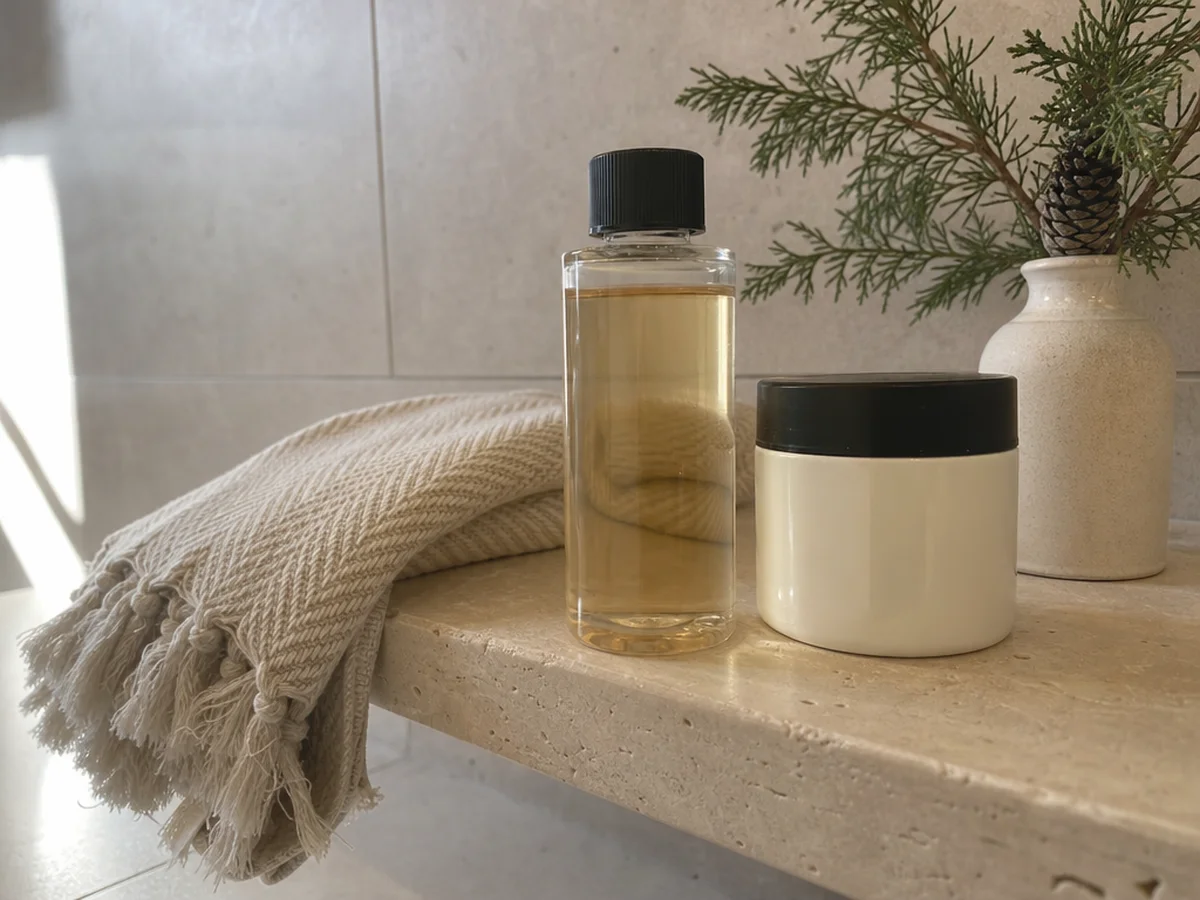
Pick a second oil for what it adds. Almond is on the lighter, faster-absorbing side, with a soft glide that suits massage. If you want a blend that feels richer on elbows, heels or hands, you could swap in a heavier oil for part of the mix. If you want it even lighter, go the other way. We would start with a simple two-oil split and adjust by feel:
- Three parts almond to one part of your second oil keeps the almond character and nudges the feel.
- Equal parts gives you a true halfway blend.
Those are suggestions, not a formula we have tuned. Mix a small amount first, because a batch you can finish in a few weeks beats a big bottle you resent. Our comparison posts show how almond sits next to jojoba, coconut and olive oil, which helps you decide what a partner oil might bring.
Start with a tiny test batch
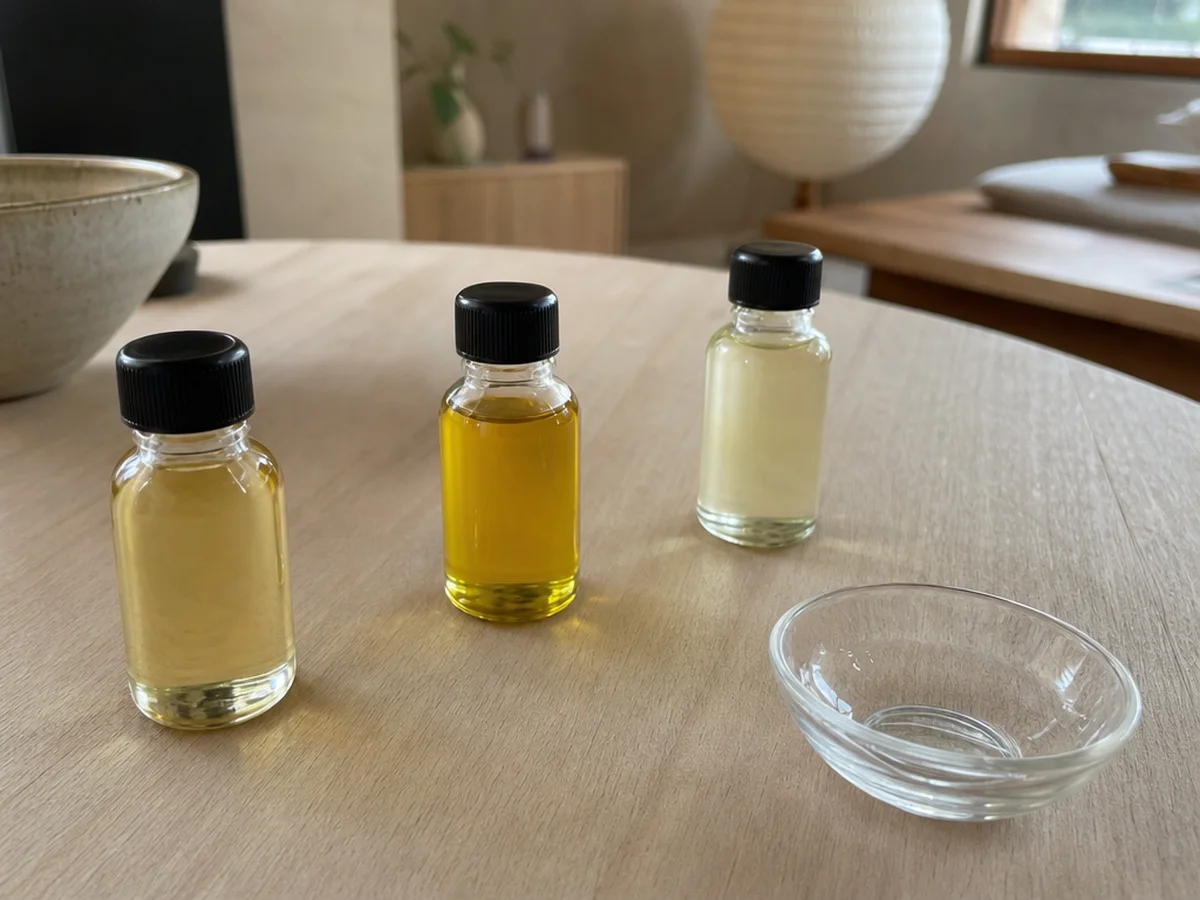
Before you commit a whole bottle, make a spoonful. Into a small clean glass dish, measure three teaspoons of almond oil and one of your second oil. Stir, smell, and rub a drop between your fingers. Is it richer or lighter than almond alone? Does it glide as you like? If you want more of the second oil, add a little at a time and make a note of each change, because a blend you cannot reproduce is a blend you cannot love twice.
The shelf-life rule that surprises people
Here is the part that is easy to overlook: a blend generally ages like its most delicate member. Oils with more unsaturated fatty acids oxidize faster. A 2025 review of vegetable oil oxidation cites relative rates in which oleic acid, with one double bond, oxidizes about ten times faster than stearic acid, and linoleic acid, with two, about a hundred times faster. Almond oil is mostly oleic acid: in one study of virgin almond oil, oleic acid made up roughly 69 to 71% of the fatty acids and linoleic acid roughly 19 to 21%. That balance is part of why we keep our own oil cool, dark and in amber glass, and count about a year from pressing.
The practical reading is straightforward. If you blend almond oil with a very linoleic-rich oil, the mix will probably not outlast the shorter-lived oil, so note the pressing or best-by date of every ingredient and use the earliest one as your clock. That is our reasoning from the chemistry rather than a measured shelf life for any particular blend. Smelling a blend before use, a sharp or paint-like note where there used to be a soft one, is a good habit. Our storage guide covers the rest.
When essential oils join the party
Almond is a popular carrier because it lets the aromas through. Lavender, rose, geranium, chamomile, sandalwood and ylang ylang all blend nicely with it. The amount matters more than the combination. The Tisserand Institute lists 1 to 3% for body oils and lotions, 0.5 to 1.2% for facial cosmetics, and 0.2 to 1% for sensitive or impaired skin. As arithmetic, 1% in 30 ml of carrier is 0.3 ml of essential oil. We keep our own general line at 0.5% to 2% and would start at the low end every time. The ratios and a worked example live in our dilution guide, and the carrier oil article shows why almond works for this job.
Label like you mean it
Write the oils, the proportions and the date on the bottle. Next month you will not remember the ratio, and a strip of masking tape and a pen take half a minute. Add a "use by" date based on the earliest ingredient. Then store the bottle in a cupboard or drawer, not on a sunny windowsill, since amber glass helps but a cool, dark spot does the rest.
Smell it, every time
Make a habit of opening the bottle and taking a quick sniff before each use. Almond oil should smell soft and a little nutty. If you notice something sharp, you have your answer, and a small batch makes that an easy decision.
One non-negotiable
If anyone who will use the blend has a tree nut allergy, almond oil stays out of it. Our oil is cold-pressed and unrefined, so trace almond protein is present. Patch test any new blend on a small spot, as the American Academy of Dermatology suggests, before it goes anywhere bigger.
A good blend is mostly patience: a small batch, a label with the date, and a nose you trust.
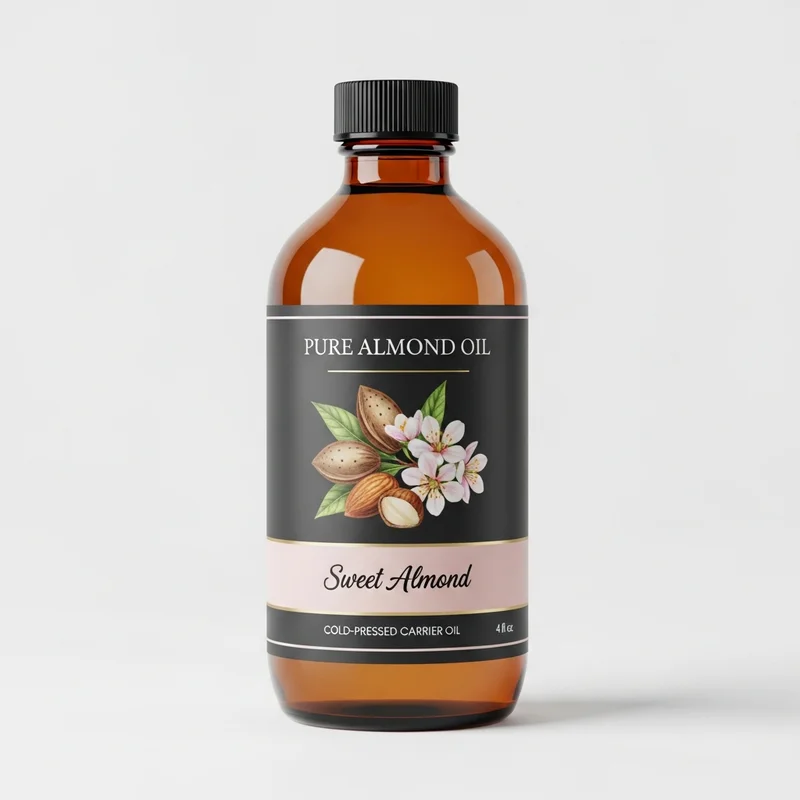
Sweet Almond Oil
Sweet Almond Oil from our own shop, in sizes from 0.5 oz to bulk.
From $9.99
Shop Now →Sources & Further Reading
- Gharby S, et al. Vegetable oil oxidation: Mechanisms, impacts on quality, and approaches to enhance shelf life. Food Chemistry X, 2025
- Roncero JM, et al. Influence of Pressure Extraction Systems on the Performance, Quality and Composition of Virgin Almond Oil and Defatted Flours. Foods, 2021
- Tisserand Institute, Dilution for essential oils
- American Academy of Dermatology, How to test skin care products