Almond Oil vs Coconut Oil: Which Should You Pick?
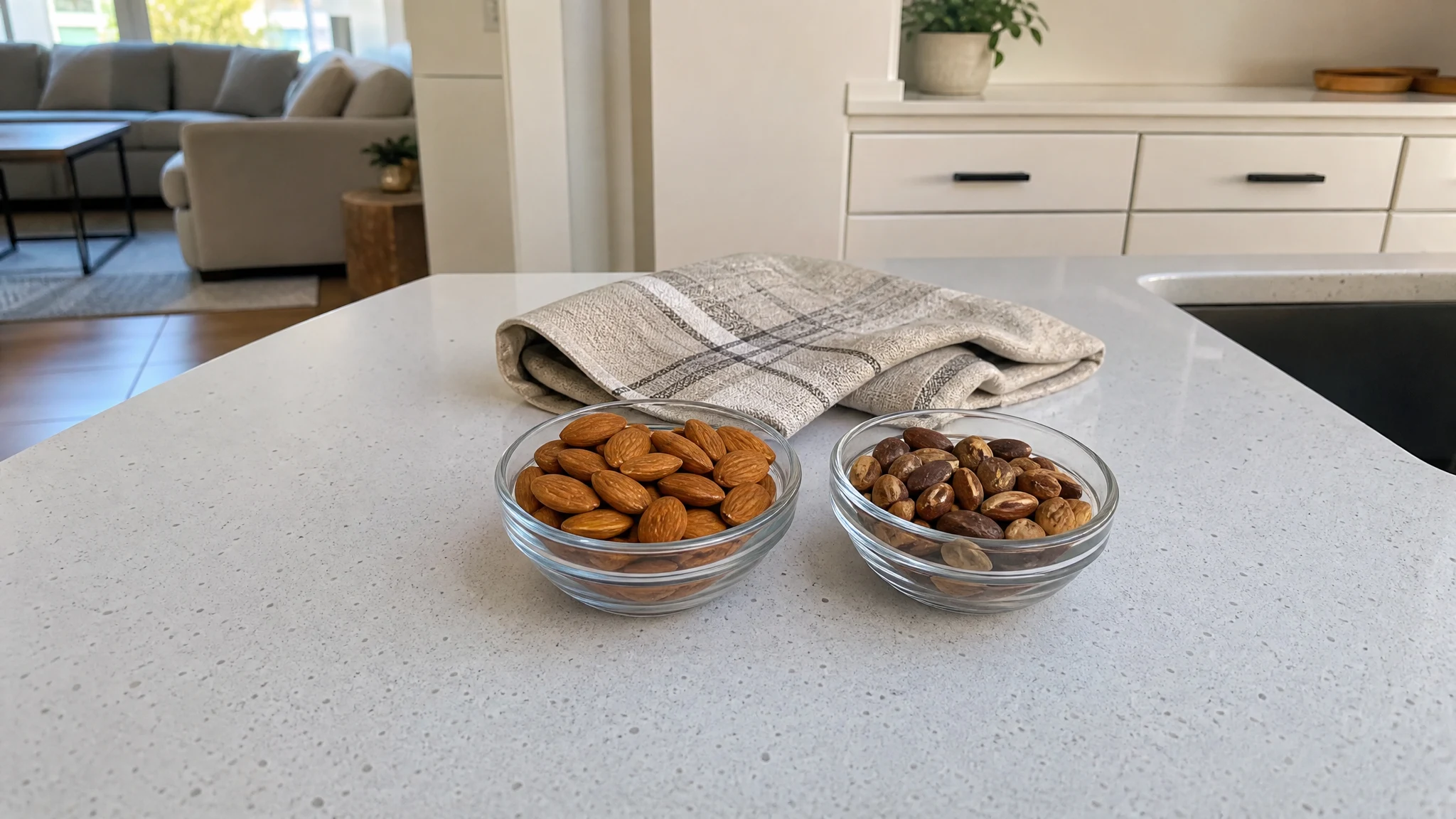
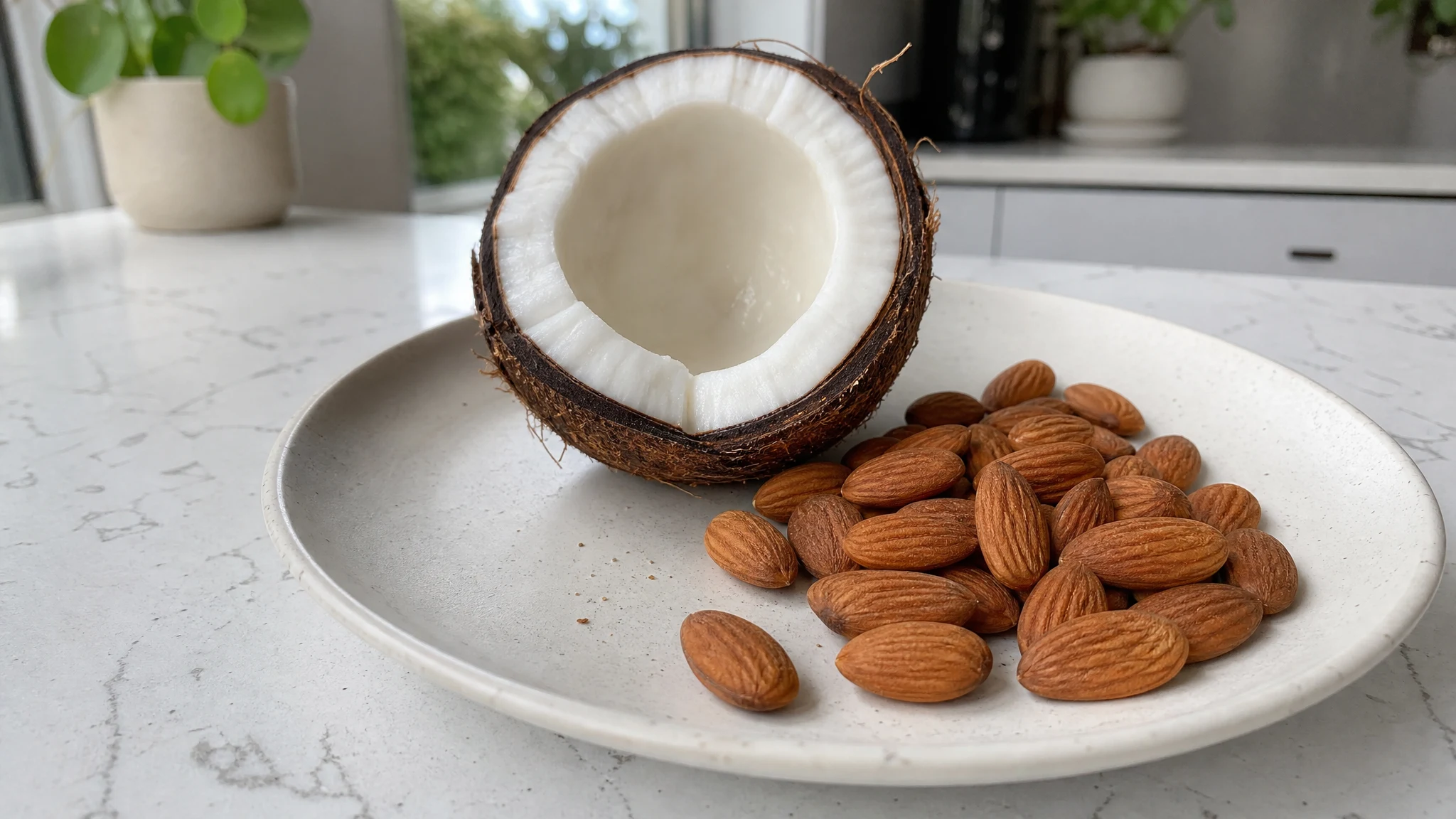
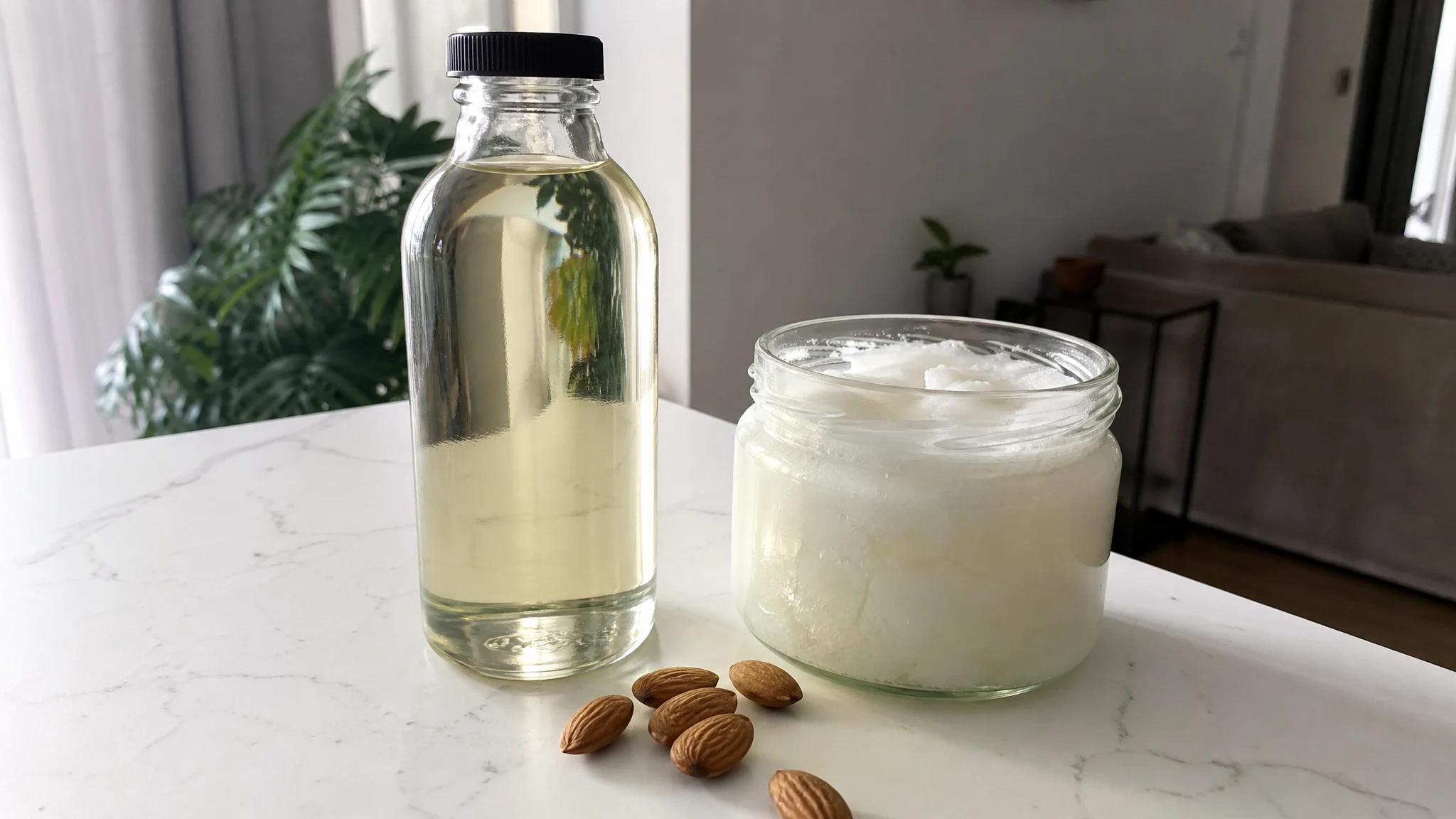
Open a jar of coconut oil in January and you may need a spoon; open a bottle of almond oil on the same day and it still pours. That small kitchen-counter difference is the best place to start, because it comes straight from what each oil is made of, and it explains most of how the two behave on skin, in hair and in a blend.
Two very different fats
Coconut oil is built mostly around lauric acid, a saturated fatty acid with a short, straight chain. That is why it firms up in a cool room and melts at body warmth. Almond oil is dominated by oleic acid, a monounsaturated fat that stays liquid. In a study of eight California almond cultivars, oleic acid ranged from about 58% to 74% of the soluble lipids and linoleic acid from about 19% to 35%. Those are almond figures in general; our oil is cold-pressed and unrefined, and we do not attach a fatty-acid profile to it.
In practice that means almond oil is easy to measure, pours into a bottle, warms in your palm without a melting step and carries essential oils without masking them. Coconut oil is lovely when you want body, but you will often be scooping and warming it first.
Try them side by side for a day and let your hands decide. Put a drop of almond oil in one palm and a fingertip of coconut oil in the other. Almond glides and sinks in; ours smells softly of almonds, lightly sweet and nutty, and finishes non-greasy. Coconut melts with warmth and has that unmistakable tropical scent. Whichever you reach for twice in a row is probably your answer.
On skin, the evidence is a tie
The most useful head-to-head we can point to is a small randomized pilot in which 32 people with dry skin used almond oil, coconut oil, jojoba oil or white petrolatum twice a day for two weeks. Skin hydration rose with every one of them, and none beat the others in a statistically meaningful way. What did separate them was preference: almond oil was the most liked at 38% of participants, and coconut oil came second at 31%.
It is a short, open-label pilot, so it does not crown a winner, and we would not ask it to. But it points to something we find reassuring and practical: choosing between these two for everyday body moisturizing can honestly come down to how you like the feel and the scent. Almond has a soft, subtly nutty, lightly sweet aroma; coconut smells like coconut. One of those will suit you better, and you will know within a week.
On hair, coconut has the lab data
If hair is the reason you are comparing, give credit where it is due. A laboratory study of hair tresses compared coconut oil, mineral oil and sunflower oil, and only coconut oil noticeably reduced protein loss, on both undamaged and damaged hair. The authors linked that to coconut oil's lauric acid, a small straight molecule that can move into the hair shaft. Almond oil was not part of that study.
So we do not tell you almond oil changes the structure of your hair. What we do say, as a sensory matter, is that a little almond oil smoothed through the lengths can leave hair feeling softer and looking glossier, and that it is a pleasant base for grooming blends. How much to use matters more than which oil; our piece on whether almond oil makes hair greasy walks through that, and the hair FAQ covers frequency.
A note on pores
People often ask which of the two is more likely to clog pores. Published comedogenic rating lists are tidy, but a small study that patch-tested finished products on volunteers concluded that a product made with a so-called comedogenic ingredient is not necessarily comedogenic itself. Single-ingredient numbers are a rough guide at best. If your face breaks out easily, our acne FAQ sets out what we can and cannot say, and a dermatologist is the right person to ask.
The allergy line comes first
Almond is a tree nut, and our oil is cold-pressed and unrefined, so trace almond protein is present. If you have a tree nut allergy, do not use it. Food Allergy Research & Education notes that nut oils which are often not highly refined are sometimes used in lotions, hair products and soaps.
Coconut sits in a different place. In January 2025 the FDA revised its food allergen guidance and no longer lists coconut as a tree nut for food labeling. That is a labeling decision about food and says nothing on what to put on skin, so someone with a nut allergy who wants to use coconut oil should check with an allergist first. We do not sell coconut oil, so a craft or grocery shop is where you would find it. Our nut allergy guide has the longer version.
How we would choose
- Want a liquid oil that pours, measures and blends easily? Almond.
- Want something solid-to-melting for a balm-like feel, or you specifically want coconut for hair? Coconut.
- Planning to blend with essential oils? A liquid carrier is simpler to measure, and our oil-mixing FAQ shows how the two can also be combined.
- Not sure? Patch test a small area, wait a day, and let your own skin vote.
Where each one lives
Because almond oil stays liquid, it is happy in a bottle, and you simply pour it. Keep it somewhere cool and dark: ours comes in amber glass for a reason, and about a year from pressing is what we count on. A jar of coconut oil will sit solid in a cool room and soft in a warm one, and that is completely normal, so there is no need to worry about it changing shape.
Whichever you choose, a little goes a long way. Both oils are for external cosmetic use, and the one we make is cold-pressed from raw kernels and sold unrefined.
Sweet Almond Oil
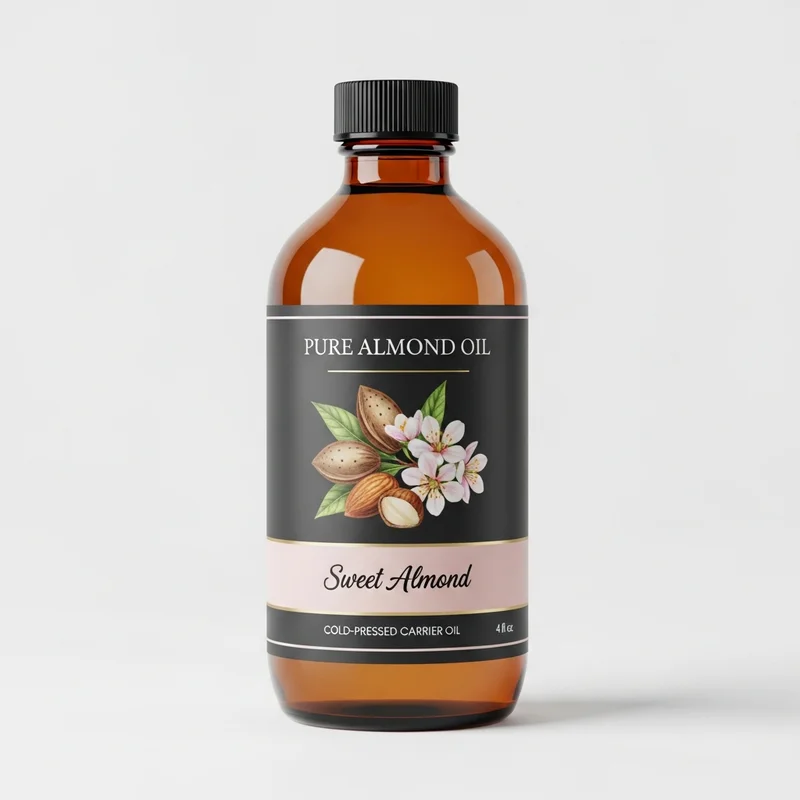
Sweet Almond Oil from our own shop, in sizes from 0.5 oz to bulk.
From $9.99
Shop Now →Sources & Further Reading
- Multi-Center Randomized Clinical Study of The Effects of Natural Oils on Xerosis and Skin Barrier Properties, SKIN The Journal of Cutaneous Medicine.
- Effect of mineral oil, sunflower oil, and coconut oil on prevention of hair damage, Journal of Cosmetic Science, 2003.
- Fatty acid composition of California grown almonds, Journal of Food Science, 2008.
- A re-evaluation of the comedogenicity concept, Journal of the American Academy of Dermatology, 2006.
- Tree Nut - FoodAllergy.org, Food Allergy Research & Education.
- Frequently Asked Questions: Food Allergen Labeling Guidance for Industry, FDA.