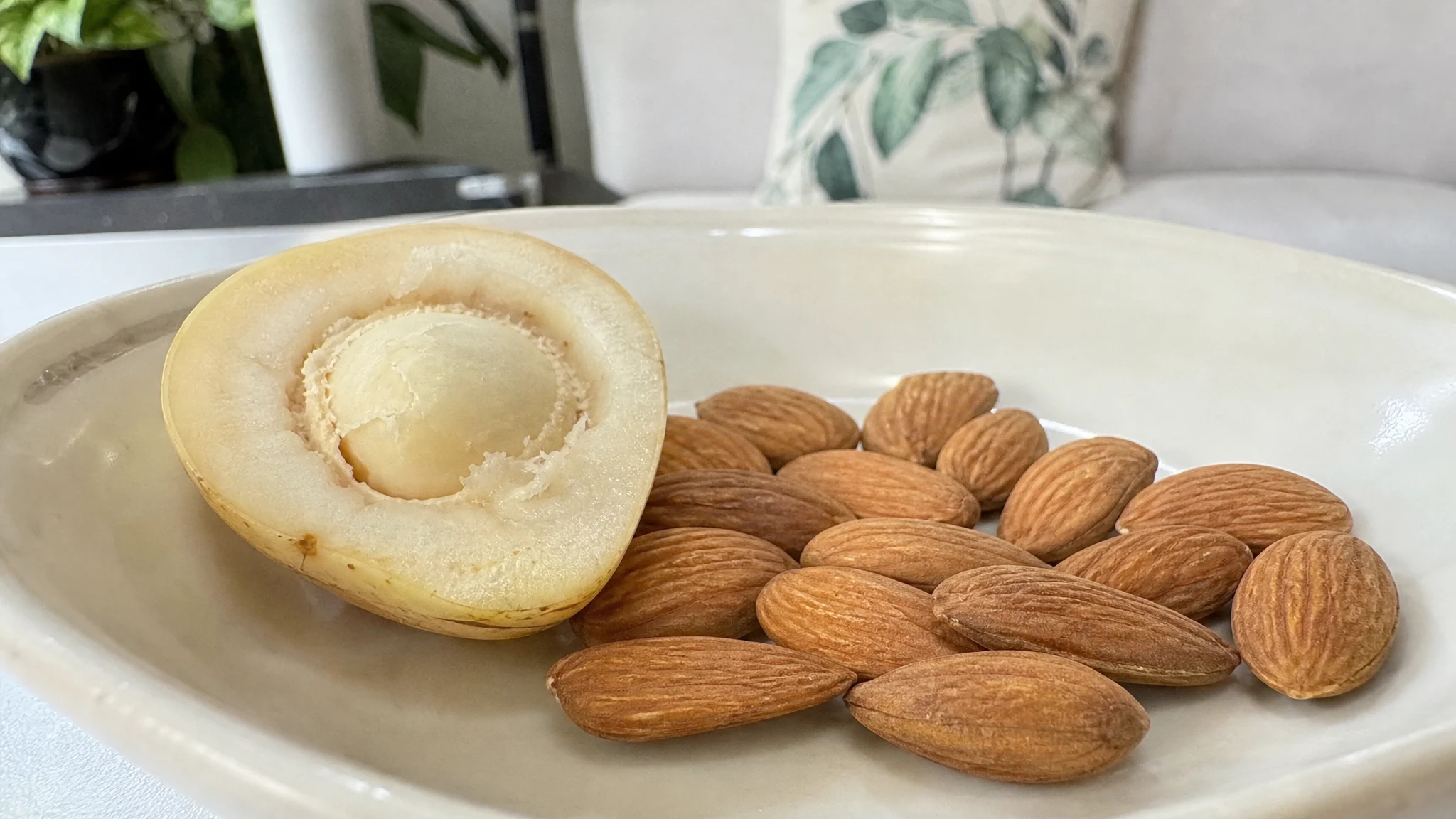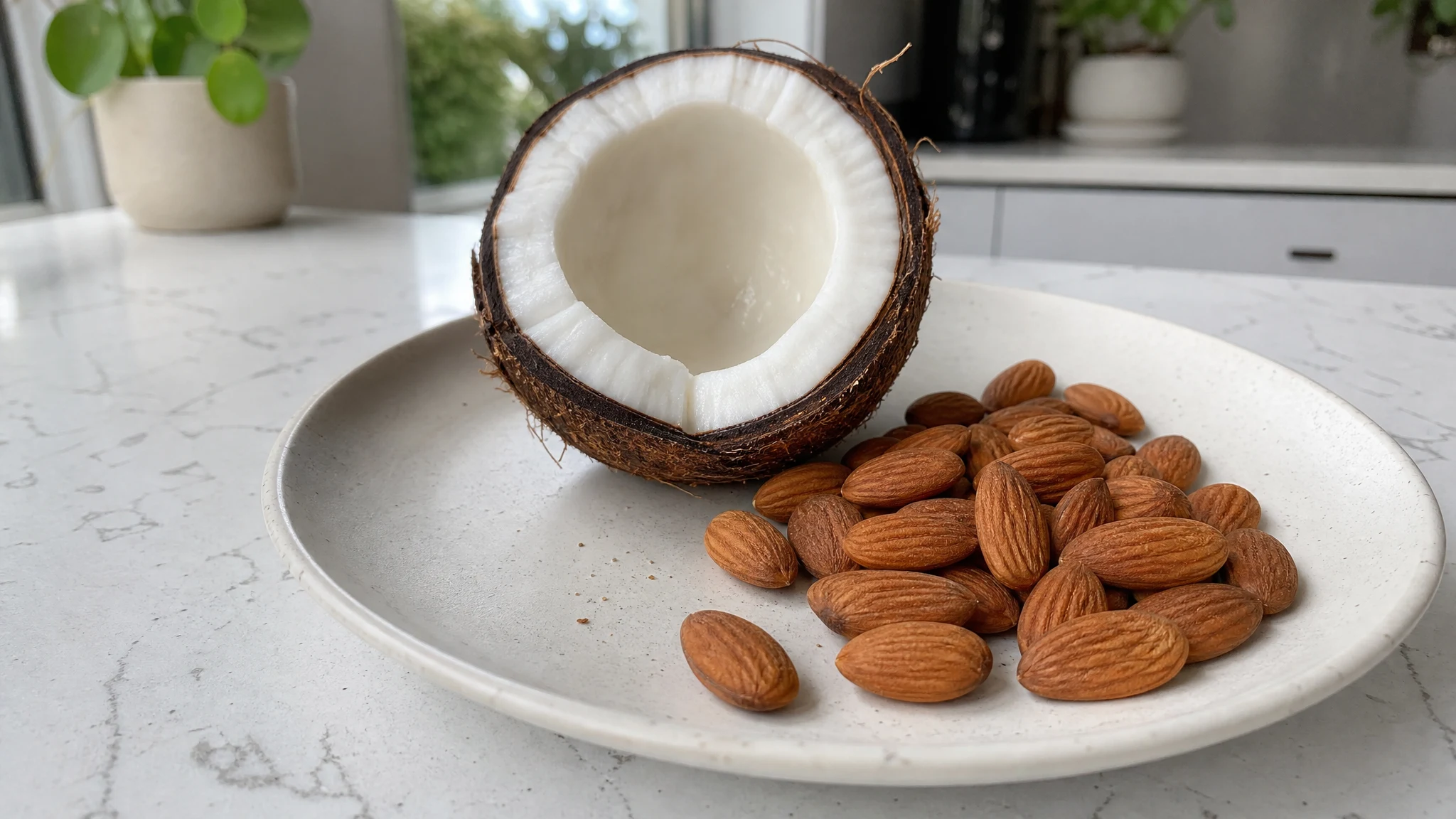
Almond vs Coconut Oil for Cooking: What to Know
Open any cooking-oil chart and you will find a column of smoke points, presented as if they settle everything. They do not, and the more you look at how oils behave in a hot pan, the less that single number explains. Before we dig in, a plain note: the almond oil we sell is a cosmetic oil for external use, so this is a read about food oils in general, not an invitation to cook with ours.
Where our oil fits, and where it does not
Our sweet almond oil is cold-pressed, unrefined and sold for skin, massage and blending. We do not market it for culinary use. If you want almond oil in the kitchen, buy one sold as food from a food seller, and check whether it is refined or cold-pressed, because that changes how it behaves under heat. Our guides to cooking with almond oil, vinaigrettes and baking cover the food side with that in mind.
Almond is also a tree nut. Food Allergy Research & Education lists almond oil among the products to avoid with a tree nut allergy, so anyone at your table with that allergy should have an allergist weigh in before any almond oil appears on the menu.
Why a smoke point is only part of the story
Smoke point is the temperature at which an oil begins to smoke under a set of test conditions. It moves with how refined the oil is, how fresh it is and how often it has been heated, which is why published numbers for the same oil disagree. A more telling question is how an oil changes during real, sustained cooking.
One laboratory team heated commercial oils to 240 C and then held them at 180 C for six hours, measuring what formed. Their conclusion was that smoke point does not predict how an oil performs when heated, and that oxidative stability, together with the polyunsaturated fat content, tells you more. Extra virgin olive oil produced the lowest level of polar compounds, coconut oil came close behind, and canola produced high levels. The authors work for an olive oil laboratory service, the oils were heated alone with no food in them, and almond oil was not named in the part we read, so treat it as a reasoned hint rather than a ruling.
Put plainly, an oil made mostly of saturated or monounsaturated fat tends to hold up to heat better than one rich in polyunsaturated fat. Coconut oil, which is largely saturated, held up well in that test. Almond kernel oil is mostly monounsaturated oleic acid (about 62 to 76 percent in one 31-genotype study), so by that reasoning it sits in a comfortable middle, though we have no measurement for a cooking oil of that kind to point to.
A practical way to choose
Before you stand in the oil aisle, ask what the dish is. A quick sauté, a roast, a salad dressing and a batch of muffins each want something different, and no single bottle wins all four. Think about flavour first, since it is the one thing you will taste in every bite. Then think about how often you will really reach for it. An oil you use every week beats a fashionable one that sits half full for a year.
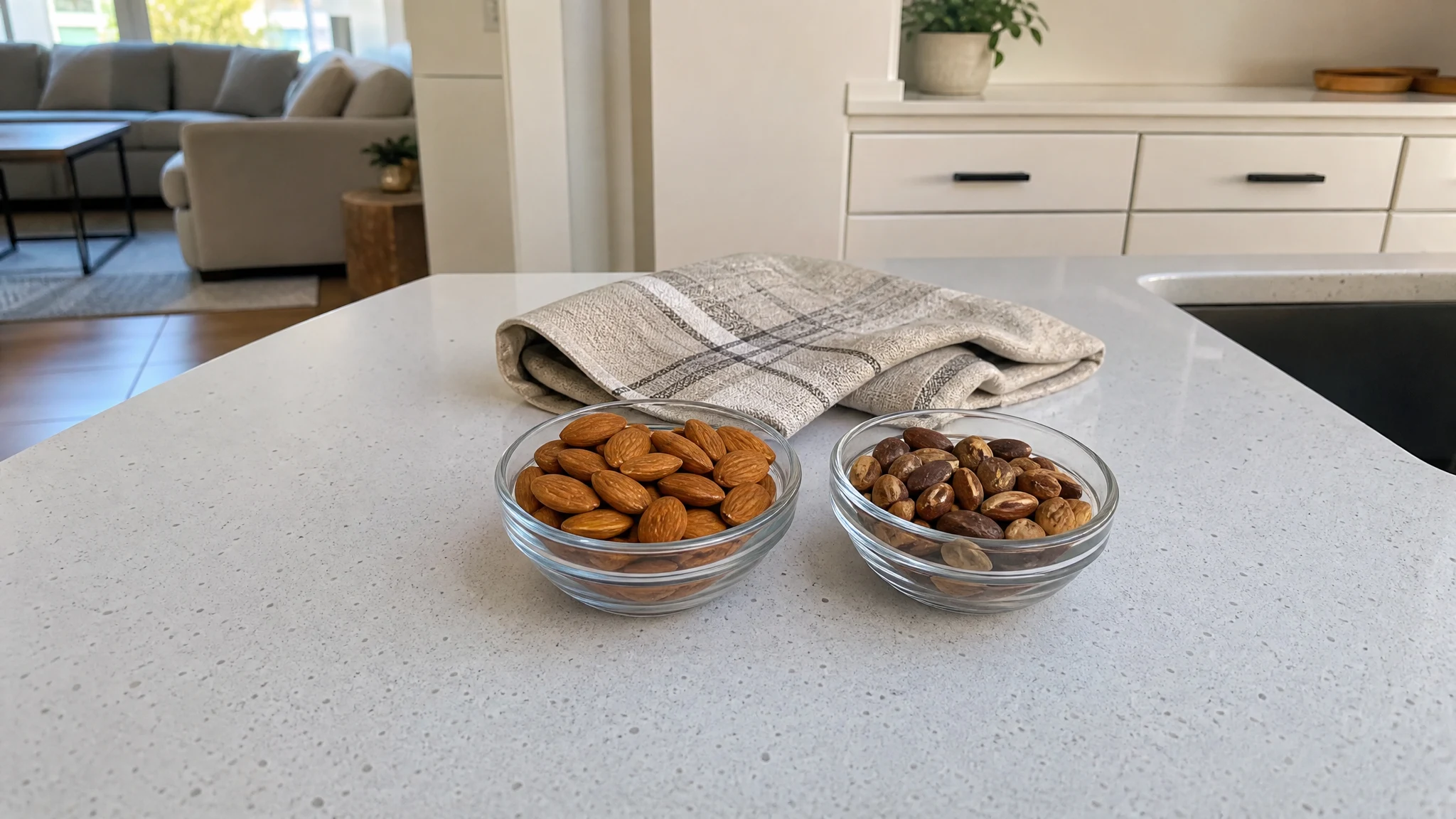
If you are curious how two food oils differ, pour a teaspoon of each into its own small dish and smell them side by side before you cook. Notice which one you want in the room with your dinner. Your nose is a better guide than any chart.
The flavour question
This one comes down to your palate. Almond oil has a soft, subtly nutty, lightly sweet aroma, which is how we describe our own cosmetic oil's scent, and it suits a dressing or a finishing drizzle where you want the nuttiness to show. Coconut oil carries its own tropical sweetness into whatever it touches, which is lovely in a curry and distracting in a fried egg. Neither needs apology, and neither is a stand-in for the other.
What authorities say about coconut oil as food
If the decision rests on fats in your diet, a meta-analysis of 16 clinical trials found that coconut oil raised LDL cholesterol by about 10 mg/dL and HDL by about 4 mg/dL compared with non-tropical vegetable oils. The authors said the result should inform decisions about coconut oil. We are an oil business and not a nutrition practitioner, so the sensible next step is a conversation with your doctor or a registered dietitian rather than a verdict from us.
For skin and hair instead of the stove, our almond and coconut comparison is the better place to look.
Small habits that help any oil
- Pour from the bottle instead of dipping a spoon in, so crumbs and moisture stay out.
- Cap it as soon as you have poured. A bottle left open is an oil that ages faster.
- Keep it away from the stove. The cupboard beside the burner is the warmest spot in the kitchen.
- Smell before you cook. If an oil smells sharp, stale or oddly like old crayons, it has had its day.
We follow the same spirit with our own cosmetic bottles: cool, dark and capped, with the date in view.
In the kitchen, pick the oil whose flavour you want, cook at the temperature the dish needs, and keep our cosmetic almond oil for skin and blending.

Sweet Almond Oil
Sweet Almond Oil from our own shop, in sizes from 0.5 oz to bulk.
From $9.99
Shop Now →Sources & Further Reading
- Food Allergy Research & Education. Tree Nut. foodallergy.org
- De Alzaa F, Guillaume C, Ravetti L, 2018. Evaluation of Chemical and Physical Changes in Different Commercial Oils during Heating. Acta Scientific Nutritional Health 2(6). actascientific.com
- Ozcan MM et al., 2020. Effect of almond genotypes on fatty acid composition, tocopherols and mineral contents and bioactive properties of sweet almond (Prunus amygdalus Batsch spp. dulce) kernel and oils. J Food Sci Technol 57(11):4182-4192. PMC7520497
- Neelakantan N, Seah JYH, van Dam RM, 2020. The Effect of Coconut Oil Consumption on Cardiovascular Risk Factors: A Systematic Review and Meta-Analysis of Clinical Trials. Circulation 141:803-814. PubMed 31928080