Marula vs Almond Oil: How Similar Are They?
Marula oil gets described in glossy terms: exotic, African, glowing. Almond oil gets described as the humble pantry staple. Put the two bottles next to each other and the labels sound like different worlds, but the chemistry says they are close cousins, and that is more interesting than the marketing.
Two oleic-rich oils
The main human study on marula oil, published in the Journal of Ethnopharmacology in 2015, analyzed the oil and found oleic acid at 69.0%, palmitic acid at 15.3%, linoleic acid at 9.2%, palmitoleic acid at 4.1% and stearic acid at 1.5%. For almonds, a study of eight California cultivars found oleic acid between roughly 58% and 74% and linoleic acid between roughly 19% and 35%, with the two moving in opposite directions from cultivar to cultivar.
Read those side by side and the shared theme is oleic acid. Marula has somewhat less linoleic acid than the almond range and a notable share of palmitic acid; almond has a wider spread, depending on the variety and the way the oil is made. Those numbers come from different materials and methods, so they describe how the two oils tend to look, not a measured match-up. And they are general figures: our cold-pressed almond oil does not come with a fatty-acid profile.
What has actually been tested
The marula study recruited healthy adult women, 20 for each test, and measured irritation, hydration and occlusion with skin instruments. The oil was non-irritating, hydrating on dry skin and occlusive on normal skin, with what the authors called moderate prevention of water loss. That is a sensible profile for an emollient oil, and it is worth knowing.
Notice what it did not measure: brightness, glow, or any difference from another oil. There was no almond arm. For almond oil, the best-known comparison is a small pilot in which 32 people with dry skin used almond oil, coconut oil, jojoba oil or white petrolatum twice daily for two weeks. All four raised hydration by week two with no significant difference between them, and marula was not in it.
So the fair summary is that both oils have been shown to behave as moisturizing emollients, in small studies, and neither study says one is better. "Glow" is a word about how skin looks in a mirror, and for any oil it is more about how well it sits on your skin and how gently you apply it than about a measurement. We would not promise it from either bottle.
What does set them apart
Sensory character is the honest difference. Our almond oil is cold-pressed from raw kernels and sold unrefined, and it has a soft, subtly nutty, lightly sweet aroma and a quick, non-greasy finish. Marula is a different plant and brings its own scent and feel; you will know which you prefer only by trying a small amount. Price and availability differ too, but we leave those to the sellers.
Process matters as much as the plant. The marula figures above describe one oil sample, and almond figures swing by several points between cultivars, so a number for "marula" or "almond" in general is not a number for the bottle in your hand. That is a good reason, for any face oil, ours included, to look for:
- the botanical name (for almond, sweet almond, Prunus amygdalus dulcis);
- whether it is cold-pressed or solvent-extracted and refined;
- a pressing or bottling date, and a lot number;
- a seller willing to share batch paperwork when you ask.
Our bottles carry the pressing date, bottling date and lot number, and the Certificate of Analysis we publish for one batch lists density, refractive index and optical rotation. If you want more detail on a lot, ask us in writing through the contact page.
How to try a new oil without fuss
Whichever oil you are curious about, a little patience goes a long way. Start with the smallest bottle, check the botanical name and the date, and test it on your forearm before it goes anywhere else. Then use it in the same place at the same time of day for a couple of weeks, so you notice the oil and not the noise of a changing routine. If it suits you, wonderful. If it does not, you have lost very little and learned what your skin prefers.
With our almond oil, the first thing you will probably notice is the aroma, soft and subtly nutty, with a little sweetness. Next comes the glide, then how quickly it settles in.
Allergy and skin type
Almond is a tree nut. Our oil is unrefined and retains trace almond protein, so anyone with a tree nut allergy should not use it. Marula oil is described in the study as a nut oil, and we have no allergy information for it, so an allergist is the right person to ask before trying it. Our nut allergy guide covers the almond side.
If your skin is oily or acne-prone, the more useful question is whether you want an oil on your face at all. The American Academy of Dermatology suggests oily skin may skip moisturizer or choose a gel, and our acne FAQ goes into it. Whichever oil you try, patch test a small area and wait a day.
Our take
If you love marula, enjoy it. If you want a versatile, soft-gliding carrier for the face, body, massage or essential oil blends, almond is a very good place to start, and you can see how it compares with argan, jojoba and rosehip, or read our face routine piece. Either way, you are choosing between two thoughtful, oleic-rich oils, not between a miracle and a staple.
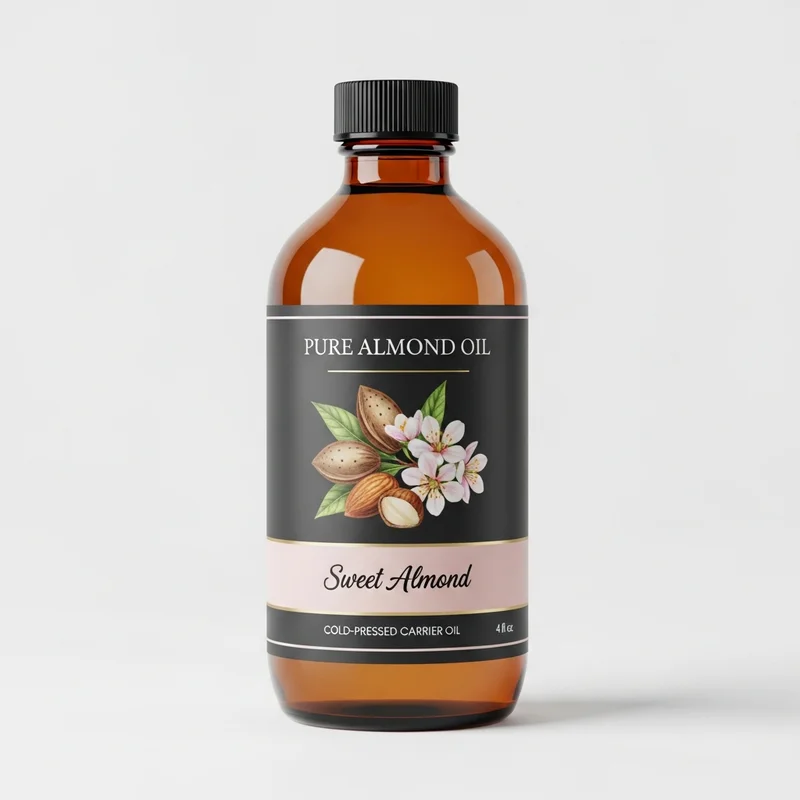
Sweet Almond Oil
Sweet Almond Oil from our own shop, in sizes from 0.5 oz to bulk.
From $9.99
Shop Now →Sources & Further Reading
- Safety and efficacy of Sclerocarya birrea (A.Rich.) Hochst (Marula) oil: A clinical perspective, Journal of Ethnopharmacology, 2015.
- Fatty acid composition of California grown almonds, Journal of Food Science, 2008.
- Multi-Center Randomized Clinical Study of The Effects of Natural Oils on Xerosis and Skin Barrier Properties, SKIN The Journal of Cutaneous Medicine.
- How to pick the right moisturizer for your skin, American Academy of Dermatology.