Olive Oil vs Almond Oil for Skin: What a Study Shows
"Natural" is not one thing. Olive oil and almond oil both come from the kitchen-cabinet end of the plant-oil world, and it is easy to assume that anything that feels oily and smells like food must be good for skin. A careful forearm study suggests the oil you choose changes the result, and that is worth knowing before you reach for whatever is on the shelf.
The forearm study
In 2013, dermatology researchers ran two randomized forearm studies in 19 adult volunteers, with and without a history of atopic dermatitis. One group applied six drops of olive oil to a forearm twice a day for five weeks. The second applied olive oil to one forearm and sunflower seed oil to the other for four weeks. Olive oil significantly reduced the integrity of the outermost skin layer and caused mild redness, in people with and without atopic dermatitis. Sunflower seed oil kept that layer intact and improved hydration. The authors concluded that the belief that all natural oils help skin is unfounded, and they discouraged olive oil for dry skin and infant massage.
Keep the study in proportion: 19 adults, forearms, a kitchen oil, a few weeks. It does not say olive oil harms every face. It does say that "plant oil" is not a single category and that your choice matters.
Where does almond oil fall?
It would be convenient to say almond oil is the gentle one. The honest answer is that nobody ran that arm. A review of plant oils on skin notes that oleic acid, which dominates olive oil, has been associated with barrier disruption under continuous topical application, while linoleic acid helps maintain the skin's water barrier. Almond oil is also oleic-rich: in a study of eight California cultivars, oleic acid was roughly 58% to 74% and linoleic acid roughly 19% to 35%. So the chemistry does not hand almond oil a free pass, and we will not pretend it does. Those are general almond figures; ours is a cold-pressed, unrefined oil without a published fatty-acid profile.
What almond oil does have is a small pilot of its own. Thirty-two people with dry skin applied almond oil, coconut oil, jojoba oil or white petrolatum twice daily for two weeks. All four raised hydration, with no significant differences between them, and almond oil was the most liked, at 38%. That is encouraging for a plain moisturizing job such as body care or massage, but it is short and open-label, and it did not test olive oil.
What we take from this
Two practical points follow, and neither is a verdict.
- Do not choose by the word "natural". If a leave-on oil is going to be part of your routine, treat it like any product: patch test a small area, wait a day, watch for redness or tightness, and stop if skin objects. If you already use olive oil and it suits you, nothing here is cause for alarm; it is a reason not to start on its reputation alone.
- For very dry skin, oils are not the first stop. The American Academy of Dermatology recommends creams and ointments over lotions for dry skin, and says to see a dermatologist if dryness persists or becomes painful, cracked or bleeding. An oil can be a pleasant extra on top of that, particularly right after a shower while skin is damp.
How to try an oil on your skin
If you want to experiment, do it quietly. Choose one oil, one spot, such as forearms after a shower, and one time of day. Use a thin film on slightly damp skin and give it two weeks. Notice how skin feels not just in the first minute but the next morning: comfortable, tight or slick? If it is not comfortable, stop. A few lines in your phone notes will keep you honest, since memory is a poor judge.
What almond oil feels like
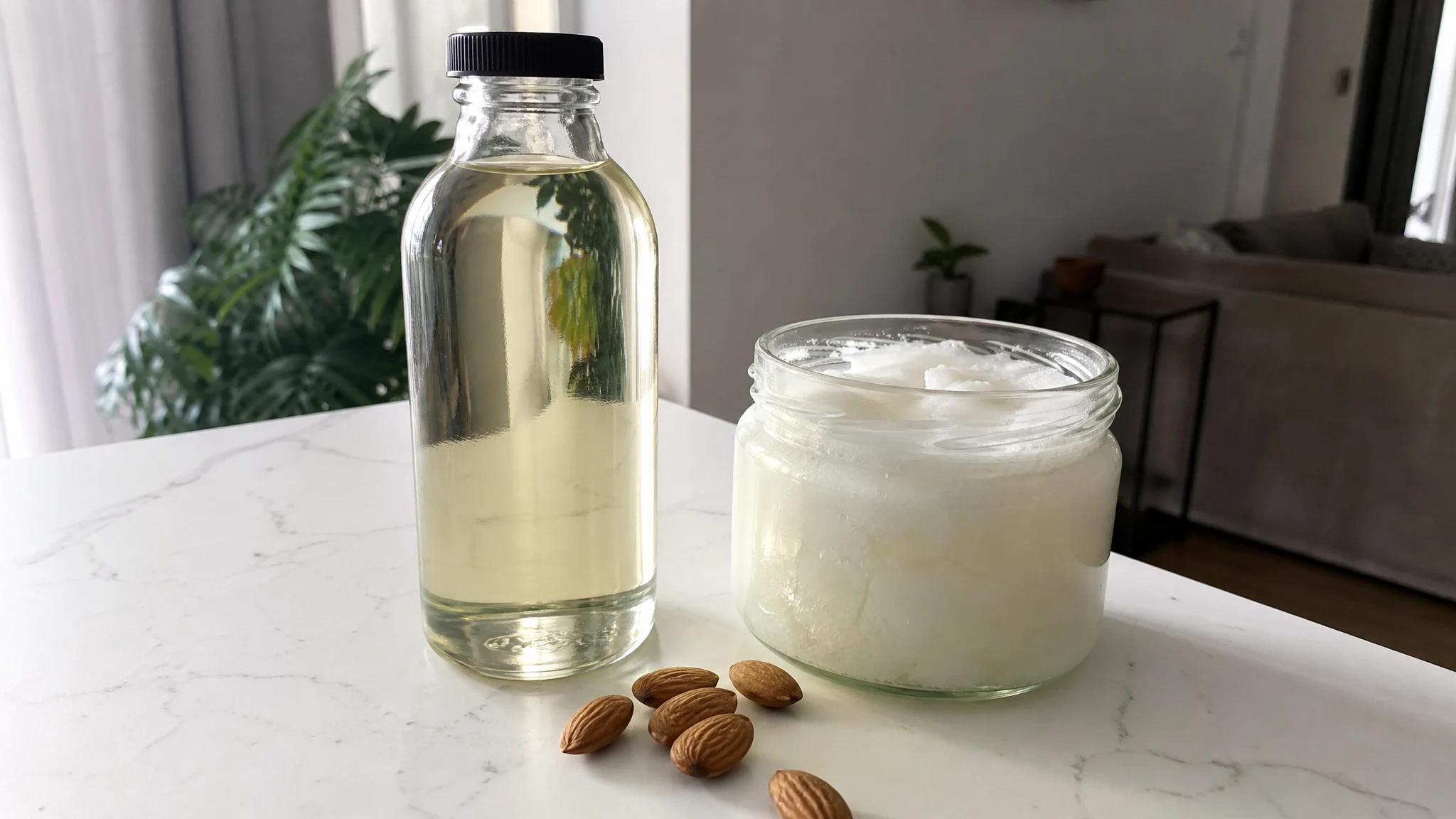
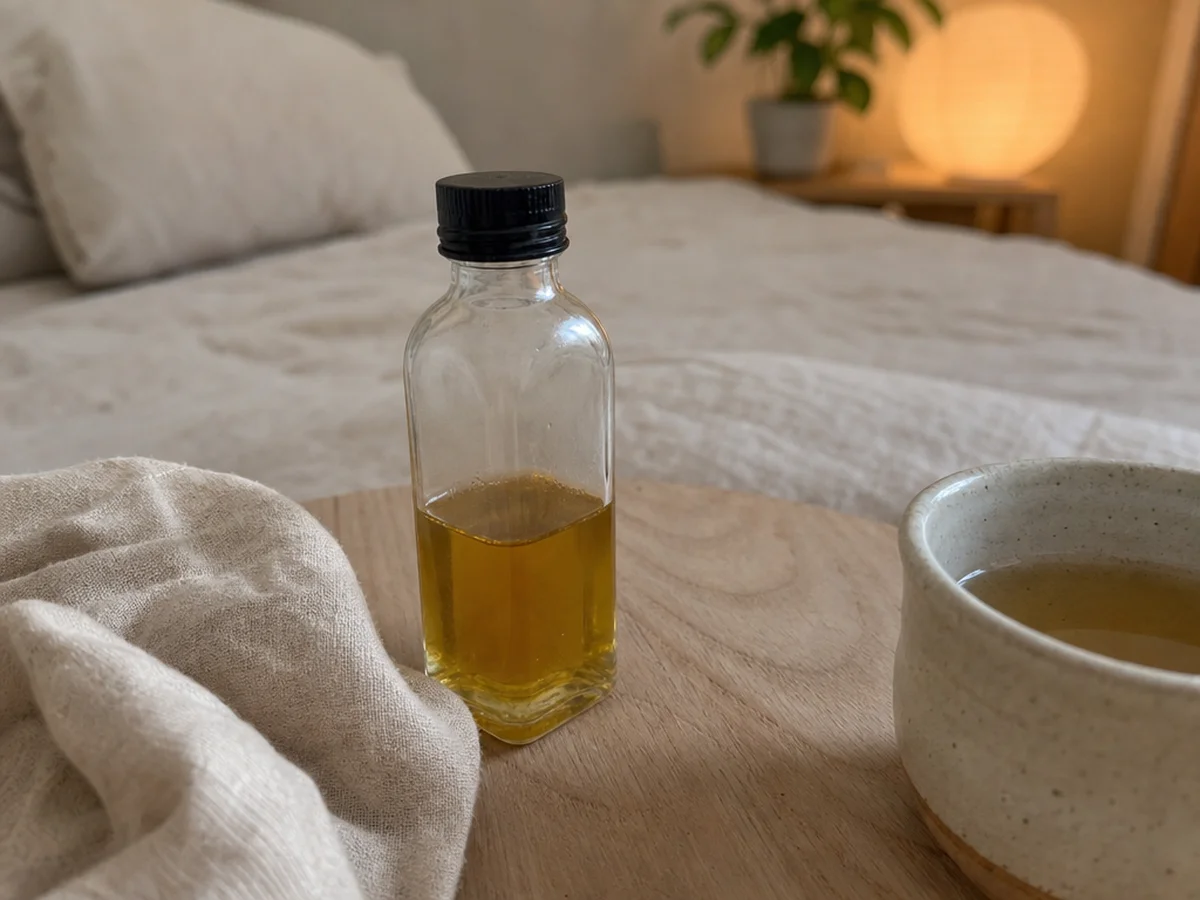
Ours is faintly golden, with a soft, nutty, lightly sweet scent. It glides easily, absorbs quickly and finishes without greasiness. That describes feel, not a promise about your skin, and the only way to know how an oil feels on you is a small test. Try it on a single patch of skin before it goes anywhere larger, and give yourself a few days before deciding.
Babies and allergies
The study authors discourage olive oil for infant massage, and our own position is simple: we do not claim our almond oil for babies, so ask your pediatrician about any oil for a newborn. Almond is a tree nut, and our oil is unrefined, with trace almond protein present. If you or the person you are massaging has a tree nut allergy, do not use it. The nut allergy guide and our notes on baby massage go further.
Where each oil fits
Olive oil belongs in the kitchen, and our companion piece on cooking with olive oil or almond oil explains why. Almond oil, if you have no tree nut allergy, is a pleasant choice for body care, massage and as a carrier for essential oils; it absorbs quickly, leaves a non-greasy finish and has a soft, lightly sweet aroma. Our almond oil for skin guide sets out how to use it, and the patch test guide shows how to try it safely.
The most useful habit from that forearm study is to stay curious about each oil you use and let your skin report back.
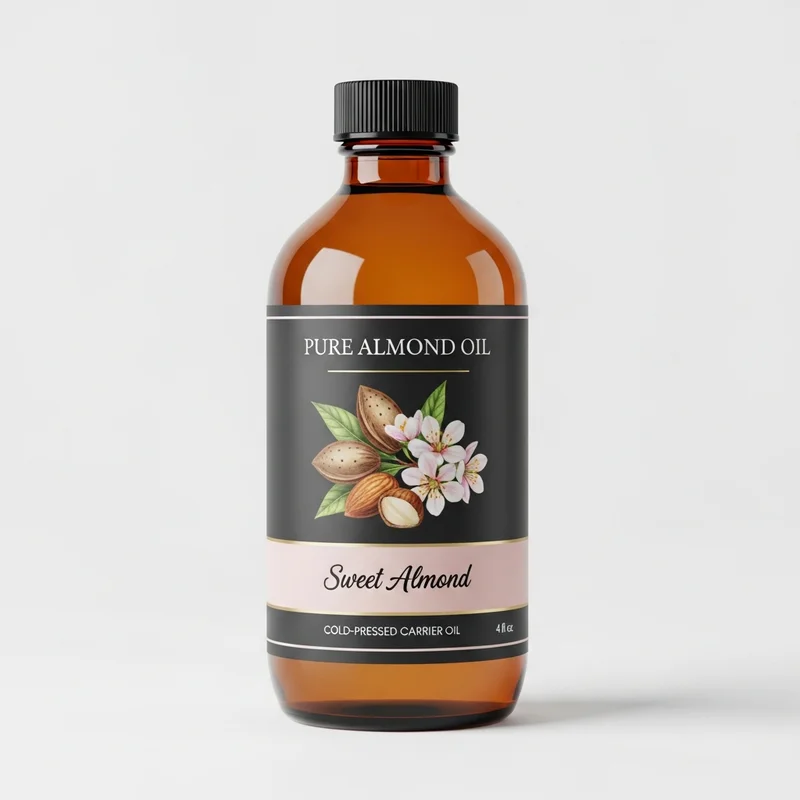
Sweet Almond Oil
Sweet Almond Oil from our own shop, in sizes from 0.5 oz to bulk.
From $9.99
Shop Now →Sources & Further Reading
- Effect of olive and sunflower seed oil on the adult skin barrier: implications for neonatal skin care, Pediatric Dermatology, 2013.
- Anti-Inflammatory and Skin Barrier Repair Effects of Topical Application of Some Plant Oils, International Journal of Molecular Sciences, 2017.
- Fatty acid composition of California grown almonds, Journal of Food Science, 2008.
- Multi-Center Randomized Clinical Study of The Effects of Natural Oils on Xerosis and Skin Barrier Properties, SKIN The Journal of Cutaneous Medicine.
- Dermatologists' top tips for relieving dry skin, American Academy of Dermatology.
- How to pick the right moisturizer for your skin, American Academy of Dermatology.