Sesame vs Almond Massage Oil: Allergies and Feel
Before you think about glide, scent or how a bottle looks on the table, there is one question that decides whether a massage oil is right for the person lying on it: do they have a nut allergy or a sesame allergy? Almond oil and sesame oil are both allergen sources, and only one of those two is covered by the labeling rules people tend to assume protect them.
The two allergies, side by side
Almond is a tree nut. Food Allergy Research & Education lists almond oil among the foods to avoid for tree nut allergy and points out that nut oils, which often are not highly refined, are sometimes used in lotions, hair care products and soaps. Our own oil is cold-pressed and sold unrefined, so trace almond protein is present, and we ask anyone with a tree nut allergy to skip it. That includes the person on the table, the person doing the massage, and anyone who handles the linens afterward.
Sesame is the other half. The same organization calls sesame the ninth most common food allergy in the U.S., notes that sesame oil is not highly refined and should be avoided by people with a sesame allergy, and lists cosmetics, including body oils and creams, among non-food items that may contain sesame, sometimes under the botanical name Sesamum indicum.
Why the label will not always save you
In the United States, the FASTER Act made sesame the ninth major food allergen, with plain-language labeling required on packaged foods from January 1, 2023, according to the FDA. That is a food rule. The FDA's own food allergy page says its allergen-labeling law is enforced on most packaged foods and excludes drugs and cosmetics. So a massage oil or a cosmetic blend is not bound by the same requirement, and an allergen statement may simply be missing.
The practical answer is to read the whole ingredient list for botanical names, almond (Prunus amygdalus) as well as sesame (Sesamum indicum), and to ask about both allergies before an oil comes out of the cupboard. If you run a practice, put both on the intake form. If you are massaging a partner at home, a quick conversation does the same job.
Choosing on feel and keeping
Once allergies are settled, the remaining differences are practical, and both are worth knowing.
Keeping qualities. A 2023 review of sesame oil reports that, although it is nearly 85% unsaturated, it resists oxidative rancidity and can be stored for a long time, which the authors credit to its tocopherols and to lignans such as sesamin and sesamol. Almond oil has a different keeping story, so we are careful with storage: cool, dark, closed, and used within about a year of pressing. If a practice buys oil in quantity, that makes rotation of stock a real habit, and our storage guide shows how.
Feel and scent. Our almond oil is soft-gliding and quick to absorb, with a faint nutty, lightly sweet aroma that stays out of the way of an essential oil blend. Sesame oil has a stronger character of its own, and which one is more pleasant is down to personal taste, so offering a client a smell first is good practice. We will not rank the two on glide, since that comes down to personal preference.
Setting the room up
A little planning makes any oil massage nicer. Warm the room before anyone lies down, since cold air makes people tense. Put a towel under the area you will be working, keep a second clean towel close for your hands, and pour oil into a small bowl rather than working from the bottle, which keeps the neck clean. Warm a spoonful of oil between your palms before it ever touches skin. Our almond oil glides softly, so you rarely need more than you think.
The laundry room matters too
One piece of advice applies to every massage oil, plant-based or not. A loss-control page from Great American Insurance Group warns that sheets and towels saturated in massage oils can spontaneously combust in a dryer or in storage, even after washing, and recounts a massage business closed for more than six months after a fire that started when oiled sheets went in the dryer. Their guidance is to wash oiled linens promptly at a high temperature, dry them on low heat, avoid large stacks and clean the lint trap. It is worth taping to the dryer if you work with oil.
Offer a smell first
One small courtesy we like is to let someone smell the oil before you start. Almond has a mild, nutty sweetness that most people find easy to be around, but scent is personal, and a person who dislikes the smell will not relax into the hour, no matter how good the technique is. Keep the bottle capped between uses, and ask a first-timer to tell you how it feels as you go.
What we would do
- Ask about tree nut and sesame allergies first, every time.
- If either allergy appears, choose a different oil entirely, and note that we sell only almond oil, so a pharmacy or supply shop is where to look for alternatives.
- Patch test a small area, wait a day, and keep any oil away from the eyes.
- Store oil cool and dark, and handle oiled linens as the insurers advise.
For massage technique and practical set-up with almond oil, see our massage guide, and for warm-oil self-massage, our abhyanga walkthrough. The allergy conversation in our nut allergy guide applies to anyone on the table.
A good massage starts before the oil is open, with a simple question and an honest answer.
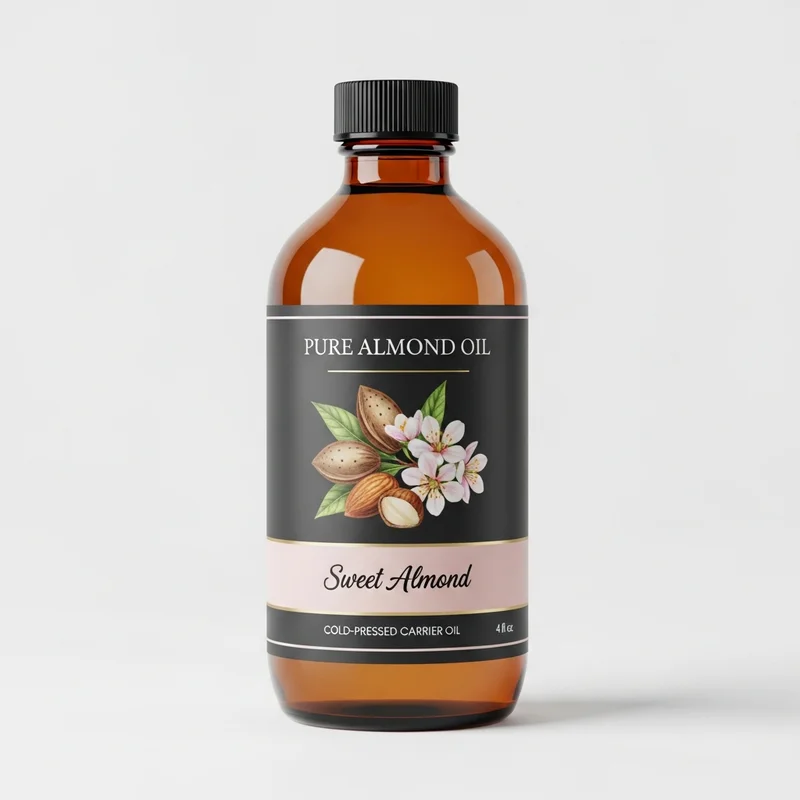
Sweet Almond Oil
Sweet Almond Oil from our own shop, in sizes from 0.5 oz to bulk.
From $9.99
Shop Now →Sources & Further Reading
- Tree Nut - FoodAllergy.org, Food Allergy Research & Education.
- Sesame - FoodAllergy.org, Food Allergy Research & Education.
- The FASTER Act: Sesame Is the Ninth Major Food Allergen, FDA.
- Food Allergies, FDA.
- Physicochemical, potential nutritional, antioxidant and health properties of sesame seed oil: a review, Frontiers in Nutrition, 2023.
- Avoid Fires from Massage Oils - Loss Control - Great American Insurance Group.