DIY Beard Oil With Sweet Almond Oil: Blend by Weight
The nicest thing about homemade beard oil is how little it needs: a good carrier, a clean bottle and, if you like, a whisper of scent. The step most recipes skip is the first one, which is asking whether the skin under your beard wants oil at all. Get that right and the rest is easy.
Match the product to your skin
The American Academy of Dermatology splits the choice by skin type in its beard advice: beard oil suits normal to dry skin, a beard conditioner suits acne-prone skin, and a fragrance-free, non-comedogenic moisturizer suits sensitive skin. It says to use either oil or conditioner sparingly to avoid a greasy look. For beard breakouts, its page on common beard problems recommends a small amount of non-comedogenic beard conditioner and no beard oil. If that sounds like your skin, start there rather than with this recipe. Flaking under the beard is a separate matter, and the Academy suggests a dandruff shampoo on the beard at least weekly and a dermatologist visit if it persists.
Almond oil's reputation for clogging pores is debated; a small 2006 study of six volunteers found that finished products containing ingredients rated comedogenic were not necessarily comedogenic. That tested finished products on the upper back, not beards, so our own advice is simply to patch test and watch your skin. Our acne FAQ goes deeper.
The blend, by weight
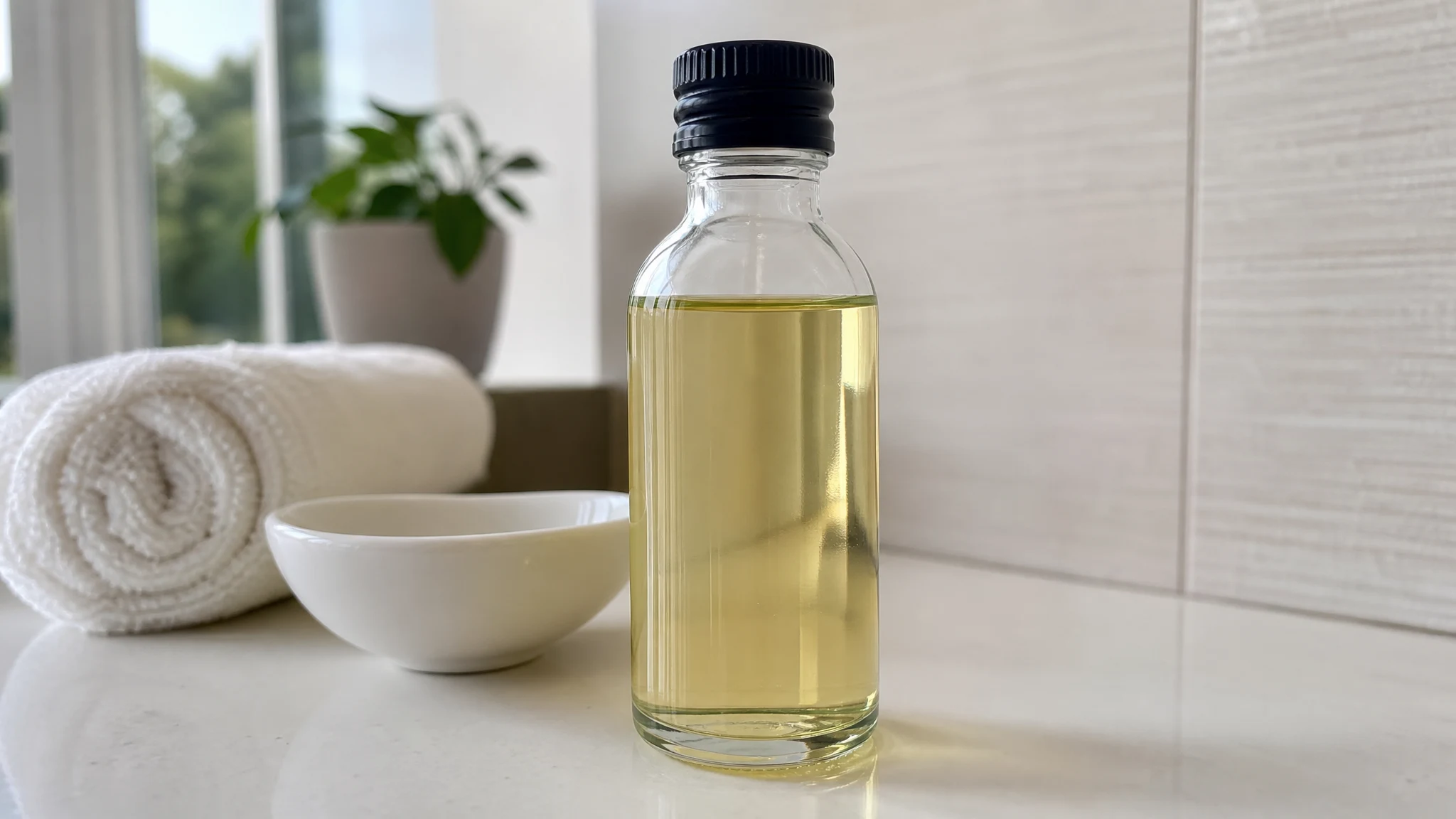
Beard oil stays on facial skin, so the relevant Tisserand Institute range is 0.5% to 1.2% for facial cosmetics, or 0.2% to 1% where skin is sensitive. The institute also notes that drop conversions "are always approximate," which is why we weigh. The sweet almond oil we sell measured a relative density of 0.918 on the batch on our Certificate of Analysis, so the oil weighs about 0.918 g per ml. The table below is simple arithmetic from that figure:
| Bottle | Almond oil by weight | Essential oil at 0.5% | Essential oil at 1% |
|---|---|---|---|
| 15 ml (0.5 fl oz) | 13.8 g | about 0.07 g | about 0.14 g |
| 30 ml (about 1 fl oz) | 27.5 g | about 0.14 g | about 0.28 g |
| 60 ml (about 2 fl oz) | 55.1 g | about 0.28 g | about 0.55 g |
Those scent amounts are tiny, which is the point: you need a scale that reads to 0.01 g, or you can leave the essential oil out. A fragrance-free beard oil is a lovely thing, and it is the gentlest place to begin. Our almond oil has its own soft, nutty, lightly sweet aroma. If you do add essential oil, our blending by weight article explains the percentages and the label checks. We do not sell essential oils, so you will find those from a supplier that prints the botanical name.
Keep water out
This recipe has no water on purpose. The FDA's page on microbiological safety lists contaminated water, ineffective preservation and dipped fingers among the ways cosmetics become contaminated. An oil-only blend sidesteps most of that. Pour into your palm rather than dipping, keep the bottle out of the shower, and leave water-based ingredients for a project with a proper preservative system.
Using it
The Academy advises applying after washing, with the beard and skin slightly damp. Start with far less than you think: a quarter teaspoon is about 1.2 ml, roughly 1.1 g of this oil, which is already generous for a short beard. Rub it between your palms, work it through the beard and then down to the skin. Once the beard covers the skin you can swap a sunscreen-containing moisturizer for oil, but during the stubble phase sunscreen stays first, since oil is not sun protection.
For a firmer, styling feel, our beard balm post covers wax ratios, and the beard care guide takes a wider look.
Small habits that make it nicer
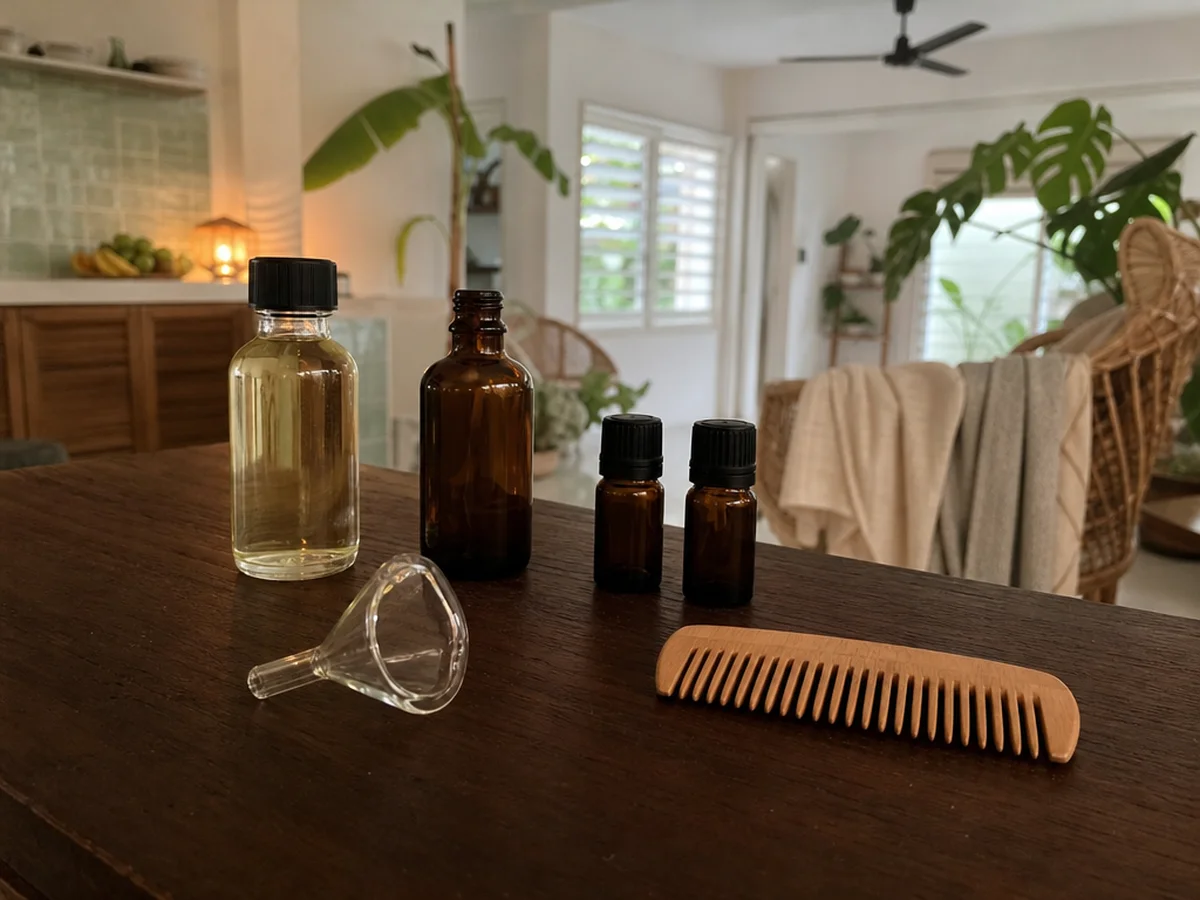
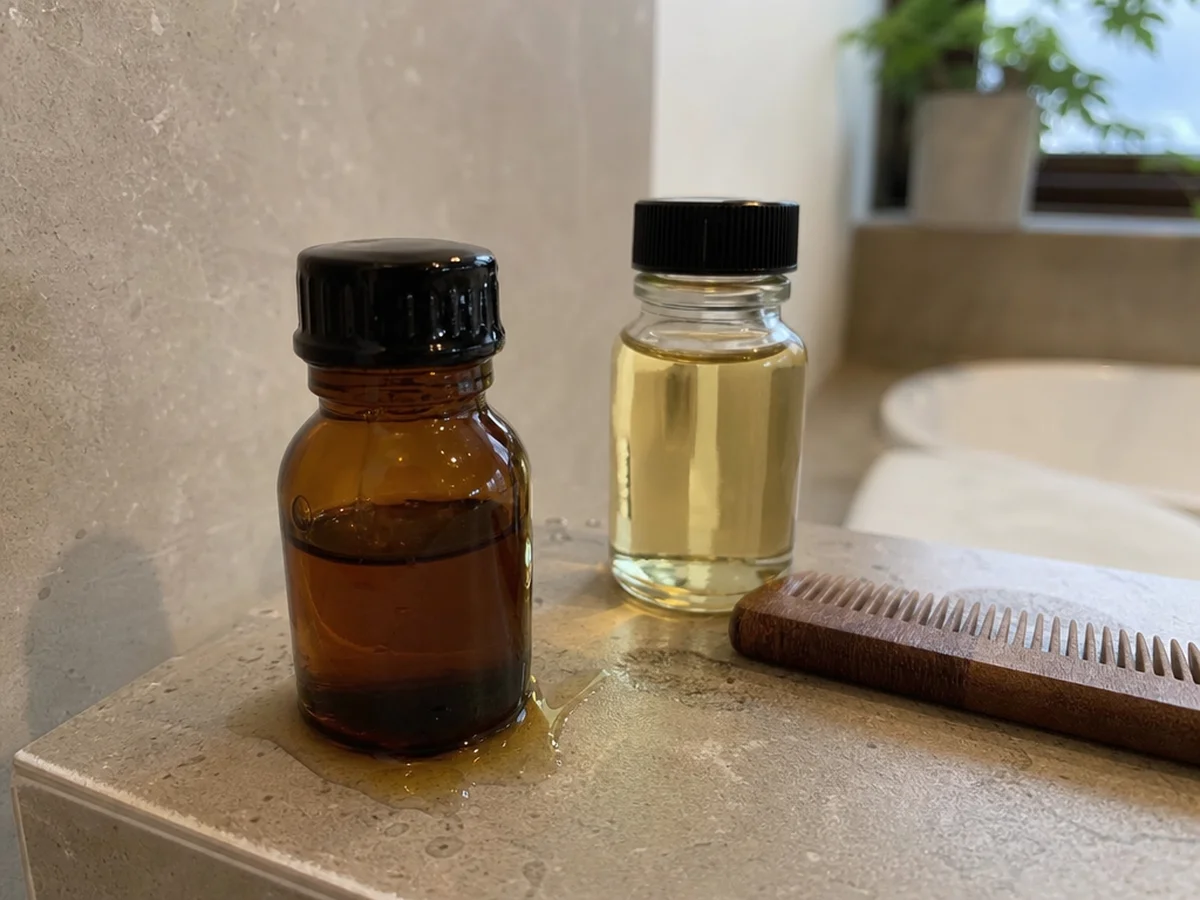
A beard is a daily companion, so the routine matters more than the recipe. Keep a comb or soft brush by the bottle and finish with a few strokes from the roots outward. It spreads the oil evenly and keeps any one spot from looking heavy. If your beard looks shiny an hour later, that is simply too much oil, and the fix is a smaller amount tomorrow. If it feels dry by midday, put a drop or two in your palms rather than a full dose.
Try it plain first
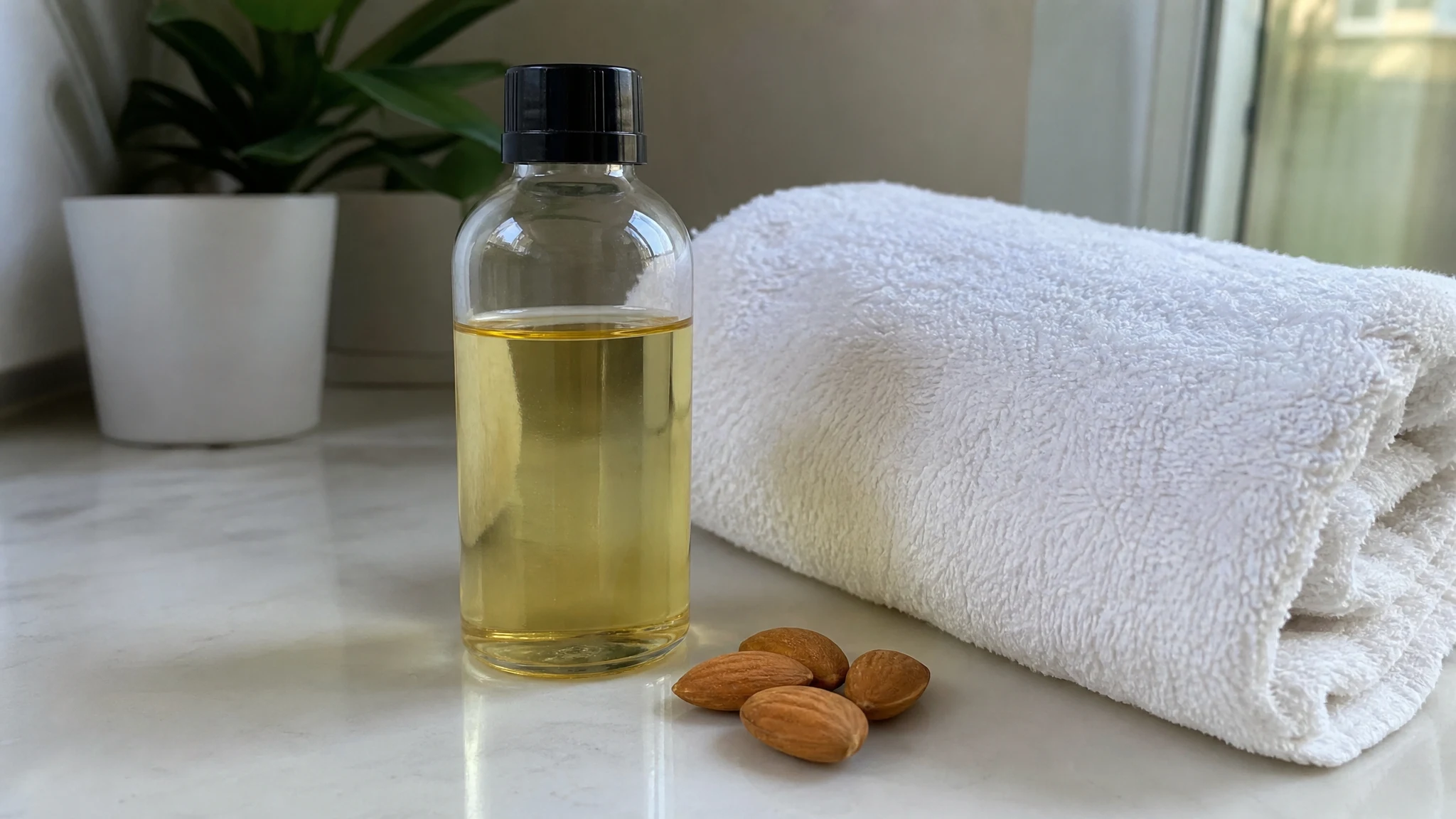
Before you add any scent, use the plain version for a week. Our almond oil is faintly golden, with a soft, nutty, lightly sweet aroma, and you may find that is all the fragrance a beard oil needs. You will also notice the glide: it spreads easily and finishes without a heavy feel.
Storing it, and who should skip it
We say our oil keeps about a year from pressing when stored cool and dark. A blend is only as fresh as its oldest ingredient, so keep the bottle capped, label the date and make small batches. Beard oil ends up on pillowcases, and an insurer's guidance on oil-soaked linens advises washing at 104 F or hotter and drying below 125 F; a beard's worth of oil is nowhere near saturation, but a hot wash costs nothing.
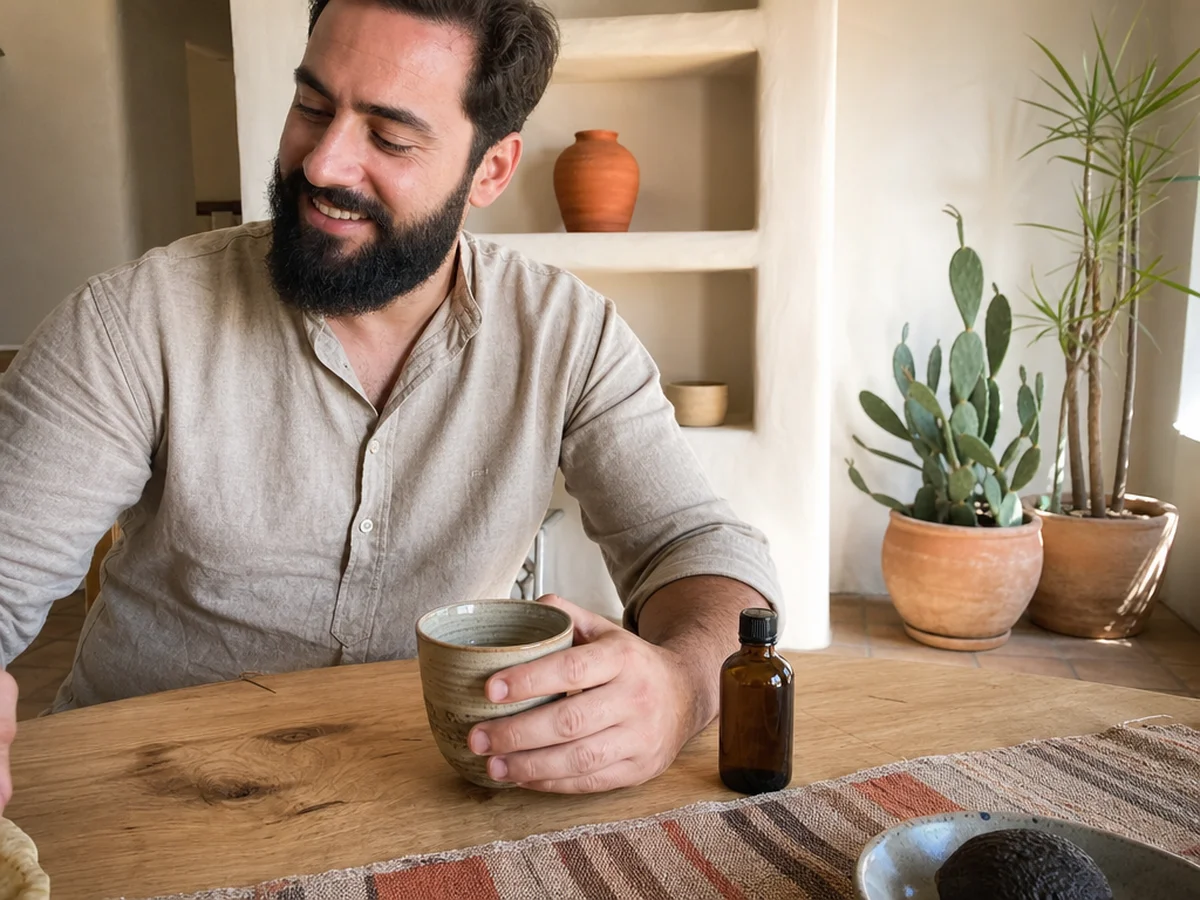
Almond is a tree nut, and ours is cold-pressed and unrefined, so trace almond protein is present. Anyone with a tree nut allergy should not use it, and that includes whoever shares your pillow. Patch test the finished blend on the inner arm, as the dermatologists describe: twice a day for 7 to 10 days, stopping at redness, itching or swelling. Persistent rash, pain or broken skin under the beard belongs with a dermatologist. This oil is for external cosmetic use only.
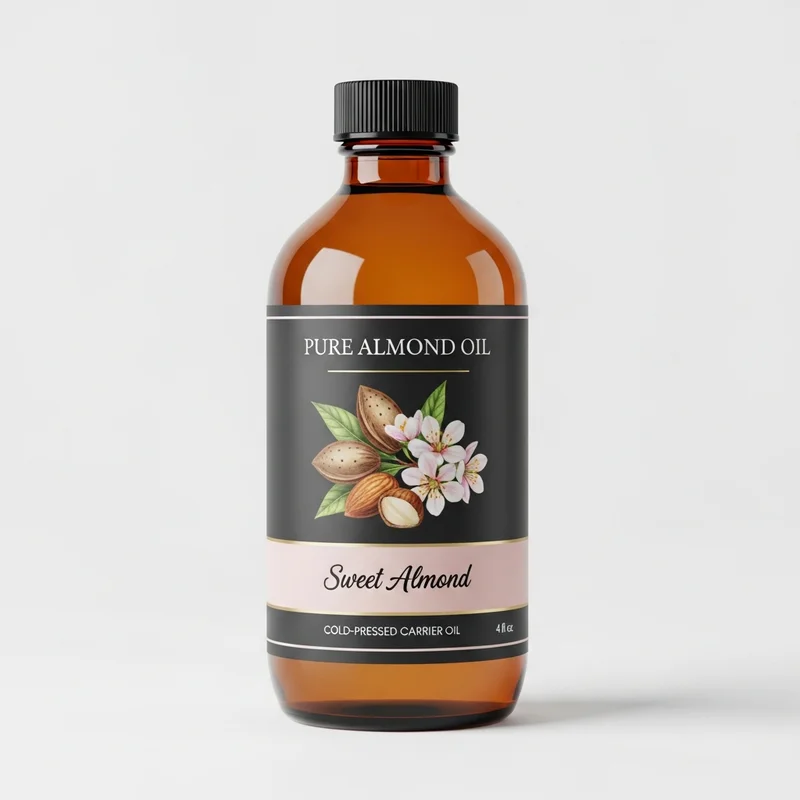
Sweet Almond Oil
Sweet Almond Oil from our own shop, in sizes from 0.5 oz to bulk.
From $9.99
Shop Now →Sources & Further Reading
- American Academy of Dermatology, A dermatologist's top tips for a healthy beard
- American Academy of Dermatology, DIY treatment for 5 common beard problems
- American Academy of Dermatology, How to test skin care products
- Tisserand Institute, Dilution for essential oils
- Draelos ZD, DiNardo JC, 2006. A re-evaluation of the comedogenicity concept. J Am Acad Dermatol.
- US Food and Drug Administration, Microbiological Safety and Cosmetics
- Great American Insurance Group, Avoid Fires from Massage Oils