Whipped Almond Oil Body Butter With Shea, Step by Step
There is something deeply satisfying about a jar of whipped body butter: pale, airy, and soft enough to scoop with a fingertip. The good news is that the version made from shea butter and almond oil needs only two ingredients and no water, which is exactly what makes it a friendly home project.
Why no water matters
A butter made from shea and oil is an oil-and-fat balm, not a lotion or cream. Water changes the picture. The FDA's page on cosmetic microbiology lists added water that dilutes preservatives, contaminated raw materials, warm or damp storage and dipped fingers as routes to contamination. A water-containing "whipped lotion" needs a proper preservative and a cosmetic chemist's review, so we keep this recipe dry. If a lotion is what you are after, our body lotion post is the place to start.
Where does a butter sit among moisturizers? The American Academy of Dermatology says ointments and creams are more effective than lotions for dry skin, lists shea butter among ingredients to look for, and advises applying moisturizer while skin is still damp. A shea-and-oil butter is not named specifically, so putting it near ointments is our own inference from its thick, water-free texture. Dryness that keeps going despite good habits is worth a dermatologist's attention.
Choose your texture
Here are three starting points for a 200 g batch, worked out for this article and not a standard. Weigh the shea and the oil. We converted the oil to volume using the relative density of the batch on our Certificate of Analysis, 0.918 at 20 C, and another batch will differ a little.
| Texture | Shea : oil | Shea | Almond oil | Oil as volume |
|---|---|---|---|---|
| Firm, holds peaks, slower to melt | 70 : 30 | 140 g | 60 g | about 65 ml (4.4 tbsp) |
| Medium, a scoopable whip | 60 : 40 | 120 g | 80 g | about 87 ml (5.9 tbsp) |
| Soft, spreads easily in a warm room | 50 : 50 | 100 g | 100 g | about 109 ml (7.4 tbsp) |
The logic is simple: more shea means more solid fat and a stiffer butter, more oil means a softer, glossier one. If you live somewhere hot, begin at 70 : 30, since a butter that is soft at 20 C can turn liquid in a warm bathroom. If your first batch is too stiff, remelt and add oil 10 g at a time; if it is too soft, remelt and add shea. Change one thing at once.
The method
- Wash and thoroughly dry the bowl, beaters, spatula and jar. Leftover water is the one ingredient this recipe does not want.
- Melt the shea in a heatproof bowl over a pan of just-simmering water until completely liquid, then stir in the almond oil off the heat.
- Chill the bowl in the refrigerator until the mixture turns opaque and the edges are set but the center is still a thick liquid. Judge by look and touch rather than the clock.
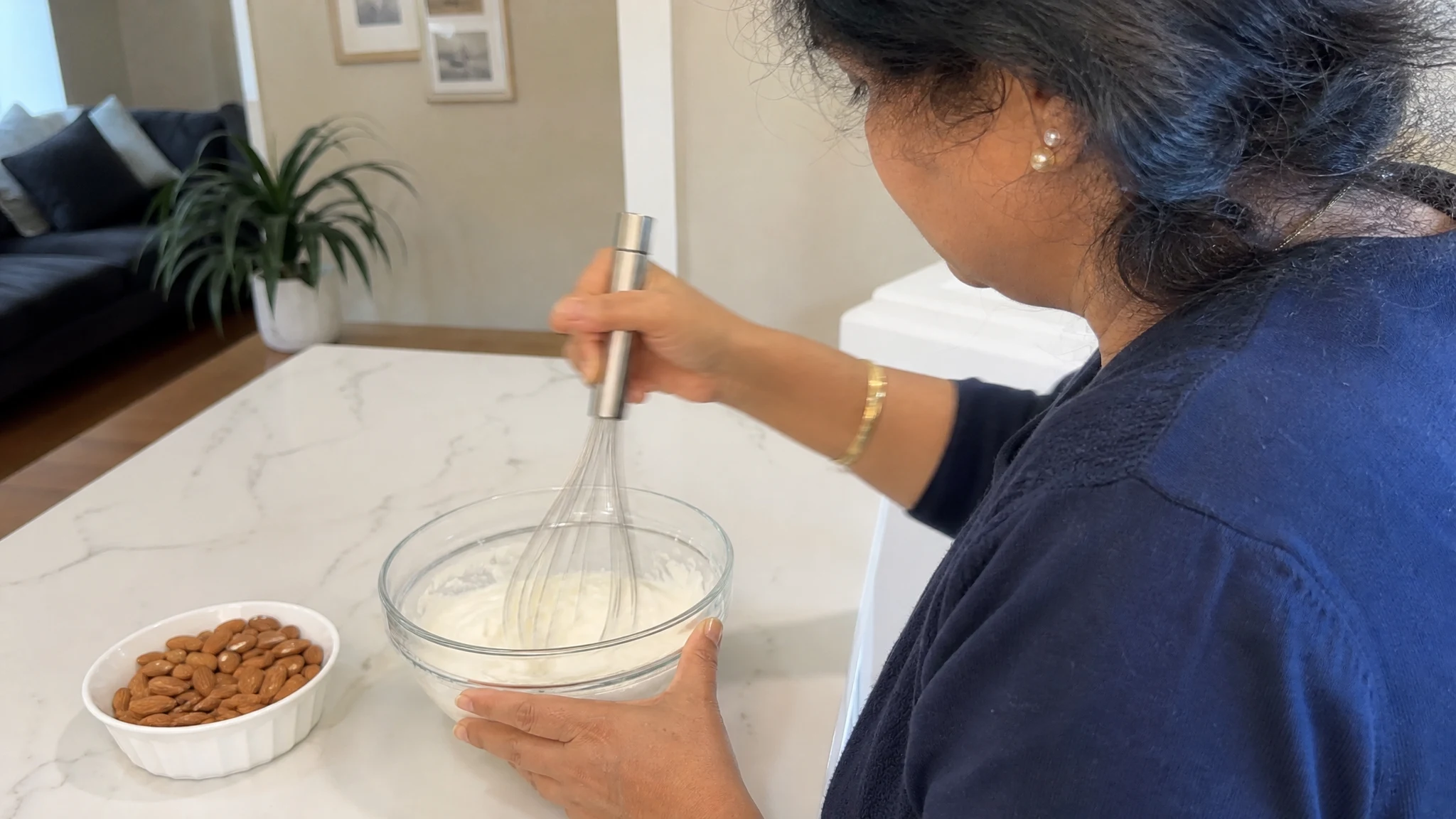
- Whip with a mixer until it holds soft peaks, scraping the sides, and spoon it into a clean, dry jar.
- Label it with the date made and the date on your almond oil bottle.
If it turns grainy, the likely cause is the fat setting unevenly, a common trait of butters like shea. A general craft remedy, which is our reasoning rather than a sourced fact, is to remelt it completely so no solid bits remain, chill it faster, and whip again.
A tip for first-timers: do a half batch the first time. It uses less shea, it is less to wash up if the texture is not what you imagined, and you still get a feel for how the butter behaves as it cools. Making it again with a tweak is one of the pleasures of a project like this.
About shea
The Cosmetic Ingredient Review panel assessed shea-derived ingredients and concluded they are safe in present practices of use and concentration when formulated to be non-sensitizing. That speaks to the ingredient class, not your batch. A 2023 laboratory study found that refining and fractionating shea butter changed its minor components, including free fatty acids and tocopherols. So "shea butter" on a label can mean different materials; buy from a seller who says whether it is refined or unrefined and gives a lot number. We do not sell shea, so a craft or supply shop is the place to look.
Before you make it
Almond is a tree nut. Our sweet almond oil is cold-pressed and unrefined, so trace almond protein is present, and if you have a tree nut allergy you should not use it, however gentle the butter. The American Academy of Allergy, Asthma and Immunology says unrefined cold-pressed nut oils retain protein. Our nut allergy article has more, and the patch testing guide shows the small-area, wait-a-day test we recommend for anything new. Skip the butter on broken, inflamed or sunburned skin.
When it is done, you will notice the butter changes over the first day as it settles, usually becoming a little firmer. Give it a day before you decide whether you want to adjust the ratio. A cool, quiet shelf is a good place for the jar while it sets.
Scent, scoops and shelf life
The Academy recommends fragrance-free products for dry skin and notes that "unscented" products can still contain irritating ingredients, which is why the base recipe has no scent. If you add essential oil, the Tisserand Institute lists 1% to 3% for body oils and lotions and 0.5% to 1.2% for facial products, and starting at the low end suits a product that covers large areas. At 1% in a 200 g batch, that would be 2 g; our blending article shows how to weigh it.
Take butter from the jar with a clean spoon rather than fingers, and keep it out of hot cars and sunny windowsills. We say our oil keeps about a year from pressing when stored cool and dark, and a butter is only as fresh as its shortest-lived ingredient, so date it and make an amount you will use. If you are still deciding between the two ingredients, almond oil versus shea butter lays out the differences.

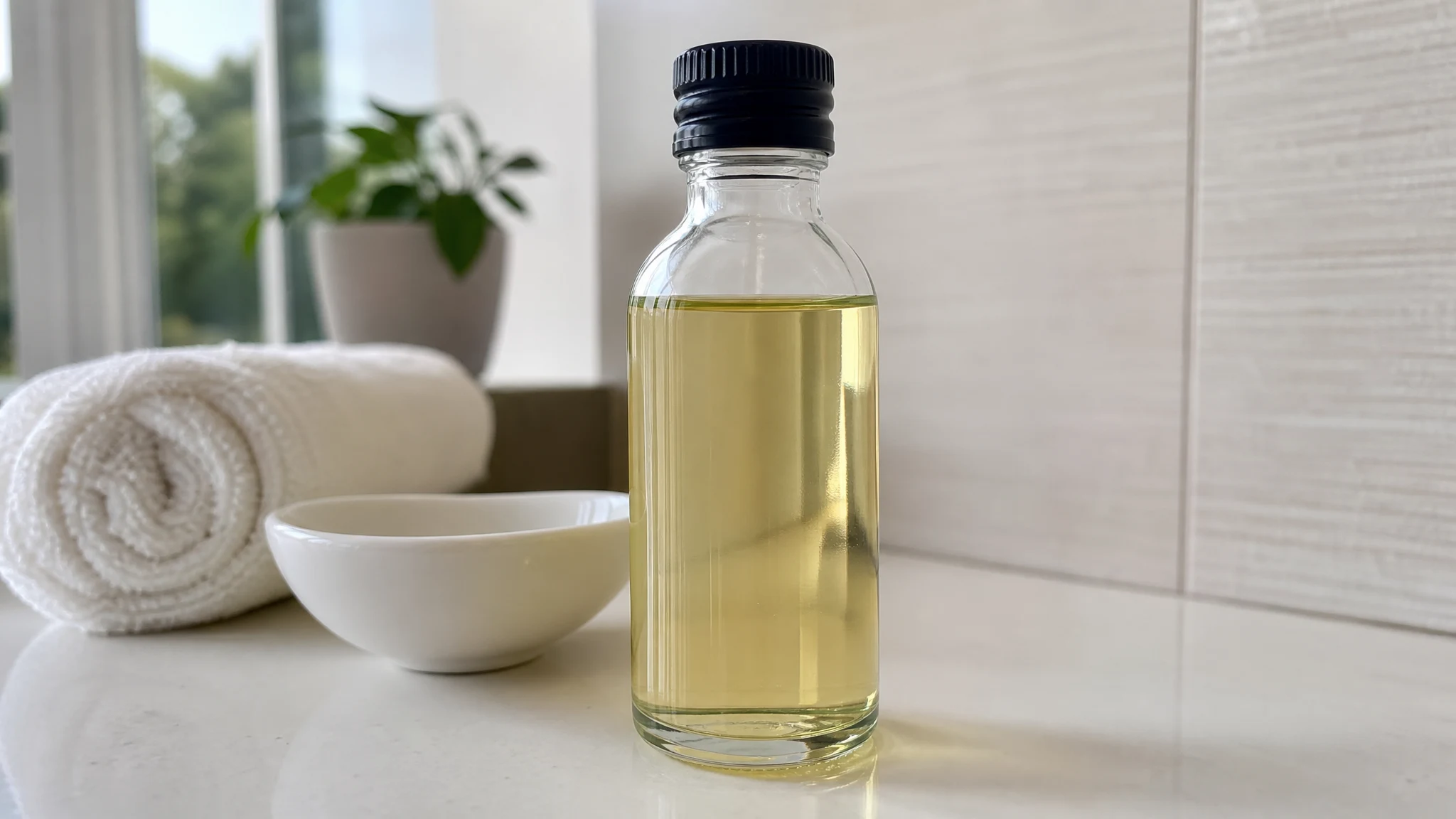
Sweet Almond Oil
Sweet Almond Oil from our own shop, in sizes from 0.5 oz to bulk.
From $9.99
Shop Now →Sources & Further Reading
- US Food and Drug Administration, Microbiological Safety and Cosmetics
- American Academy of Dermatology, Dermatologists' top tips for relieving dry skin
- Burnett CL et al., 2024. Safety Assessment of Butyrospermum parkii (Shea)-Derived Ingredients as Used in Cosmetics. Int J Toxicol.
- Abdel-Razek AG et al., 2023. Effect of Refining and Fractionation Processes on Minor Components, Fatty Acids, Antioxidant and Antimicrobial Activities of Shea Butter. Foods.
- American Academy of Allergy, Asthma and Immunology, Food allergy: nut oils in topical products
- Tisserand Institute, Dilution for essential oils