Almond Oil Body Lotion vs Body Oil: Why Water Matters
The jump from body oil to body lotion looks small: a little water, a little emulsifier, a pretty pump bottle. In reality it is the biggest step in home skincare, because water changes how a product behaves, how long it lasts and what it needs to stay clean. That is why we would start almost anyone on a body oil, and this post explains the difference.
What a lotion actually is
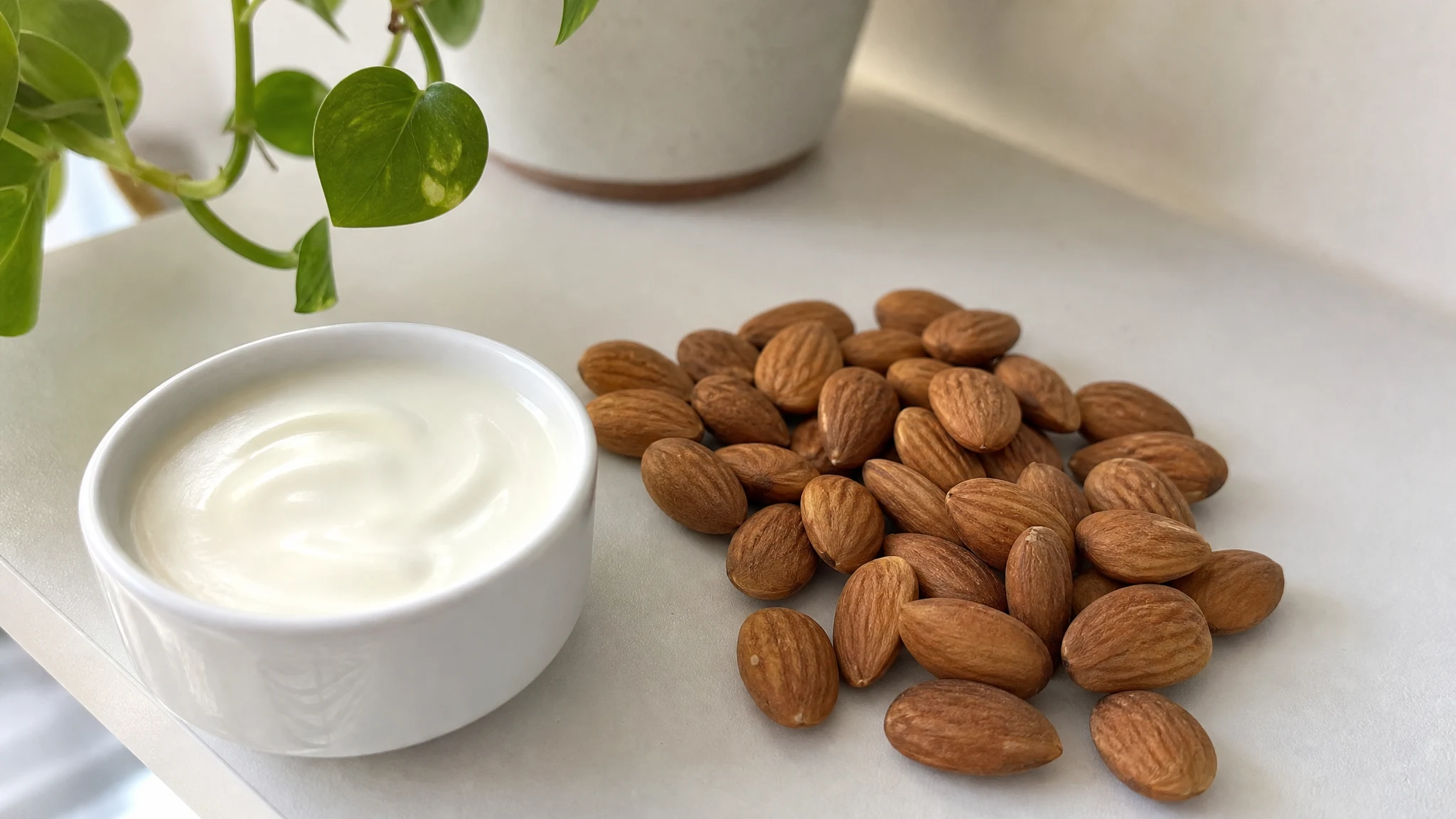
A lotion is an emulsion: tiny droplets of oil held in water by an emulsifier. Almond oil is only the oil part, and in many lotions it is a modest share of the whole. A hand cream trial gives a sense of scale, a finished product that contained 7 percent sweet almond oil and 2 percent colloidal oatmeal (Zeichner, Berson and Donald, J Drugs Dermatol, 2018). The abstract does not give us the rest of the formula, so we use it only to make one point: most of a lotion is not almond oil.
Here is some arithmetic to picture it. At the density measured on the batch on our published Certificate of Analysis (0.918), a 250 gram lotion that is 20 percent oil holds 50 grams of almond oil, about 54.5 milliliters. The other 200 grams is water and water-based ingredients.
Why water needs a plan
The FDA explains how microbes reach cosmetics: contaminated water or ingredients, weak preservation, fingers dipped into jars, and warm, damp storage, which helps microbes multiply and can break preservatives down. Adding water to a product also dilutes its preservatives (FDA, Microbiological Safety and Cosmetics). The agency also says making cosmetics at home is not against the law, that you are responsible for their safety, and that if you lack the expertise to prevent contamination it suggests working with a consultant (FDA, Small Businesses & Homemade Cosmetics: Fact Sheet).
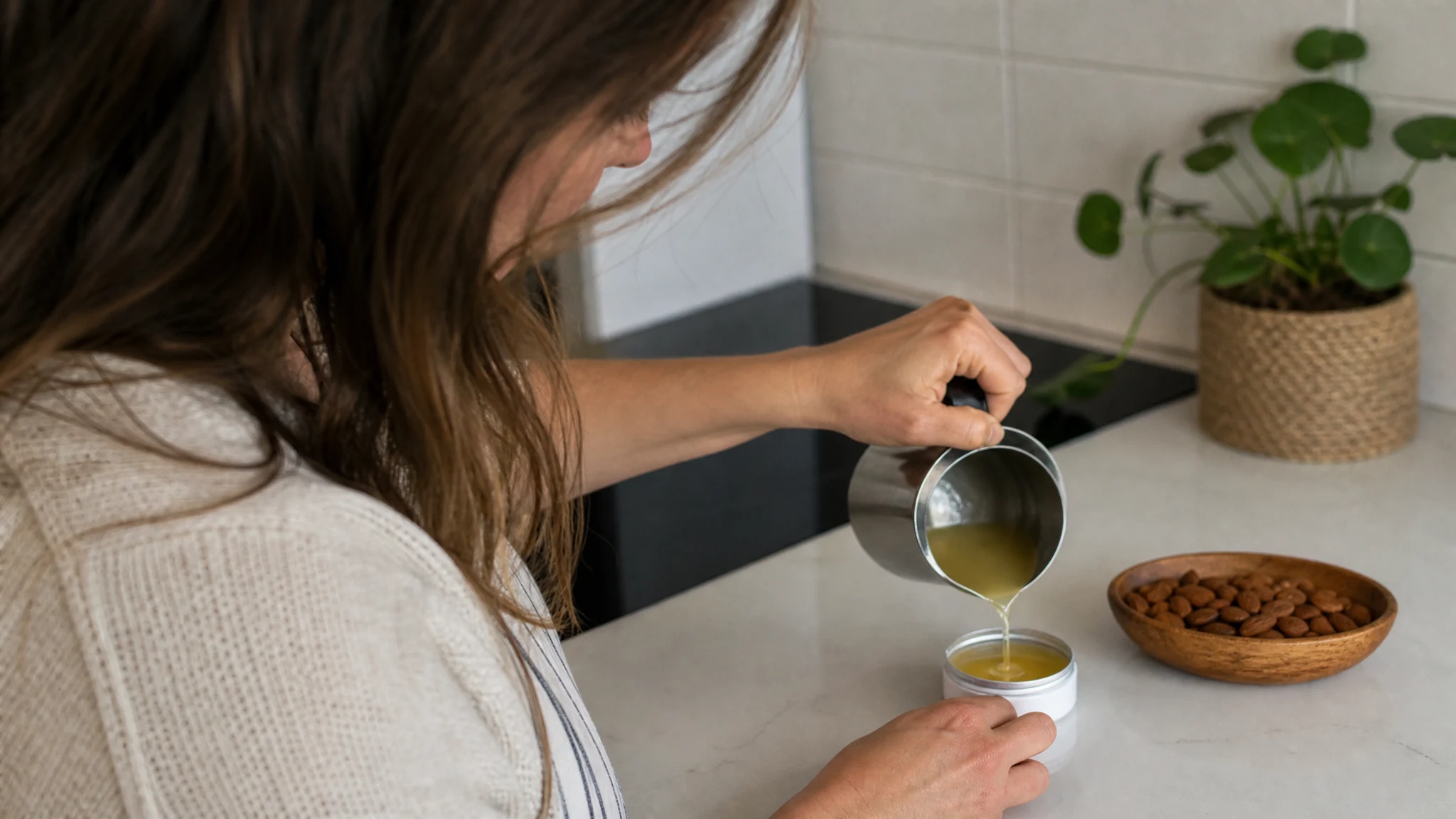
So a lotion has three jobs that an oil never has: hold the water and oil together, keep microbes out for as long as the jar exists, and prove that both are working. The right emulsifier and preservative depend on the exact recipe, which is why a lotion is a job for a cosmetic chemist or a ready-made base from a supplier that supplies its own preservation data, rather than a kitchen experiment. A pump bottle helps too, since it keeps fingers out.
What dermatologists say about moisturizer type
The American Academy of Dermatology says ointments and creams are more moisturizing than lotions, advises moisturizing while skin is still damp, and recommends fragrance-free products (AAD, Dermatologists' top tips for relieving dry skin). In other words, the most elaborate product to make is also the lightest on moisture. A plain oil sits at the richer end.
A small randomized pilot compared almond, coconut and jojoba oil with white petrolatum, applied twice daily for two weeks to 32 completers. All four raised skin hydration by week two with no significant differences between them, and almond oil was the favorite of 38 percent of participants (Vaughn and colleagues, Multi-Center Randomized Clinical Study of The Effects of Natural Oils on Xerosis and Skin Barrier Properties, SKIN, 2018). That is a small study and the abstract does not say which almond oil was used, but it is encouraging for the simple route: a plain oil on damp skin.
The easy way to enjoy almond oil on your body
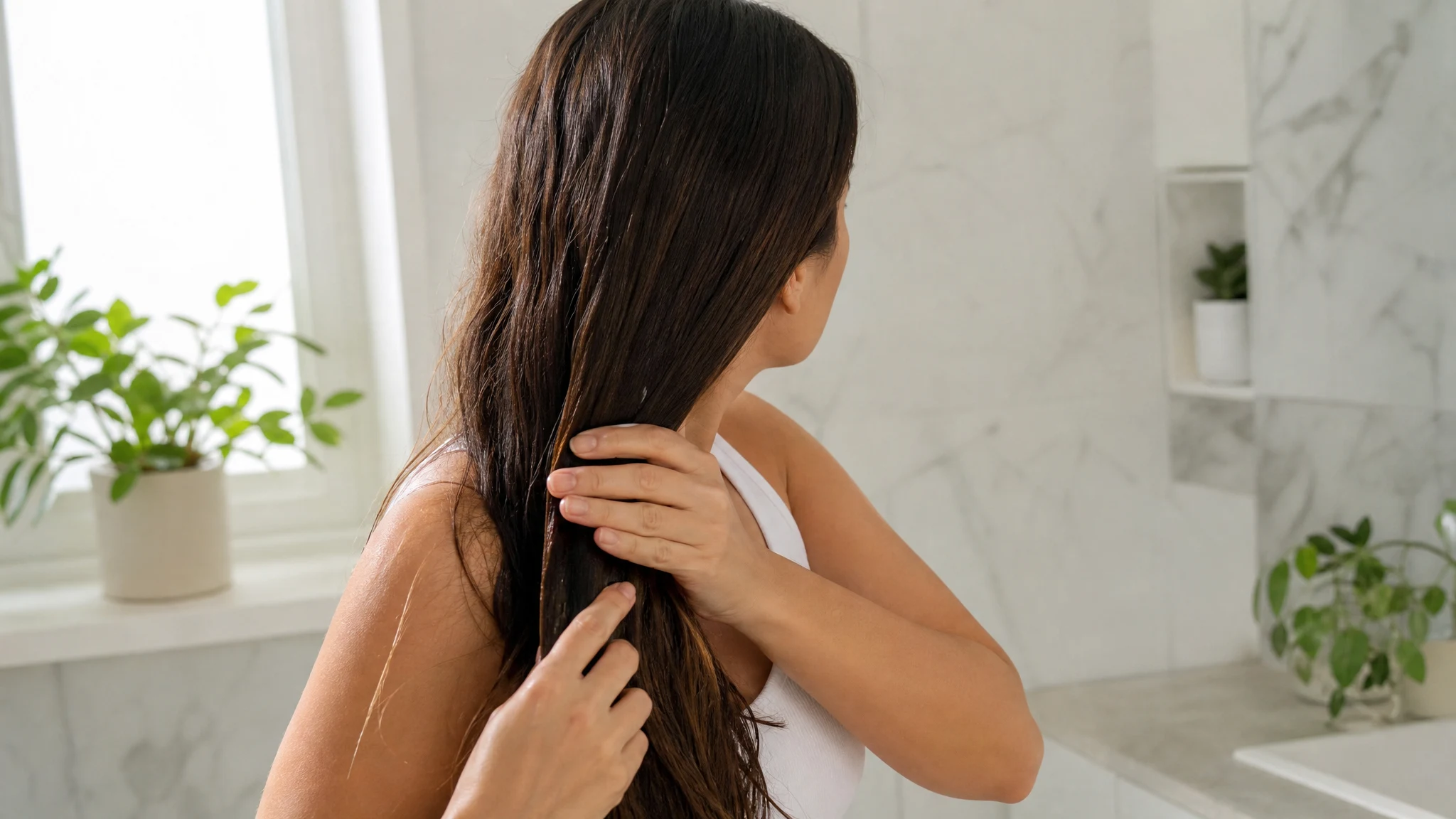
We think almond oil is at its best exactly as it comes. It has a soft, lightly sweet aroma, spreads with a gentle glide and leaves a non-greasy finish, and there is nothing in the bottle to spoil. Warm a few drops between your palms and smooth them over skin straight after a shower, while you are still a little damp. Our body care guide shows how people use it head to toe, and our whipped body butter post is a water-free way to get a richer, creamier texture.
A good minute-long routine: step out of the shower, pat the towel over your skin so a little dampness remains, and warm three or four drops between your palms. Start at the shoulders and work down, adding a drop at a time where skin feels dry, such as shins and elbows. The finish should feel soft rather than slick, so stop when your hands no longer glide.
If you still want a lotion
- Start from a ready-made lotion base whose supplier states how it is preserved, and add only what that supplier says the base tolerates.
- Choose a pump or tube so fingers stay out.
- If you give lotion away or sell it, labeling rules apply, so check the FDA fact sheet above.
- Make small batches and throw out anything that separates, changes smell or color, or grows anything.
- Patch test a quarter-sized spot on the inner arm for 7 to 10 days, per the AAD, before wider use (our patch test guide explains it).
One more point: almond is a tree nut. Our oil is cold-pressed and unrefined, so anyone with a tree nut allergy should not use it, including in a lotion made for someone else. If skin stays dry despite regular moisturizing, the AAD notes it can be linked to conditions such as atopic dermatitis, and a dermatologist is the person to ask.
Sometimes the best recipe is the shortest one. A bottle of oil, damp skin and a minute after the shower may be all your body lotion really needs to be.
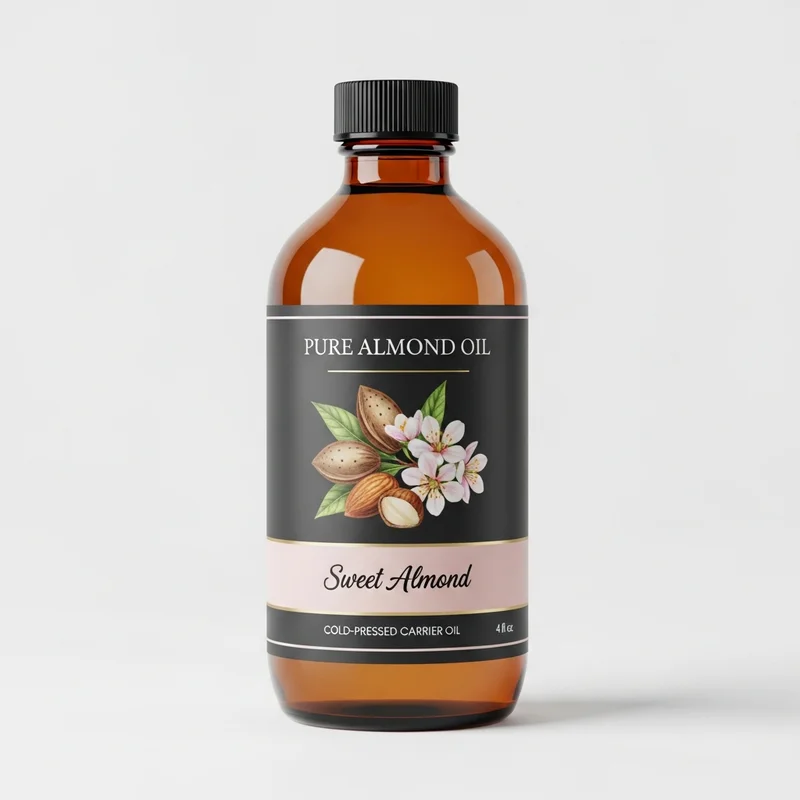
Sweet Almond Oil
Sweet Almond Oil from our own shop, in sizes from 0.5 oz to bulk.
From $9.99
Shop Now →Sources & Further Reading
- Zeichner JA, Berson D, Donald A. The Use of an Over-the-Counter Hand Cream With Sweet Almond Oil for the Treatment of Hand Dermatitis. J Drugs Dermatol, 2018. pubmed.ncbi.nlm.nih.gov/29320591
- U.S. Food and Drug Administration. Microbiological Safety and Cosmetics. fda.gov
- U.S. Food and Drug Administration. Small Businesses & Homemade Cosmetics: Fact Sheet. fda.gov
- American Academy of Dermatology. Dermatologists' top tips for relieving dry skin. aad.org
- Vaughn AR et al. Multi-Center Randomized Clinical Study of The Effects of Natural Oils on Xerosis and Skin Barrier Properties. SKIN The Journal of Cutaneous Medicine, 2018. skin.dermsquared.com
- American Academy of Dermatology. How to test skin care products. aad.org