Almond Oil Foot Soak for Dry Heels: Soak, Then Seal
Most foot soak recipes spend all their energy on the bowl: salts, petals, a splash of oil. The part that actually matters happens after you step out, in the first few minutes while your skin is still damp. Get that right and a simple routine does a lot of work, so let us start there and build the soak around it.
First, whose feet are these?
If you have diabetes or numb feet, skip the soak. The CDC's guidance for people with diabetes is blunt: do not soak your feet, check them every day for cuts, redness, swelling, sores and blisters, and keep lotion out from between the toes, where it could lead to infection (CDC, Your Feet and Diabetes). Cracked heels can also be linked to medical conditions such as diabetes, which is why the American Academy of Dermatology suggests seeing a board-certified dermatologist when cracks are severe or do not improve. A podiatrist or your care team is the right guide there.
The dermatologist's order of events
For ordinary dry heels, the AAD's advice is refreshingly short (AAD, How to care for dry, cracked heels):
- Keep baths and showers to 5 to 10 minutes, since long soaks dry skin out, and pat dry gently.
- Use a gentle, fragrance-free cleanser.
- Within 5 minutes of bathing, while skin is damp, apply a cream with 10 to 25 percent urea, an alpha hydroxy acid or salicylic acid, and reapply when heels feel dry.
- At night, use plain petroleum jelly and wear socks to protect the bedding.
- Cover cracks with a liquid bandage by day, and wear shoes that fit, avoiding open-heeled styles.
Notice that the soak is not a separate step. If you love one, treat it as part of the 5 to 10 minute bath, and then move straight to moisturizing. The seal is the point.
Setting up the evening
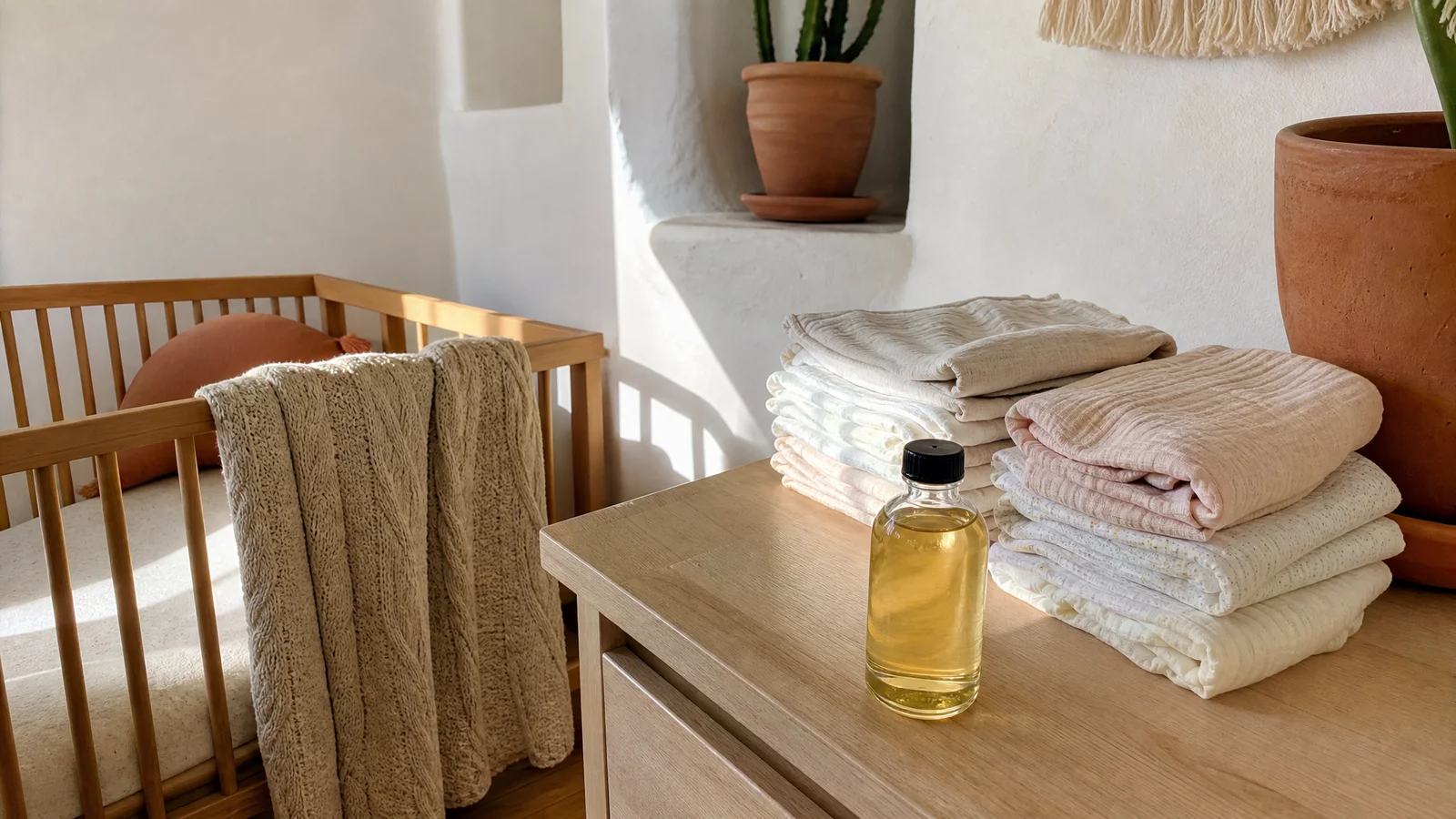
A foot soak is a small ritual, and it helps to set the scene before your feet go in the water. Put a towel on the floor within reach, a pair of clean cotton socks beside it, and the bottle of oil on a stool or a shelf you can reach without standing up. A comfortable chair makes the five or ten minutes feel like a pause rather than a chore. Keep the water comfortably warm, never hot: if you would not want to hold your wrist in it, your feet will not enjoy it either.
Where almond oil fits
We are fans of almond oil as a damp-skin moisturizer for dry feet, with the honest note that the dermatologists name other products for cracked heels, and an oil on its own does not supply urea or an acid. Think of it as a soft, pleasant finish for dry rather than deeply cracked heels, and for the rest of the foot.
There is some encouraging evidence for plain oils in general. In a small randomized pilot, 32 participants applied almond oil, coconut oil, jojoba oil or white petrolatum twice a day for two weeks, and all four raised skin hydration significantly with no significant differences between them (Vaughn and colleagues, Multi-Center Randomized Clinical Study of The Effects of Natural Oils on Xerosis and Skin Barrier Properties, SKIN, 2018). The study did not test heels specifically, so applying it to thick heel skin is our inference rather than a finding.
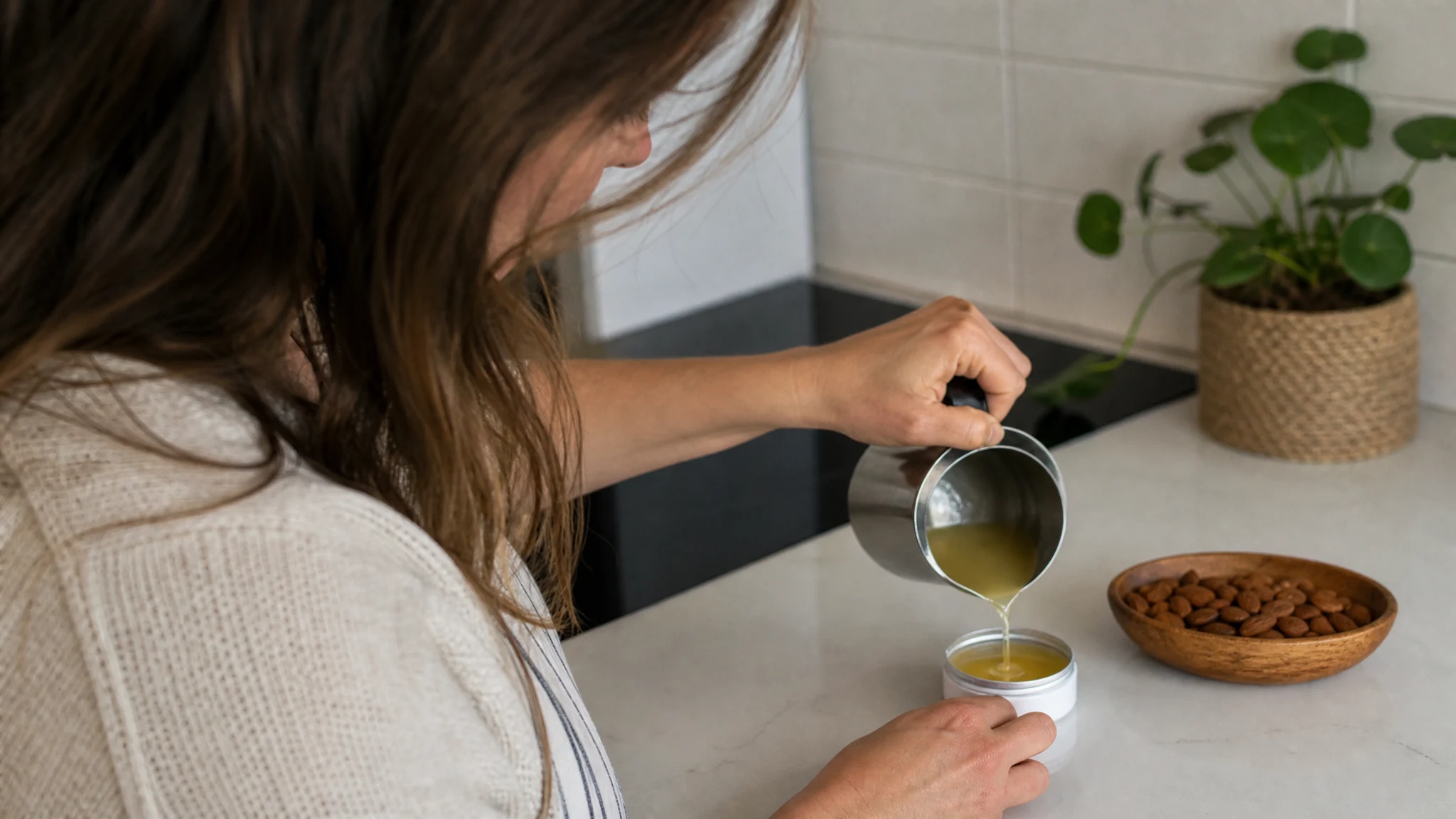
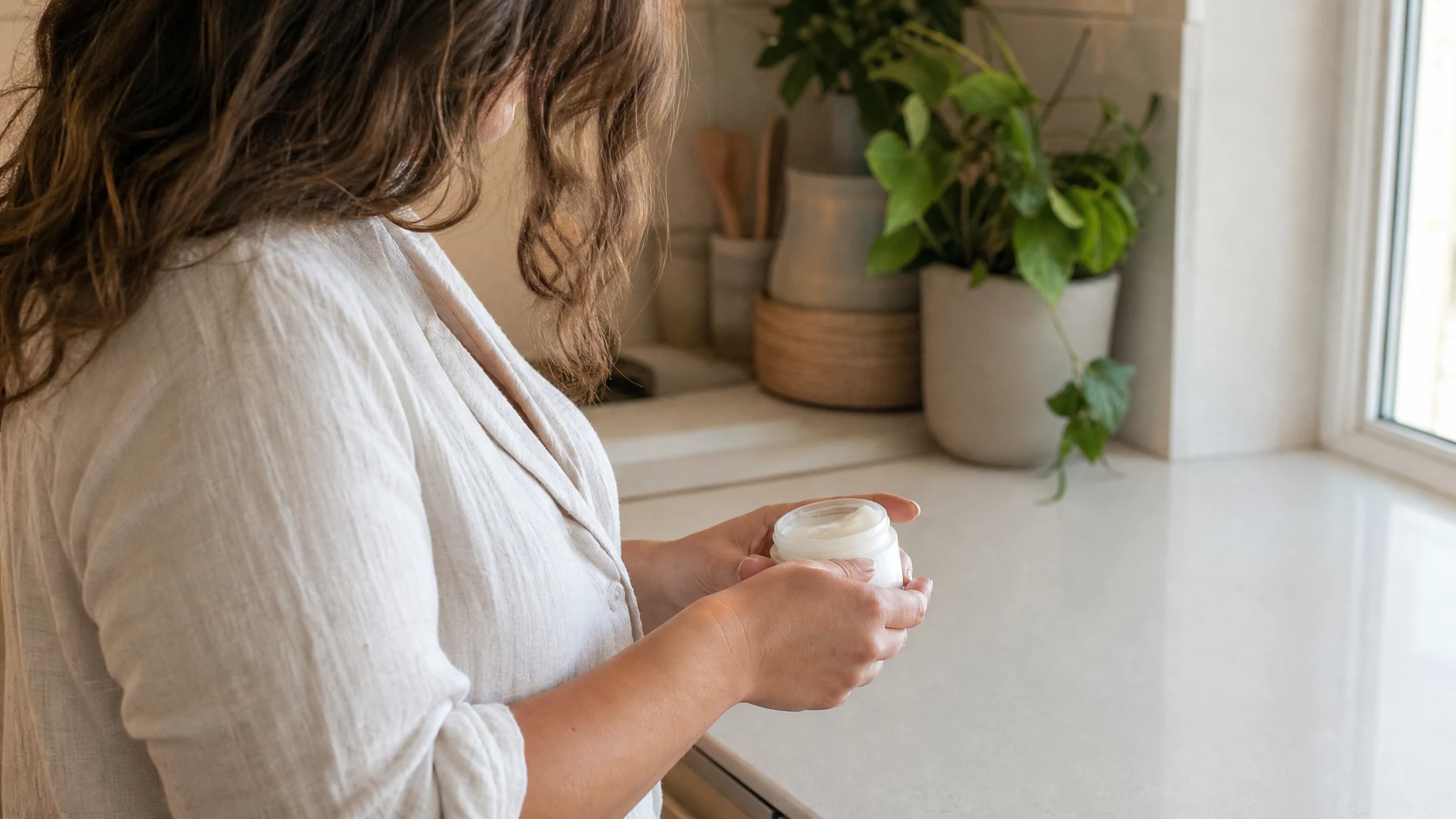
Our Sweet Almond Oil is cold-pressed, unrefined and has nothing added. A teaspoon weighs about 4.5 grams at the density measured on the batch on our published Certificate of Analysis (0.918), and a little goes a long way on the heel. Smooth it over damp feet after the bath, press it into the heels, then put on cotton socks.
What you will notice afterward
When you pat your feet and press the oil in, notice how quickly it spreads over damp skin and how soft, nutty and mild it smells. Heel skin is thick, so it will take a little longer to soak in than the skin on your ankles, and that is normal. Give it a minute, press it in with your thumbs, and then pull on the socks. In the morning, you will notice the socks feel soft and slightly oily, which is the cue to put them in the wash.
Keep the floor in mind
Oily feet and bathroom tile are not friends. Apply oil at the end of the evening, wear socks, and avoid walking on hard floors in them. The same goes for laundry: oily socks and sheets should be washed regularly. Fire services also point out that emollients on fabric can be a fire risk near open flames (Cambridgeshire Fire and Rescue Service, Emollients), so keep treated socks and bedding away from candles and cooking.
Salts, scrubs and essential oils
You are free to add Epsom salts or a drop of essential oil to the bowl if you enjoy them, and the AAD suggests fragrance-free products for dry skin, so keep the amounts light and skip them if your skin is cracked or irritated. Cracked skin is the worst place to try something new, so patch test on unbroken skin first: a quarter-sized spot, twice a day for 7 to 10 days (AAD, How to test skin care products). Our patch test walkthrough explains it.
Almond is a tree nut. Our oil is unrefined and anyone with a tree nut allergy should not use it; the nut allergy post has the details. Stop and see a dermatologist or podiatrist if cracks bleed, weep or look infected, or if dryness spreads.
For the wider picture, take a look at our dry skin post and our fall skincare guide. A short, warm soak, a quick pat dry and a good seal: that is the whole secret, and it is a pleasant way to end a day.

Sweet Almond Oil
Sweet Almond Oil from our own shop, in sizes from 0.5 oz to bulk.
From $9.99
Shop Now →Sources & Further Reading
- Centers for Disease Control and Prevention. Your Feet and Diabetes. cdc.gov
- American Academy of Dermatology. How to care for dry, cracked heels. aad.org
- Vaughn AR et al. Multi-Center Randomized Clinical Study of The Effects of Natural Oils on Xerosis and Skin Barrier Properties. SKIN The Journal of Cutaneous Medicine, 2018. skin.dermsquared.com
- Cambridgeshire Fire and Rescue Service. Emollients. cambsfire.gov.uk
- American Academy of Dermatology. How to test skin care products. aad.org