DIY Almond Oil Hair Perfume: Dilution and Scent Tips
A hair perfume made on almond oil is a different creature from a spray. It does not evaporate or sparkle across a room. It sits close, warms with your skin and gives a quiet scent you notice when you turn your head, with a little shine on the ends for company. That quietness is the charm, and it is also what keeps the recipe simple.
Why dilution is the whole game
Fragrance is the part of this project most likely to cause a reaction, so the amount of essential oil is the number to get right. The European Commission's Scientific Committee on Consumer Safety describes contact allergy to a fragrance as a life-long, altered reactivity of the immune system, and the rules require 26 fragrance substances to be listed on cosmetic labels under certain conditions. The label thresholds, 0.01 percent for rinse-off and 0.001 percent for leave-on products, came from what the committee calls a "pragmatic administrative decision" made for lack of data (European Commission, Perfume allergies: 1. Introduction). In practice, that means a homemade leave-on scent has no label threshold to lean on, so we keep the share low.
The Tisserand Institute gives guideline dilution ranges of 0.2 to 1 percent for sensitive or impaired skin, 0.5 to 1.2 percent for facial cosmetics and 1 to 3 percent for body oils (Tisserand Institute, Dilution for essential oils). It does not give a figure for hair. Because hair perfume lands on the neck and hairline, we start at the lowest end. That is our own conservative suggestion, not a sourced limit.
| Total essential oil (by weight) | In 30 g almond oil | In 60 g almond oil |
|---|---|---|
| 0.5% | 0.15 g | 0.30 g |
| 1% | 0.30 g | 0.60 g |
The figures are the combined total, not per oil, so three scents share the 0.15 gram. A scale that reads to 0.01 gram makes this easy, since drop counts are only approximate. At the density measured on the batch on our published Certificate of Analysis (0.918), 30 grams of almond oil is about 32.7 milliliters. At 0.5 percent the scent will be soft, which is the nature of a non-evaporating oil. We would rather you enjoy a gentle scent than push the amount up to get a louder one.
Choosing the scent
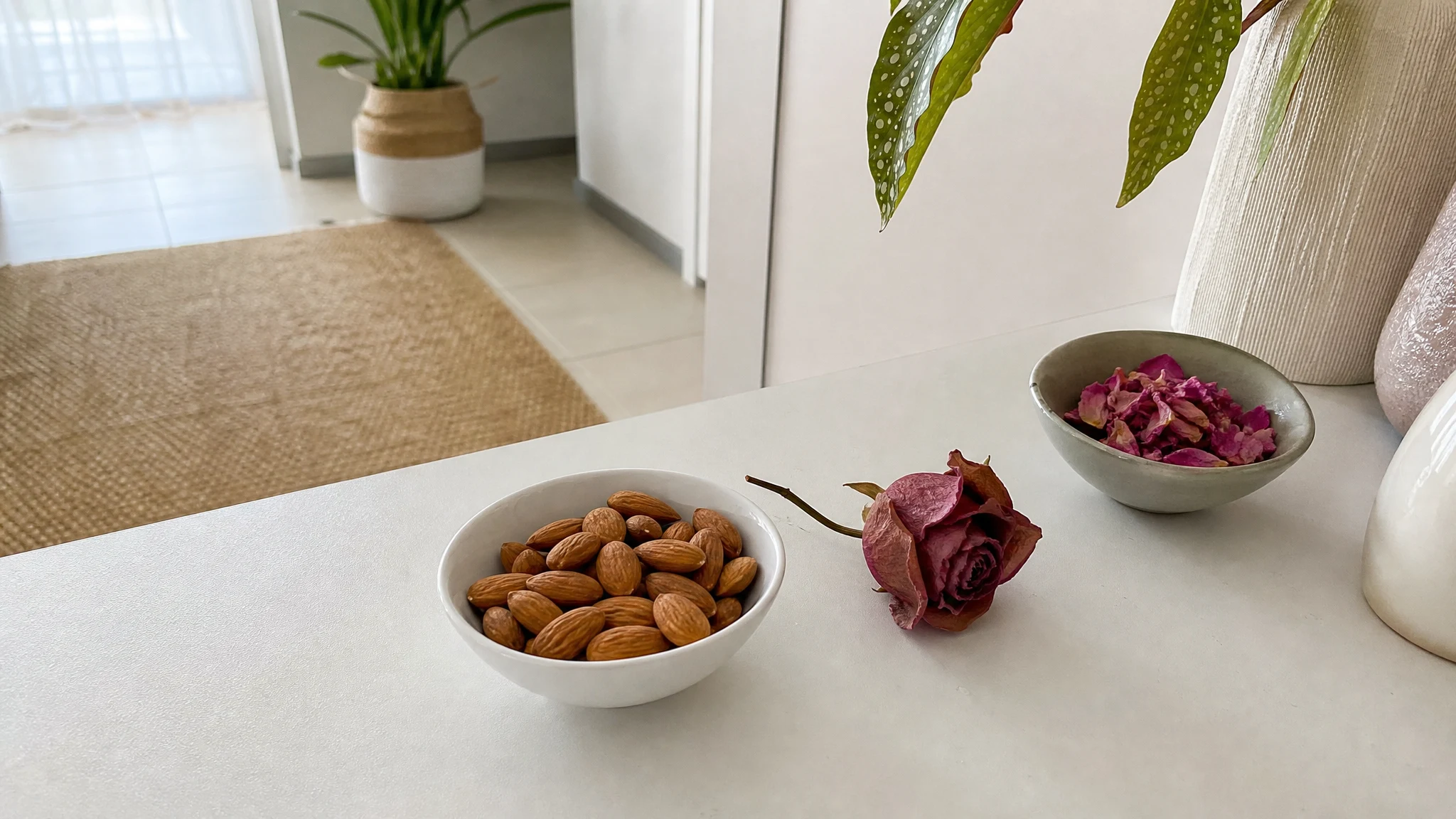
Our Sweet Almond Oil has a soft, lightly sweet, nutty aroma of its own, and it blends well with lavender, rose, geranium, chamomile, sandalwood and ylang ylang. That is a note about how the scents sit together, not a safety clearance for any essential oil. We do not sell essential oils, so buy from a supplier that lists the botanical name and batch.
One family needs a little extra thought. Most phototoxic essential oils are expressed citrus oils such as bergamot, and the Tisserand Institute gives an IFRA limit of 0.4 percent in the final product for bergamot oil on sun-exposed skin and advises keeping treated skin out of UV for at least 12 hours. Distilled citrus oils contain far fewer of the compounds involved (Tisserand Institute, Phototoxicity: essential oils, sun and safety). Hair perfume touches the neck and ears, which see sun, so florals and woods are an easy place to start. A bottle labeled only "fragrance oil" gives you nothing to look up, so we suggest oils you can name.
Smelling your way to a blend
Choosing scents is the fun part. Before you weigh anything, open each essential oil bottle and smell it on a paper strip, then smell the almond oil on its own. Hold two strips together to hear how they sit. A floral against a wood can feel rich, and two florals can feel sweet. Take your time, and come back to the strips an hour later, because first impressions fade. You will notice that what you enjoyed at first is not always what you enjoy after an hour.
Making it
- Weigh the almond oil into a clean amber or glass bottle.
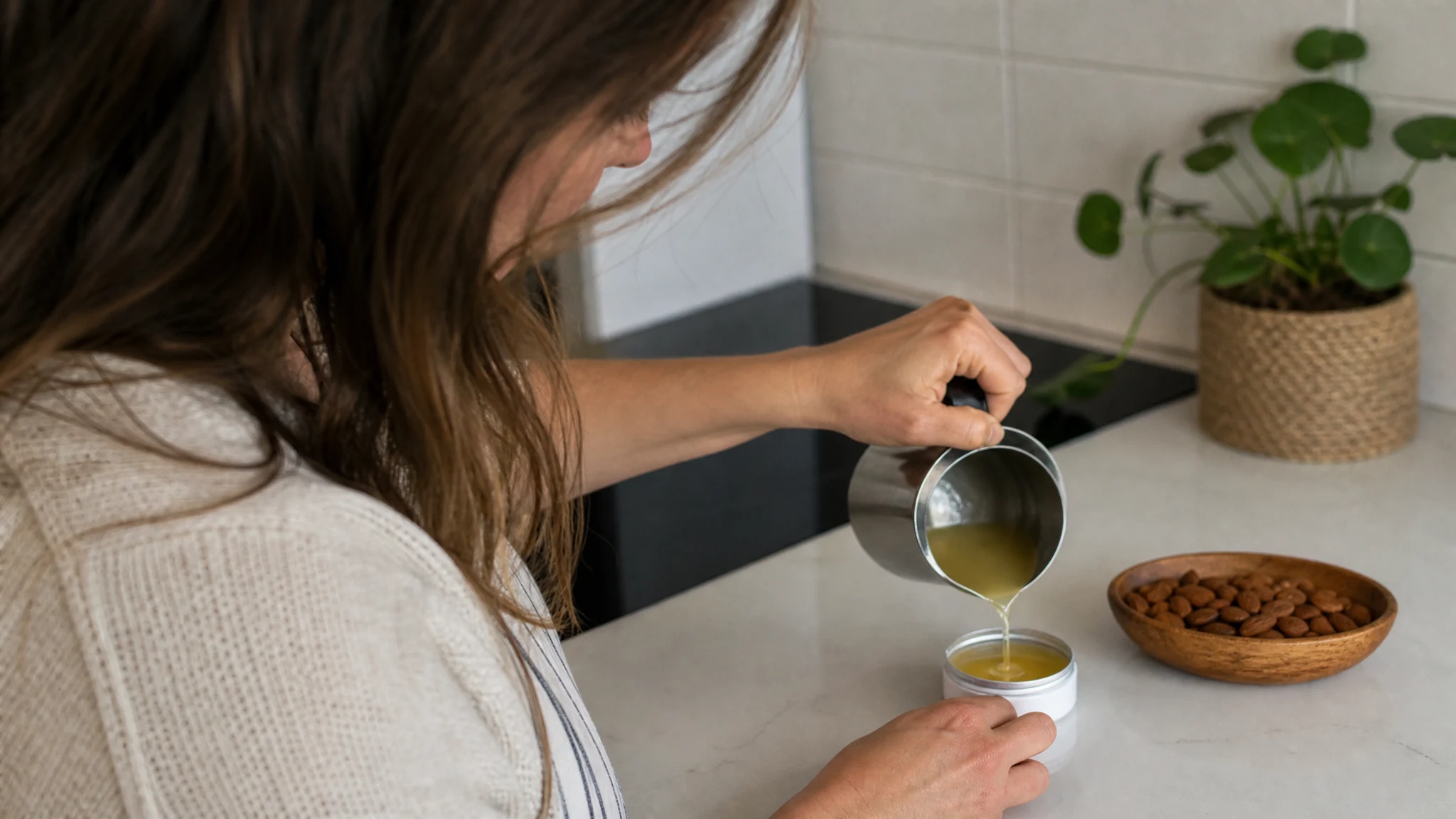
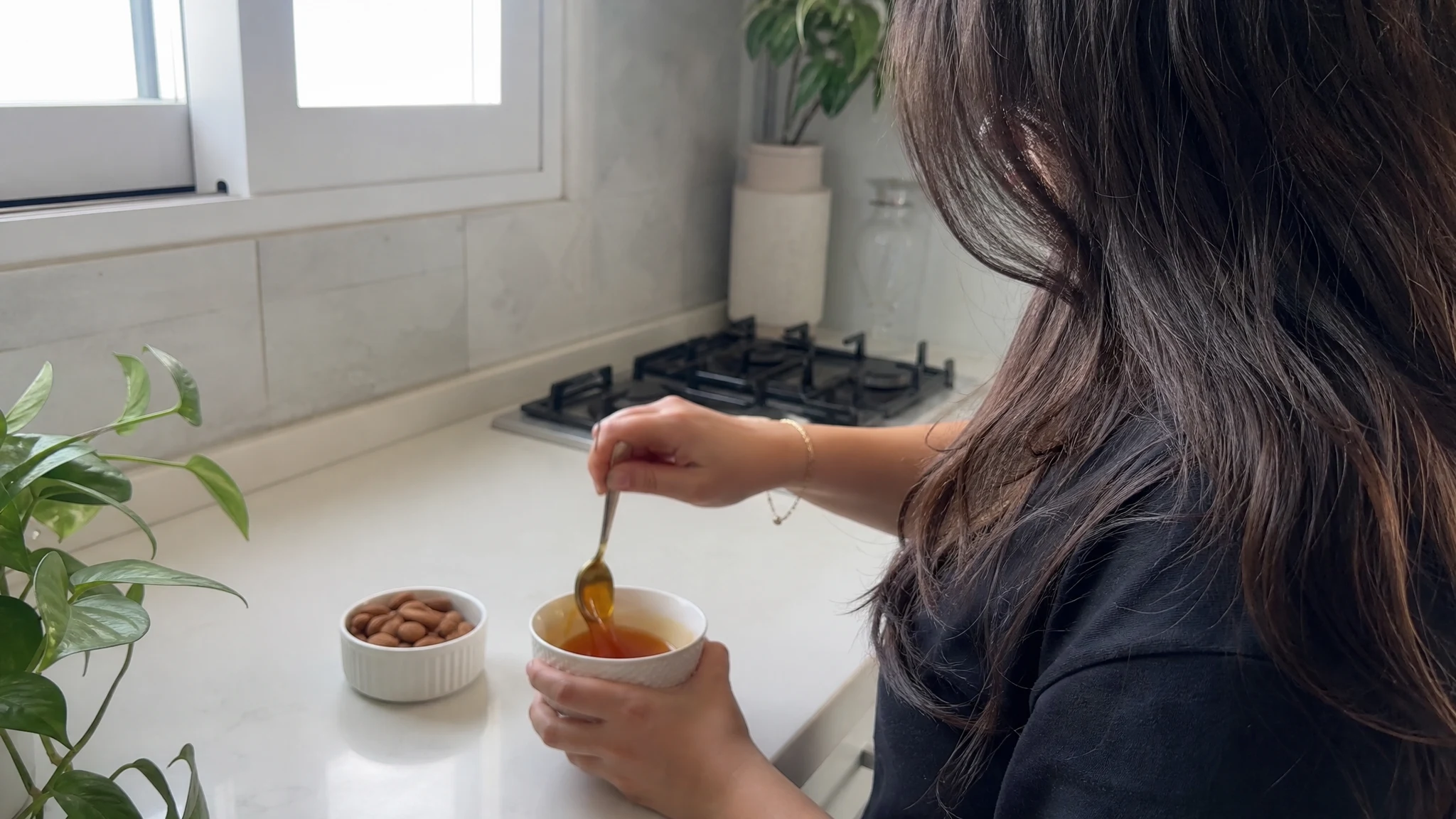
- Add the essential oils by weight, stir or swirl for a minute, then cap.
- Label it with the date and the oils.
That is all, and the lack of water is the point: the FDA lists water, weak preservation, warm damp storage and dipped fingers among the routes by which cosmetics become contaminated (FDA, Microbiological Safety and Cosmetics), so we keep water, flower water and hydrosol out of this oil. Make small batches. Our oil is best within about a year of pressing, kept cool and dark, and a blend with essential oils is a new product with its own timeline.
Wearing it well
A hair perfume on oil is a whisper. Apply a drop or two to the ends, then run your fingers through. You will notice the scent most when you move your head or when someone is close. If you want a little more, add a drop to the ends rather than increasing the essential oil in the bottle. A small bottle in a bag is lovely for a refresh through the day.
Using it
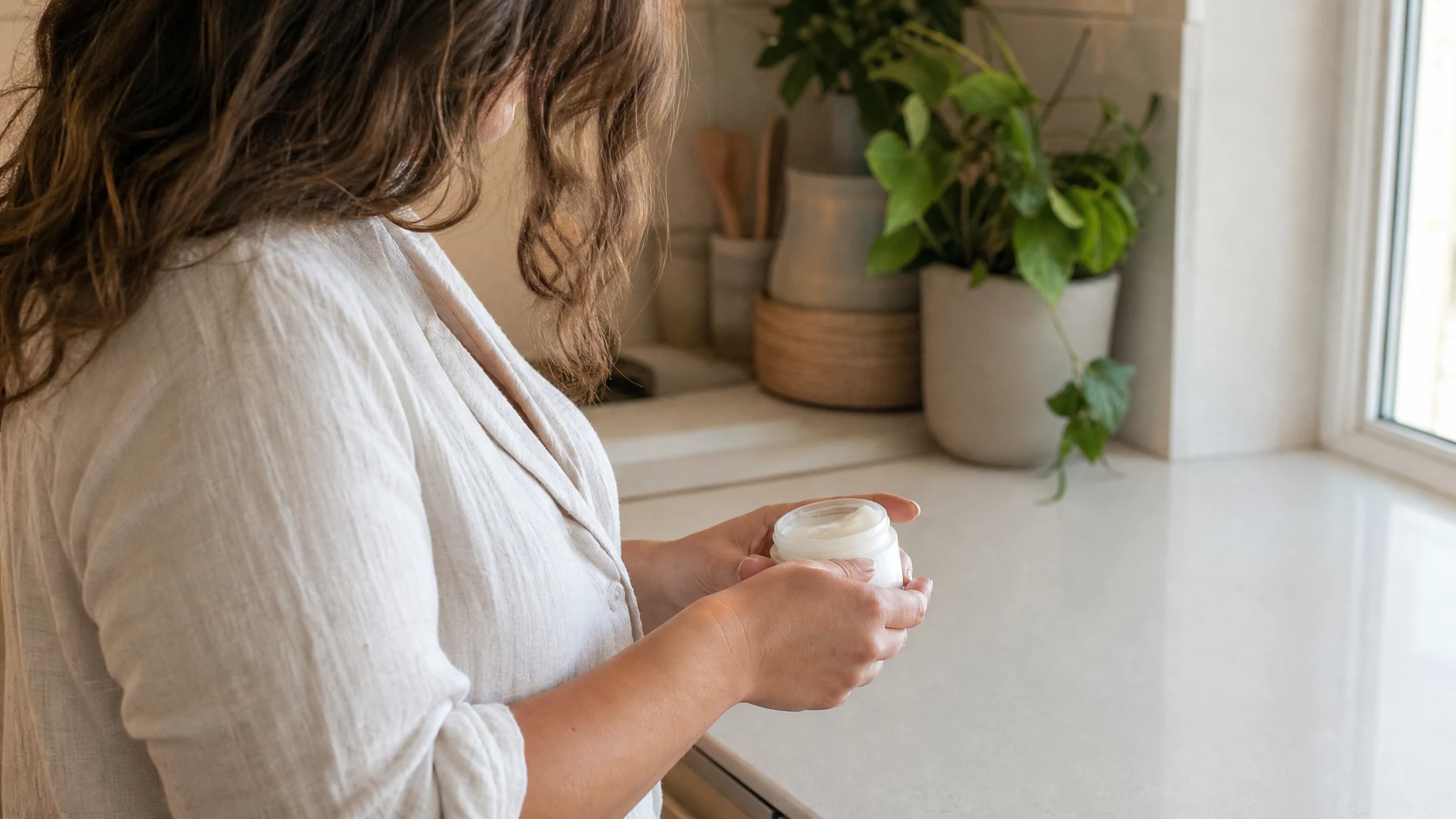
Warm a drop or two between your palms and smooth it over mid-lengths and ends rather than the scalp. That is our reasoning: it keeps fragrance away from the hairline and scalp, where contact is most direct. Before the first use, patch test. The American Academy of Dermatology describes a quarter-sized spot where the product will not rub off, the normal amount, twice a day for 7 to 10 days, stopping at redness, itching or swelling (AAD, How to test skin care products). Our patch test guide covers the almond side.
Almond is a tree nut, and our oil is cold-pressed and unrefined. Anyone with a tree nut allergy should not use it; see our nut allergy post. If you are pregnant or nursing, or the scent is for a child, ask your OB/GYN, midwife or pediatrician about essential oils first. And if you already react to scented products, leave the fragrance out: a plain almond oil on the ends is the nicest version of this idea.
For a no-scent version, see our homemade hair serum, and for amount and placement our greasy hair post. A little oil, a hint of scent, and you are done.
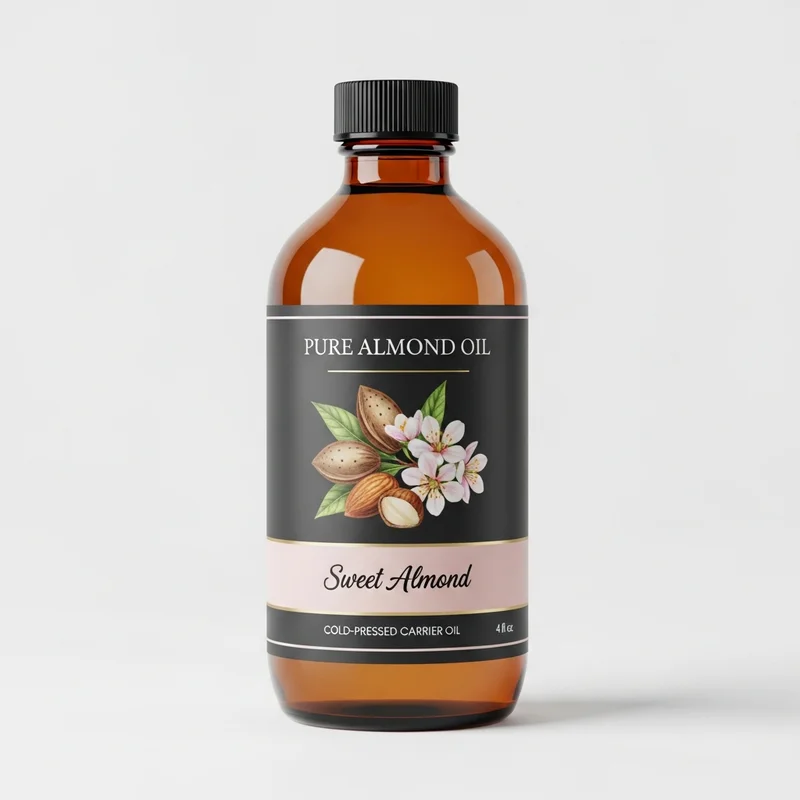
Sweet Almond Oil
Sweet Almond Oil from our own shop, in sizes from 0.5 oz to bulk.
From $9.99
Shop Now →Sources & Further Reading
- European Commission, Scientific Committee on Consumer Safety. Perfume allergies: 1. Introduction. ec.europa.eu
- Tisserand Institute. Dilution for essential oils. tisserandinstitute.org
- Tisserand Institute. Phototoxicity: essential oils, sun and safety. tisserandinstitute.org
- U.S. Food and Drug Administration. Microbiological Safety and Cosmetics. fda.gov
- American Academy of Dermatology. How to test skin care products. aad.org