Honey and Almond Oil Mask: Ratios and Who Should Skip It
Honey and almond oil make a beautiful pair on the kitchen counter: golden, glossy and sweet-smelling. Together they are a favorite for a quick face mask, but they come with one rule that decides everything else. The mix has water in it and no preservative, so you make it fresh, use it once and throw out the rest.
What each half brings
Honey is a humectant, meaning it holds on to water. A review in the Journal of Cosmetic Dermatology describes honey in cosmetics as an emollient, humectant and soothing agent, notes that its properties depend on its botanical source, and says typical cosmetic use levels run from 1 to 10 percent in finished products (Honey in dermatology and skin care: a review). Our almond oil is the other half: a soft-gliding oil with a gentle, nutty aroma that spreads easily. In a small randomized pilot of 32 people with dry skin, almond oil raised hydration significantly over two weeks and was as effective as white petrolatum (Multi-Center Randomized Clinical Study of The Effects of Natural Oils on Xerosis and Skin Barrier Properties).
A small practical point on the honey: pick one you already like the smell of, since the scent is half the pleasure. Plain runny honey mixes in more easily than a set, creamy one. If yours has crystallized, stand the closed jar in a bowl of warm tap water for a few minutes until it loosens, and let it cool before it goes near your face.
Put those together and the idea makes sense: honey for a sticky, water-holding feel, oil for slip and softness. The two have not been studied together as a mask, so think of this as a pleasant ritual and not a miracle.
Why you mix it fresh
Oil and honey do not stay blended. They separate within minutes, so give the bowl a stir right before you use it. More important, honey contains water, and a water-containing mix with no preservative is a welcoming place for microbes. The FDA lists contaminated raw materials or water, weak preservation, warm or damp storage and dipping fingers into a product among the ways cosmetics become contaminated (Microbiological Safety and Cosmetics).
So the habit is simple: a clean bowl, a clean spoon, one application, and what is left goes in the bin, not the fridge. Our oil on its own is different, since it has no water, which is why it keeps so well in a cool, dark cupboard.
A by-weight formula
These proportions are our suggestion, worked out as arithmetic from the use levels above. Weigh the ingredients rather than measuring with spoons, because a spoonful of honey is not a fixed weight.
| Ingredient | Lighter honey | Richer honey |
|---|---|---|
| Sweet almond oil | 25 g (83%) | 20 g (67%) |
| Honey | 5 g (17%) | 10 g (33%) |
| Total | 30 g | 30 g |
At the relative density of 0.918 on the Certificate of Analysis for one of our batches, 25 g of oil is about 27 ml, roughly 5.5 teaspoons. Both versions use more honey than the 1 to 10 percent cosmetic range in the review, so you will notice a stickier, more honey-forward mask than a finished product would be. If you prefer it lighter, begin with the left column and use less. Apply a thin layer to clean skin, keep it away from the eyes, and rinse with warm water after the time you are comfortable with. The AAD suggests leaving a rinse-off product on for about five minutes unless the label says otherwise.
What you will notice
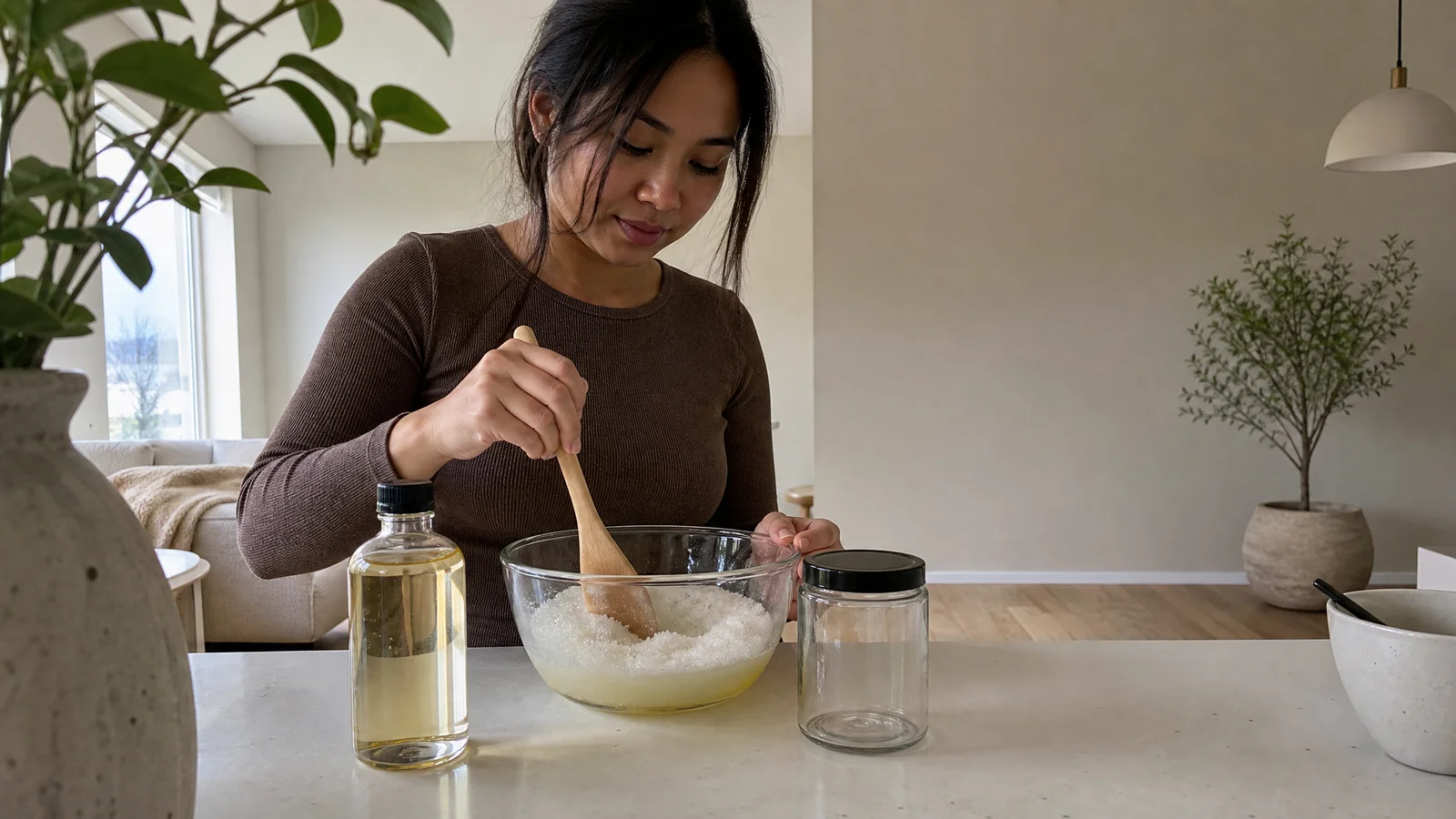
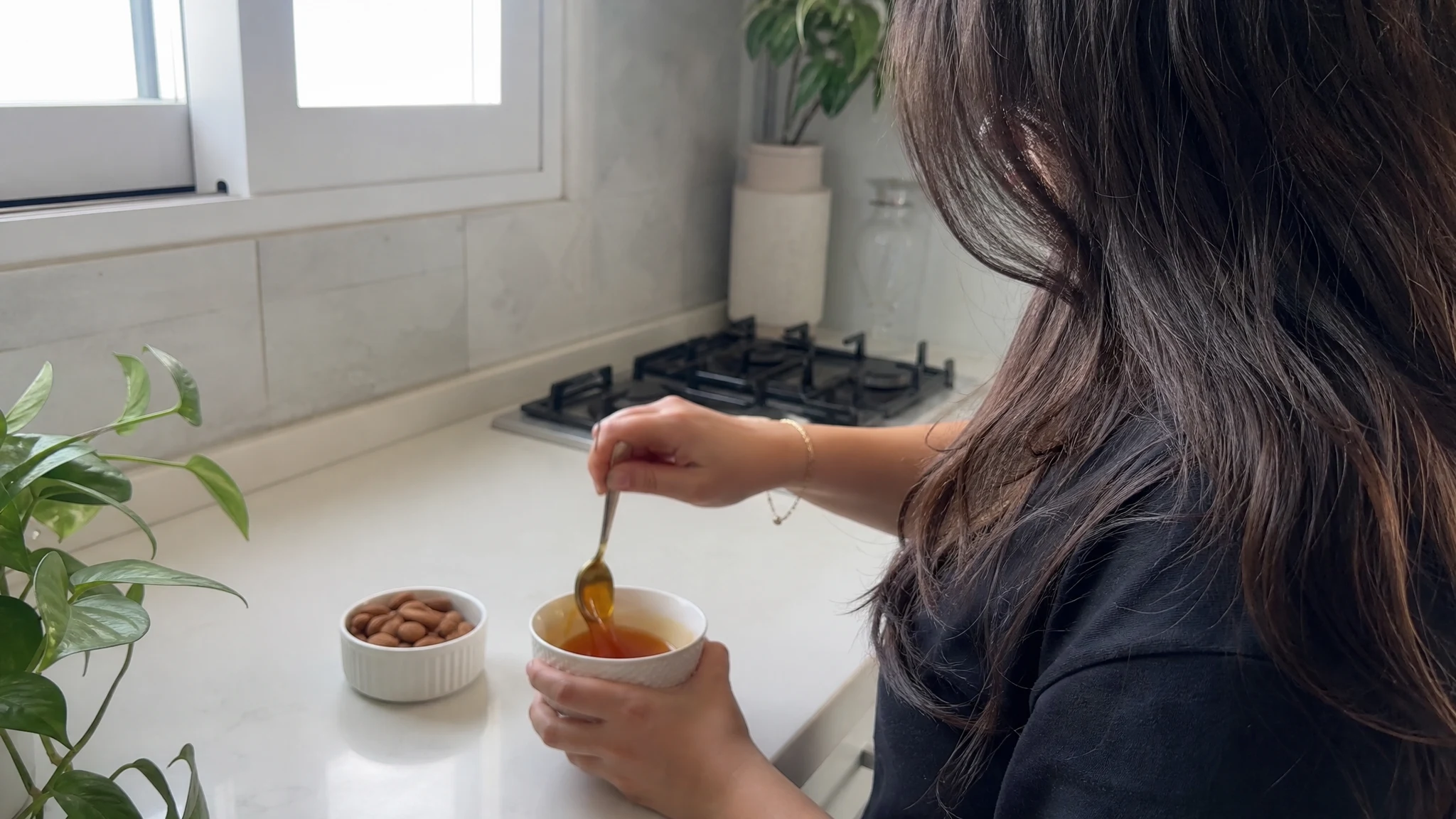
Honey is thick and slow and almond oil is light and quick, so the two behave like strangers in the bowl at first. Keep stirring with a clean spoon until the mix looks glossy and streaky gold, and expect it to loosen as it warms on your fingers. On the skin it feels tacky at first, then glides more as you spread it. The scent is warm and sweet with a soft, nutty note underneath.
Tips for a tidy mask
- Tie your hair back and put a towel around your shoulders, because honey drips.
- Spread a thin layer with clean fingertips or a clean brush. It rinses off more easily than a thick one.
- Rinse over the sink with warm water and a soft cloth, then pat dry.
- Wash the bowl right away, since dried honey is harder to shift.
Patch test first
The American Academy of Dermatology describes testing a product on a quarter-sized spot of the inner arm or elbow crease, the normal amount, twice daily for seven to ten days, and stopping if redness, itching or swelling appears (How to test skin care products). Our own guidance is to patch test and wait at least a day. The longer schedule is worth following for anything new on your face. Our patch test guide walks through it.
Who should skip it
- Anyone with a tree nut allergy. Our oil is cold-pressed and unrefined, so trace almond protein is present, and we ask anyone with a tree nut allergy not to use it.
- Anyone allergic to bee products. A 2025 review says honey, royal jelly, propolis and bee pollen can all trigger immediate reactions (Ensuring the Safe Use of Bee Products: A Review of Allergic Risks and Management). Ask an allergist if you have any history.
- Anyone with broken or reactive skin, or a child: ask a dermatologist or pediatrician first.
Keep it simple
Resist the urge to add essential oils or spices. Each addition is another possible irritant, and a two-ingredient mask is much easier to figure out if your skin objects. If you would like a different direction, our facial serum and face routine articles show where an oil fits, and the acne-prone skin FAQ is useful if your skin runs oily.
Mix it, enjoy the scent, rinse it off, and let the oil on its own do the day-to-day work.
Sweet Almond Oil
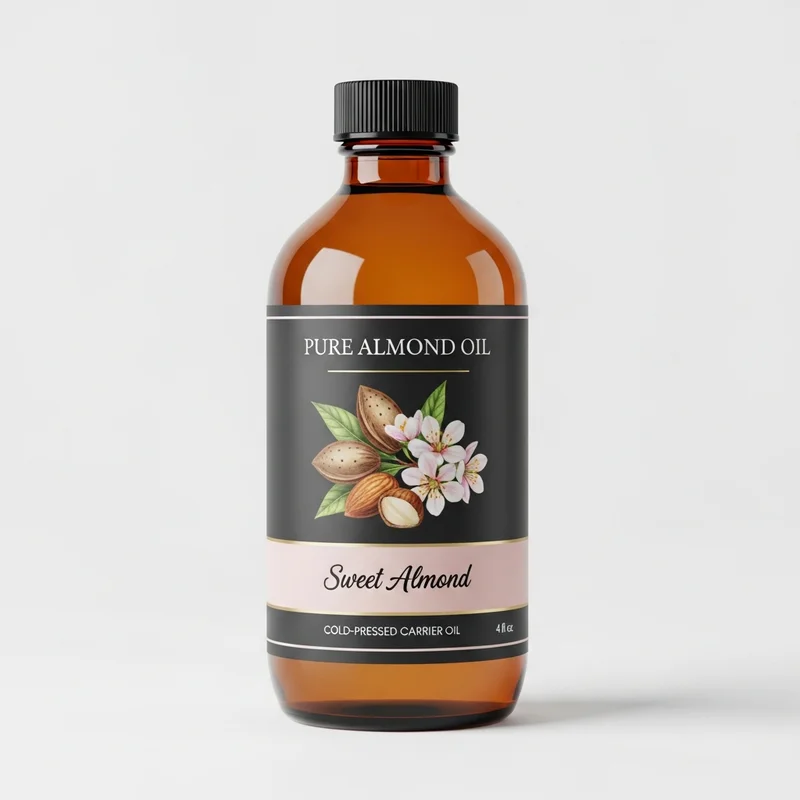
Sweet Almond Oil from our own shop, in sizes from 0.5 oz to bulk.
From $9.99
Shop Now →Sources & Further Reading
- Burlando and Cornara, Honey in dermatology and skin care: a review, J Cosmet Dermatol, 2013
- Vaughn et al., Multi-Center Randomized Clinical Study of The Effects of Natural Oils on Xerosis and Skin Barrier Properties, SKIN The Journal of Cutaneous Medicine
- US FDA, Microbiological Safety and Cosmetics
- American Academy of Dermatology, How to test skin care products
- Matuszewska-Mach et al., Ensuring the Safe Use of Bee Products: A Review of Allergic Risks and Management, Int J Mol Sci, 2025