Turmeric Almond Oil Face Mask: A Golden Ritual
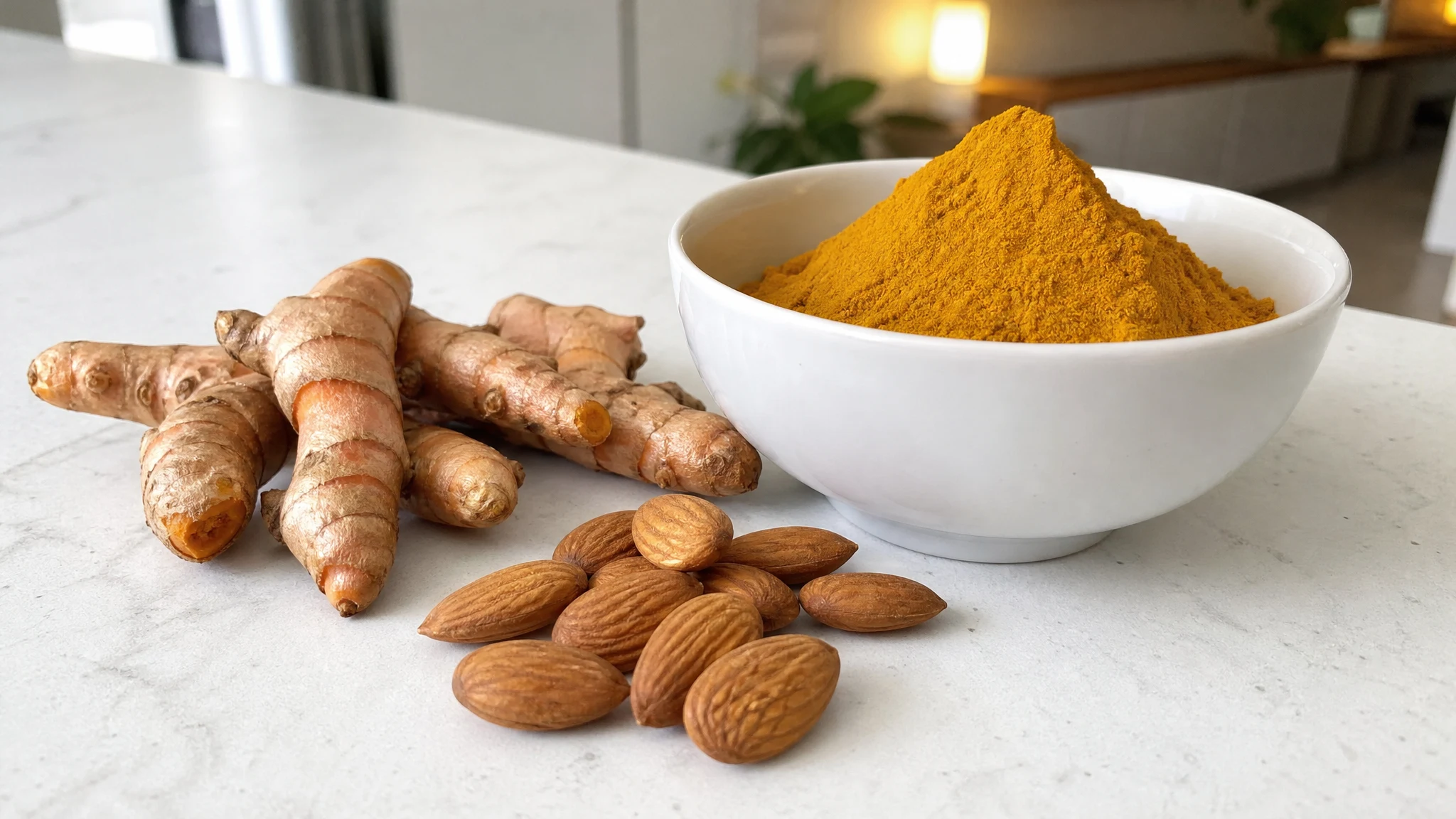
Turmeric turns nearly everything it touches a vivid saffron yellow, and that color is half the charm of a turmeric and almond oil mask. It is also the first thing to plan for. Here is how we would approach this mix: where the powder should come from, what to expect on your skin and towels, and what the almond oil brings to the bowl.
Start with the powder
The oil is the easy half, because we know exactly what ours is. The turmeric is the half to choose with care. Researchers who bought 32 samples of ground turmeric around Boston in 2011 and 2012 found lead in every one, from trace amounts up to 99.5 parts per million. The two highest samples were the only ones imported from Bangladesh, and the authors suspect lead was deliberately added to boost color or weight (Cowell and colleagues, Public Health Reports, 2017). That study was about turmeric as a food, not as a face mask, so we draw no conclusion about skin. But it is a good reason to treat turmeric powder as an ingredient worth shopping for rather than the nearest jar in the cupboard.
In practice, that means buying from a spice seller who can tell you where the turmeric was grown and whether it is tested for heavy metals. We sell almond oil, not spices, so that part of the shopping is yours.
Expect a golden mess
Because turmeric is such a strong pigment, a few habits keep the evening pleasant. These are our reasoning from the color itself, not from a study:
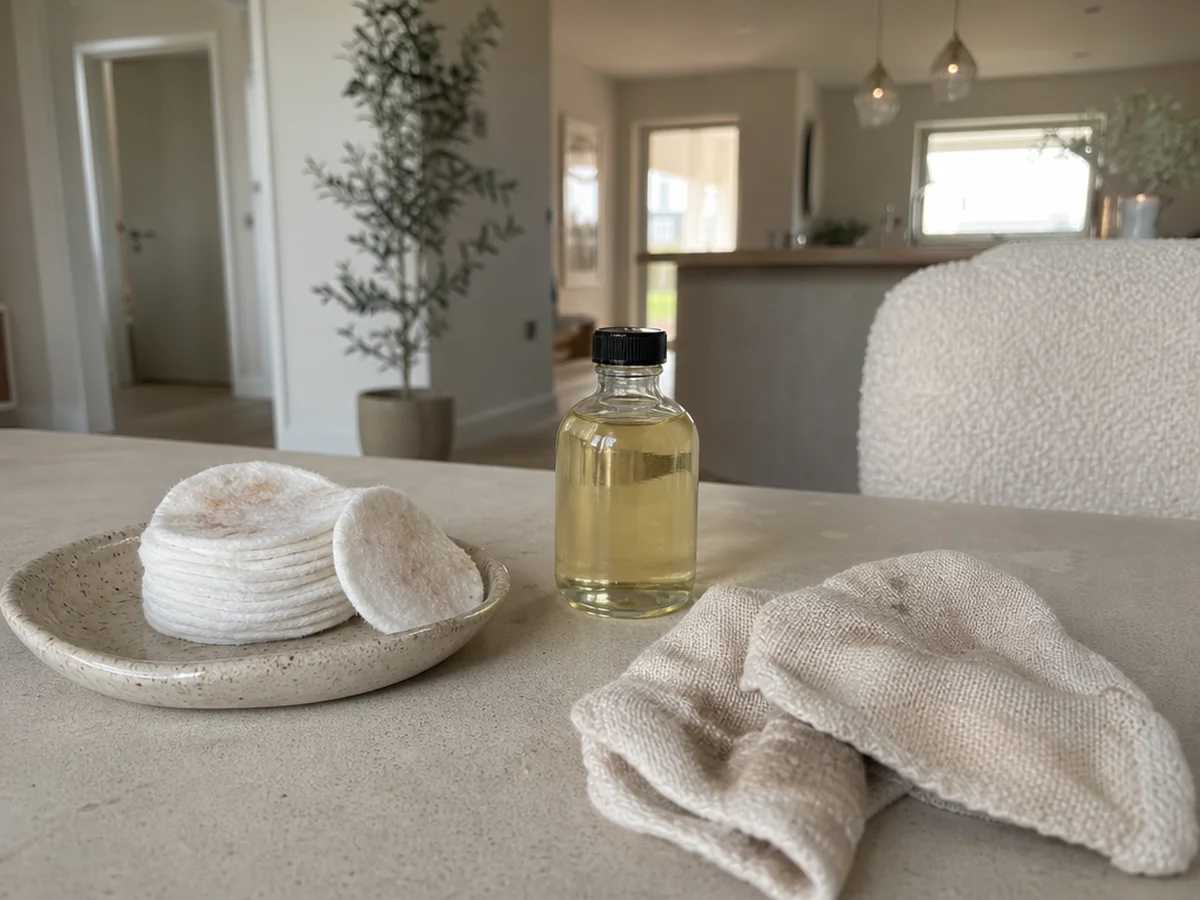
- Work over the sink and drape an old towel across your shoulders.
- Use a thin layer and a short time. A little goes a long way with a pigment this strong.
- Expect a faint yellow tint that may linger for a while, and do not plan the mask for the hour before an event.
- Keep it away from the hairline, light countertops and white linens.
As a starting suggestion (arithmetic, not a tested ratio), a quarter teaspoon of turmeric stirred into a tablespoon of almond oil makes a loose paste. At the density measured on the batch on our published Certificate of Analysis (0.918), that tablespoon of oil weighs about 13.6 grams, which is handy if you prefer to measure on a scale. You can add a little more powder if you want it thicker, though a thicker paste stains more.
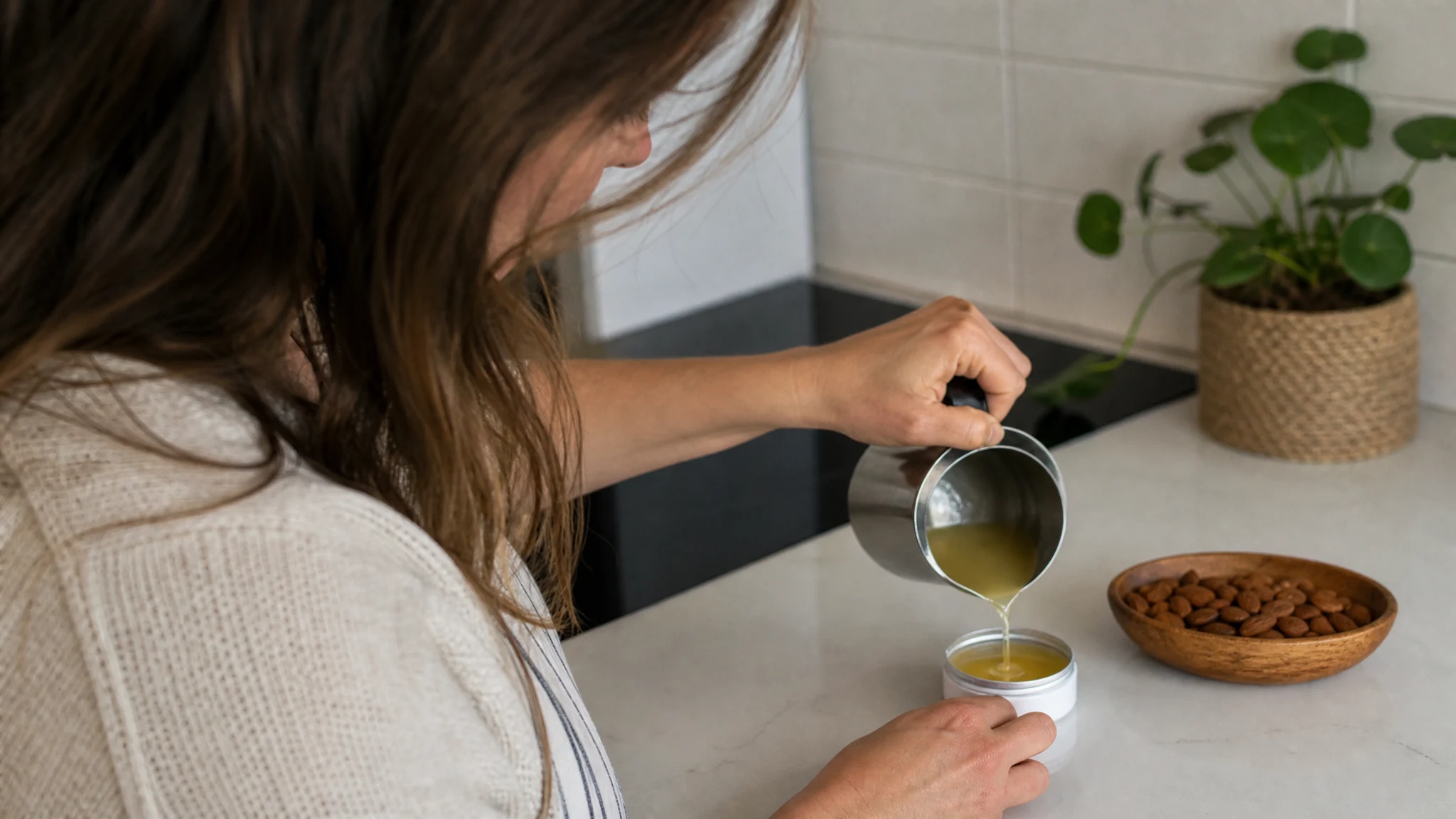
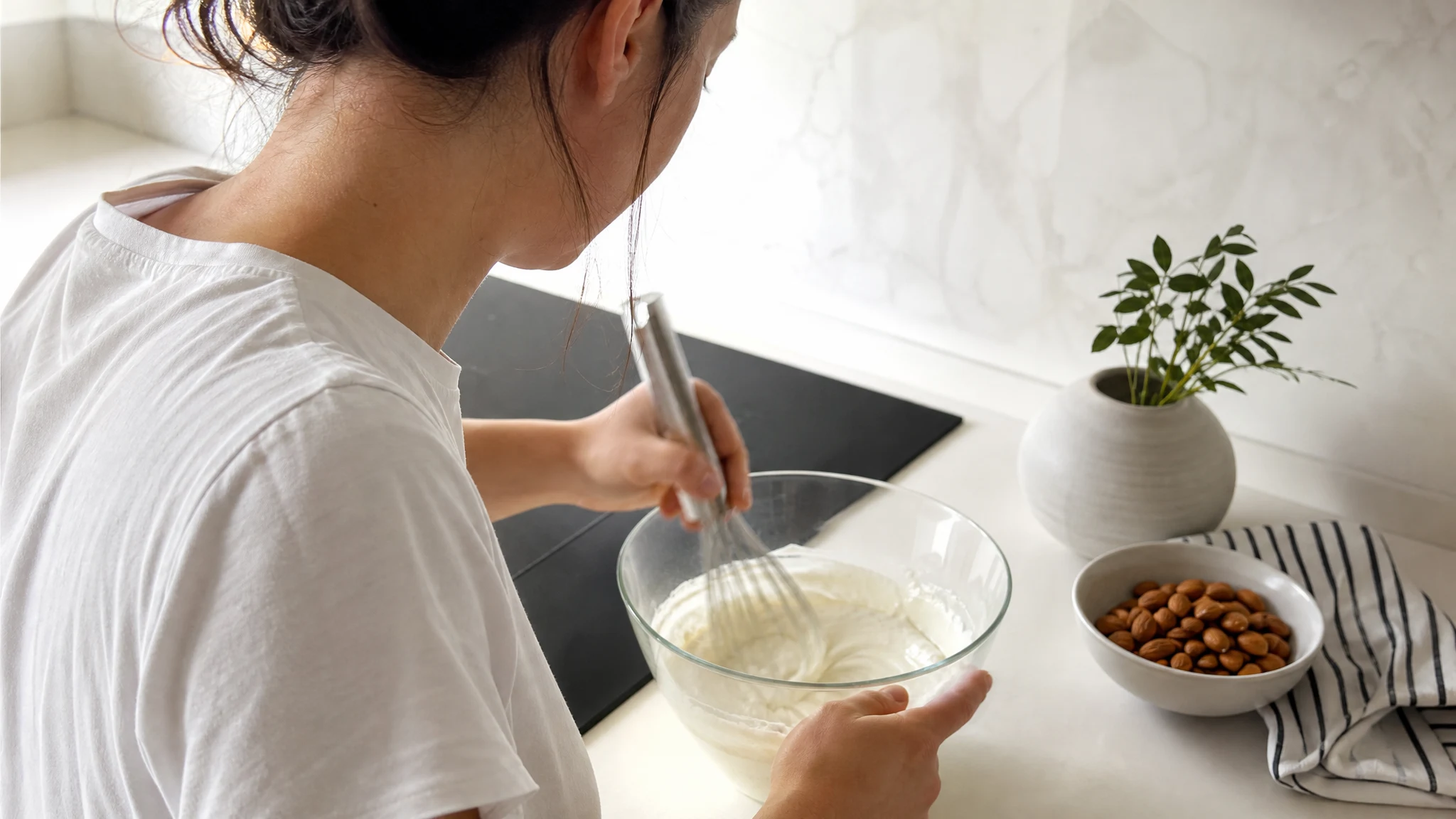
If it helps to picture the process, imagine a small ceramic bowl, a little spoon and a bright yellow powder that looks almost too cheerful to be a face mask. Stir slowly, because turmeric is fine and loves to float up as dust. A glass or ceramic bowl is a good idea, since plastic can hold a yellow tint for a long time.
What almond oil brings to the bowl
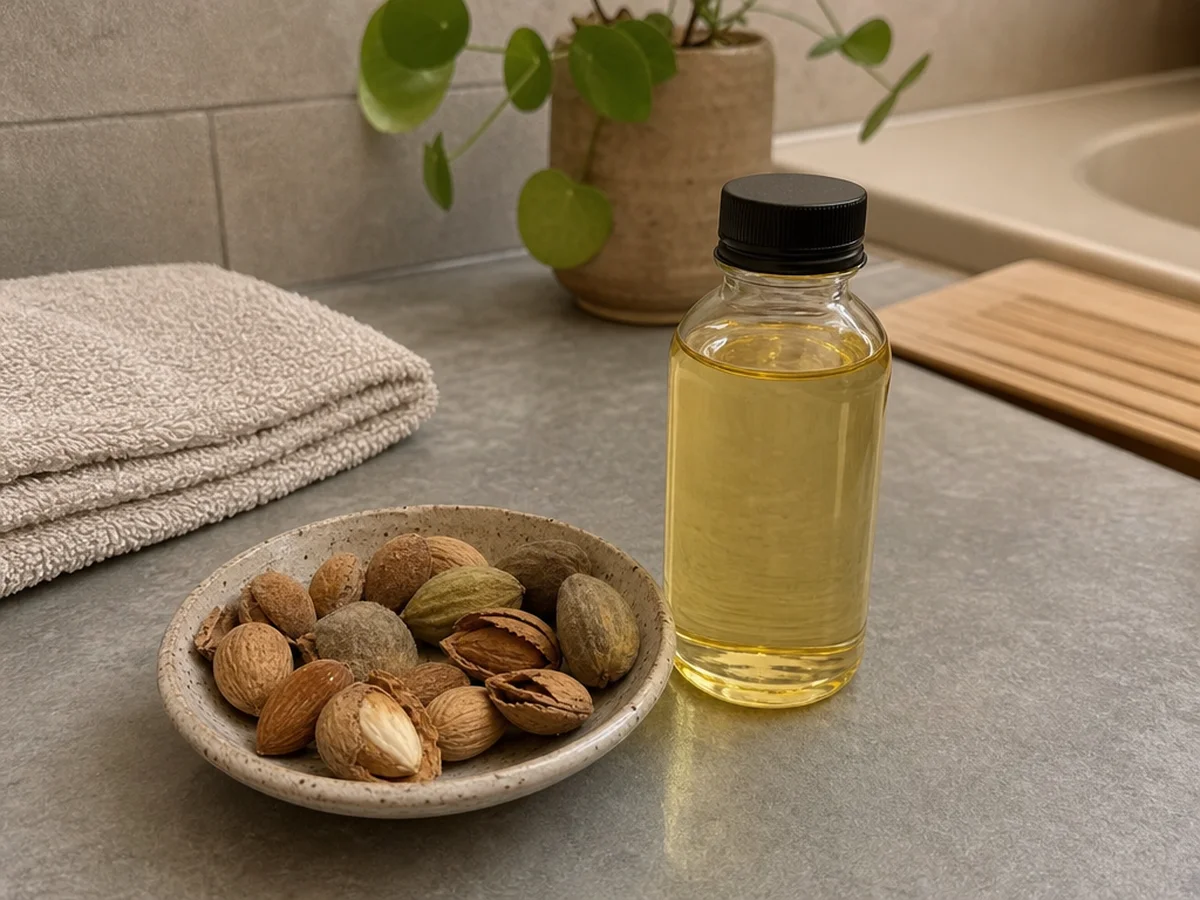
Our Sweet Almond Oil is cold-pressed and unrefined, with nothing added. It has a soft, lightly sweet, nutty aroma, glides easily and has a non-greasy finish, so it spreads a powder into a smooth paste without any water. No water also means no preservative question, which is one reason oil-based masks are the simpler kind to make at home. Mix only what you will use in one sitting and rinse the bowl straight away.
Rinsing and cleaning up
When the time is up, wipe the mask away gently with a warm, damp cloth you do not mind staining, then wash your face as you normally would. Rinse the bowl and spoon immediately, before the color sets. If a faint yellow lingers, give it time and keep makeup plans for another day. Wipe the sink and counter too, because turmeric loves to leave a trace.
Where the research fits
Turmeric gets plenty of scientific attention. A systematic review of its effects on skin (Vaughn, Branum and Sivamani, Phytotherapy Research, 2016) found 18 clinical studies on swallowed or topical turmeric and curcumin, looking at conditions from acne to psoriasis. The authors describe the evidence as early and limited. Those studies used defined products, and none looked at a homemade powder in oil. So we think of this mask as a sensory ritual, a warm golden color and a gentle nutty scent, and we do not promise it does anything beyond that. If you have a skin condition, a dermatologist is the right person to talk to.
Test before you mask
Almond is a tree nut. Our oil is unrefined, so trace almond protein is present, and anyone with a tree nut allergy should not use it. The allergist Jacqueline Pongracic notes that unrefined, cold-pressed nut oils can retain protein, while refined ones generally lack it (AAAAI, Food allergy: nut oils in topical products). Our nut allergy guide goes through it.
The American Academy of Dermatology describes a patch test that suits any new mixture: a quarter-sized spot on the inner arm or elbow crease, the normal amount, twice a day for 7 to 10 days, stopping if redness, itching or swelling appears (AAD, How to test skin care products). That is longer than most people expect, and it is worth it with a pigmented, multi-ingredient mask. Our patch test walkthrough covers the oil side. Keep the mask away from the eyes, and skip it on broken or irritated skin.
If you like the idea of a simple kitchen mask, our almond oil and honey mask is a gentler-colored cousin, and our face routine shows where a plain oil fits day to day.
A golden mask is a small pleasure: a quiet ten minutes, a sheet of color to wash away, and skin that feels softened by the oil. Choose the powder well, keep the layer thin, and enjoy the ritual.

Sweet Almond Oil
Sweet Almond Oil from our own shop, in sizes from 0.5 oz to bulk.
From $9.99
Shop Now →Sources & Further Reading
- Cowell W, Ireland T, Vorhees D, Heiger-Bernays W. Ground Turmeric as a Source of Lead Exposure in the United States. Public Health Reports, 2017. pmc.ncbi.nlm.nih.gov/articles/PMC5415259
- Vaughn AR, Branum A, Sivamani RK. Effects of Turmeric (Curcuma longa) on Skin Health: A Systematic Review of the Clinical Evidence. Phytotherapy Research, 2016. pubmed.ncbi.nlm.nih.gov/27213821
- Pongracic JA. Food allergy: nut oils in topical products. AAAAI Ask the Expert. aaaai.org
- American Academy of Dermatology. How to test skin care products. aad.org