Almond Oil Sugar Scrub: Ratios for Every Texture
Stir sugar into almond oil until it looks like wet sand and you have a body scrub in about five minutes. The mixing is the easy part. What makes a scrub pleasant instead of harsh is the ratio of oil to sugar, which skin it goes on, and keeping the shower out of the jar.
Choose your texture by weight
Oil is the dial you turn. More of it gives a looser scrub that leaves a soft film behind; less gives more bite. These are starting points worked out as arithmetic, with the volume column using the density we measured on the batch on our Certificate of Analysis (0.918 g per ml), so another batch will differ slightly.
| Texture | Sugar | Sweet almond oil | Oil by volume |
|---|---|---|---|
| Grittier | 100 g | 30 g | about 33 ml (2.2 tbsp) |
| Balanced | 100 g | 40 g | about 44 ml (2.9 tbsp) |
| Silkier | 100 g | 50 g | about 54 ml (3.7 tbsp) |
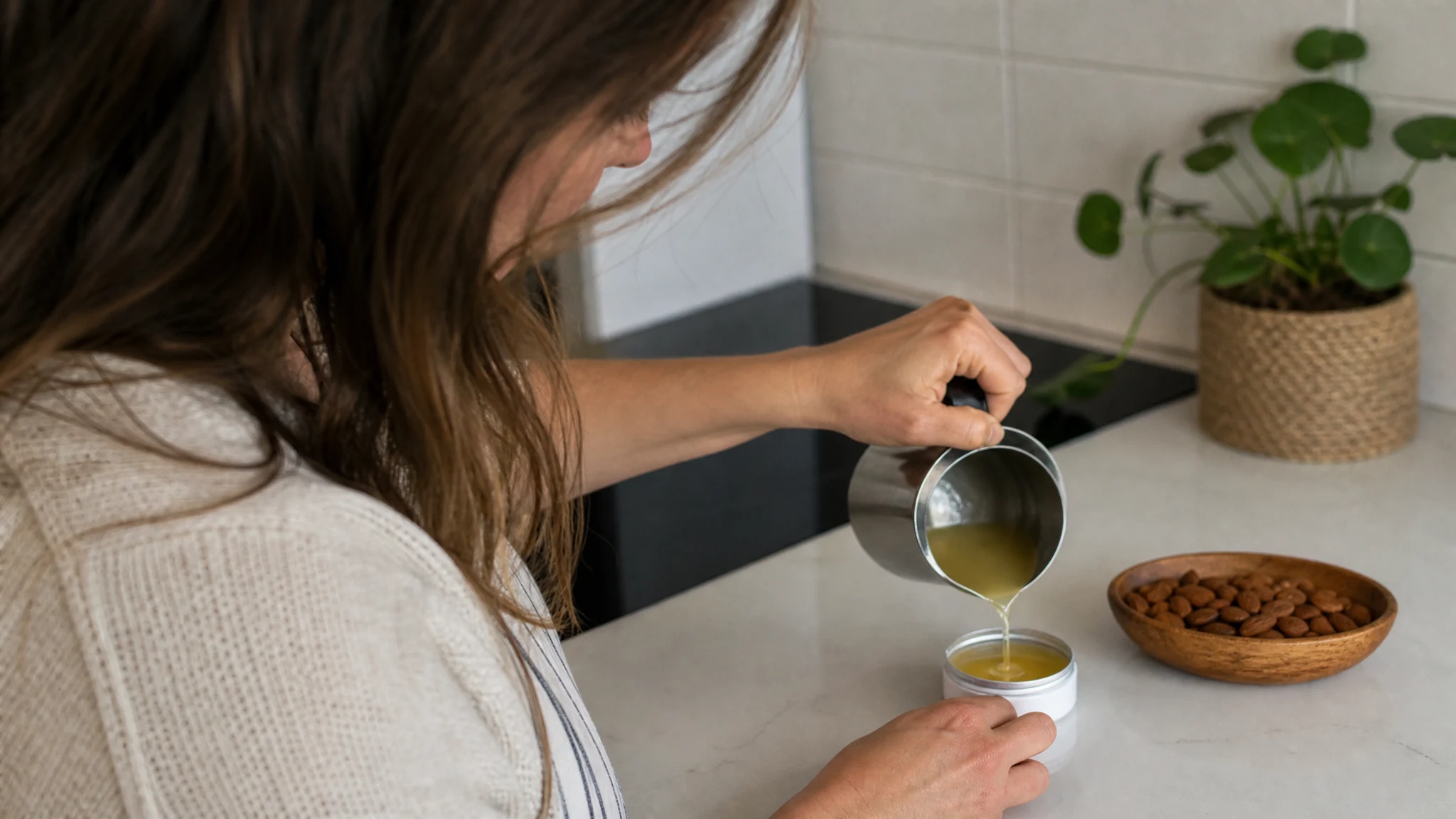
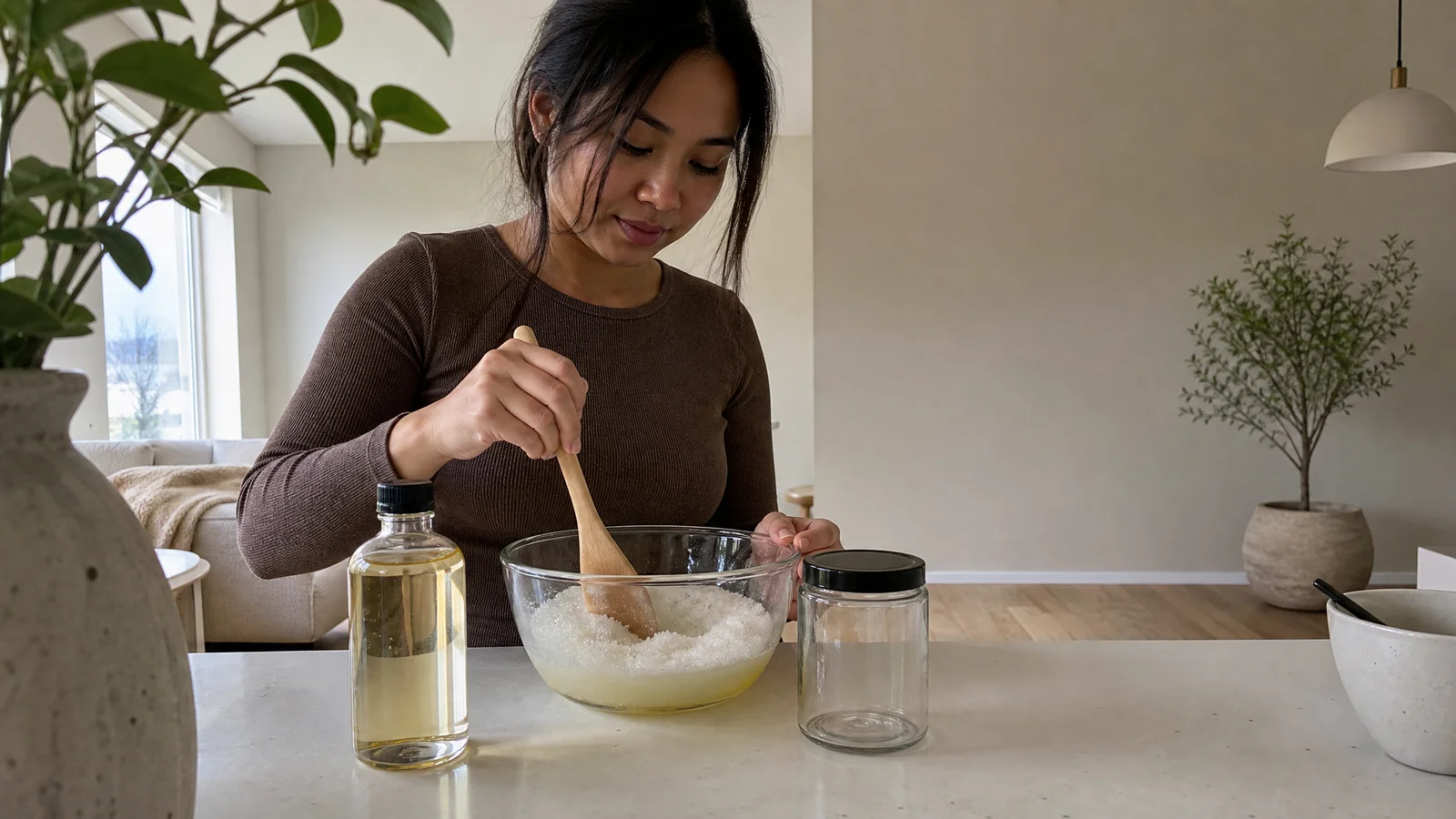
Weigh both rather than using cups, because sugar packs differently from one scoop to the next. Put the sugar in a clean, dry bowl, pour in the oil, and stir with a dry spoon until every crystal is coated. Spoon it into a clean, dry jar. We suggest starting at the silky end the first time, since it is the gentlest, and adjusting from there.
Look at the jar once it is mixed. Sugar crystals glisten under a thin gold sheen of oil, and the scent is soft and lightly nutty with a hint of sweetness, a bit like a bakery, which is part of the fun. Run your finger through it: it should hold together when pressed but fall apart easily when scooped. If it looks dry and crumbly, add a little more oil a teaspoon at a time. If it pools oil at the bottom, stir in a spoonful more sugar.
We keep the recipe to those two ingredients on purpose. Water, fruit or honey would call for a preservative, and fragrance is one more thing for skin to react to. A plain first batch is the best place to begin.
Who a scrub suits
A sugar scrub is mechanical exfoliation: the crystals physically lift away dead surface cells. The American Academy of Dermatology draws a line between this and chemical exfoliation with acids, and its advice is useful for deciding if a scrub is for you. Dry or acne-prone skin does better with gentler methods, because scrubbing can be too harsh. People with darker skin tones, or with dark marks left by burns, bites or acne, are asked to avoid strong mechanical exfoliation, since it can deepen pigmentation. Nothing should be scrubbed over cuts, wounds or sunburned skin, and exfoliating on top of retinoids or benzoyl peroxide can add dryness.
So we think of this one as a body scrub for intact skin that already handles scrubbing well, such as elbows, knees and shoulders. It is not a face scrub (the AAD page does not separate face from body, so that is simply our preference), and the crystals are best kept away from skin that is irritated or inflamed.
Using it well
The AAD describes small circular motions for about 30 seconds, followed by a lukewarm rinse and moisturizer. The rule that more aggressive exfoliation needs more days between sessions applies here too: the grittier the scrub, the longer you leave between uses. The AAD gives no weekly number, so we will not invent one. Try it once, look at your skin the next morning, and let that guide you.
Choose your moment, too. A scrub is a nice thing to do when you are not in a hurry, perhaps at the end of a bath or shower when your skin is warm and you can take your time. Use a small handful for a whole arm or leg and work in sections, so that each part gets the same gentle attention instead of the first part getting all of it.
Oil makes a tub floor slippery. Rinse the tub after you finish and take your time getting out. That is common sense rather than something we have a source for, but it is worth saying.
Keep the jar dry
A scrub with no water in it needs no preservative on paper, but a shower undoes that. The FDA lists added water, dipped fingers and warm, damp storage as ways cosmetics become contaminated, and a jar on a wet shower shelf, opened with wet hands, ticks all three. A few easy habits fix it:
- Keep the jar outside the shower and scoop with a dry spoon, or portion out one use into a small dish.
- Make small batches that you will use within a few weeks. Our oil keeps about a year from pressing when stored cool and dark, but a jar that is opened often has a shorter life.
- If it smells off, changes color or shows spots or pooled water, discard it.
Planning to give jars as gifts or sell them? The FDA's homemade cosmetics fact sheet points out that making cosmetics at home is legal, but anyone who markets them is responsible for safety and labeling, so that is a conversation for a cosmetic chemist or regulatory adviser.
A note on almond
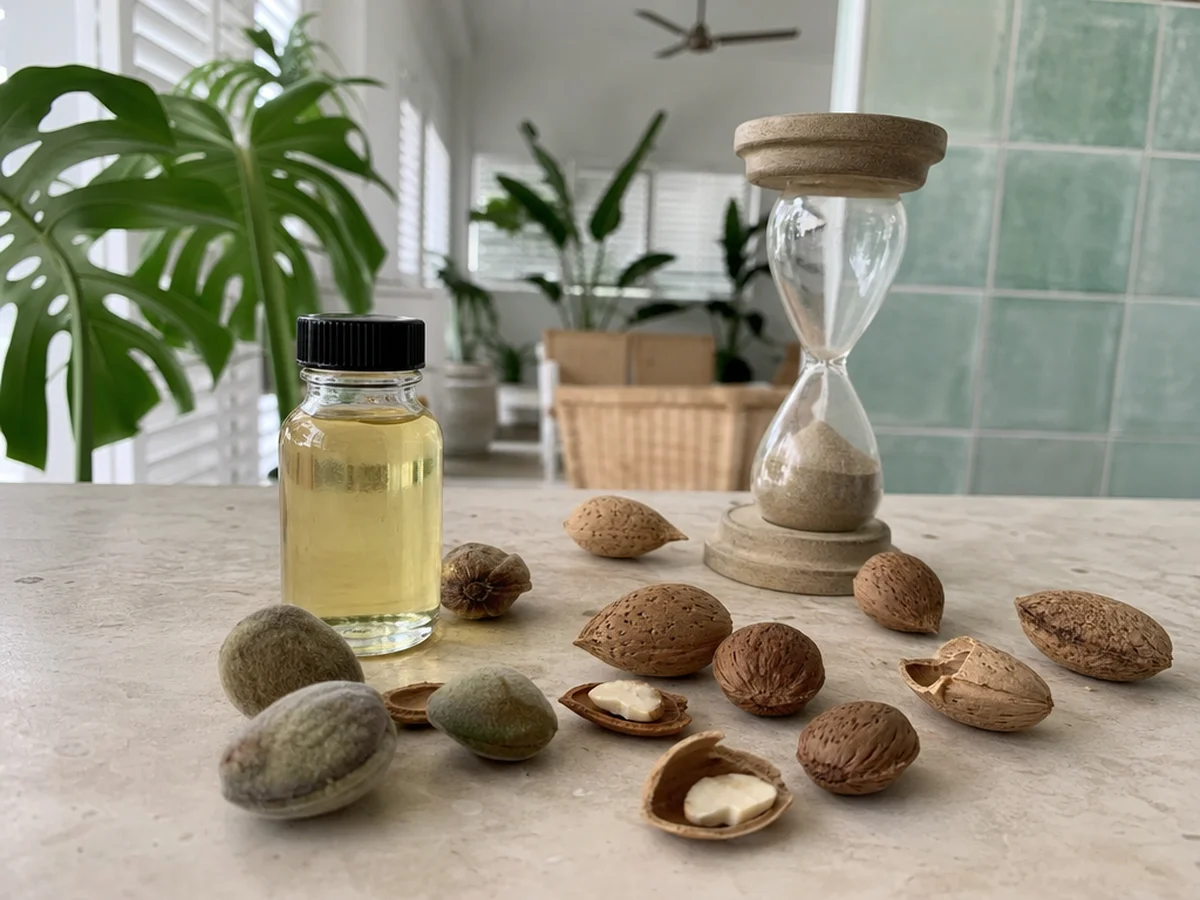
Our oil is cold-pressed and unrefined, so trace almond protein is present, and anyone with a tree nut allergy should not use it. A scrub covers a lot more skin than a dab of oil, and the AAAAI notes that unrefined, cold-pressed nut oils retain protein that refined ones usually lack. Read almond oil and nut allergies first and patch test following our patch test guide.
For rough heels, a soak works better than a scrub, and the foot soak post covers it. If you would rather skip the sugar and keep the oil, our body lotion post is the next step. Either way, a handful of ingredients and a clean jar go a long way.
Two ingredients, a clean jar and a dry spoon: that really is the whole recipe, and it is the easiest way to learn what you like.

Sweet Almond Oil
Sweet Almond Oil from our own shop, in sizes from 0.5 oz to bulk.
From $9.99
Shop Now →Sources & Further Reading
- American Academy of Dermatology. How to safely exfoliate at home. aad.org
- FDA. Microbiological Safety and Cosmetics. fda.gov
- FDA. Small Businesses & Homemade Cosmetics: Fact Sheet. fda.gov
- AAAAI. Food allergy: nut oils in topical products. aaaai.org
- American Academy of Dermatology. How to test skin care products. aad.org