Is Almond Oil Better Than Mineral Oil for Skin?
Mineral oil gets a bad reputation online, and sweet almond oil gets a good one, so it is easy to assume that switching is a clear upgrade. The truth is more nuanced and more interesting. We sell sweet almond oil and we like it, but we would rather help you decide with the facts than push a swap that does not need to happen.
What mineral oil actually is
A 2019 review in the Journal of the European Academy of Dermatology and Venereology describes cosmetic mineral oils as mixtures of mainly saturated hydrocarbons, and explains that European rules allow them in cosmetics only when they meet purity specifications. Its authors judged refined mineral oils low-risk for topical use, partly because they do not penetrate the skin. A separate 2017 review of dermal penetration data reached a similar conclusion: no evidence that mineral oils and waxes used in cosmetics are absorbed through the skin into the body.
Both are reviews of existing data, and they apply to cosmetic-grade, refined mineral oil that meets those specifications. Within that, they are reassuring. Mineral oil is not a toxic ingredient to escape, and a good reason to choose almond oil is not that mineral oil is dangerous.
So why would anyone choose almond oil?
There are honest reasons, and they are mostly about what you like.
- It comes from a plant. Almond oil is pressed from kernels, while mineral oil is a refined mixture of hydrocarbons. Some people simply prefer a plant-based ingredient, and that is a perfectly good preference. It is a matter of taste, not a performance finding.
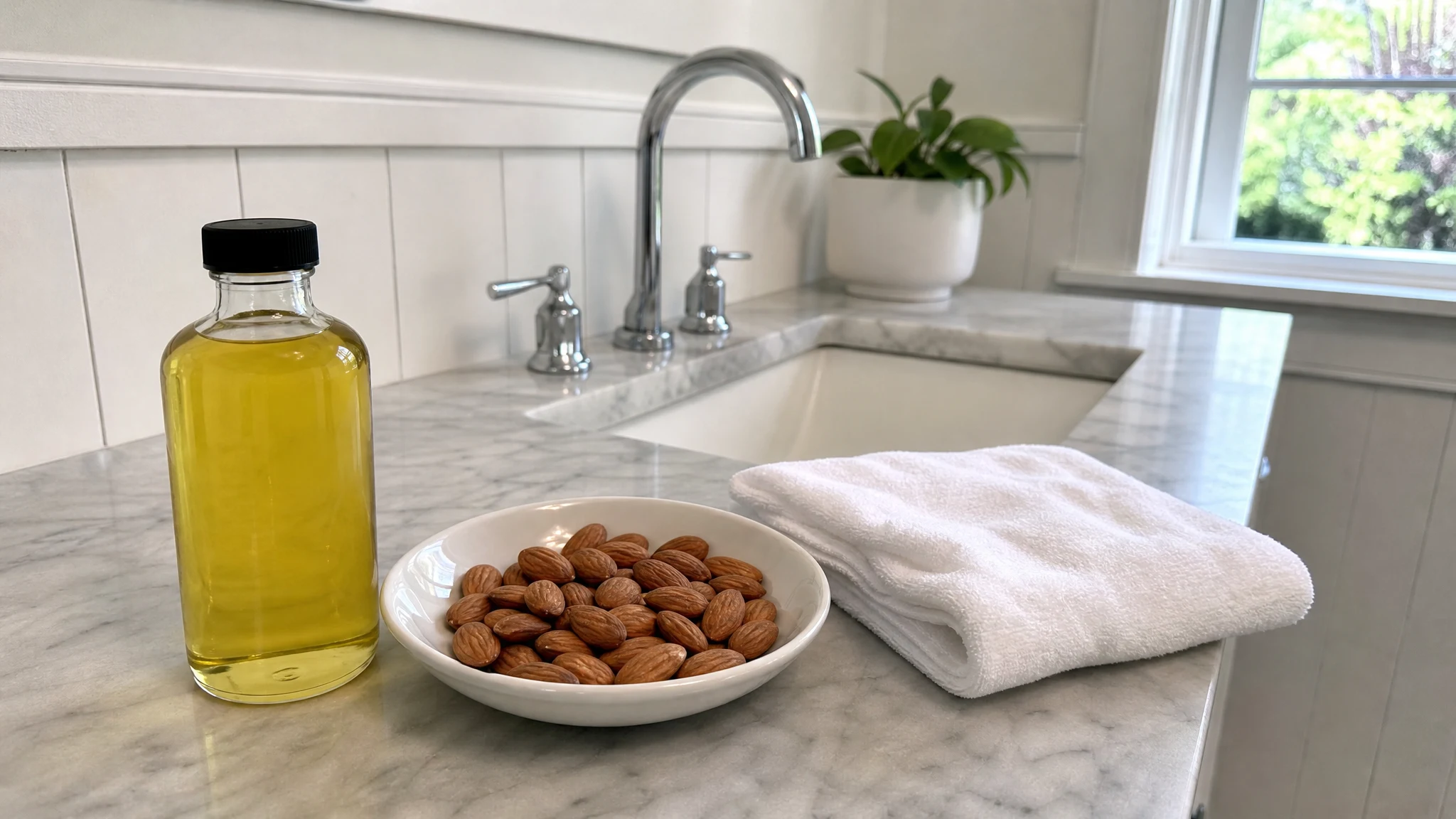
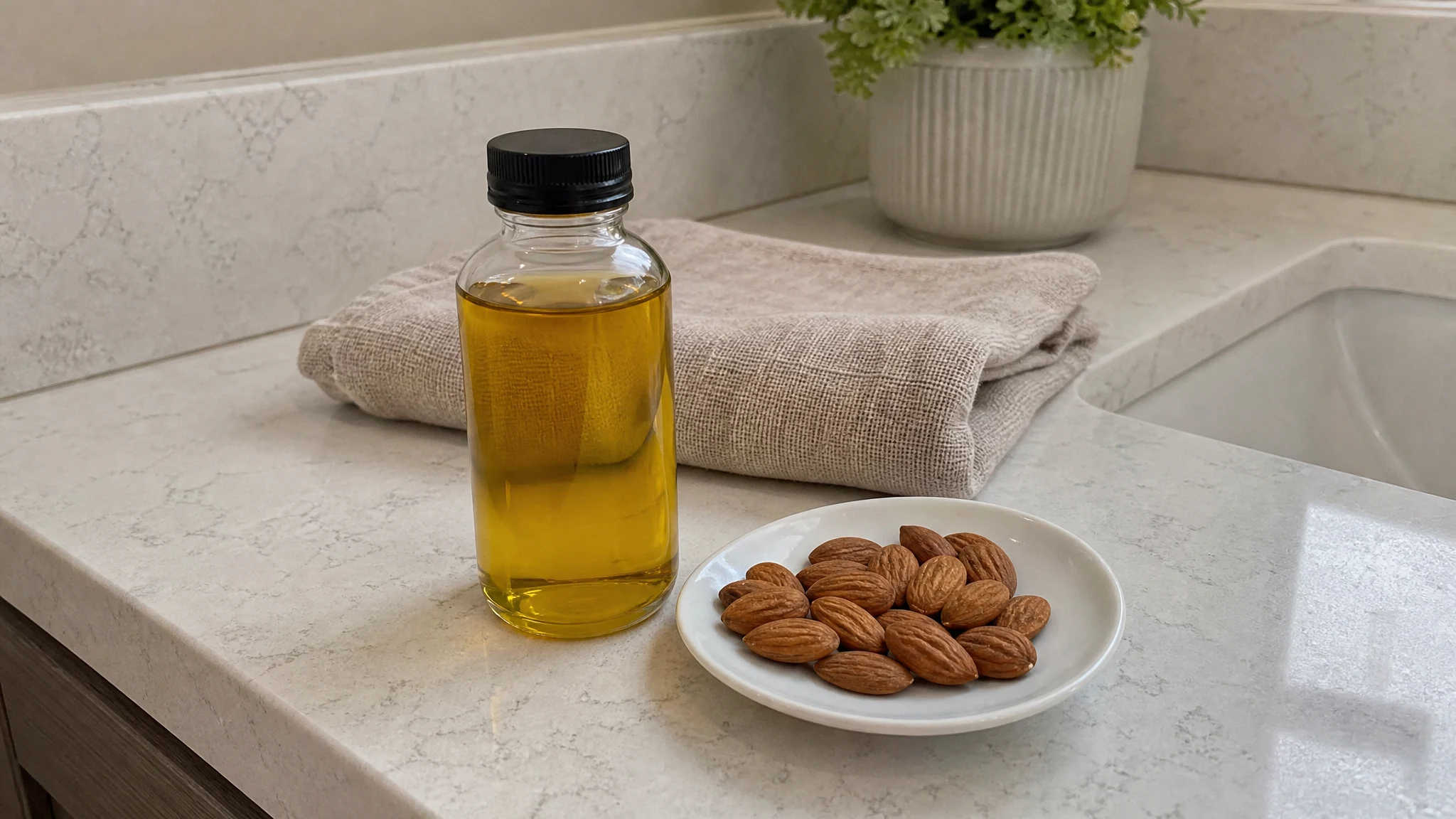
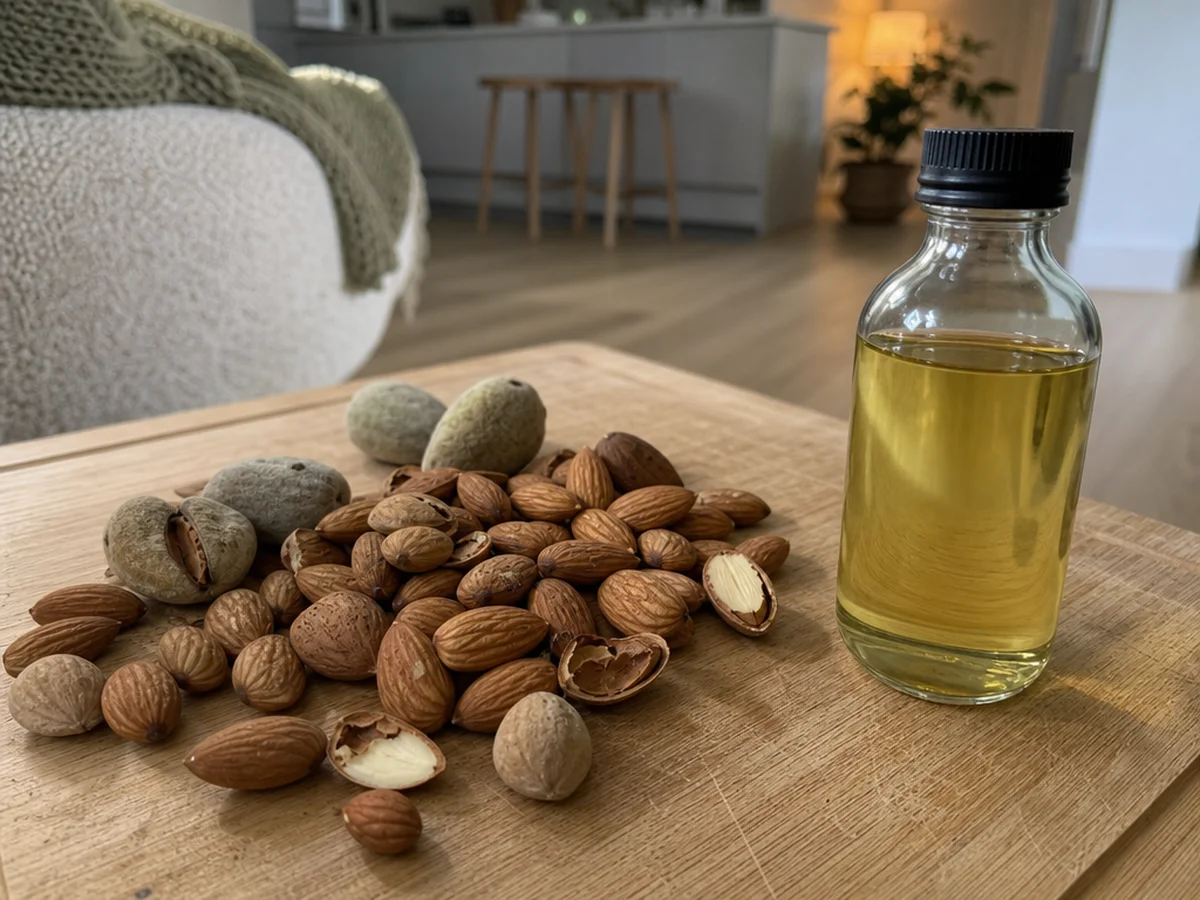
- How it is made. We press whole California kernels below 40 degrees C (104 F), with no bleaching, deodorizing, winterizing or solvent, and nothing is added. The oil is faintly golden and has a soft, subtly nutty, lightly sweet aroma. If you enjoy a product with character, that is part of the appeal. Our post on refined versus unrefined almond oil explains what that means in a bottle.
- It is a good blending partner. Almond oil carries essential oils without masking them, which is why it is a favorite for massage and for homemade blends. Our carrier oil guide covers that.
The one clear difference: nuts
This is where the two oils genuinely part ways. Almond is a tree nut. Food Allergy Research & Education lists almond oil among tree nut products and notes that tree nut oils are often less refined and sometimes used in lotions, hair care products and soaps. Our oil is cold-pressed and unrefined, so trace almond protein is present, and anyone with a tree nut allergy should not use it. Mineral oil has no such issue. If you or someone in your home has a tree nut allergy, that fact settles the question on its own. Our nut allergy guide goes into detail.
What you will notice in your hands
The two oils do not feel quite alike, and feel is a perfectly fair reason to choose. Put a drop of each on the back of separate hands, after a patch test if either is new to you. Watch how each one spreads, how it glides and how it finishes. Our almond oil glides softly and absorbs quickly with a non-greasy finish, and it has a faint nutty, lightly sweet scent. Notice what, if anything, you can smell on the other one.
Freshness is a plant oil thing
Plant oils are made of unsaturated fats, which means they can eventually go rancid, while a saturated hydrocarbon oil does not behave that way. That is reasoning from chemistry rather than a measured comparison, but it explains why a plant oil comes with a date. We label ours with the pressing date, bottling date and lot number in amber glass, and about a year from pressing, stored cool and dark, is what we plan on. Our post on storing almond oil has practical tips.
Skin conditions are a different conversation
If your interest in switching comes from a skin condition such as eczema, a dermatologist is the person to guide the choice of emollient. A product comparison cannot do that job, and comparisons between oils for conditions are best left to people who can examine your skin. For everyday dry skin, hands and general care, either oil can be a pleasant, simple moisturizer, and the choice comes down to whether you want a plant oil and whether nuts are a concern. If you are weighing plant oils against each other, our comparison of almond and coconut oil may help.
Switching without drama
If you use mineral oil now and it works for you, you do not have to change anything. If you are curious, change one thing at a time: swap the oil, keep the rest of your routine, and give it a couple of weeks. Keep the old bottle until you are sure. And if you share a home, make sure nobody has a tree nut allergy before almond oil comes through the door.
We would rather you use the oil you enjoy than feel pushed into ours. Our job is simply to tell you plainly what ours is, and you can take it from there at whatever pace suits you.
The best oil is the one that suits your skin, your household and your tastes. A small test first, and then a routine you actually enjoy.
Sweet Almond Oil
Sweet Almond Oil from our own shop, in sizes from 0.5 oz to bulk.
From $9.99
Shop Now →Sources & Further Reading
- Chuberre B et al., Mineral oils and waxes in cosmetics: an overview mainly based on the current European regulations and the safety profile of these compounds (J Eur Acad Dermatol Venereol, 2019)
- Petry T et al., Review of data on the dermal penetration of mineral oils and waxes used in cosmetic applications (Toxicol Lett, 2017)
- Food Allergy Research & Education, Tree Nut Allergy