Almond Oil and Psoriatic Arthritis: Skin Care Basics
Almond oil is a skin product, and psoriatic arthritis is a joint condition, so the two do not meet at the part that hurts. Where they can meet is the dry, scaly skin and brittle nails that often travel with it. We sell a cosmetic sweet almond oil for external use and make no medical claims for it, so this article stays on the skin side of that line and reports what the authorities say.
What psoriatic arthritis is
The National Institute of Arthritis and Musculoskeletal and Skin Diseases describes psoriatic arthritis as a progressive inflammatory condition of the joints and the places where tendons and ligaments attach to bone. It happens when the immune system, for reasons not fully understood, becomes overactive. Symptoms include joint pain, swelling and stiffness, painful sausage-like swelling of a whole finger or toe, and nail changes such as pitting, crumbling or separation from the nail bed. NIAMS advises seeing a doctor soon if joint symptoms appear, because early treatment is associated with better outcomes and less damage.
Its treatment page names the team: rheumatologists for the joints, dermatologists for skin, hair and nails, and occupational and physical therapists for protecting joints and function. That team is the right place to take any question about managing the condition. A cosmetic oil is not part of that plan, and we would not suggest otherwise.
What the skin side looks like
Dry skin is common with psoriasis, and the National Psoriasis Foundation's over-the-counter guidance is clear about how it prefers to handle it. Dermatologists recommend heavy creams and ointments that lock water into the skin, applied right after showering and after washing hands, and fragrance-free products are the ones to choose. The page also says that cooking oils and shortening can be economical substitutes for commercial moisturizers and that adding oil to a bath has been effective for some people. So oils are part of the conversation, in a supporting role to the thicker products.
Reasoning from that, a plain sweet almond oil can play the role of a fragrance-free oil after the bath for someone who enjoys it. It is cold-pressed, sold unrefined with nothing added, and it has a soft, subtly nutty scent and a quick-absorbing feel. Those are sensory qualities. For thick, scaly areas the guidance points toward heavier products, and if skin cracks or bleeds or a patch spreads, that is a message to the dermatologist.
Nails
The American Academy of Dermatology offers seven nail-care tips for people with nail psoriasis. They include keeping nails short, wearing vinyl or nitrile gloves for wet work, moisturizing hands with a thick cream or ointment after each hand wash and within three minutes of bathing, leaving cuticles alone, and skipping artificial nails. A moisturizer is part of the routine, and the AAD names a thick cream or ointment as the form that works best. Our nails and cuticles article covers general nail care.
Warm oil on a sore joint
Many people ask about warm oil massage on stiff joints. We have nothing from the sources above that addresses it, and we would not want to guess. NIAMS lists physical and occupational therapists for joint protection, so whether pressure on a swollen joint is comfortable and appropriate is a question for your rheumatologist or physical therapist. If they are happy with massage, almond oil is simply a lubricant for the hands.
Making a routine easy on stiff hands
If your fingers are stiff or sore, a screw cap can be the hardest part of the routine. Loosen the cap before you need it, or move a little oil into a clean, dry container with a wide mouth that is simple to open. Use a dab, not a rub, on tender skin. You will notice a light, quick-absorbing feel rather than a heavy coat.
A short notebook helps too. Write down what you use, when, and how your skin looked afterward, and bring it to your dermatologist. That is far more useful to them than a vague memory.
Practical cautions
- Tree nut allergy. Almond is a tree nut. Our oil is unrefined, so trace almond protein is present, and anyone with a tree nut allergy should not use it. See our nut allergy article.
- Prescribed topicals. If you use one, ask your dermatologist or pharmacist whether and when to put a moisturizer over it.
- Fragrance. The NPF recommends fragrance-free products, and blending in essential oils makes a fragranced one. Our blending guide covers the limits.
- Patch test. Our guidance is to test a small area and wait a day. For skin that is already inflamed, the AAD's longer method is gentler to start with, and our patch test guide covers both.
- Eyes. Keep the oil away from them. NIAMS notes that eye pain, redness or blurry vision in psoriatic arthritis calls for prompt attention.
Small touches that keep it pleasant
Pick a quiet moment, such as right after you dry your hands, and let the oil be a few calm minutes for yourself. Wipe the bottle clean after pouring so the cap does not stick, and keep it somewhere cool and dark. Skin routines work best when they ask very little of you, and a single plain oil asks very little.
An almond oil moisturizer can be a pleasant, simple part of a skin routine, and the plan for the condition itself belongs to your care team.
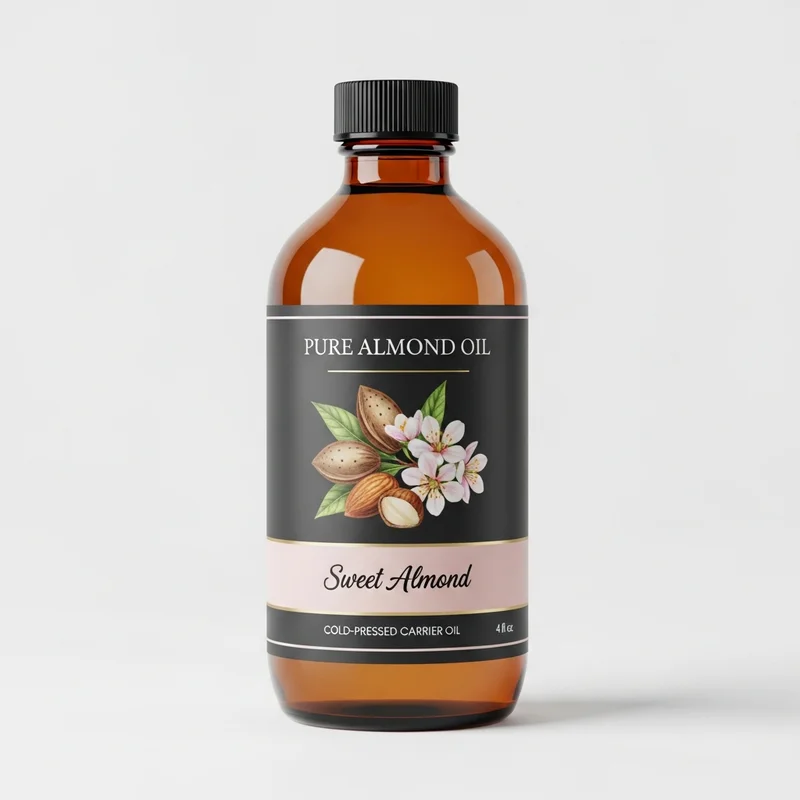
Sweet Almond Oil
Sweet Almond Oil from our own shop, in sizes from 0.5 oz to bulk.
From $9.99
Shop Now →