Almond Oil for Nails and Cuticles: Nightly Routine
Hands do a lot of work, and nails and cuticles take the brunt of it: dishwater, soap, sanitizer, polish remover, a day of typing and lifting. A little oil at night is a lovely way to give them something back. It works best, though, as the second half of a routine whose first half happens in the daytime.
Start with the water
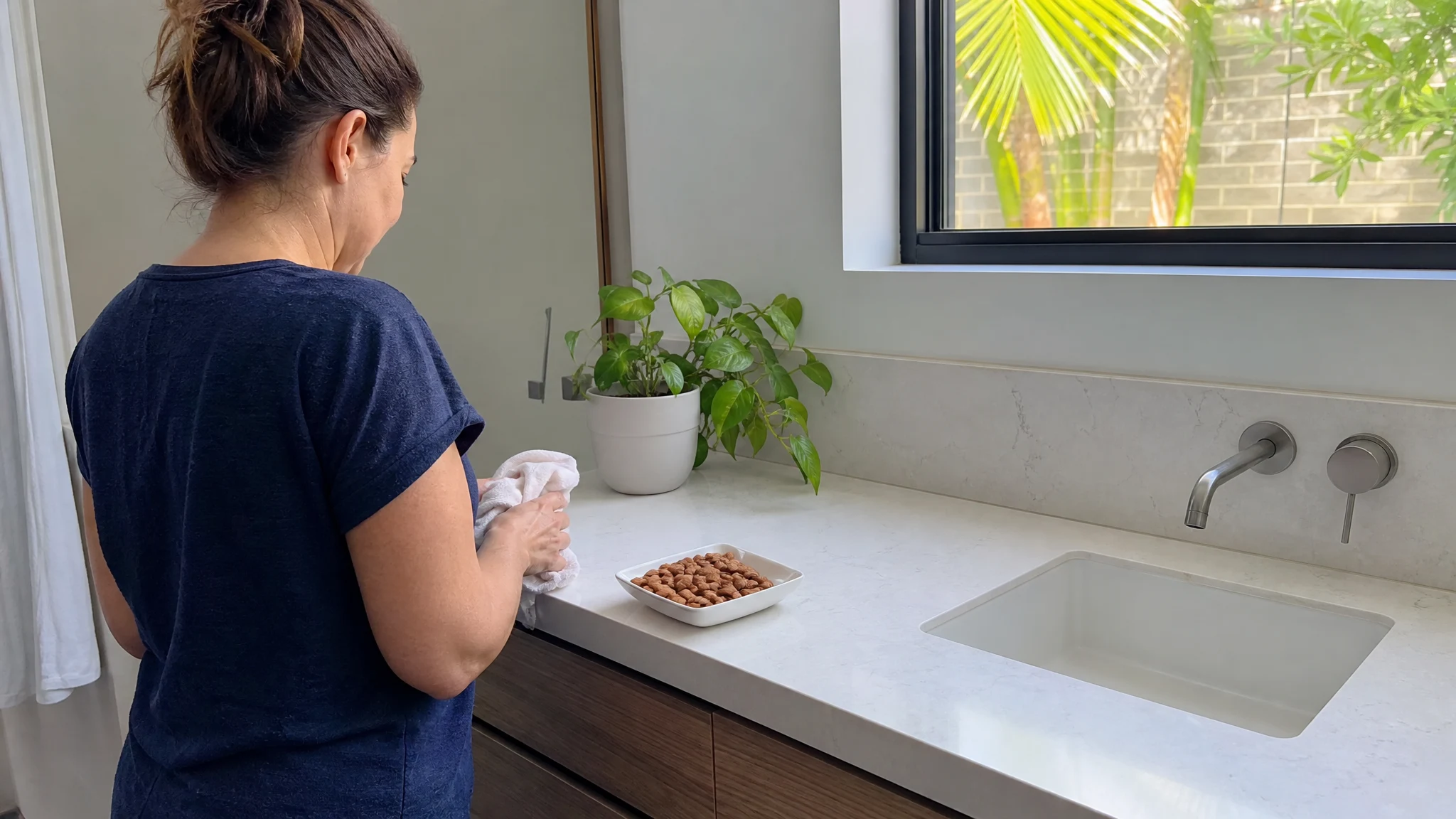
The American Academy of Dermatology is direct about this. Its advice for brittle nails begins with stopping whatever is causing them, and the two causes it names first are long stretches with wet hands and harsh chemicals handled without gloves. A review of nail fragility in Dermatology and Therapy adds frequent hand washing, solvents, nail polish and polish remover to the list, and notes that fragile nails affect up to 20% of the population, women over 50 most often. Its practical suggestion is easy to adopt: cotton gloves under vinyl gloves for wet work, and heavy cotton gloves for dry work.
That is a useful way to think about any nail oil: if the day starts with a sink full of dishes, an evening routine can only do so much. It is also why the AAD suggests moisturizing after hand washing, not just at bedtime.
The bedtime routine
For the moisture half, the AAD describes a simple pattern: once the cause is under control, rehydrate the nails, cuticles and hands with a moisturizer, usually at bedtime, and slip on a light cotton glove so the skin and nails take it up while you sleep. Its examples are a urea cream or mineral oil. A plant oil fills the same slot, and that is where our sweet almond oil comes in as a matter of texture and preference.
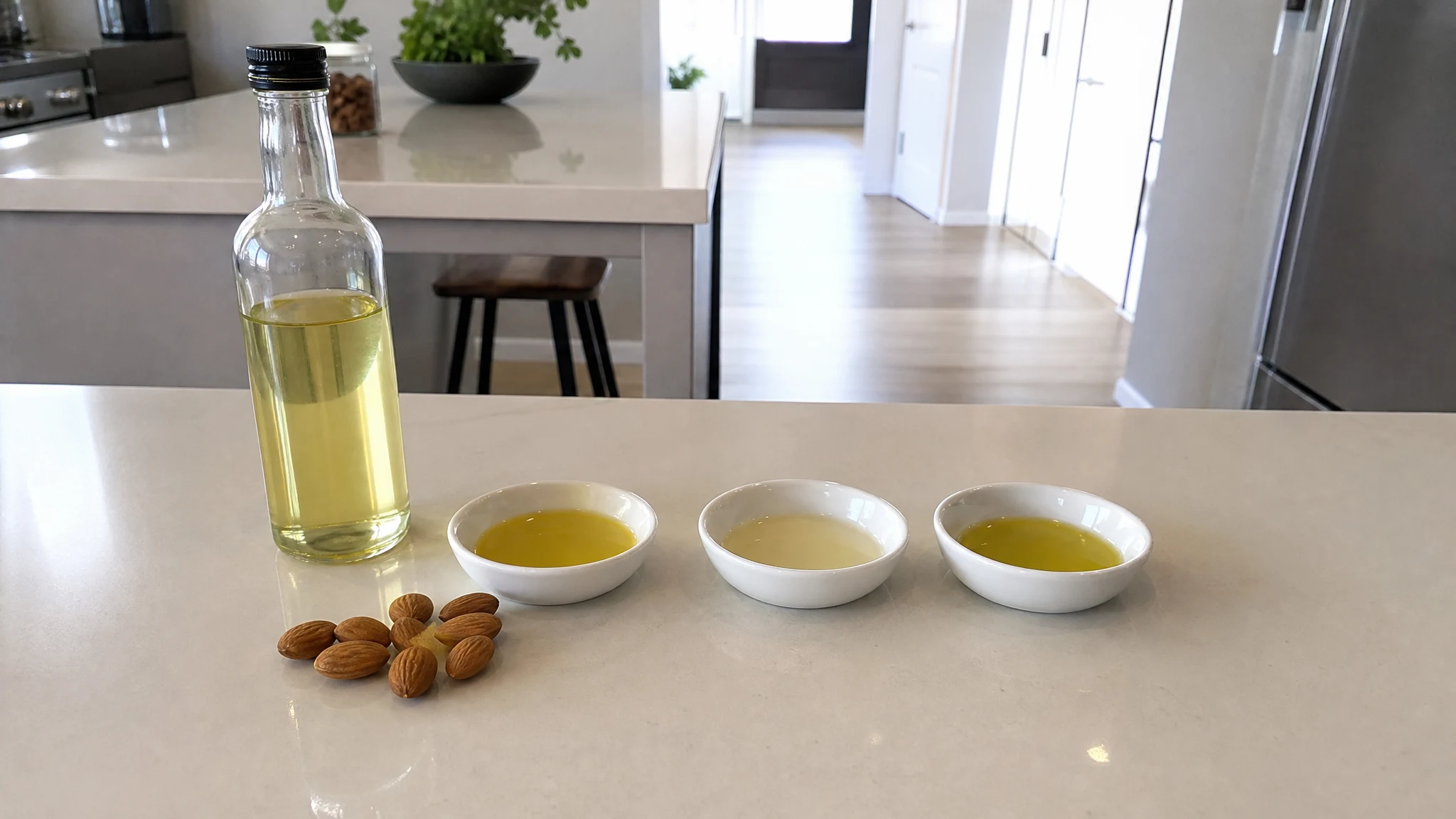
It is cold-pressed and unrefined, with nothing added, and it absorbs quickly with a non-greasy finish, so it does not leave a slick film on your fingertips or your phone. The aroma is soft, subtly nutty and lightly sweet. Our suggestion, which is a way of applying the AAD pattern rather than a tested protocol, is to warm a few drops between your palms, work them into each nail, the cuticle skin and the folds around it, then rub the rest into the backs of your hands. Pull the gloves on only once the oil has mostly absorbed, so your sheets stay clean. Thicker petrolatum ointments, available at any pharmacy, are the heavier option if your hands need one.
What to expect is comfort: softer-feeling cuticle skin and hands that are less tight and papery by morning. We do not claim that an oil makes nails grow faster or stronger, and the sources do not either; moisture is care, and that is plenty.
Make it part of the evening
The best routines ride on habits you already have. Keep the bottle next to your toothbrush or on the nightstand, and do it at the same point each night, so it needs no willpower. Pour a few drops into your palm instead of dipping fingers into the bottle, which keeps the oil clean for next time.
Give it a minute before you pick up your phone or a book, and you will notice that the oil settles in with a light, silky finish rather than sitting on top. Keep a pair of cotton gloves by the bed so they are there when you need them.
Leave the cuticle in place
One habit is worth changing. The AAD says not to remove the cuticle, because doing so can damage the nail, and its nail-care tips also say to avoid nail biting and using nails as tools. The cuticle and the skin folds around the nail form a seal at the base of the nail plate. Reasoning from that, softening dry, rough skin there with oil is a better manicure step than cutting. Our hand cream article goes further if you want a richer formulation, and the dry skin article covers the wider moisturizing routine.
When a dermatologist is the better call
Nail changes that are not simple dryness deserve a professional look. The nail review stresses that doctors rule out other causes before calling nails simply brittle, so if yours are pitted, crumbling, lifting from the nail bed, thickened or painful, or if they changed suddenly, book an appointment rather than reaching for another bottle. Supplements belong in that same conversation: ask your doctor or pharmacist, as we sell only an external cosmetic oil. If you live with a skin or joint condition, our psoriatic arthritis article sets out what an oil can and cannot be part of.
Allergy, testing and storage
Almond is a tree nut. Our oil is unrefined, so trace almond protein is present, and anyone with a tree nut allergy should not use it. Before first use, patch test a small area and wait a day; hands that are already cracked or sore deserve extra caution, so keep the oil off open skin and away from the eyes. Our patch test guide and nut allergy article go through the details. Stored cool and dark, the oil keeps for about a year from pressing; a bottle whose smell has changed should be retired.
So the plan is gloves by day, a few drops and a cotton glove by night, and a dermatologist on call for anything that looks wrong. It is a small ritual, and the kind that is easy to keep.

Sweet Almond Oil
Sweet Almond Oil from our own shop, in sizes from 0.5 oz to bulk.
From $9.99
Shop Now →Sources & Further Reading
- What can make my hands look younger?, American Academy of Dermatology
- 11 dermatologists' tips for healthy nails, American Academy of Dermatology
- Pathogenesis, Clinical Signs and Treatment Recommendations in Brittle Nails: A Review, Dermatology and Therapy, 2020