Almond Oil for Stretch Marks: What the Studies Found
Rubbing oil into a growing belly is one of those rituals people love, and it is natural to wonder whether it can stop stretch marks from appearing. The honest answer from the research is that nobody has shown that it can. What the studies do offer is a more modest and more interesting picture of what almond oil and a little massage might do for skin that feels tight and itchy.
What stretch marks are
The American Academy of Dermatology describes a stretch mark as a type of scar that forms when skin stretches or shrinks quickly, which ruptures the collagen and elastin that support it. Puberty growth spurts, pregnancy, rapid weight change and rapid muscle growth are the usual triggers, and family history and hormones play a part. Early marks are red, purple, pink or brown and can feel slightly raised and itchy. Over time they fade and sink a little below the surrounding skin. Because that rupture happens beneath the surface, an oil applied on top is best thought of as a moisturizing step, and any claim beyond that needs trial evidence.
The almond oil studies
Two trials give a feel for the research. In Turkey, a non-randomized study of first-time mothers compared bitter almond oil with massage, bitter almond oil alone and no treatment. Stretch marks appeared in 20% of the oil-and-massage group, 38.8% of the oil-only group and 41.2% of the controls. Only the massage group stood apart, which raises the possibility that the massage mattered as much as the oil. (That oil was bitter almond oil, a different material from the sweet almond oil we sell.)
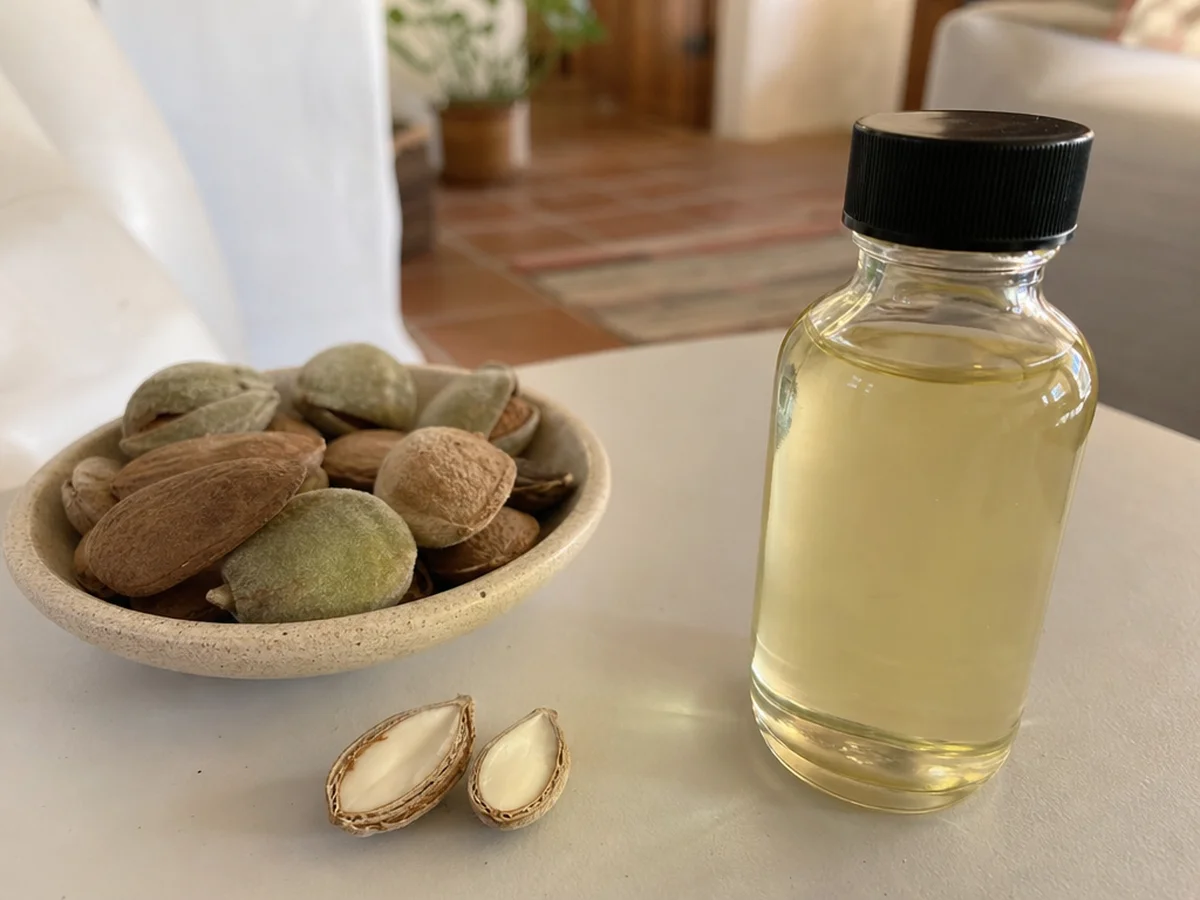
A double-blind trial of 160 first-time pregnant women compared aloe vera gel, sweet almond oil, a base cream and no treatment. Aloe vera and almond oil did better than the base cream and the control group on itching, redness and the spread of marks, while all three creams performed alike on the number and width of marks. The authors concluded that both reduce itching and slow the progression of marks. Read that closely: the benefit reported is about how skin feels and looks as it stretches, not about whether marks form.
How the wider evidence reads
A Cochrane review of topical products for preventing stretch marks in pregnancy pooled trials of 800 women and found no statistically significant difference overall; its authors concluded there is no high-quality evidence for any topical preparation and called for larger, better-designed trials. Its search ended in 2011, before the almond studies above, so it does not rule almond oil in or out. The AAD, for its part, says that in studies almond oil, cocoa butter, olive oil and vitamin E did not prevent stretch marks, and that creams generally work best on early marks. These sources are not in tension so much as measuring different things: a consistent signal on itching and comfort, and no reliable signal on prevention.
It is easy to feel pressure, when you are expecting or growing quickly, to do everything right. Skin changes during growth are common and personal, and a moisturizer you enjoy is not a test you can fail. If you love the ritual, keep it. If it starts to feel like a chore, you can let it go without guilt.
Where that leaves almond oil
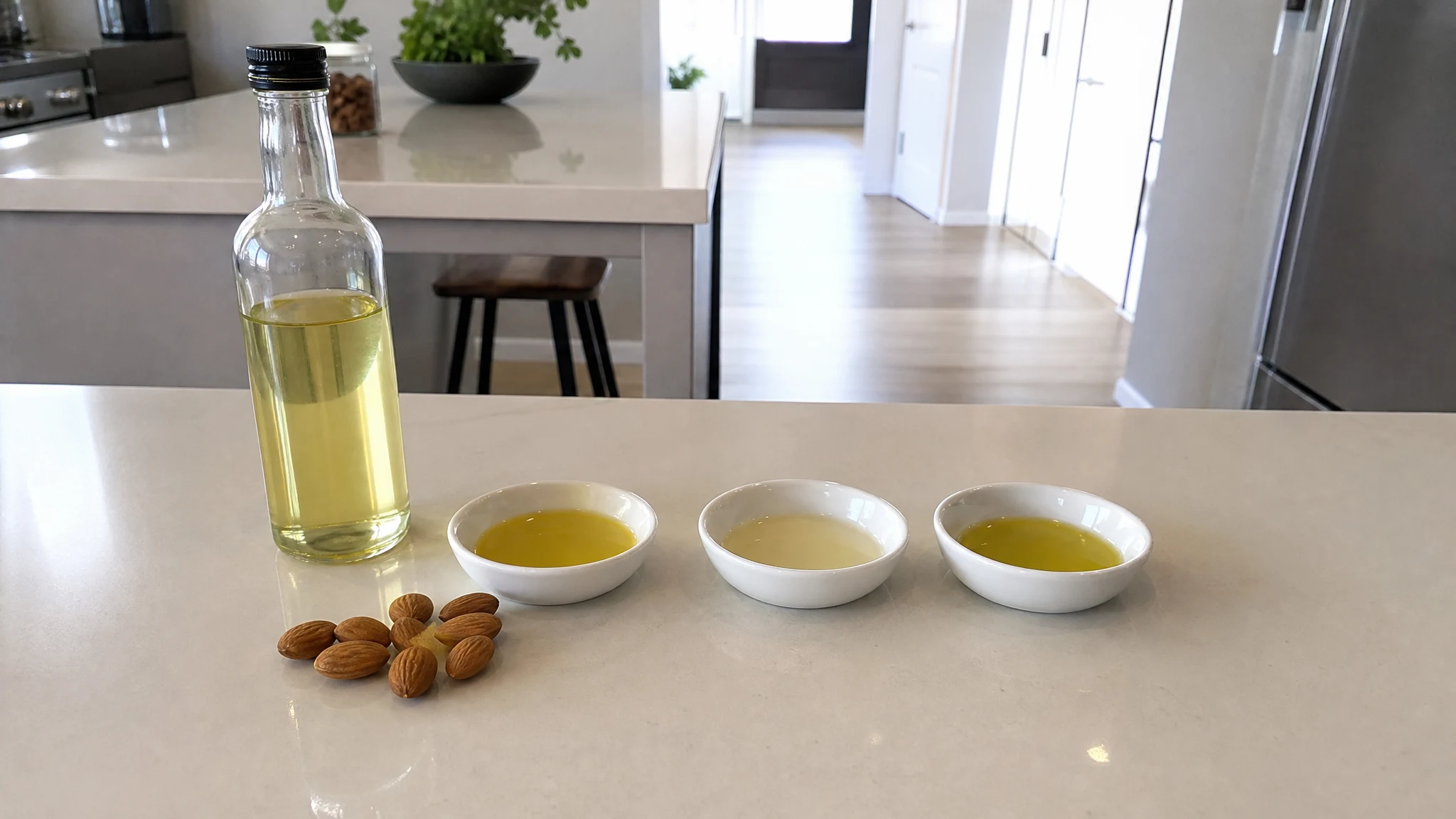
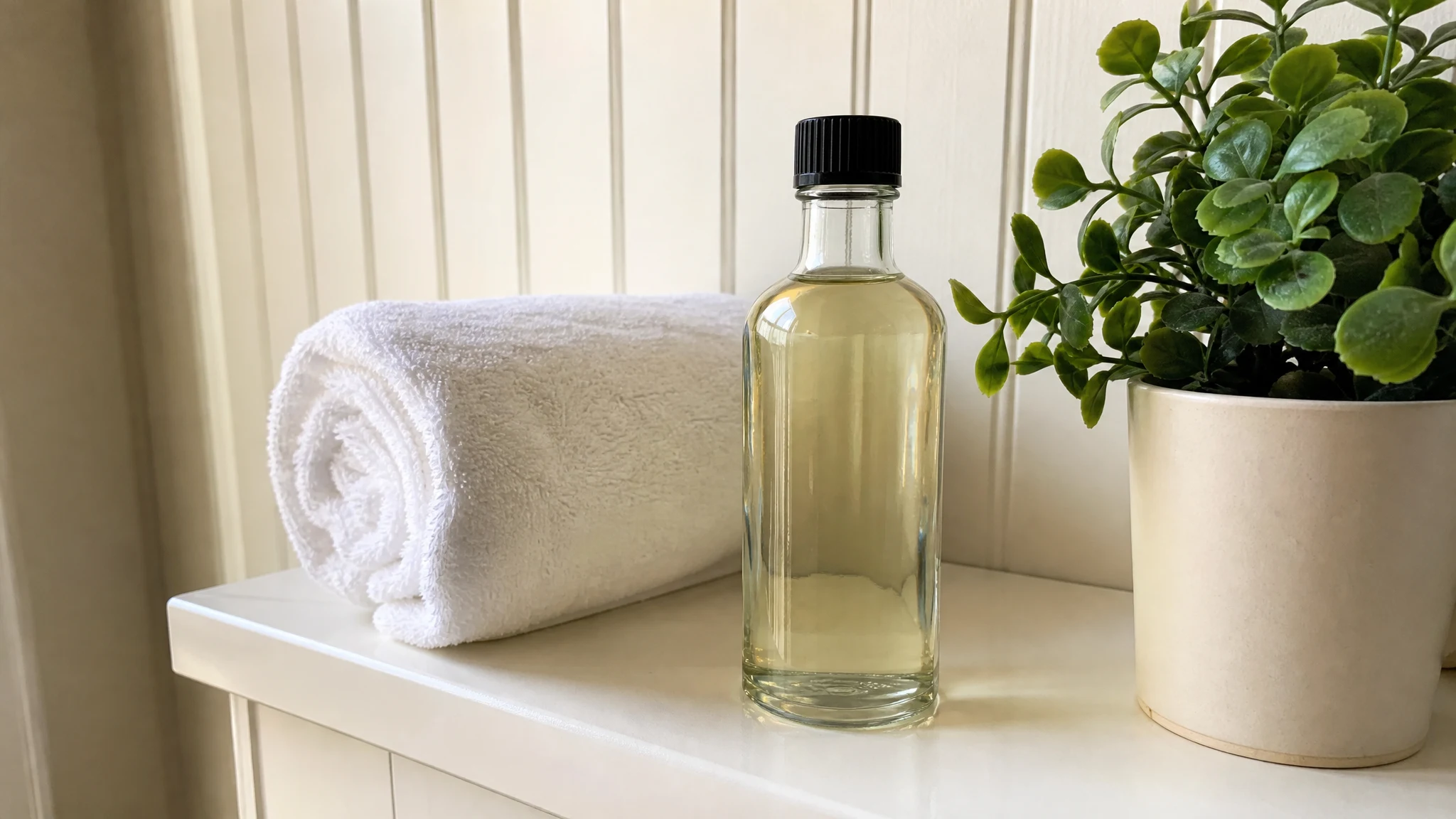
We make a cold-pressed, unrefined sweet almond oil for external cosmetic use, and we do not sell it as a stretch mark product or claim that it prevents, fades or lightens anything. As a pleasant, quick-absorbing oil for a daily skin ritual, it is a different story, and massage is part of what makes the ritual feel good. If you choose to use it, three simple points apply.
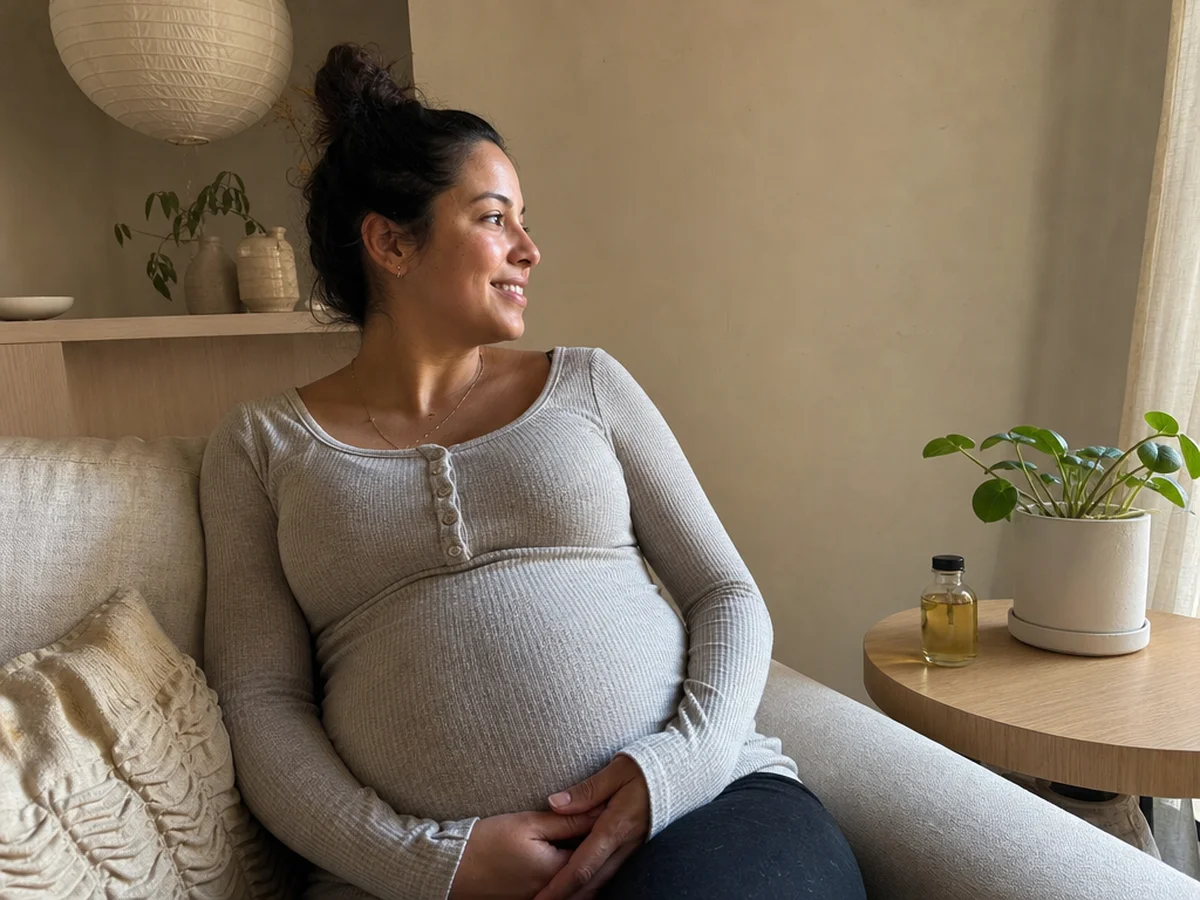
- Tree nut allergy. Our oil is unrefined, so trace almond protein is present; anyone with a tree nut allergy should not use it. See our nut allergy article.
- Patch test first. Try a small area and wait a day. Skin that is stretched and itchy deserves a patient start; our patch test guide shows how.
- Tell your prenatal provider. Whether to use anything on the skin during pregnancy is a question for your OB/GYN or midwife. Our pregnancy article reports what the authorities say, and the perineal massage article covers a separate use.
Making the ritual a pleasant one
If you like the idea of a few quiet minutes with a bottle of oil, make them good ones. Warm a few drops between your palms first so the oil meets your skin gently, and use slow, soft strokes rather than hard rubbing. Our oil absorbs quickly with a non-greasy finish, which keeps the routine short. Take a moment to notice the soft, lightly sweet, nutty scent; it is a small pleasure, and part of the reason a daily habit like this is easy to keep.
Store the bottle in a cool, dark cupboard instead of a warm bathroom shelf, and use a little at a time. A minute or two is plenty.
If you already have marks
The AAD notes that hyaluronic acid and prescription tretinoin have made early marks less noticeable in studies, and cautions that some ingredients, retinol among them, should be checked with your doctor if you are pregnant or breastfeeding. It also says in-office procedures have proven more effective than creams, lotions and gels, though none removes marks entirely, and suggests a board-certified dermatologist if over-the-counter products have not worked. That is the route with the evidence behind it. For ordinary body care with almond oil, our body care article covers where it fits.
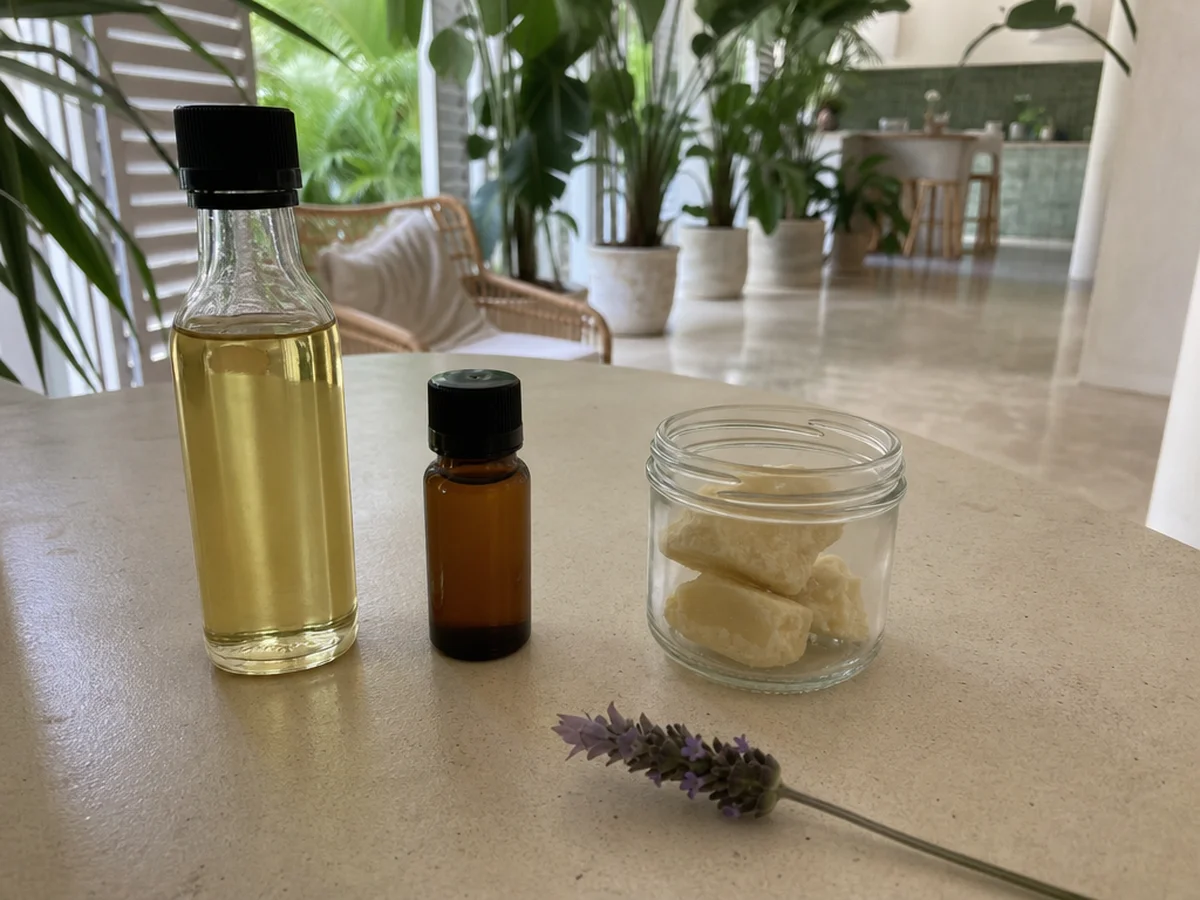
In the end, a few drops of almond oil and a gentle massage are a kind thing to do for your skin, and that is reason enough to enjoy them.

Sweet Almond Oil
Sweet Almond Oil from our own shop, in sizes from 0.5 oz to bulk.
From $9.99
Shop Now →Sources & Further Reading
- Stretch marks: Why they appear and how to get rid of them, American Academy of Dermatology
- Topical preparations for preventing stretch marks in pregnancy, Cochrane
- The effect of bitter almond oil and massaging on striae gravidarum in primiparaous women, Journal of Clinical Nursing, 2012
- The effect of Aloe vera gel and sweet almond oil on striae gravidarum in nulliparous women, Journal of Maternal-Fetal and Neonatal Medicine, 2018