How to Infuse Almond Oil With Herbs, Safely
An herbal oil looks like the simplest craft in the cupboard: leaves, a jar, a glug of oil and a sunny windowsill. The one thing worth knowing before you start is that herbs carry a little water, and water is what turns a jar of oil into a place where microbes might grow. Handle that, and a small batch of infused almond oil is a lovely thing to make.
What food-safety agencies say
Both agencies we checked speak about food, but their advice is the best guide we have to herbs sitting in oil. The US Centers for Disease Control and Prevention says to refrigerate homemade oils made with garlic or herbs and to throw away any unused oil after 4 days. Health Canada says to keep vegetables and herbs stored in oil in the refrigerator at 4 C (40 F) or below and to use the oil within a week. When two sources differ, we follow the shorter one, so we use four days.
Neither page is about skin products, and we do not claim the four-day rule is a safety standard for skin products. The FDA's cosmetic microbiology page names contaminated raw materials and water, weak preservation, warm or damp storage and dipped fingers as routes to contamination. A jar of plant matter kept in a warm cupboard and opened with fingers touches several of those. The sensible reading is that cold storage and a short window are the fix, and that anything meant to last longer is a job for a cosmetic chemist.
Set everything out first
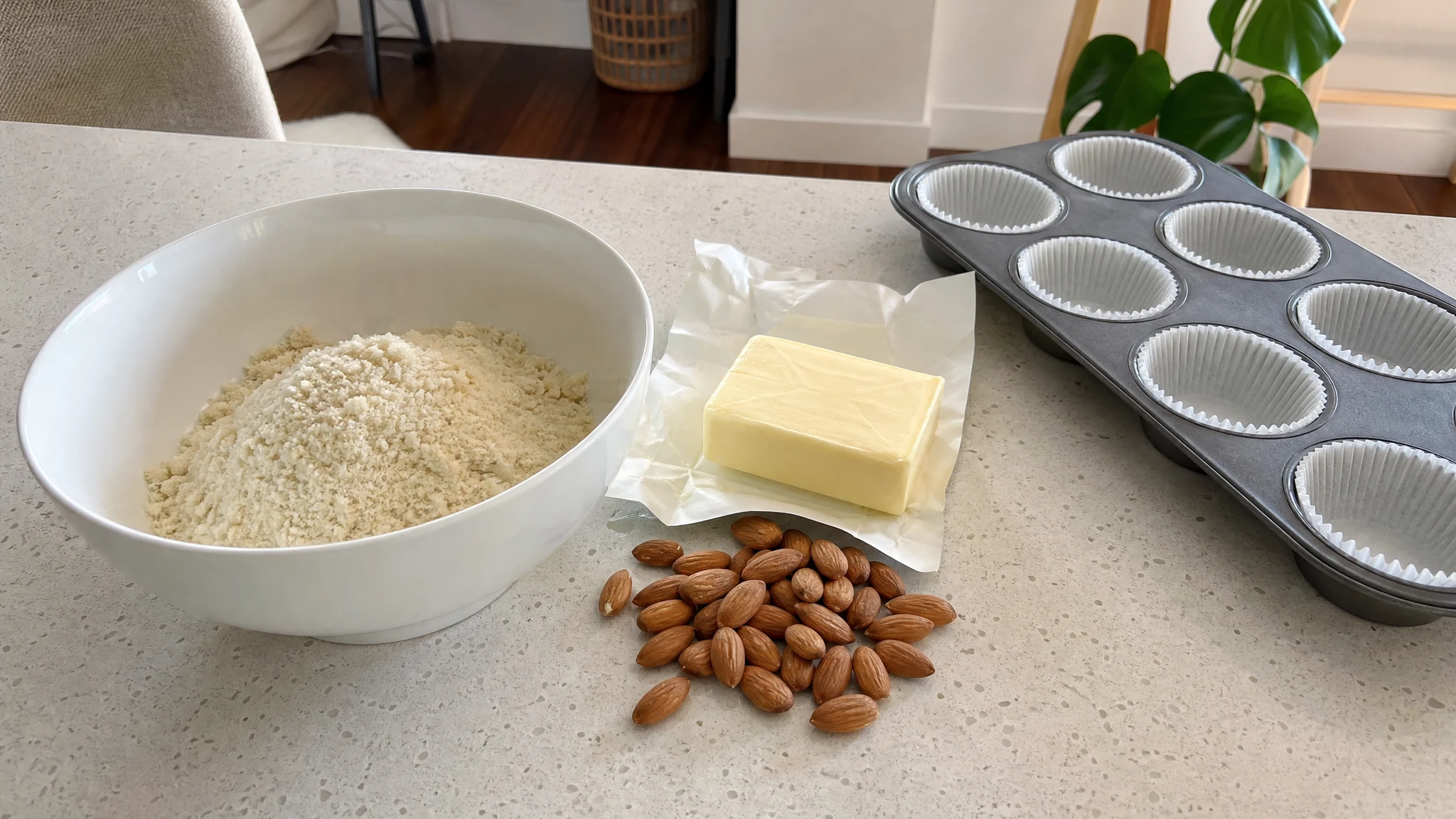
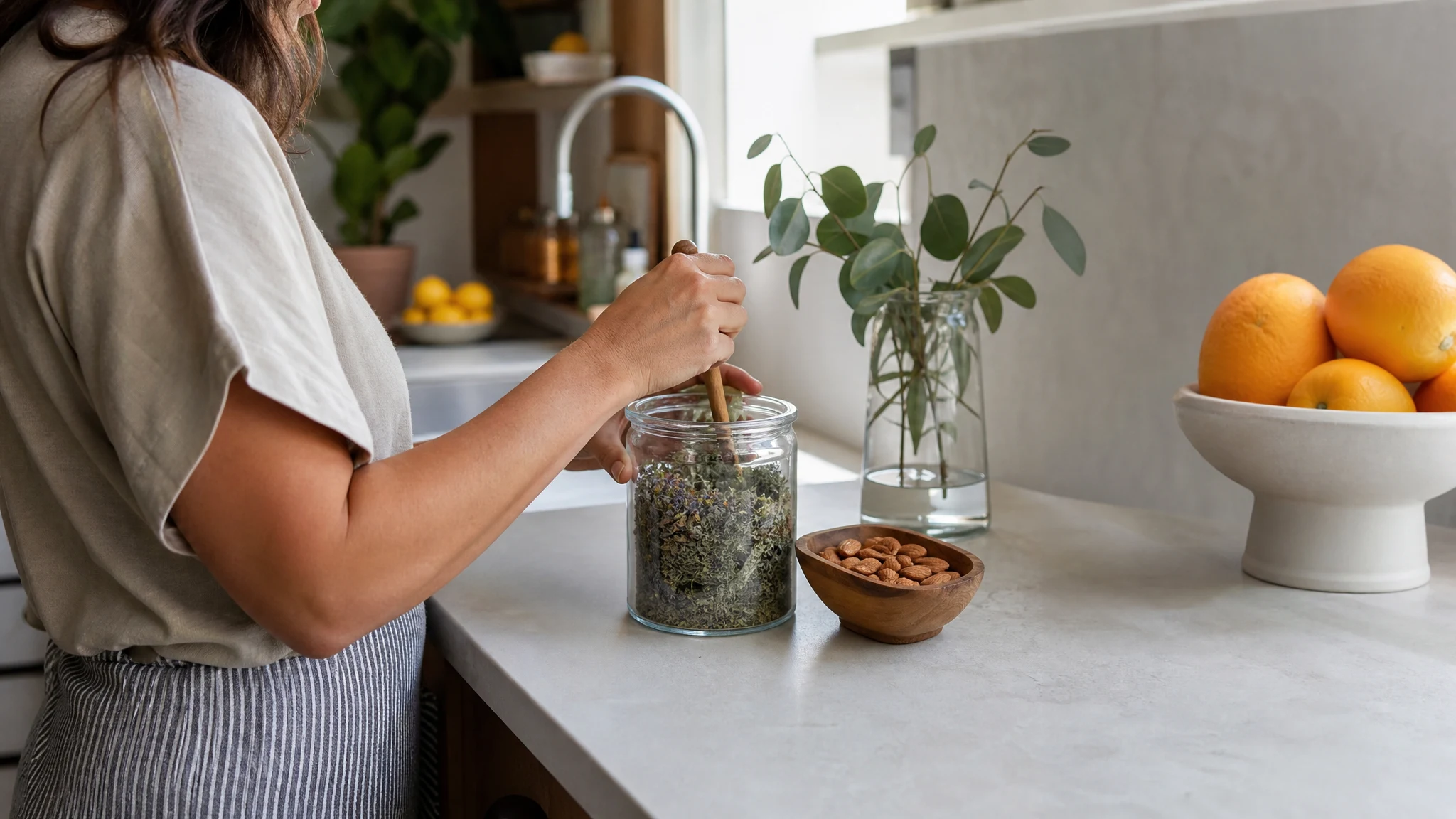
Small-batch crafting is far calmer when nothing has to be hunted for halfway through. Lay out a scale, a clean dry jar, a fine cloth, a pan, a label and a pen. Wash the jar well and let it dry completely, because a drop of water left in the bottom is exactly what you are trying to keep out. Write the discard date on the label the moment you make the batch, not the made date alone, so there is no guessing on day three.
A careful method
This is a method worked out from the guidance above, with every number a starting point to adjust.
- Use dried herbs. Check that they are crisp. Fresh leaves and petals hold the most water.
- Choose a ratio. One part herb to ten parts oil by weight is an easy start: 10 g herb with 100 g almond oil. At the density of the batch on our Certificate of Analysis (0.918 at 20 C), 100 g is about 109 ml. The herb will soak up some oil, so you will recover a little less.
- Submerge. Lightly crush the herb, put it in a clean, dry glass jar and cover it completely. Anything above the surface is exposed to air.
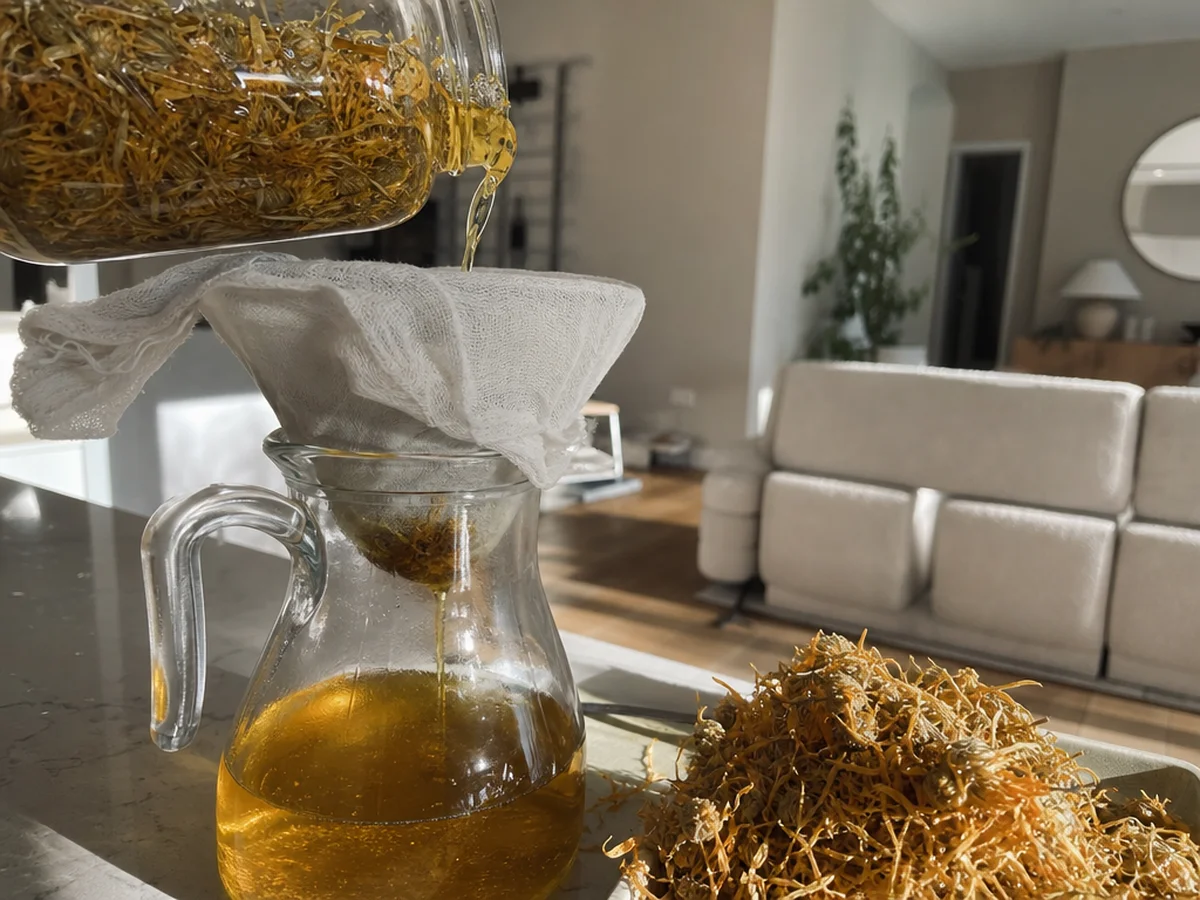
- Warm gently. Stand the sealed jar in a pan of hot, not boiling, water for a couple of hours, topping up the water as needed.
- Strain well through a fine cloth. Tiny plant particles hold water, so you want them out.
- Chill and date. Label it, keep it in the refrigerator and use it within four days.
We skip the weeks-long room-temperature steep that many recipes describe, because that is exactly the situation the agencies caution about. If four days is too short, make 10 g and 100 g only when you need them, or look for a finished product from a maker who handles preservation and testing.
Choosing herbs thoughtfully
Not every herb suits every skin. St. John's wort is a classic example. The National Center for Complementary and Integrative Health notes that it is promoted for wounds and other skin conditions without clear evidence that it helps, and that taken in large doses or applied to the skin it might cause severe skin reactions after sun exposure. The oil's gorgeous red color is no measure of what is inside it, and a pharmacist is a good person to ask before using it at all.
Plants in the daisy family, such as calendula and chamomile, can bother people who react to related plants, so anyone with known plant allergies should be cautious. For a first try, choose an herb you already know your skin tolerates, and patch test the finished oil on a small area first; our patch testing guide shows how.
What an infusion really is
A kitchen infusion is a lightly scented, lightly colored oil, and its strength cannot be measured. We would enjoy it for what it is: a pleasant, aromatic oil for massage or dry skin. It is not a targeted treatment for anything. A rash, a wound or a persistent patch of irritated skin belongs with a dermatologist, not a jar. If you want a simple herbal blend with the ratios already worked out, our chamomile oil post takes another approach.
What you will notice
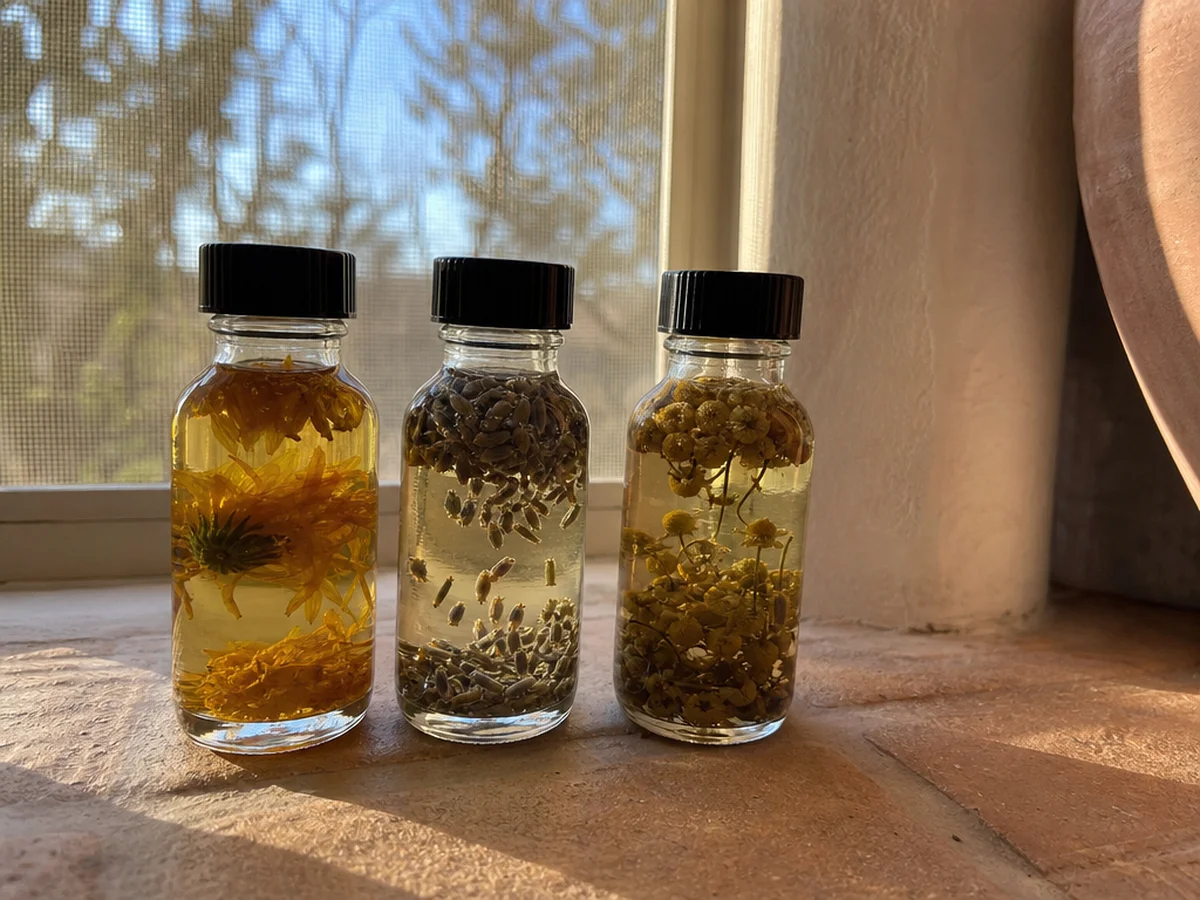
Dried herbs in almond oil give a gentle result. Expect the oil to turn a little deeper in color and to pick up a faint, leafy scent over the almond’s soft, nutty one. Subtle is normal. If you are hoping for a stronger aroma, resist the urge to add more herb or let it sit longer, because more plant matter means more water in the jar. A quiet, pleasant oil you use up within the window beats a strong one that lingers on the shelf.
The oil you infuse into
Almond is a tree nut, and our sweet almond oil is cold-pressed and unrefined, so trace almond protein is present. If you have a tree nut allergy, do not use it. The American Academy of Allergy, Asthma and Immunology draws the same line between refined and unrefined nut oils, and our nut allergy article has the detail. Our refined versus unrefined guide explains why this matters. Remember too that the oil's own shelf life, about a year from pressing for ours, stored cool and dark, does not carry over to an infusion made with it.
If you remember one thing: dried herbs, small batches, cold storage, four days and a patch test. That keeps the craft as pleasant as it looks.
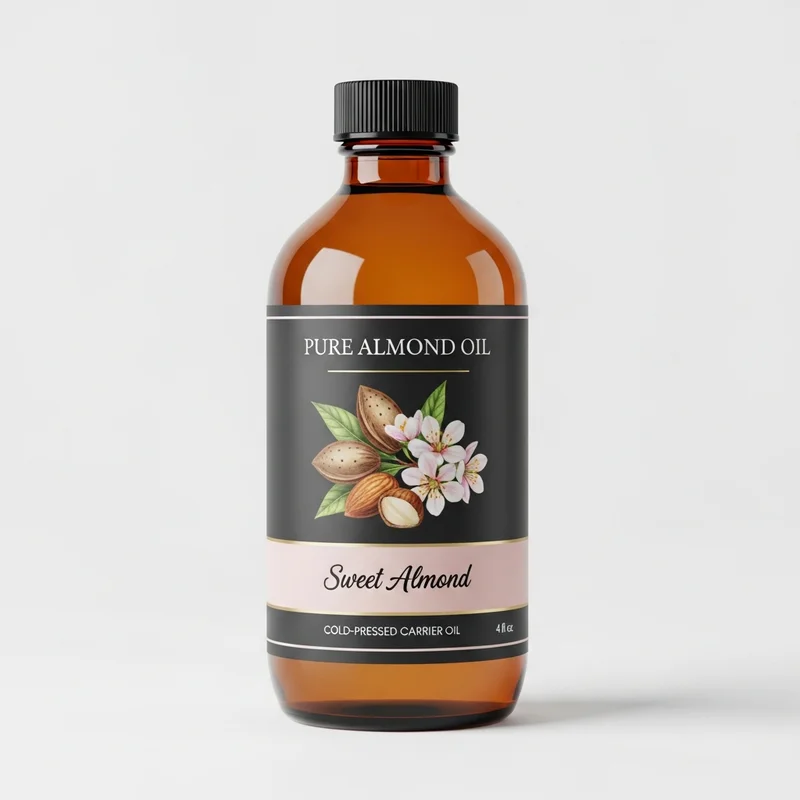
Sweet Almond Oil
Sweet Almond Oil from our own shop, in sizes from 0.5 oz to bulk.
From $9.99
Shop Now →Sources & Further Reading
- Centers for Disease Control and Prevention, Home-Canned Foods
- Health Canada, Food safety tips for vegetables and herbs in oil
- US Food and Drug Administration, Microbiological Safety and Cosmetics
- National Center for Complementary and Integrative Health, St. John's Wort: Usefulness and Safety
- American Academy of Allergy, Asthma and Immunology, Food allergy: nut oils in topical products