Vitamin E Oil vs Almond Oil: What Is in Each Bottle?
Almond oil and "vitamin E oil" sound like neighbors on the same shelf, but they are different kinds of product. Almond oil is a plant oil that happens to contain a little vitamin E. A bottle sold as vitamin E oil is built around a much larger dose of that single compound. We sell only the almond oil, and we add nothing to it, not even vitamin E, so this post is about what each bottle actually is.
Read the ingredient line first
Vitamin E is a family of compounds, and the form matters. A review of vitamin E in dermatology explains that natural alpha-tocopherol oxidizes slowly in air, that dl-alpha-tocopheryl acetate is the most stable form, and that many products lose potency once opened and exposed to air and light. It also reports that most over-the-counter creams of the kind marketed for aging skin contain 0.5 to 1 percent vitamin E (Vitamin E in dermatology).
So when you hold a bottle of vitamin E oil, three questions tell you what you have. Which form is it, tocopherol or tocopheryl acetate? What is the rest of the bottle, which is often an unnamed carrier oil? And what concentration is it? A label that does not answer those is itself information.
The numbers, as simple arithmetic
In cold-pressed oils from three almond cultivars, alpha-tocopherol measured 14.18 to 16.86 milligrams per 100 grams (Özcan et al., 2020). That is general almond oil, not ours: the Certificate of Analysis we publish for one batch lists density, refractive index and optical rotation, with no vitamin E figure.
Here is what that means, labelled as arithmetic. 14 to 17 milligrams per 100 grams is about 0.14 to 0.17 milligrams per gram of oil. A 1 percent vitamin E product holds 10 milligrams per gram, so it would be roughly 60 to 70 times richer in vitamin E than the almond oil in that paper, and a 0.5 percent product about 30 to 35 times. A teaspoon of our oil weighs about 4.5 grams at the density on our batch certificate (0.918), which would put the vitamin E in a teaspoon of typical almond oil well under a milligram.
None of this says more is better. It just means that anyone who calls almond oil "full of vitamin E" and suggests it does what a vitamin E product does is comparing amounts that are more than an order of magnitude apart. We think almond oil deserves to be appreciated for what it is: a light, softly nutty liquid that spreads easily and carries essential oils nicely. Our vitamin E post and nutritional profile look at what else is in the oil.
Think of it like reading the label on a jar of soup. You would not buy one without checking what is in it, and a bottle that goes on your skin deserves the same attention. Flip it over, read the ingredients in order and notice what comes first. The first item is the largest part of the bottle.
What the research says about vitamin E on skin
The review's authors describe the controlled clinical evidence for topical vitamin E as thin: reports and small studies, with a lack of controlled trials to support defined dosages. So it is wise to be skeptical of big promises on either bottle, and a board-certified dermatologist is the person to ask about any skin concern.
Allergy runs in two directions
Topical vitamin E can occasionally cause contact allergy. In a review of Mayo Clinic Arizona patch-test records from 1987 to 2007, 18 of 2,950 patients, about 0.6 percent, reacted to alpha-tocopherol, which the authors called a relatively rare contact allergen (Allergic contact dermatitis from vitamin E: the experience at Mayo Clinic Arizona, 1987 to 2007). Rare is not never, so patch testing any new product makes sense.
For almond oil the allergy point is different, and for us it is decisive. Almond is a tree nut. Our oil is cold-pressed and unrefined, so trace almond protein is present, and anyone with a tree nut allergy should not use it. An allergist writing for the American Academy of Allergy, Asthma and Immunology notes that unrefined, cold-pressed nut oils retain protein, and suggests asking a manufacturer whether a nut oil is refined (Food allergy: nut oils in topical products). A vitamin E product sidesteps that only if its carrier is not a nut oil, which the label should tell you.
What you will notice in the bottle
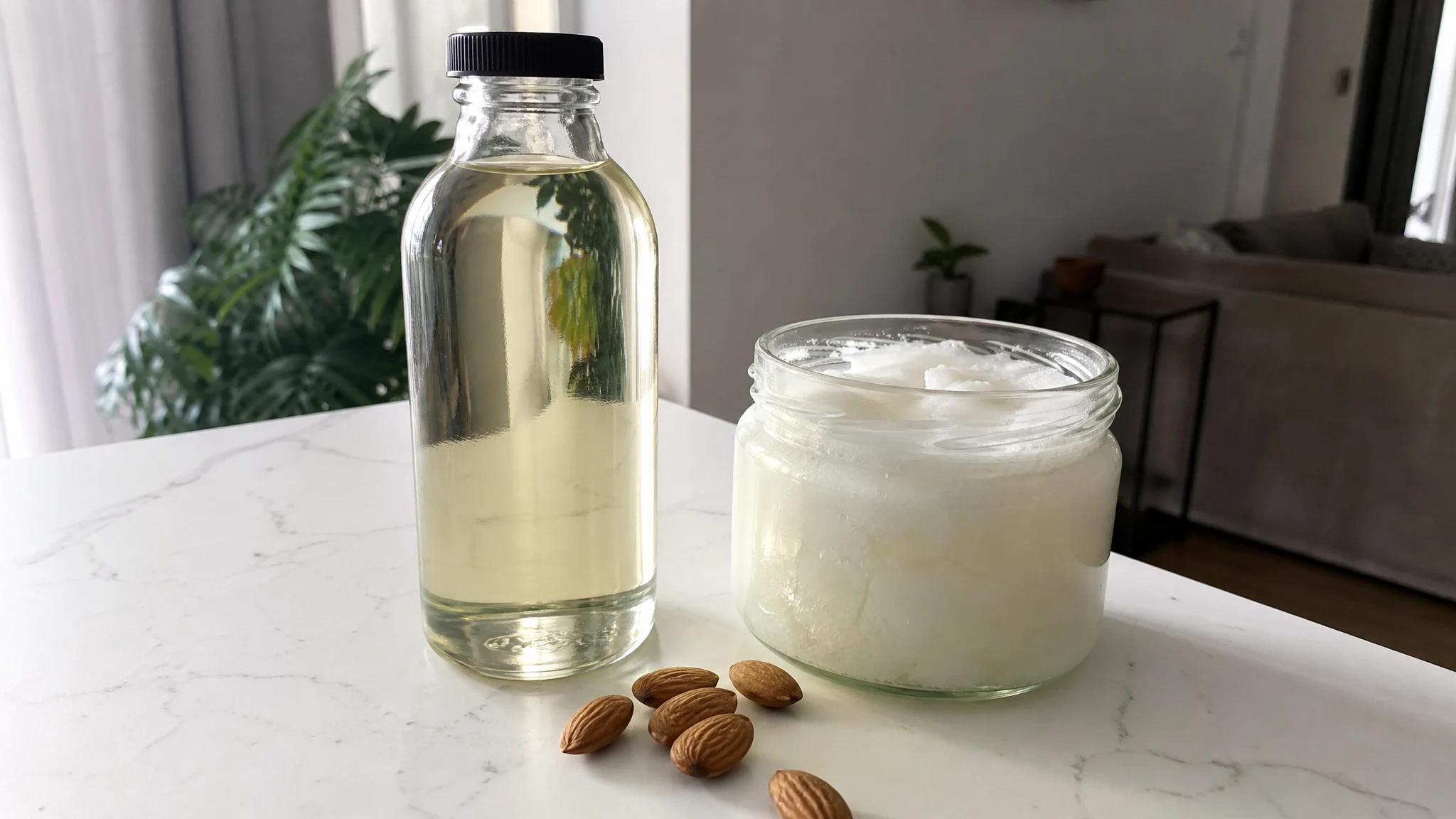
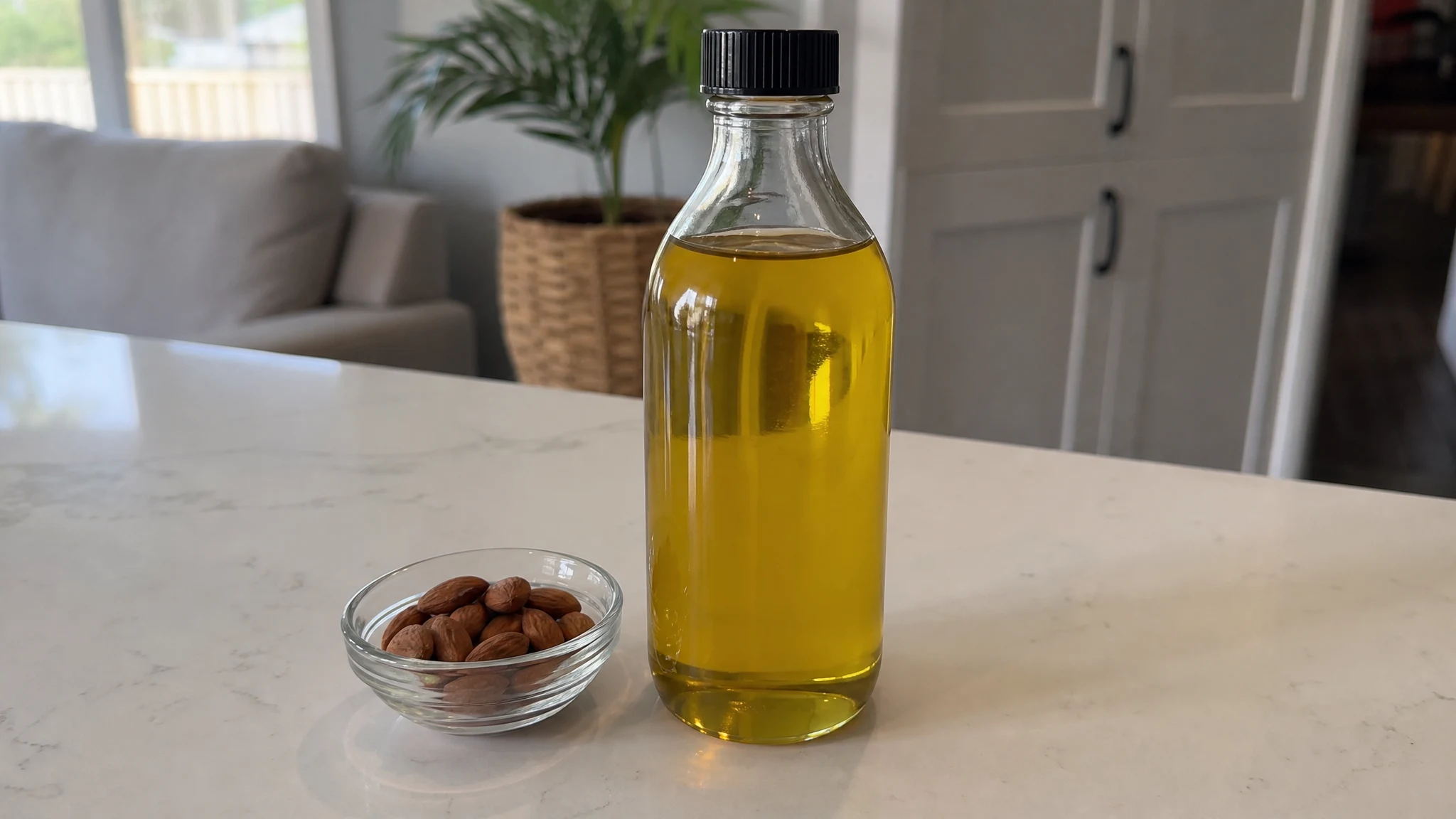
A plain almond oil is thin, light in color and quietly nutty-smelling. A vitamin E product may look and feel quite different, depending on what else is in the bottle. If you ever try both side by side, rub a drop of each into the back of your hand and pay attention to how they feel a minute later. It is a small experiment, and it teaches you more than a label can.
Choosing in practice
Want a plain oil for massage or to carry essential oils? That is almond oil's job, and no added vitamin E is needed; our dilution ratios post covers blending. Curious about keeping an oil fresh? Cool, dark storage matters more than any additive we can point to, and our storage guide has the specifics; we say our oil keeps about a year from pressing when stored that way.
Both bottles are for the skin only. Keen and Hassan list nausea, fatigue and a bleeding tendency among the effects reported at high oral doses of vitamin E, which is one more reason to keep topical oils out of the supplement conversation. If you take anticoagulants or supplements, your pharmacist or physician can advise. Patch test either bottle on a small area and wait a day.
Understanding which one you are holding is half the work, and it makes shopping for either a good deal more fun.

Sweet Almond Oil
Sweet Almond Oil from our own shop, in sizes from 0.5 oz to bulk.
From $9.99
Shop Now →Sources & Further Reading
- Keen MA, Hassan I, 2016. Vitamin E in dermatology. Indian Dermatol Online J.
- Özcan MM et al., 2020. Characterization of physico-chemical and bioactive properties of oils of some important almond cultivars by cold press and soxhlet extraction. J Food Sci Technol.
- Adams AK, Connolly SM, 2010. Allergic contact dermatitis from vitamin E: the experience at Mayo Clinic Arizona, 1987 to 2007. Dermatitis.
- American Academy of Allergy, Asthma and Immunology. Food allergy: nut oils in topical products.