Almond Oil on Your Pregnant Belly: What Research Says
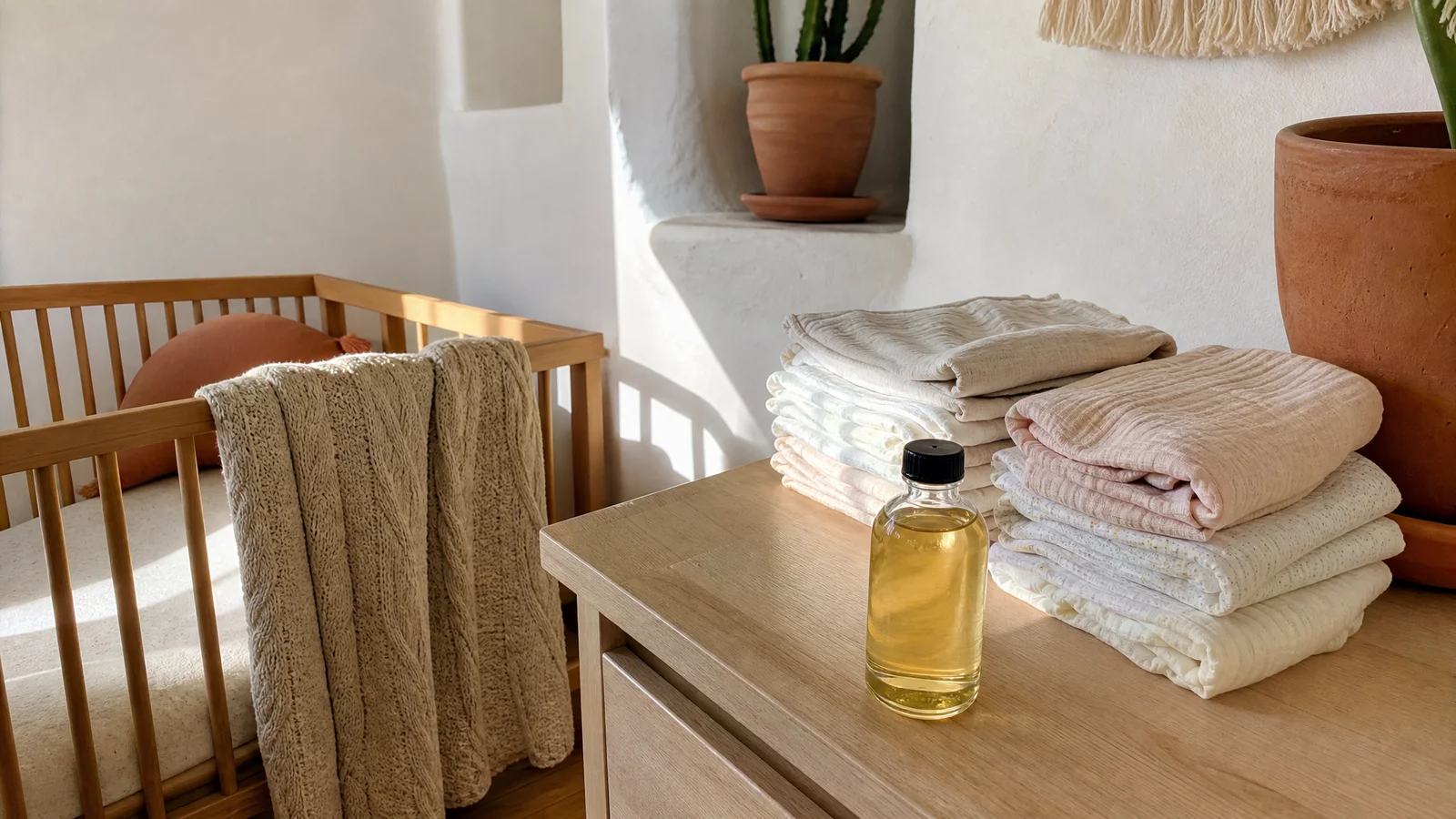
A pregnant belly and a bottle of plain almond oil seem made for each other: the oil glides on, smells softly of almonds, and turns a daily moisturizing minute into a small ritual. Whether it keeps stretch marks from forming is a different question, and the research does not say it does.
What the studies actually found
The broadest look comes from a Cochrane review of topical products used in pregnancy, which pooled six trials and 800 women. Women using a product developed stretch marks at about three-quarters the rate of those using nothing or a placebo (a ratio of 0.74), but the range around that number runs from 0.53 to 1.03, so it could just as easily be no difference at all. The reviewers concluded there was no high-quality evidence for any of the preparations tested, and almond oil was not one of them.
Almond oil does have its own small trial. In a double-blind study of 160 women pregnant for the first time, one group used sweet almond oil, one used aloe vera gel, one used a plain base cream and one used nothing. Itching and redness came out better in the aloe and almond oil groups, while the number and width of stretch marks were about the same across all four. The American Academy of Dermatology is blunter: its stretch mark page says almond oil did not prevent them in studies and did not fade existing ones.
Our reading is simple. A plain oil is a lovely thing to moisturize with, and a stretch mark plan it is not. We would rather say that clearly than let a pleasant routine carry a promise it cannot keep.
Why people still reach for a plain oil
Skin that is stretching often feels tight and dry, and a nongreasy-feeling, single-ingredient oil is an easy answer to that. Ours is cold-pressed and unrefined, sold neat with nothing added, so there is no fragrance to wonder about. That matters during pregnancy, when many people prefer to keep the ingredient list short.
A little goes a long way. A teaspoon is about 4.9 ml, which works out to roughly 4.5 grams of the batch on our Certificate of Analysis (its measured density is 0.918). That is arithmetic, not a prescribed dose, but it gives you a sense of scale: half a teaspoon poured into a warm palm is plenty to cover a belly, and pouring it out rather than dipping fingers into the bottle keeps water and bacteria out of what is left.
Store the bottle somewhere cool and dark. Our oil keeps for about a year from pressing, and the pressing date is on the bottle. There is more on this in our storage guide.
Making the moment pleasant
If you decide to use a plain oil, a little thought makes the routine easy to keep. Warm a few drops between your palms first, since cool oil on a stretched belly is a bit of a shock. Go in slow circles and take your time. A few drops on damp skin after a shower spread beautifully and absorb quickly.
Give it a few minutes to sink in before you dress, because oil can mark light-colored fabrics. Keep the bottle somewhere you will see it, and pour rather than dip, as above, so the rest stays clean.
Three things before the first application
- A tree nut allergy settles the question. Almond is a tree nut. Our oil is unrefined, so trace almond protein is present, and if you have a tree nut allergy you should not use it. The American Academy of Allergy, Asthma and Immunology explains that refined oils usually lose their protein while cold-pressed ones keep it, and that topical use of nut oils has not been well studied. We cover this in depth in almond oil and nut allergies.
- Patch test. The AAD suggests a quarter-sized spot on the inner arm, applied twice a day for 7 to 10 days, stopping if skin turns red, itchy or swollen. Our own advice is a shorter patch test (a small area and a day's wait), so the AAD schedule is the more cautious one. Details are in our patch test guide.
- Mention it to your midwife or OB/GYN. They know your pregnancy; we know a cosmetic oil. The AAD also asks pregnant readers to check with a doctor before treating stretch marks, since some ingredients in other products are not appropriate in pregnancy. Our pregnancy FAQ collects the general questions.
When itching deserves a phone call
Itchy skin is common in pregnancy and usually nothing to worry about, according to the NHS, but it also says to check with a GP or midwife because it can occasionally come from a liver condition called intrahepatic cholestasis of pregnancy. So if the itch is persistent, or it is not limited to the stretched skin on your belly, call your care team rather than adding more oil. Our oil is a cosmetic moisturizer for external use, nothing more.
A note on comfort
Some mornings your skin feels tight and some mornings it does not, and that is normal. Let the routine flex with you. If you skip a day, nothing is lost. If a different texture feels better on a particular day, use it. What matters is that the time you spend on it is time you enjoy, since there is no trophy for the most diligent belly.
If you want the fuller walk through the research, our longer stretch mark article goes study by study. Meanwhile, a belly that is moisturized, comfortable and looked after by people who know you is a good outcome on its own.

Sweet Almond Oil
Sweet Almond Oil from our own shop, in sizes from 0.5 oz to bulk.
From $9.99
Shop Now →Sources & Further Reading
- Cochrane. Topical preparations for preventing stretch marks in pregnancy. cochrane.org
- Hajhashemi M et al. The effect of Aloe vera gel and sweet almond oil on striae gravidarum in nulliparous women. J Matern Fetal Neonatal Med, 2018. pubmed.ncbi.nlm.nih.gov/28521546
- American Academy of Dermatology. Stretch marks: Why they appear and how to get rid of them. aad.org
- NHS. Itchy skin. nhs.uk
- AAAAI. Food allergy: nut oils in topical products. aaaai.org
- American Academy of Dermatology. How to test skin care products. aad.org