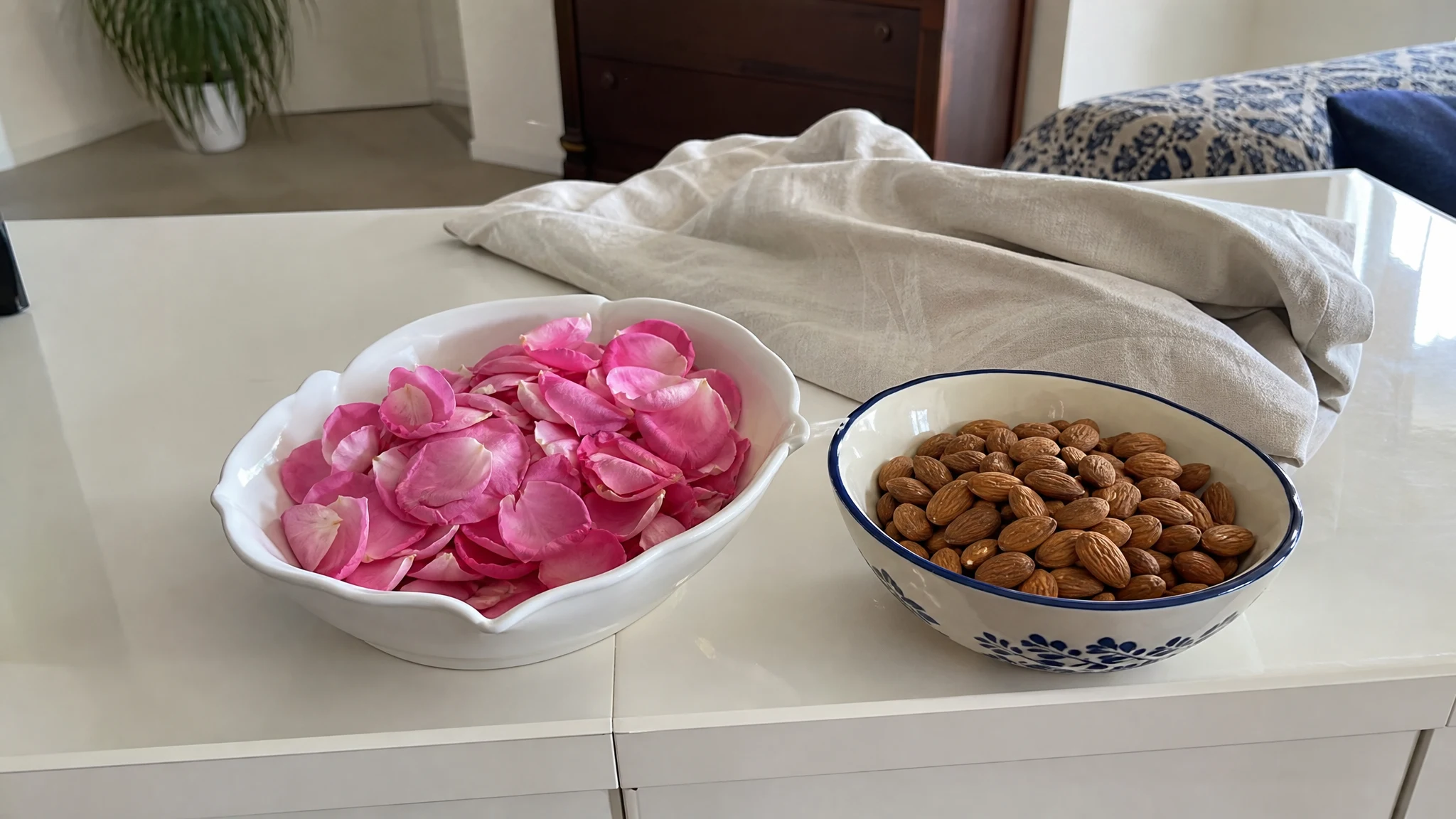
DIY Rose Perfume Oil With Almond Oil: Roll-On Guide
A roll-on perfume oil is one of the nicest small projects you can make with a carrier oil: a few drops of something floral in a base that stays out of the way. Rose and sandalwood is a classic pairing, and almond oil suits it well. The part that matters most is not the rose-to-sandalwood proportion. It is the total strength and the measuring, so we will work through both.
To be clear about what we offer: we sell sweet almond oil only, not a blend, a perfume or any essential oil. The numbers below are arithmetic built from published dilution guidance, a formulation on paper for you to adapt, and the essential oils come from an aromatherapy supplier.
Decide the total strength first
A perfume oil sits on skin, usually the wrists, neck or behind the ears, so it belongs in the same conversation as any leave-on skin product. The Tisserand Institute's dilution guidelines list these ranges:
- 0.2 to 1% for sensitive or impaired skin
- 0.5 to 1.2% for facial cosmetics and deodorants
- 1 to 3% for body oils and lotions
- 2 to 4% for bath and wash-off products
The page recommends starting low and going up only if needed, and calls a 1 in 4 mix "much too concentrated for almost any safe use." It does not give separate figures for rose or sandalwood, so we use the general bands. Our suggestion: for a leave-on perfume oil, start at 1% and stay within the 1 to 3% body band at most. A lighter blend you reapply is easier to enjoy than a strong one you cannot take back. If you want something stronger and longer lasting, a cosmetic chemist is the right person to ask.
Measuring is where recipes get tricky
Percentages sound simple until you try them in a roll-on bottle. Here is the arithmetic, by volume, for the total essential oil in the finished blend:
| Total strength | In 10 ml | In 30 ml |
|---|---|---|
| 0.5% | 0.05 ml | 0.15 ml |
| 1% | 0.10 ml | 0.30 ml |
| 2% | 0.20 ml | 0.60 ml |
| 3% | 0.30 ml | 0.90 ml |
Tisserand notes that conversions using drops "are always approximate, because no two drops of essential oil are the same." At 10 ml, a single extra drop can push you well up a band, so our reasoning is to make 30 ml, measure with a small graduated pipette or syringe, and keep the extra as a stock bottle for refilling the roll-on.
A worked example, as a starting point to smell and adjust rather than a tested ratio: 30 ml at 1% needs 0.30 ml of essential oil. Split one part rose to two parts sandalwood, that is 0.10 ml rose and 0.20 ml sandalwood, topped up with almond oil to 30 ml. If you prefer more rose, change the proportion but keep the total fixed. The total is what keeps the blend in its band.
Setting up your workspace
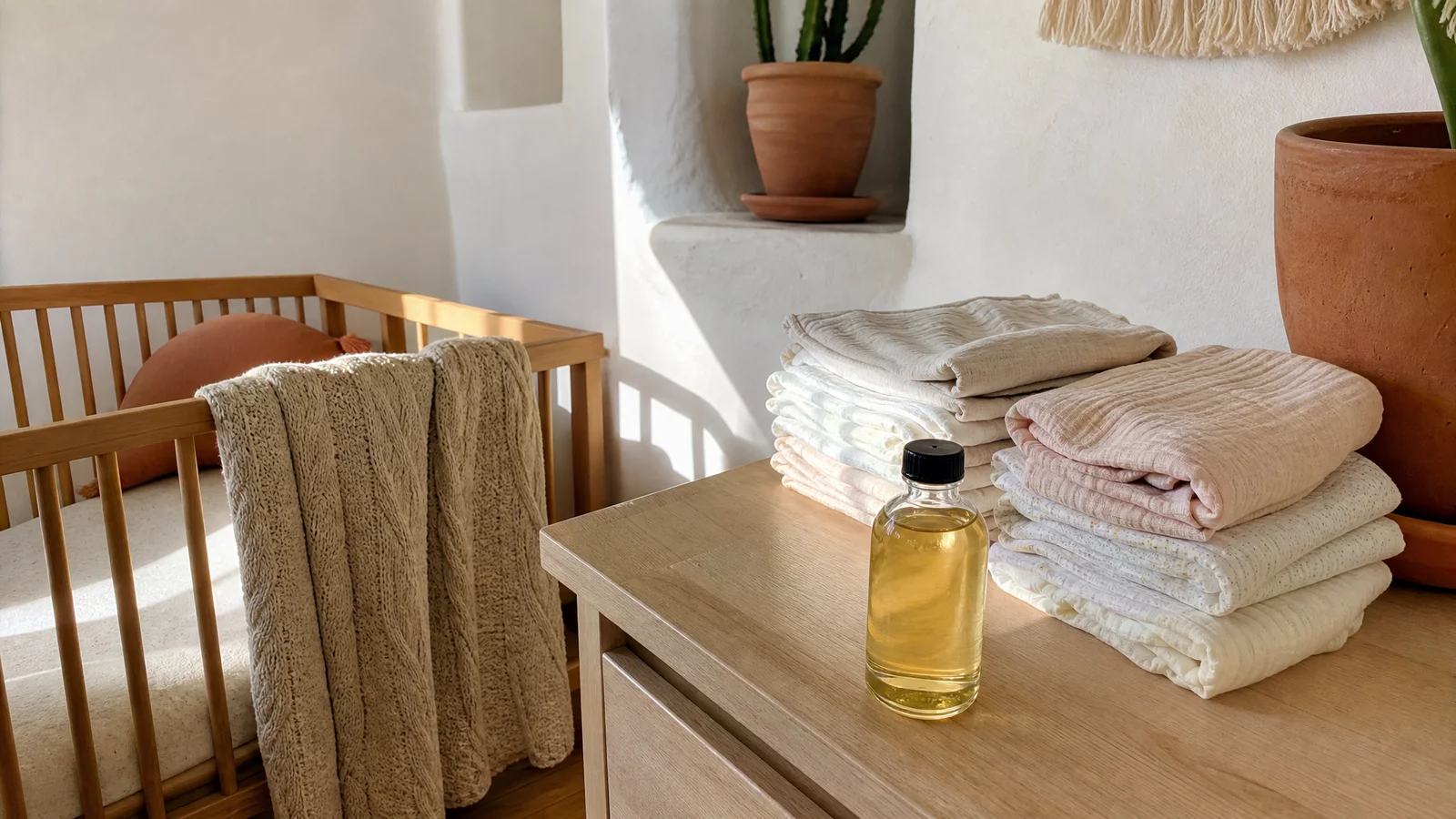
Gather your tools before you open any bottles: a clean glass roll-on, a small funnel, a graduated pipette, a label and paper towel. Wash and dry the bottle completely, because water left in it does not belong in an oil blend. Work on a tray so a spill stays put, and do the almond oil last so you can top up to the line.
Why the base matters
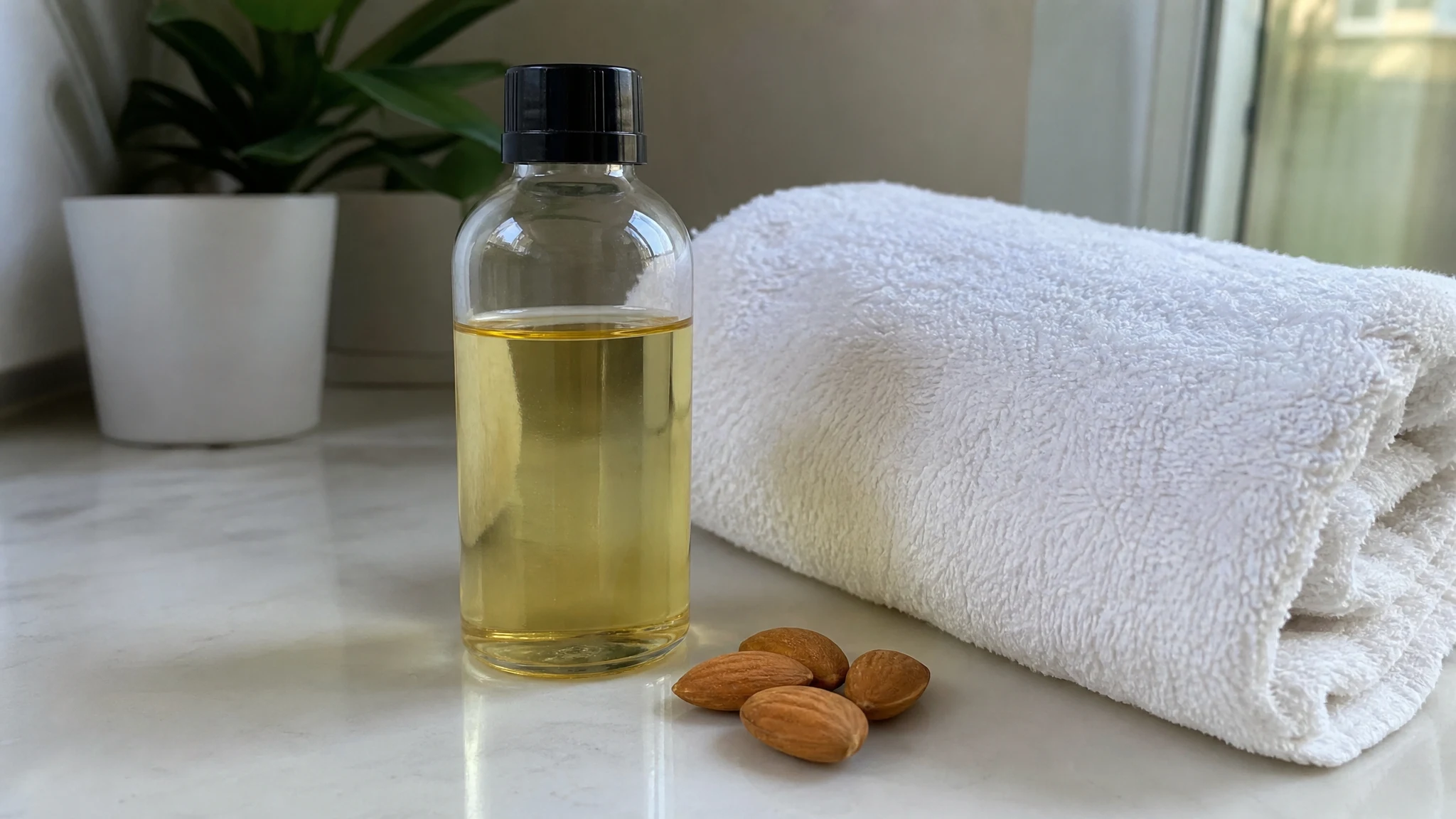
In a perfume, you want the carrier to support the scent without competing. Our oil has a soft, subtly nutty, lightly sweet aroma, and it blends well with rose, lavender, geranium, chamomile, sandalwood and ylang ylang. It is cold-pressed and unrefined, which gives it a faintly golden look. It is a base that carries essential oils without masking them, and that is exactly what a perfume oil asks of it. Our post on almond oil as a carrier oil goes deeper, and our dilution post covers the blending math in more detail.
Fragrance is the part to test
In the EU, 26 fragrance substances must be labelled individually when present in a cosmetic. The European Commission's summary says 13 of them are the most frequently reported contact allergens and 11 are less well documented. We cannot tell you which of these appear in a given rose or sandalwood oil, so the sensible approach is the same one we suggest for any leave-on product: do a patch test. The blend is a fragrance, which makes it the ingredient most likely to cause a reaction, and an almond base will not change that. Our patch-test guide shows how.
Smell it, then let it settle
Put a little on a paper strip or the back of your hand and notice how the scent changes as it warms. Rose often shows first, with the sandalwood slowly rising underneath. Label the bottle with the recipe and the date so you can repeat what you liked. Keep it somewhere cool and out of the sun, and if the smell turns sharp or stale, let it go and make a fresh one.
Also note that almond is a tree nut and our oil is unrefined, so trace almond protein is present: anyone with a tree nut allergy should not use it. See our nut allergy post for more.
Small batches, careful measuring and a scent you love: that is really all a good perfume oil needs.
Sweet Almond Oil
Sweet Almond Oil from our own shop, in sizes from 0.5 oz to bulk.
From $9.99
Shop Now →