Almond Oil and Cats: What Vets and Poison Lines Say
A cat winds around your freshly oiled calves, and a minute later it is washing its paws. That small moment is why the question of almond oil and cats is harder than it looks. We make a cosmetic almond oil for people's skin, and nothing we sell is formulated or dosed for animals, so we would rather give you what vets and poison lines have said than a yes or no we cannot back up.
What the poison experts have written
The ASPCA's list of people foods to avoid feeding pets puts nuts, almonds among them, in the high-fat group: nuts contain a lot of oils and fats, and those fats can cause vomiting and diarrhea and, in some pets, pancreatitis. That page is about eating, and it speaks of pets in general rather than cats alone. Still, it tells you how to think about the oil. Almond oil is that fat, concentrated, and a cat's digestive system is not built around it.
We could not find a study of sweet almond oil applied to cat skin, so there is no dose, routine or "amount that is fine" for us to pass on. Anyone who tells you there is one is guessing.
Why a cat is the careful case
Cats groom constantly, and whatever is on their fur ends up in their mouths. Pet Poison Helpline makes the same point in its essential oils guide, ranking oral exposure as the highest risk and skin contact next, while noting that in real homes the routes are usually mixed. It also says cats and birds are the animals at greatest risk from essential oil poisoning. That page is about essential oils rather than carrier oils like ours. It does matter if you scent almond oil for massage, because a blend is the product your cat would be licking.
You may also have read that cats "cannot process" oils. The documented part is narrower. Cats carry a nonfunctional version of a liver enzyme gene, UGT1A6, that other species use to clear phenol-type compounds such as acetaminophen and aspirin, and veterinary pharmacologists have laid out how many cat reactions to drugs differ from dogs and people. Plain almond oil is made of fats, not phenols, so that finding does not describe it. What it does tell you is that a cat cannot be treated as a small person or small dog, which is the reason a vet's opinion beats anything we can offer.
Habits that make sense in a house with a cat
None of these are rules from a source; they are the sensible steps that follow from the cat's grooming habit.
- Keep the oil on your own skin. Our oil is for people and for external cosmetic use only, so we do not suggest putting it on a pet's coat, paws or skin.
- Give a body oil time to absorb before you pick the cat up, and wash your hands first if you have just used a generous amount. A cat rubbing against oiled legs is the likeliest way it gets any.
- If you scent your oil, treat the essential oils as the part that needs the most care around a cat, and read what the vet or Pet Poison Helpline say about the particular oil.
- Close the bottle and keep it inside a cupboard. Cats knock things off shelves, and a spill on a floor is a coat-and-paws problem.
- Wash oiled towels and sheets before the cat claims them for a nap.
If your cat does get into it
Call your veterinarian, or an animal poison line, straight away rather than waiting to see how the cat looks. The ASPCA Animal Poison Control Center is at (888) 426-4435 and notes a consultation fee, and Pet Poison Helpline is at (855) 764-7661. Have the bottle in hand so you can read out exactly what it is, how much may be missing and whether anything else was in it. Pet Poison Helpline's guidance for essential oil exposures describes bathing with dish detergent for skin contact and advises against making an animal vomit because of the risk of aspiration, but let the person on the phone direct you, since the right step depends on what the cat actually got into.
The people in the house
Our oil is cold-pressed and sold unrefined, so trace almond protein is present, and we say plainly that anyone with a tree nut allergy should not use it. A person with that allergy who snuggles a cat that has been rubbing on oiled skin could pick the oil up second-hand, which is worth raising with their allergist. Our post on almond oil and tree nut allergy goes into who should skip the oil altogether, and our dog article, what to ask your vet about almond oil and dogs, covers the same grooming logic for another household animal. If a bottle does not say sweet almond, the difference between sweet and bitter almond oil is worth knowing before it goes anywhere near pets or people.
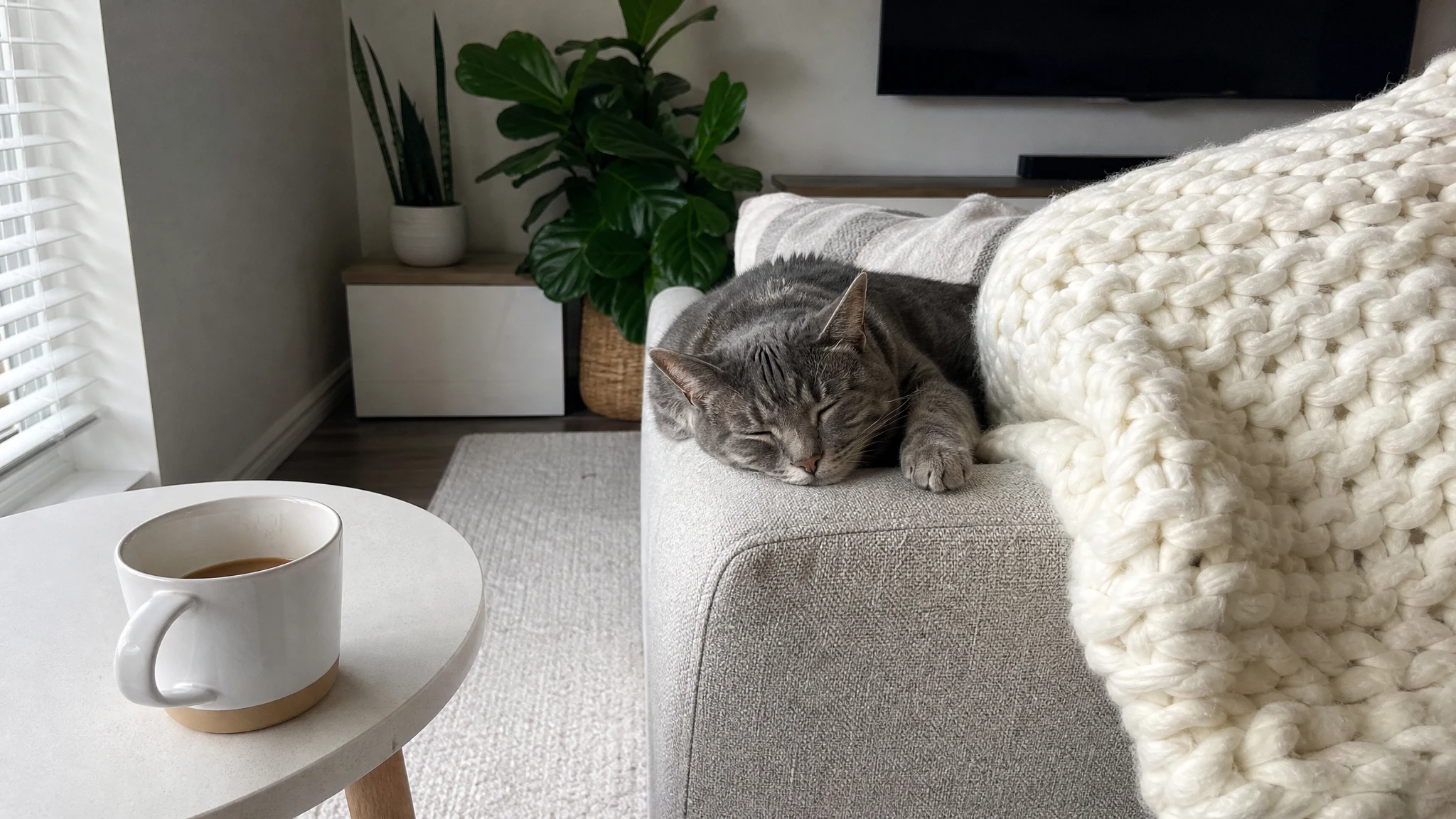
For itchy, flaky or sore skin on a cat, a veterinarian is the right first stop, and a bottle from a person's cupboard is not a substitute. For the humans, almond oil can be a soft, pleasant part of the evening, with a cat curled up well out of the oil's way.
Sweet Almond Oil
Sweet Almond Oil from our own shop, in sizes from 0.5 oz to bulk.
From $9.99
Shop Now →Sources & Further Reading
- People Foods to Avoid Feeding Your Pets, ASPCA
- Essential Oils, Pet Poison Helpline
- Court MH. Feline drug metabolism and disposition: pharmacokinetic evidence for species differences and molecular mechanisms. Vet Clin North Am Small Anim Pract, 2013
- Shrestha B et al. Evolution of a Major Drug Metabolizing Enzyme Defect in the Domestic Cat and Other Felidae: Phylogenetic Timing and the Role of Hypercarnivory. PLoS One, 2011