Almond Oil for Squeaky Hinges and Household Lubrication
That squeaky hinge. You know the one. Every time you open the pantry door at 6 a.m., the whole house knows about it. Before you reach for a can of synthetic spray lubricant, check your bathroom cabinet. If you keep sweet almond oil on hand for your skin or hair routine, you already have a surprisingly capable natural household lubricant sitting right there.
Almond oil has been used in kitchens, workshops, and households for centuries. Its light viscosity, low odor, and skin-safe profile make it a versatile oil to keep around. This guide covers exactly how to use almond oil as a lubricant, which household applications it works well for, and where it falls short so you can make an informed choice.
Why Almond Oil Works as a Lubricant
Not all oils are created equal when it comes to lubrication. What makes almond oil a good candidate for household use comes down to a few practical properties.
Light Viscosity
Sweet almond oil is a relatively thin, free-flowing oil. It can penetrate into tight metal joints and narrow gaps without needing to be warmed up or thinned first. Heavier oils like coconut oil can solidify in cool temperatures, which creates its own problems. Almond oil stays fluid at typical indoor room temperatures.
Low Residue, Low Odor
Synthetic lubricants often leave a greasy, chemical-smelling residue on surfaces. Almond oil has a faint, neutral nutty scent that dissipates quickly. It absorbs into metal surfaces and surrounding wood without leaving a sticky, dust-attracting film when applied in small amounts.
Food-Safe Origins
Because sweet almond oil is a food-grade and cosmetic-grade oil, it is a sensible choice for areas where you want to avoid harsh chemicals. Cabinet hinges near food storage, kitchen drawer runners, and wooden cutting board pivot points are all spots where a food-safe lubricant makes practical sense.
Widely Available and Affordable
You do not need a specialty product. A standard bottle of pure sweet almond oil from a grocery store or beauty supplier works fine for household lubrication tasks. If you already use almond oil as part of your beauty routine, there is essentially no added cost for the occasional household application.
Best Household Uses for Almond Oil Lubricant
1. Squeaky Door Hinges
This is the most classic application. An almond oil squeaky hinge fix is fast, low-mess, and does not require removing the hinge from the door.
Here is how to do it:
- Open the door fully so the hinge is accessible and the pin is under no tension.
- Apply a few drops of almond oil directly to the top of the hinge pin, where it meets the barrel of the hinge.
- Move the door back and forth several times to work the oil down into the joint.
- Wipe away any excess oil from the surrounding door frame or wall with a dry cloth.
- Repeat on each squeaky hinge.
For a more thorough job, you can tap the hinge pin upward with a screwdriver and hammer, coat the pin itself with almond oil, and reinsert it. This gets oil along the full length of the pin rather than just the top.
2. Sticky Kitchen Drawer Runners
Wooden drawer runners that stick or drag can be refreshed with a light coat of almond oil. Pull the drawer out completely, run a finger dipped in almond oil along the wooden runner on both sides, and slide the drawer back in. Work it in and out a few times. The wood absorbs the oil gradually, which helps the surface glide more smoothly.
3. Cabinet Door Hinges
Kitchen and bathroom cabinet hinges are subject to humidity fluctuations, which causes metal to expand and contract. A small amount of almond oil applied to the hinge pivot point can reduce friction and keep the door swinging quietly. The food-safe nature of almond oil makes this a sensible choice for kitchen cabinets specifically.
4. Scissors and Garden Shears
The pivot screw on scissors and garden shears collects grime and oxidation over time. A drop of almond oil on the pivot, followed by opening and closing the blades several times, can noticeably improve the action. Wipe the blades clean afterward so the oil does not transfer to paper or fabric.
5. Bicycle Chains (Light Maintenance)
For casual, low-mileage bicycle use, almond oil can serve as a light chain lubricant in a pinch. It is not a replacement for purpose-formulated bike chain oil for regular cyclists, but for a seldom-used bicycle or a child's bike, a light application can reduce squeaking and keep the chain moving. Reapply more frequently than you would with a dedicated bike lubricant, as almond oil washes off more easily.
6. Squeaky Floorboards
This one requires a bit of patience. For floorboards that squeak because the wood is rubbing against a nail or an adjacent board, you can work almond oil into the gap between boards using a small brush or dropper. The oil lubricates the wood-on-wood contact point. Results vary depending on how deep the squeak source is, but surface squeaks often respond well.
7. Wooden Furniture Joints
Chairs and tables with loose, creaking joints can benefit from almond oil applied to the contact points. It also conditions the surrounding wood as a bonus. This works best on unfinished or lightly finished wood where the oil can actually absorb into the grain.
8. Zipper Pull Tabs
A stuck zipper on a bag, jacket, or piece of luggage can often be freed with a tiny amount of almond oil applied to the teeth with a cotton swab. Work the zipper slowly back and forth after applying. Use sparingly on fabric-adjacent zippers and wipe away any excess to avoid staining.
How to Apply Almond Oil as a Lubricant: Tips and Techniques
Getting the right amount of oil in the right place matters. Here are a few practical methods.
The Dropper Method
Transfer some almond oil into a small bottle with a dropper tip. This gives you precise control, which is especially useful for hinges and tight joints. Most dropper bottles hold enough for dozens of applications.
The Cotton Swab Method
Dip a cotton swab in almond oil and dab it directly onto the target area. This works well for zippers, small hinges, and scissor pivots where you want a controlled, small application.
The Brush Method
A small paintbrush or old toothbrush can be used to work oil into floorboard gaps, drawer runners, and wooden joints. This gives you reach and coverage in spaces where a dropper would be clumsy.
The Fingertip Method
For larger surfaces like drawer runners, applying oil directly from your fingertip gives you good tactile feedback about how much coverage you are applying. This is the least precise method but works fine for flat surfaces.
Where Almond Oil Has Limitations as a Lubricant
Almond oil is useful, but it is not a universal solution. Knowing where it falls short saves you time and frustration.
| Application | Almond Oil Suitability | Better Alternative |
|---|---|---|
| Door hinges | Good | N/A for light use |
| Drawer runners | Good | Beeswax for heavy drawers |
| Bicycle chain (heavy use) | Temporary only | Dedicated chain lubricant |
| Lock cylinders | Not recommended | Graphite powder |
| Automotive parts | Not suitable | Manufacturer-specified grease |
| High-heat applications | Not suitable | High-temp lubricants |
| Outdoor exposed metal | Limited (washes off) | Waterproof grease |
A note on lock cylinders specifically: oils can attract dust and debris inside a lock mechanism, which can eventually cause the lock to jam. Graphite powder or a PTFE-based lock lubricant is the standard recommendation for keyed locks.
Almond oil is also a drying oil, meaning it can polymerize over time when exposed to air. On most household applications this is not a concern because you are applying thin amounts and wiping away excess. On surfaces where oil sits undisturbed in a thick layer, it may eventually form a sticky residue. Apply lightly and wipe clean.
Choosing the Right Almond Oil for Household Use
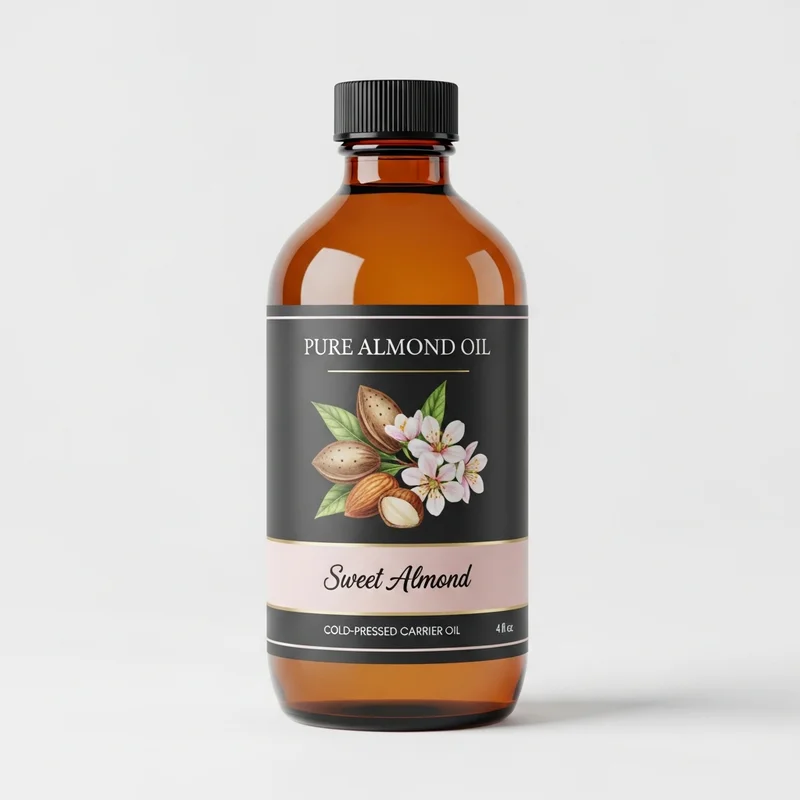
For lubrication purposes, you do not need a premium cosmetic-grade oil. A standard, pure sweet almond oil is fine. Look for these qualities:
- 100% pure sweet almond oil: No carrier fillers, no added fragrances, no vitamin E additives that could leave residue.
- Cold-pressed: Cold-pressed oils retain their natural fatty acid profile, which contributes to their lubricating properties. This also tends to mean less processing.
- Clear or pale yellow color: A very dark or cloudy oil may have quality issues or be past its best.
- Neutral to faint scent: Fresh almond oil has a barely perceptible nutty smell. A rancid or off smell means the oil has oxidized and should not be used.
If you already keep almond oil in your home for skin or hair care, you can simply repurpose the same bottle. There is no need to buy a separate household supply.
Storage and Shelf Life
Almond oil has a shelf life of roughly 12 to 24 months when stored properly. Keep it in a cool, dark location away from direct sunlight and heat sources. A kitchen cabinet or pantry shelf works well. Once opened, it is best used within a year for optimal freshness.
You can check whether your oil is still good by smelling it. Fresh almond oil has a faint, pleasant scent. Rancid oil smells sharp, sour, or paint-like. Using rancid oil for household lubrication will not damage your hinges, but the smell is unpleasant and the oil's performance may be slightly reduced.
A Simple Household Lubrication Kit
If you want to put together a practical natural lubrication kit for your home, here is a straightforward setup:
- One small dropper bottle filled with sweet almond oil
- A pack of cotton swabs
- A small stiff-bristled brush (an old toothbrush works well)
- A few lint-free cloths for wiping excess
Store it somewhere accessible, like under the kitchen sink or in a utility drawer, so it is ready when you notice a new squeak or a sticky drawer. The whole kit costs very little and gives you a go-to natural solution for most minor household friction issues.
Final Thoughts
Almond oil is one of those quietly useful products that earns its place in a home beyond a single purpose. As a natural household lubricant, it handles the everyday annoyances well: the squeaky hinge, the drawer that catches, the scissors that drag. It is food-safe, low-odor, and gentle on the surfaces around it.
It is not a replacement for specialized lubricants in demanding applications. But for the kind of minor friction that accumulates in any lived-in home, a small bottle of almond oil and a dropper is often all you need. Keep one in the bathroom and one under the kitchen sink, and your home will thank you the next time a door tries to wake the whole house at dawn.