
Almond Oil for Rosacea: Can It Calm Redness Without Irritation?
If you have redness-prone, reactive skin, you already know the frustration of scanning an ingredient list, hoping nothing in there will set your face off. The beauty world is full of oils that sound lovely in theory but leave sensitive skin looking angrier than before. So where does almond oil fit in? Can it actually be a gentle, supportive option for skin that flushes easily? Let's take a close, honest look.
What Is Rosacea-Prone Skin, Really?
Before we dive into the oil itself, it helps to understand what we mean by rosacea-prone or redness-prone skin. This type of skin tends to be chronically reactive. Blood vessels near the surface are easily triggered by heat, certain ingredients, environmental stress, or friction. The skin barrier is often compromised, meaning it loses moisture quickly and is less able to fend off irritants.
People with this skin type frequently report that even products marketed as "gentle" or "natural" can cause stinging, flushing, or visible redness. That history of bad reactions makes finding trustworthy ingredients genuinely difficult.
This is exactly why so many people with redness-prone skin have started asking about almond oil for redness. The appeal makes sense: it is plant-derived, it has a reputation for being mild, and it does not carry the long ingredient list of a typical moisturizer.
A Quick Look at What Sweet Almond Oil Contains
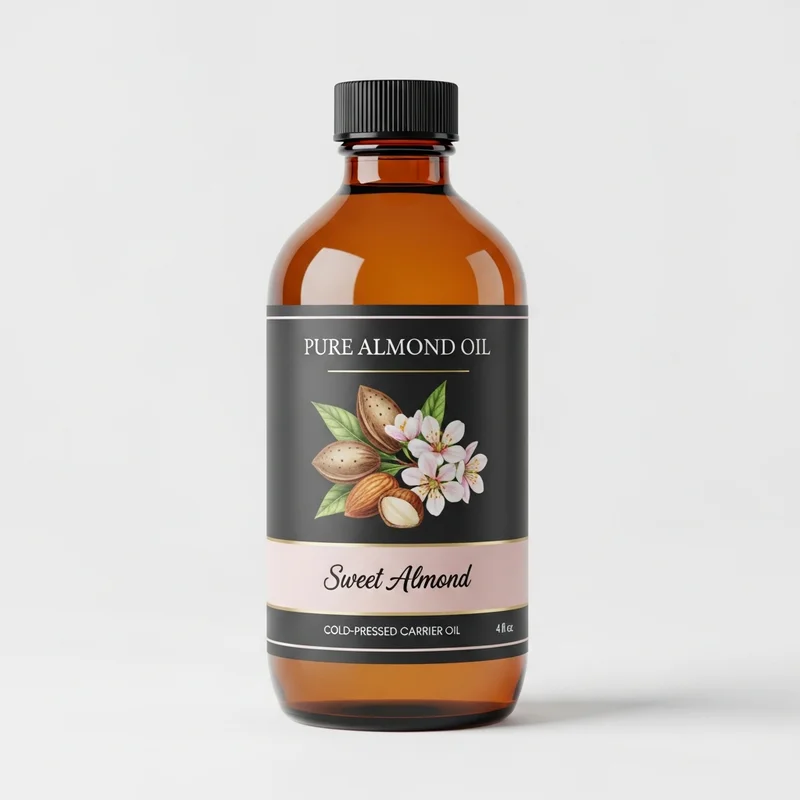
Sweet almond oil (Prunus amygdalus dulcis oil) is pressed from the kernels of sweet almonds. It is distinct from bitter almond oil, which is not used in skincare. The cold-pressed version retains most of the oil's naturally occurring nutrients.
Its fatty acid profile is a key part of why it gets attention for sensitive skin:
- Oleic acid (omega-9): Typically makes up around 62 to 86 percent of sweet almond oil. Oleic acid is deeply penetrating and may support the skin's natural moisture retention.
- Linoleic acid (omega-6): Present in smaller amounts, roughly 20 to 30 percent. Linoleic acid is a component of the skin's natural lipid barrier and is often lower in people with compromised skin barriers.
- Palmitic acid: A saturated fatty acid that contributes to the oil's smooth, emollient texture.
- Vitamin E (tocopherols): A naturally occurring antioxidant found in the oil, which some research suggests may help support skin from environmental stressors.
This combination gives sweet almond oil a relatively lightweight, skin-compatible feel. It absorbs at a moderate pace, without the heavy, occlusive finish of something like castor oil.
Why People With Redness-Prone Skin Are Drawn to Almond Oil
The interest in almond oil for sensitive rosacea skin comes down to a few practical reasons.
It Has a Low Comedogenic Rating
Sweet almond oil sits at around a 2 on the comedogenic scale, which runs from 0 to 5. A 2 is considered unlikely to block pores for most people, though individual responses always vary. For skin that is already reactive, this lower rating is appealing.
It Is Fragrance-Free in Its Pure Form
Fragrance is one of the most common triggers for reactive skin. Pure, cold-pressed sweet almond oil has a very faint, nutty scent that is generally well tolerated. It does not contain the volatile aromatic compounds found in essential oils, which can be more problematic for sensitized skin.
Its Fatty Acid Profile Mirrors the Skin's Own Lipids
Skin naturally contains a mix of oleic and linoleic acids in its lipid barrier. When that barrier is disrupted, as it often is in reactive skin, applying oils with a similar composition may help support the barrier's ability to hold onto moisture. Some researchers have observed that bolstering the skin barrier may also reduce its reactivity over time, though more studies in this specific context are needed.
It Has a Long History of Use in Gentle Skincare
Sweet almond oil has been used in traditional wellness and beauty practices for centuries, particularly in parts of the Middle East, South Asia, and the Mediterranean. It has long been favored in formulations intended for delicate or sensitive skin, including products for newborns. This track record does not replace clinical evidence, but it does suggest a profile of general tolerability that is hard to ignore.
What the Research Actually Says (And What It Does Not)
Here is where it is important to be clear and honest: there is no body of clinical research specifically studying almond oil as a direct solution for rosacea. The skin condition itself is complex, involving vascular reactivity, immune responses, and often microbial factors. No plant oil has been shown to address these underlying mechanisms.
What some research does suggest is that emollient oils rich in linoleic acid may help support a compromised skin barrier function. A well-supported barrier is generally associated with reduced transepidermal water loss and, anecdotally, less reactivity to external irritants. Whether this holds true specifically for almond oil on rosacea-prone skin has not been studied in formal clinical trials.
People report a range of experiences. Some find that adding a lightweight facial oil to their routine noticeably reduces the tight, sensitized feeling their skin carries. Others find that any added oil increases flushing. Skin is genuinely individual, and this variability is real.
For a broader look at how almond oil fits into a gentle daily routine, the almond oil skincare benefits guide covers the foundational uses in more detail.
Potential Concerns: When Almond Oil May Not Be the Right Fit
For all its mild reputation, almond oil is not universally suitable for every person with redness-prone skin. There are a few situations where caution is warranted.
Nut Allergies
This is the most significant concern. People with a known tree nut allergy, particularly to almonds, should approach almond oil with caution and consult a qualified healthcare provider before use. While topical application and dietary ingestion involve different exposure pathways, a reaction is still possible. This is not a situation to experiment with casually.
Oleic Acid Sensitivity
Some research suggests that for certain individuals, particularly those with a disrupted skin barrier, oleic acid may actually increase permeability rather than support it. Since sweet almond oil is high in oleic acid, it may not be the best choice for everyone with reactive skin. Oils with a higher linoleic-to-oleic ratio, such as rosehip or sea buckthorn, are sometimes recommended in those cases instead.
Product Purity Matters
Low-quality or adulterated almond oil may contain added mineral oils, synthetic fragrances, or other ingredients that can trigger reactions in sensitive skin. Always look for cold-pressed, 100 percent pure sweet almond oil with no additional ingredients listed. The sourcing and processing method significantly affect what you are actually applying to your skin.
For guidance on how to evaluate what is on the label, the guide to reading almond oil labels walks through what to look for and what to avoid.
How to Test Almond Oil Safely If You Have Reactive Skin
If you want to explore whether almond oil for redness might work in your routine, a careful, gradual introduction is essential. Do not apply a new oil to your full face on the first try.
- Patch test first. Apply a small amount of the oil to the inside of your forearm or behind your ear. Leave it on for 24 hours and check for any redness, stinging, or reaction before proceeding.
- Start with a small area of the face. If the patch test goes well, try applying a few drops to one small section of your face, such as the cheek, for several evenings before expanding use.
- Apply to slightly damp skin. Many people find that applying oil to skin that is still slightly moist from cleansing helps with absorption and reduces any potential for a heavy or occlusive feel.
- Use at night to start. Evenings are a lower-stakes time to introduce a new product. You can observe how your skin looks and feels the following morning without sun exposure as a variable.
- Use sparingly. Two to three drops is typically sufficient for the full face. More is not better, especially when you are testing how your skin responds.
If at any point you notice increased redness, stinging, or warmth in the skin, discontinue use and allow your skin to settle before trying anything new. Always consult a dermatologist or qualified healthcare provider if you have questions specific to your skin's needs.
How Almond Oil Fits Into a Redness-Conscious Routine
For those who tolerate it well, almond oil can serve a few different purposes in a routine designed with sensitive, redness-prone skin in mind.
As a Standalone Moisturizing Step
Some people with reactive skin find that standard moisturizers contain too many actives, preservatives, or fragrances that cause issues. A pure oil used as the final step in a minimal evening routine may support the skin's moisture levels without introducing those potential irritants.
Mixed Into a Gentle Moisturizer
If you love your existing moisturizer but want a little added nourishment, mixing one or two drops of almond oil into your usual product is a low-commitment way to incorporate it. This approach also dilutes the oil, which may be helpful if you are uncertain about applying it at full concentration.
As a Gentle Cleansing Oil
Oil cleansing has grown in popularity for sensitive skin because it removes makeup and sunscreen without the surfactants that can strip the skin's natural oils. Almond oil is sometimes used as a simple cleansing oil. If you try this, follow with a very gentle rinse or a damp cloth, and monitor how your skin responds.
For more ideas on incorporating almond oil into everyday beauty rituals, the almond oil face routine guide offers a range of approaches suited to different skin types.
A Side-by-Side Look: Almond Oil vs. Other Oils for Redness-Prone Skin
| Oil | Comedogenic Rating | Key Fatty Acids | Notes for Reactive Skin |
|---|---|---|---|
| Sweet Almond Oil | 2 | High oleic, moderate linoleic | Generally well tolerated; avoid with nut allergies |
| Rosehip Oil | 1 | High linoleic, high linolenic | Higher linoleic may suit barrier-compromised skin; oxidizes quickly |
| Jojoba Oil | 2 | Technically a liquid wax (wax esters) | Closely mimics skin sebum; widely tolerated |
| Argan Oil | 0 | High oleic, moderate linoleic | Lightweight; may support moisture; similar profile to almond oil |
| Coconut Oil | 4 | High saturated (lauric acid) | Higher comedogenic rating; may not suit redness-prone or acne-prone skin |
This comparison is meant to give you a starting framework, not a definitive ranking. Every skin is different, and what works beautifully for one person may not suit another even within the same skin type category.
The Honest Bottom Line
Almond oil for rosacea-prone skin is not a guaranteed fix. No oil is. What it is, for many people, is a gentle, relatively simple ingredient with a composition that may be compatible with sensitive skin and a purity profile that avoids many common irritants.
The people who seem to do best with it are those who choose a high-quality, cold-pressed pure product, introduce it carefully with a proper patch test, use it sparingly, and pay close attention to how their skin responds over time. Those who do not have nut sensitivities, who are looking for a minimal moisturizing step, and who tolerate oleic-rich oils generally tend to report the most positive experiences.
If you are managing a confirmed skin condition, your dermatologist or healthcare provider is the right starting point before adding anything new to your routine. Skincare decisions are always more informed with professional guidance behind them.
For those ready to explore further, the guide to choosing the best almond oil for face use can help you navigate what to look for when selecting a product worth trusting on reactive skin.